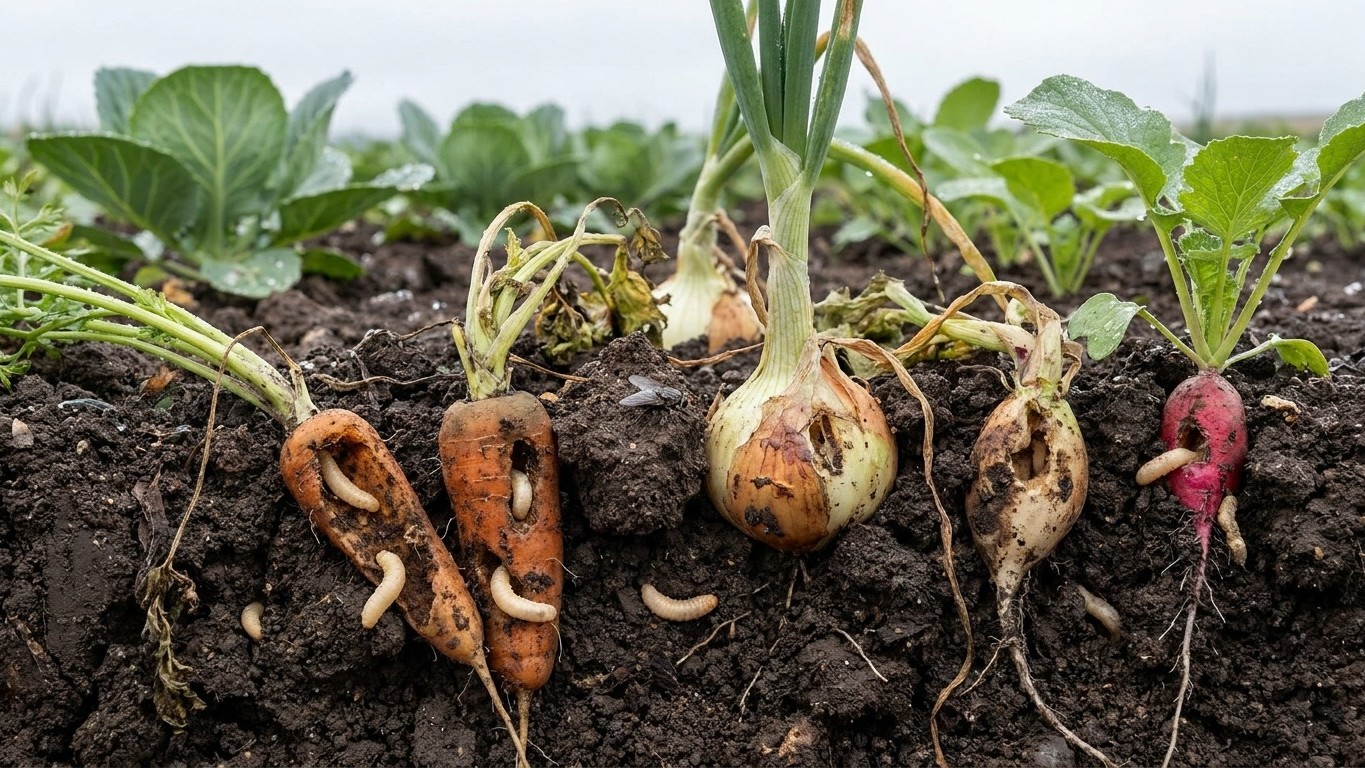

For most Tennessee gardens, the best unusual roots come in three types: cool-season taproots such as parsnip, salsify and celeriac, timed for spring or late summer; fall-sown daikon and rutabaga; and tough perennial roots such as horseradish and Jerusalem artichoke. The state’s long frost-free stretch is generous. The real limits are summer heat and wet soil, not a short season.
The short answer for Tennessee
The frost dates show how much room you have. At the Nashville reference station, NOAA’s 1991-2020 Climate Normals put the last spring frost between March 31 and April 12. Those dates mark the span where the odds of a 32F freeze sit between 30 and 70 percent. They are probabilities, not promises, and a freeze can still show up after the later date. The first fall frost falls between October 28 and November 8, on the same measure. Between the two bands lie roughly 200 to 220 days.
That is a long runway. Slow crops that would never finish in the upper Midwest have time here. Winter is mild too: the mean daily minimum of the coldest month is 30.1F, barely under freezing. So the sorting question is not “will it finish?” but “which part of the year suits each type?” The table below answers that. For a wider look at the crops themselves, see Growing Unusual Root Crops in Tennessee.
| Type | Examples | Best timing | Tennessee verdict |
|---|---|---|---|
| Cool-season taproots | Parsnip, salsify, scorzonera, celeriac | Early spring, or late summer for fall and winter harvest | Good, but timing decides the result |
| Fall-sown quick roots | Daikon, black radish, rutabaga | Late summer into early fall | Strongest fit for the state |
| Hardy perennial roots | Jerusalem artichoke, horseradish, burdock | Late winter to early spring | Reliable, though some need containing |
| Long-season warm tubers | Yacon, oca | After the last frost risk has passed | Worth a trial, not a staple |
My pick for a first-timer is the fall-sown group. Cooling soil and shortening days suit them, and the mild winter lets many sit in the ground until you want them. This page does not have a Tennessee trial list ranking individual cultivars, so the advice here stops at type. Your county can supply the rest.
What will not work here
Advice written for northern states tells you to start everything indoors in February and race the frost. In Tennessee that is the wrong worry. A season of 200-plus days between frost bands means almost nothing is defeated by running out of time.
Summer is what defeats the slow roots. A parsnip or salsify sown in April and left to sweat through a Tennessee summer often ends up woody, forked or bitter, because these crops prefer cool weather for bulking up. Parsnip seed also sulks in warm, crusted soil, and a bed that dries out between weekly waterings can leave you with patchy germination and stranded seedlings. If you water once a week, sow earlier or shift the crop to fall.
Celeriac fails in a different way. It wants steady moisture across a long season, and a dry July spell followed by a heavy storm tends to leave cracked, hollow roots. Close spacing makes it worse. Humid Tennessee summers keep foliage damp for hours, and crowded leaf canopies invite fungal disease. Give each root more room than the seed packet’s minimum.
Then there is the ground itself. Much of the state has heavy clay, and taproots grown in it fork around clods and stones. Wet winters add a second problem. With the coldest month averaging 30.1F at night, the soil freezes only in spells, then thaws and soaks. Roots left in poorly drained beds can rot rather than keep, which is the opposite of the “leave them in the ground” advice that works in colder, drier places. Raised beds or at least loosened, amended rows fix most of this.
Two more cautions. Jerusalem artichoke is a fine perennial, but a mild winter and long season help it spread. A corner bed with a firm edge, or a large container, keeps it from taking over. And yacon and oca need a long, frost-free autumn to bulk up their tubers. Frost here arrives between October 28 and November 8 at Nashville, which gives them a chance, but a single early cold snap can clip the tops. Treat them as experiments you can afford to lose.
What changes across Tennessee
Tennessee is not one garden. The USDA Plant Hardiness Zone Map (2023 edition, based on 1991-2020 normals) places the state in zones 5b to 8a. That is six half-zone steps, built on a single variable, the average annual extreme minimum temperature. So there is no single answer for the state. Everything on this page is anchored to Nashville, the reference city, and other parts differ.
The difference matters most in spring. East Tennessee and the Cumberland Plateau run cooler and later than Nashville. If you garden on the plateau or at elevation, treat March 31 to April 12 as the earliest your frost risk could end, not the typical date. Push spring sowings back accordingly, and expect cool-season taproots to have a shorter, more comfortable window before summer heat than they do in the Middle Tennessee basin. The facts behind this page cover the Nashville station only, so there is no verified fall frost date for the plateau here. Plan on the cooler side and keep an eye on the forecast in October.
The cold end changes the perennial advice. In the warmer parts of the state, hardy roots like horseradish and Jerusalem artichoke shrug off winter. In the coldest zone-5b pockets, a thick mulch over in-ground roots is cheap insurance. On the warmer side, the issue flips: summer heat, not winter cold, is what you plan around, so lean harder on fall sowings.
Look up your own zone on the USDA map by ZIP code. I won’t guess which one you are in, and neither should a general page. Once you know it, the planting calendar for unusual roots in Tennessee shows how to line up sowing dates with your local frost risk.
Where to check this for your own county
A county recommendation beats a state one. This page is the state one: a climate-normals view built on a single reference station, useful for choosing a type but too coarse for choosing a sowing date in your yard.
The place to go next is University of Tennessee Extension, the state’s land-grant extension service. Your county has its own office, and the staff there know the local soil and the local weather quirks. When you look, aim for two things:
- The local planting calendar, with sowing windows set for your county rather than for Nashville.
- Any varieties trialled in your county, so you pick cultivars that have already been grown on soil like yours.
This page does not have an extension root-crop calendar for Tennessee, so I won’t invent one. If the extension has nothing on a crop you want, that is useful information too. It usually means the crop is unproven locally, and you should plant a small test row before committing a whole bed.
Ask the office about your soil as well. A county agent who sees clay and drainage problems every week can tell you whether raised beds are worth the lumber. That one answer can save a season of forked parsnips.
Checking this against your own garden
Your own observations outrank every date above. Three are worth watching, and none needs a gadget.
Soil warmth by feel. Push your bare hand into the bed in the morning. If it feels cold and clammy, parsnip and salsify seed will sit and rot or germinate unevenly. If it feels comfortably cool, sow. A bed that warms days before your neighbor’s is a south-facing, well-drained spot, and it will also be the first to bake in July.
First true leaves. The first pair of leaves a seedling shows is just seed reserve. The second pair, the true leaves, means the root is actually established. A test row sown a little early shows you how long your soil takes to get there, and that is your real germination lag. Thin at that stage, not before.
Where the first frost lands. On the first frosty morning in fall, walk the yard. Whichever corners are white show you your frost pockets, and the spots that stayed green are your warm microclimates. Tender tubers such as yacon belong in the green spots, and the frost pockets suit hardy perennials that don’t mind.
Keep notes for a year. A page of dates from your own yard will serve you better than any state average.
Common questions
What is the easiest unusual root for a first-time Tennessee grower?
Daikon sown in late summer is forgiving, matures quickly and avoids the worst heat. Horseradish is the easy perennial, but give it a bed of its own because it is hard to remove once settled.
Can I leave roots in the ground over winter?
In much of the state, yes. The coldest month’s mean daily minimum at Nashville is 30.1F, so freezing is brief and intermittent. Drainage is the real risk: roots in soggy clay can rot. In colder zone-5b areas, add a thick mulch.
Do I need to start seeds indoors?
Taproots like parsnip and salsify resent transplanting, so sow them directly. Celeriac is the usual exception, since it takes a long season and is commonly started indoors, then set out after frost risk has passed.
How long is Tennessee’s growing season?
At the Nashville reference station, roughly 200 to 220 days separate the spring and fall frost bands (March 31 to April 12, and October 28 to November 8). Those are 32F freeze probabilities in the 30 to 70 percent band, not guarantees, and East Tennessee and the Cumberland Plateau run later in spring.