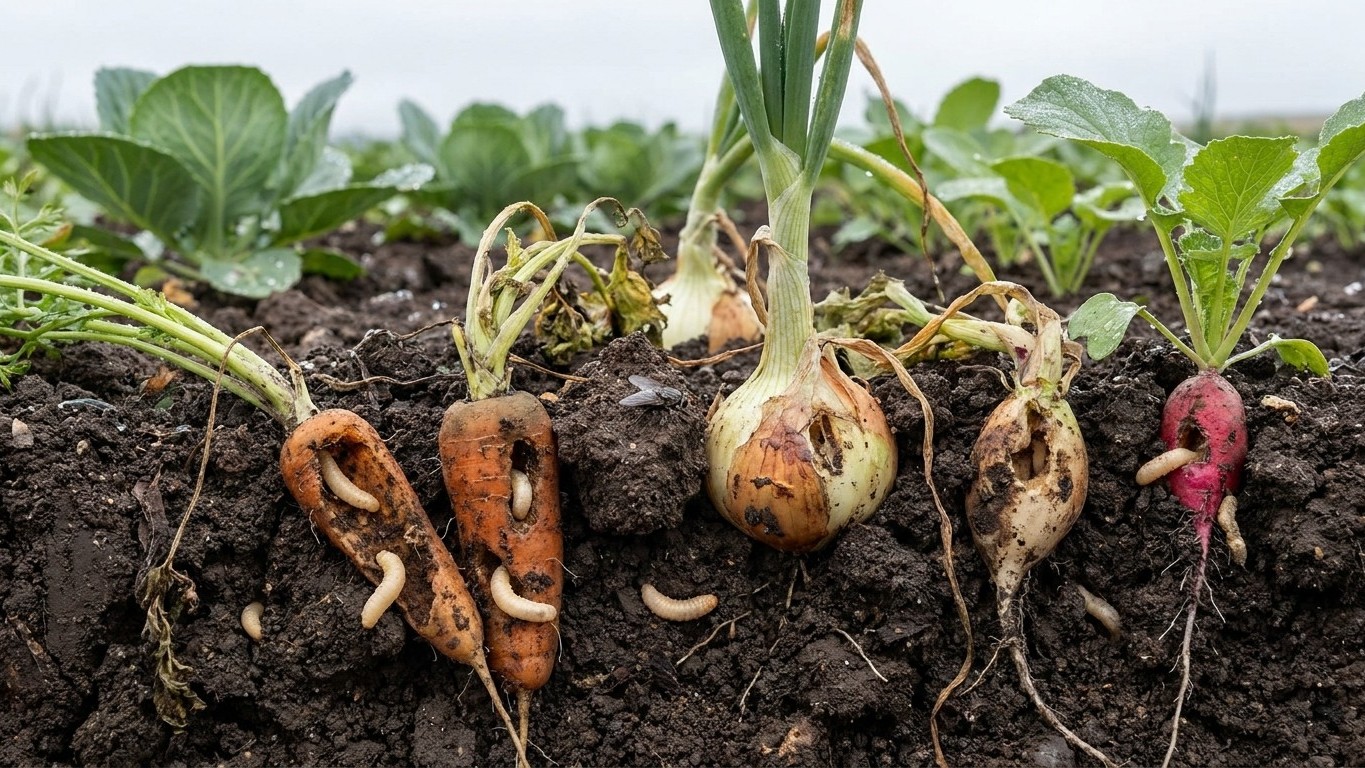

The best unusual roots for Virginia are the frost-tolerant ones: salsify, scorzonera, parsnip-style roots, black radish, daikon and Hamburg parsley, plus the perennials horseradish and Jerusalem artichoke. Celeriac is a maybe. Tender, long-season crops such as oca and yacon are a gamble that only the mild coastal end of the state can really support.
The short answer for Virginia
What the frost dates actually say
The reference numbers come from NOAA’s 1991-2020 Climate Normals for NAS Oceana in Virginia Beach. There, the last spring freeze at 32°F falls between March 20 and April 3, and the first fall freeze between November 10 and November 24. Those dates are probabilities of a 32°F freeze (the 30 to 70 percent band), not deadlines. Some years the freeze comes earlier, some years later.
That station sits at the mild end of the state. The Blue Ridge and southwest Virginia run weeks later in spring and earlier in fall, so read these dates as the most generous version of Virginia’s growing season. On the coast, the gap between the spring and fall bands is long enough for a slow root to finish. In the mountains it is not.
The decision by type
| Type | Examples | Fit in Virginia |
|---|---|---|
| Frost-tolerant, cool-season | Salsify, scorzonera, parsnip-style roots, black radish, daikon, Hamburg parsley | Best bet statewide, sown early in spring or timed for fall |
| Hardy perennials | Horseradish, Jerusalem artichoke | Reliable from the coast to the mountains |
| Long-season, moisture-hungry | Celeriac | Workable on the coast with a head start indoors; marginal at altitude |
| Tender, frost-sensitive | Oca, yacon | Coastal experiment only; fall frost can end the crop early elsewhere |
Winter helps the first two rows. The mean daily minimum of the coldest month at Virginia Beach is 31.6°F, just under freezing. That is an average night, not a record low, but it tells you the coastal ground is rarely locked up for long. Hardy roots can stay in the bed and be dug as needed. Timing is covered in When to Plant Unusual Roots in Virginia, and the wider overview lives in Growing Unusual Root Crops in Virginia.
What will not work here
Slow, tender crops in the cold half of the state
Anything that needs the whole frost-free stretch fails first in the mountains. The coastal band gives you a season running from late March or early April into mid or late November. Move up into the Blue Ridge or out to the southwest corner and both ends shrink by weeks. Oca makes its tubers late in the year, after the tops have grown all summer, so an early fall frost there arrives before the harvest does. Yacon has the same problem. Celeriac is the borderline case: it can work, but only if you start it indoors and it still has months of steady growth ahead of it.
Warm-season thinking also fails the other way. A parsnip-type root or salsify sown too late in spring runs into Virginia’s warm, humid summer while still small, and the result is a tough, stringy root or a plant that bolts. These crops want cool weather at both ends. Sow them early, or treat fall as the main season for the radishes.
Close spacing in a humid climate
Virginia summers are humid, and that punishes crowding. Foliage that stays wet invites leaf diseases, and dense celeriac or Hamburg parsley rows hold moisture around the crown. Space generously, favor morning watering at the base, and thin early. Spacing you could get away with in a dry western state is a liability here.
Soil matters as much as air. Heavy clay, common across much of the Piedmont, produces forked and stunted roots in any long-rooted crop and rots them in wet spells. Sandy coastal soil has the opposite flaw: it drains so fast that a once-a-week watering habit leaves celeriac and radishes stressed between soakings. Raised beds loosened deeply suit clay gardens. Sandy gardens need mulch and more frequent, lighter watering.
Jerusalem artichoke without a boundary
One more failure is of a different kind. Jerusalem artichoke is hardy enough for nearly any Virginia winter, and that is the trouble: every small tuber left behind sprouts. Plant it where it can stay, or in a contained bed, and dig thoroughly each year. Horseradish behaves the same way.
What changes across Virginia
Virginia does not have one answer. The USDA Plant Hardiness Zone Map (2023, built on 1991-2020 normals) runs from 5a to 8b across the state. That is four full zones, from cold mountain pockets to the mild coast. The system rests on a single variable, the average annual extreme minimum temperature, so it tells you whether a plant survives winter, not whether it has enough warm weeks to finish.
That distinction matters for roots. A gardener in the zone 5 and 6 parts of the state can grow horseradish and Jerusalem artichoke without worry, since both handle serious cold. The trouble for that gardener is the calendar. Spring soil warms weeks later than at the coast, and the fall freeze arrives earlier. Two gardens in the same zone can still have very different frost dates, because hardiness and season length are separate questions.
If you garden in the mountains or at altitude, shift three things. Push spring sowings later, and expect the coastal dates above to be too early for you. Lean on the hardy types and the cool-season roots, which cope with a short window, and skip oca and yacon unless you accept the risk. Start celeriac indoors if you want it at all. Cool nights that slow summer crops can also help fall radishes and parsnip-style roots sweeten up.
For the coast and warmer southeastern areas, the shift runs the opposite way. Fall sowing opens up, and overwintering in the ground becomes routine. The zone range is territory-wide, and this page cannot tell you which zone your own address falls in. Look up your location on the USDA Plant Hardiness Zone Map, then treat the frost dates here as the coastal baseline to adjust from.
Where to check this for your own county
Your state extension service is the next stop. Virginia Cooperative Extension runs local offices across the state, staffed by agents who know your county’s soils and weather. Find your local office and ask for two things: the planting calendar for vegetables in your area, and any variety trials run nearby.
The variety trials are the useful part. A trial tells you which cultivars of a given root actually performed in your county’s soil and humidity, which a state-level article cannot. If a local office lists results for parsnips, radishes or celeriac, those beat any general advice. Extension offices can also point you toward soil testing, which pays off with deep-rooted crops, and many counties have Extension Master Gardener volunteers who answer questions.
A county recommendation beats a state one, and this page is the state one. It draws its frost dates from a single coastal station, and the data behind it does not include county-level calendars for Virginia. If your local office gives a different date from what you read here, trust the office. Treat this article as a way to narrow down what to ask, not a replacement for what they know.
Checking this against your own garden
Every date on this page is an average. Your garden’s own signals outrank them, and none of them need a gadget.
- Soil warmth by feel. Push your hand a couple of inches into the bed in the morning. Soil that feels cold and clammy is not ready for tender roots, and comparing a sunny bed against a shaded or low-lying one shows you which spot warms first.
- The first male flowers. Squash and cucumber vines send up male blossoms before female ones. When they open, warm weather has settled in. If yours open weeks after a neighbor’s, your site runs cooler, and warm-season roots there should be started later.
- The first true leaves. The first leaves after the seed leaves tell you how a sowing is going. Seedlings that stall before this stage suggest cold or wet soil. Quick, even growth means the bed suits that crop.
Write down what you see each year next to the date. Two or three seasons of notes will tell you more about your microclimate than any state map.
Common questions
Can unusual roots stay in the ground over winter in Virginia?
Hardy ones can. Salsify, scorzonera, parsnip-style roots, horseradish and Jerusalem artichoke tolerate freezing. On the coast, where the coldest month’s mean daily minimum is 31.6°F, digging as needed is easy. In colder mountain zones, add heavy mulch and harvest before the ground freezes hard.
Which unusual root is easiest for a first try?
Daikon or black radish sown for fall is a forgiving start, as is horseradish if you have a spot to leave it. Both handle Virginia’s variable weather better than celeriac or the tender tropicals.
Do I need to start celeriac indoors?
In most of Virginia, yes. It needs a long stretch of steady growth and consistent moisture. A head start indoors fits the coast. At altitude, the shorter season makes it a harder bet, and your local extension office can say whether anyone nearby has trialled it.
Should I plant on the frost dates listed here?
Treat them as a coastal reference, not a rule. March 20 to April 3 is the band for the last spring 32°F freeze at one Virginia Beach station, and it is a probability. Gardens in the Blue Ridge and southwest run weeks later, so check your county before you sow.