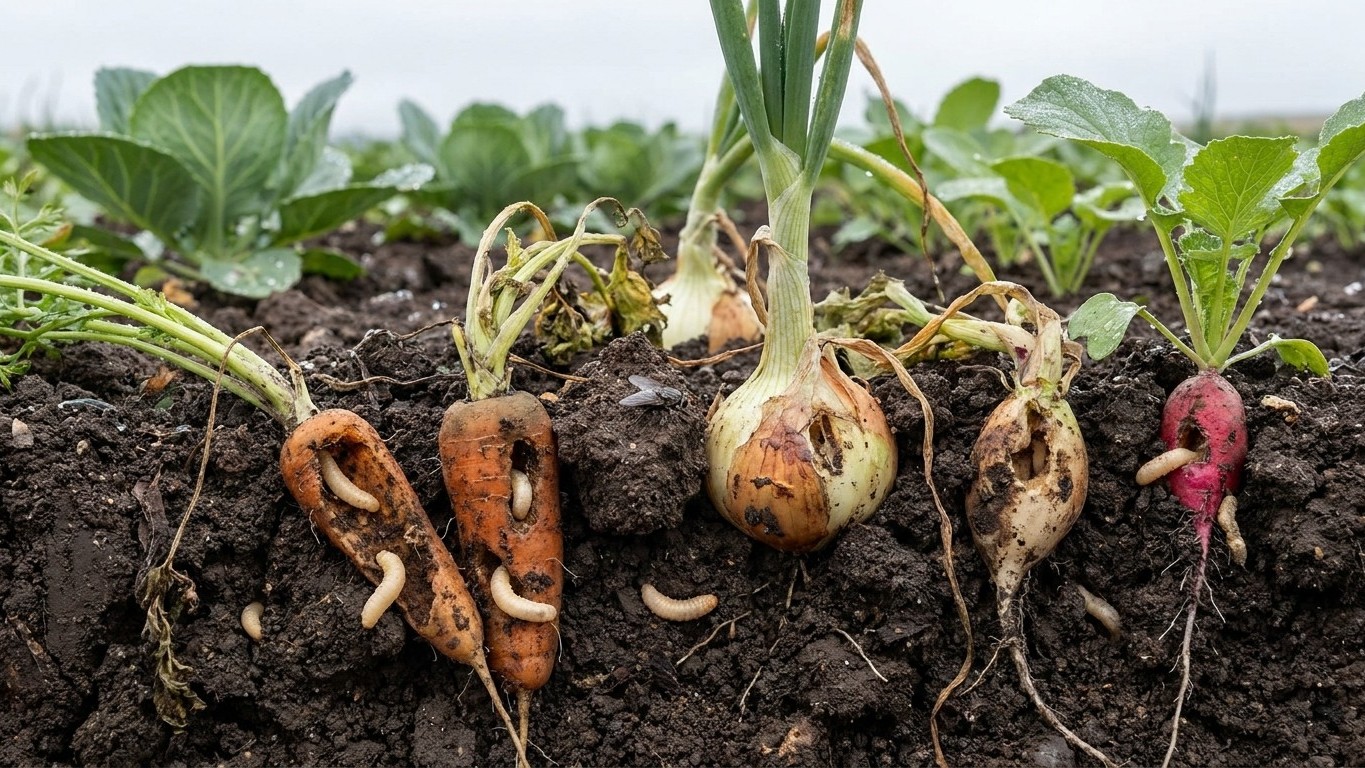

West of the Cascades, the best unusual roots are the slow, cool-tolerant ones: salsify, scorzonera, parsnip, celeriac, Hamburg parsley, black radish, daikon and sunchokes. They use the long, mild season well. Eastern Washington follows different rules, and this page has no frost dates for it. For the wider picture, start with Growing Unusual Root Crops in Washington.
The short answer for Washington
Pick roots that are patient and hardy, and skip the ones that need summer heat. The frost figures here come from the Seattle-area station in the NOAA NCEI 1991-2020 Climate Normals. They are probabilities of a 32°F freeze, taken from the 30-70% band. They are not guarantees. The last spring freeze falls between February 27 and March 18, and the first fall freeze between November 13 and November 30.
Why the season favors slow roots
That is a long window, and it ends late. The mean daily minimum of the coldest month is 37.1°F, so winter rarely locks the ground solid. Hardy roots can sit in the soil and be dug as needed. Slow crops that sulk in a short season have time to finish here.
A mild frost date is not an early planting date, though. Cold, wet soil and thin spring light hold seedlings back well past the last freeze. Salsify and parsnip can sit for weeks in soil that is too cold. The frost dates tell you when a freeze is unlikely, not when the soil is ready. The timing details are in When to Plant Unusual Roots in Washington.
The decision by type
| Type | Examples | Fit in western Washington | Main risk |
|---|---|---|---|
| Slow taproots | Salsify, scorzonera, parsnip | Strong. Long cool season, and they hold in mild winter soil | Slow germination in cold, wet spring soil |
| Fall radishes | Daikon, black radish | Strong. Sown in late summer, harvested in cool weather | Bolting if sown in spring |
| Celery-family roots | Celeriac, Hamburg parsley | Good. They like cool, even moisture | Need fertile soil and a long runway |
| Perennial tubers | Sunchokes, horseradish | Very good. Tough and low effort | They spread and are hard to remove |
| Frost-tender tubers | Oca, yacon | A gamble. Worth a trial, not a staple | Cool summers slow growth, and fall freezes end it |
What will not work here
Sowing by the frost date
The biggest failure is sowing in late February because the freeze odds have dropped. Seeds that sit in cold, saturated soil rot, or germinate unevenly and leave a patchy row. Slow germinators like parsnip and salsify suffer most, because they spend the longest time exposed. Wait for soil that feels workable and not clammy, even if the calendar says go.
Heat-hungry roots and soggy winters
Maritime summers disappoint crops that want sustained heat. Yacon and oca are the usual temptations. They can be grown, but expect modest harvests unless you give them the warmest, sunniest spot you have. Sweet potatoes need the same help from black plastic or low tunnels. If you want a dependable harvest, build the garden around the first four rows of the table above and treat the tender tubers as experiments.
Wet winters cause a different problem. Leaving roots in the ground works with a 37.1°F coldest-month minimum, but heavy, poorly drained soil turns that strategy into rot. Slugs and voles also stay active in mild weather and treat an in-ground winter pantry as a buffet. Raised beds or ridged rows help. So does lifting a portion of the crop in late fall and storing it.
Applying the Seattle window to the whole state
The frost figures here describe western Washington only. Eastern Washington is high desert with a far shorter season, and a reader in the Columbia Basin or the Okanogan who follows these dates will plant at the wrong time. This page does not have a verified frost window for the east, so it does not offer one. Slow, long-season roots like celeriac and the tender tubers lose the most when the season is cut short. A hot, dry summer east of the mountains also punishes anyone who waters once a week. Shallow-rooted seedlings of radishes and young parsnips need steady moisture, and the same schedule that works on the coast fails there.
What changes across Washington
Under the USDA Plant Hardiness Zone Map (2023 edition, built on 1991-2020 normals), Washington spans zones 4a to 9a. That is five full zone steps in one state, so there is no single answer. The system rests on one variable, the average annual extreme minimum temperature, and says nothing about summer heat, rainfall or season length. The spread runs from cold mountain and northeastern country to mild Puget Sound shoreline.
Which zone applies to you is something to look up, not guess. Enter your ZIP code on the USDA map and read it from there. It is also worth knowing that the map measures winter cold, which matters less for hardy roots than for perennials.
The recommendations on this page are anchored to the reference city, Seattle, and a gardener in the north or at altitude should shift in three directions. First, expect later soil warming in spring and an earlier first fall freeze, so favor the fastest-finishing types and drop the tender tubers entirely. Second, lean on the tough perennials: horseradish and sunchokes handle cold winters that would flatten a marginal crop. Third, sow in the order the soil allows, not the order the Seattle dates suggest. Your frost window may be weeks narrower than the one printed here, and this page cannot say by how much.
Where to check this for your own county
Your state extension service is the right next stop. WSU Extension runs county offices across Washington, and its staff and Master Gardener volunteers work with local soil, local weather and local pests. Look for two things there: a planting calendar written for your county, and any root crops or varieties that have been trialled nearby.
The trial results matter more than they sound. A variety that did well in a Puget Sound trial may behave very differently in the Yakima Valley or the Spokane area. When a county office reports what actually grew, you get information a state-level page cannot give.
A county recommendation beats a state one, and this page is the state one. It tells you which types suit the general climate of western Washington and flags where the east differs. It cannot see your elevation, your slope or the cold pocket at the bottom of your yard. If the county calendar and this page disagree on a date, go with the county.
The extension site also lists soil testing and publications on specific crops. For unusual roots, check whether your county has anything on salsify, scorzonera or celeriac. If not, a call to the county office is worth making, because they may know a grower nearby.
Checking this against your own garden
Your own observations outrank every date here. Three things are worth watching, and none needs equipment.
- Soil warmth by feel. Push a bare hand a few inches into the bed in the morning. If it feels cold and clammy, slow germinators will stall. A bed that feels loose and mildly cool is ready. Comparing a sunny, drained bed with a shaded, low one shows how much your microclimate differs from the regional picture.
- The first true leaves. Sow a small test row early. Seedlings with their first true leaves (the ones after the seed leaves) tell you the soil has turned a corner. If they stall for weeks, your site runs colder or wetter than the regional dates suggest.
- The first male flowers on squash. If you grow zucchini or another squash, the first male blooms mark a warm stretch. Their timing tells you whether your garden is warm enough to try oca or yacon.
Write the dates down for a season or two. A scribbled note beats memory, and it will sharpen every number on this page.
Common questions
Can I leave unusual roots in the ground all winter in western Washington?
Hardy types such as salsify, scorzonera, parsnip and sunchokes can stay put, since the coldest-month mean minimum is 37.1°F. The risk is rot in waterlogged soil and damage from slugs and voles, so drainage matters more than cold.
Can I use the Seattle frost dates in eastern Washington?
No. The February 27 to March 18 and November 13 to November 30 windows describe a mild, maritime station. Eastern Washington has a far shorter season, and this page does not have verified dates for it. Check your county extension office.
Should I sow as soon as the last frost date passes?
Not by that signal alone. The dates are probabilities of a 32°F freeze, not a measure of soil readiness. Cold, wet soil and low light hold seedlings back well past the last freeze, so let the soil feel decide.
Are sunchokes a safe choice for a small bed?
They are easy to grow and just as easy to regret in a small space. Any tuber fragment left in the soil regrows the next year, so give them a contained spot or a deep barrier from the start.