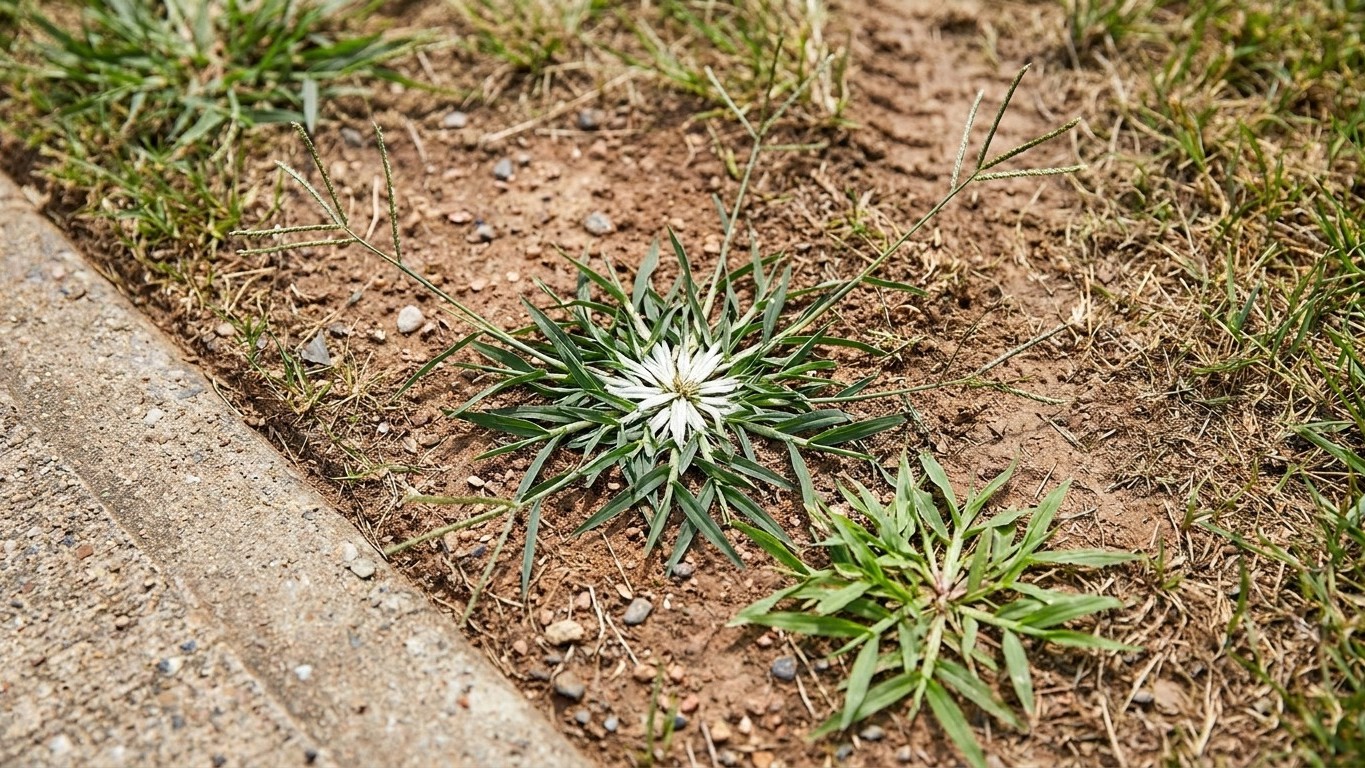

Mow Delaware lawns between 1.5 and 3.5 inches, and let the grass species pick the exact number. Tall fescue wants 3 to 3.5 inches. Kentucky bluegrass and fine fescues sit at 2 to 3 inches. Perennial ryegrass and rough bluegrass run lower, at 1.5 to 2.5 inches. Mow one species at another’s height and the lawn can thin out within a season. If you can’t name your grass yet, 2.5 inches falls inside the range of four of the five.
The mowing height for Delaware lawns
Blade height decides how much leaf the grass has for catching sunlight, and leaf area feeds the roots. A taller cut supports deeper roots and shades the soil so weed seeds struggle to sprout. A shorter cut works only for species that grow low and dense by nature.
Height by species
| Grass | Mowing height |
|---|---|
| Tall Fescue | 3 to 3.5 inches |
| Kentucky Bluegrass | 2 to 3 inches |
| Fine Fescues | 2 to 3 inches |
| Perennial Ryegrass | 1.5 to 2.5 inches |
| Rough Bluegrass | 1.5 to 2.5 inches |
Each range sits within what the land-grant extension sources publish for these species. A tall fescue lawn cut at 1.5 inches is scalped, and a ryegrass lawn left at 3.5 inches flops over and mats.
Most home lawns are blends, so use the dominant species as your guide. A cut of 2.5 inches falls inside the range for every species above except tall fescue. A cut of 3 inches suits tall fescue, Kentucky bluegrass and fine fescues, but it runs half an inch above the ceiling for ryegrass and rough bluegrass.
Why these five species
These are the cool-season grasses, and they are the ones the extension sources recommend for this part of the country. Delaware’s reference frost dates (covered in the last section below) show frost ending the season in late October to early November, when a warm-season lawn would turn straw-brown until spring warmth returns. Cool-season grasses keep growing in the cooler months on either side of summer, so the lawn stays green longer.
For guidance specific to your county’s soils and seed choices, the University of Delaware Cooperative Extension is the local authority. Neighbors in other states will find different numbers, as in How High to Mow a Lawn in Indiana and How High to Mow a Lawn in Nova Scotia.
Raising the deck when the heat comes
Summer is when a cool-season lawn is under the most stress, and the mower is the one tool you control. Move the deck to the top of your species range from the time the weather turns hot. For tall fescue that means 3.5 inches, and for Kentucky bluegrass or fine fescues it means 3 inches. Even ryegrass and rough bluegrass should ride at 2.5 inches rather than 1.5.
At the reference airport station, NOAA NCEI Monthly Climate Normals for 1991 to 2020 show about 13.1 inches of rain across June, July and August, out of 45.3 inches for the whole year. June averages 4.67 inches, July 4.41 and August 3.98, making August the driest of the three. Those are normals, not a forecast and not a reading from your yard.
Rain totals do not settle how often the lawn needs water. An inch of rain drains through sand within the day, while clay can hold it for a week. Hot afternoons also pull water out of the soil fast, and rain that falls as one hard thunderstorm tends to run off rather than soak in. A cheap rain gauge on your own lot settles the question better than any regional average. If a week of weather brings less than an inch, water deeply once instead of sprinkling daily.
Tall grass helps in a dry spell because it shades the soil, which slows evaporation, and keeps more green leaf working. If growth slows to a crawl in August and the lawn starts to go dormant, mow less often rather than lower. Cutting dormant grass short adds stress without giving anything back. Skip the pass until the grass is growing again.
Mow when the blades are dry, since wet clippings clump and smother patches. A dull blade tears leaf tips instead of cutting them cleanly, and torn tips turn brown and invite disease in humid weather. Sharpen the blade at least once a season.
The one-third rule, and why it is not arbitrary
Never remove more than one third of the grass height in a single mowing. Every blade you cut away is solar panel the grass needs to feed itself. Take too much at once and the plant stops sending energy to its roots to rebuild leaf. Roots shorten, and a shorter root system dries out faster in August weather.
The arithmetic is simple. Tall fescue cut at 3 inches should be mowed when it reaches 4.5 inches, and at 3.5 inches it should be mowed at 5.25 inches. Kentucky bluegrass at 2.5 inches should be mowed by about 3.75 inches. Perennial ryegrass at 2 inches should be cut at 3 inches. The taller your target height, the longer you can wait between mowings.
Rain breaks the schedule. A wet week can push growth well past the line, and the temptation is to drop the deck and take it all off. Resist that. Cut a third, wait a few days for the grass to recover, then cut another third until you are back at target height. It takes two or three passes, but the lawn avoids the yellow, stubbly look of a scalped one. Following the rule also keeps clippings short enough to mulch back into the lawn rather than bag.
For the basics on blade sharpness, mowing pattern and general technique that apply in any state, see Mowing a Lawn.
The first and last cut of the year
Start the season by watching the grass, not the calendar. The reference-station figures for the last spring frost run from April 3 to April 14 (NOAA NCEI 1991-2020 Climate Normals, 32F freeze probabilities in the 30-70% band). Those figures come from an airport weather station. Suburban and rural lawns usually see the last frost one to two weeks later, and more at elevation, so check the date for your own county. Do the first mow when the grass is actively growing and has reached about a third above your target height.
The first cut of spring is the one people tend to do too short. Scalping down to 1.5 inches feels tidy, but it exposes crowns to a late cold snap and gives weeds sun. Start at your normal height for the species.
Fall matters as much. The reference figures for the first fall frost run from October 26 to November 7 (same NOAA NCEI source and station), and a suburban or rural lawn often sees it one to two weeks sooner. Today is October 8, so for many Delaware lawns the first frost window is a few weeks out. Cool-season grasses keep growing until cold stops them, so keep mowing at the same height through October, less often as growth slows.
The last cut of the year comes once the grass stops growing. It can go to the lower end of your species range: 3 inches for tall fescue, 2 inches for Kentucky bluegrass and fine fescues, and 1.5 inches for ryegrass and rough bluegrass. Going lower invites trouble, and very long grass going under leaf litter or snow tends to mat and can develop disease. Remove or mulch fallen leaves with the mower before they pile up and smother the lawn.
Neither frost date is a deadline. Frost is a probability, and the reference station sits in one spot in a state that varies from place to place. Watch your own lawn and thermometer, and let the University of Delaware Cooperative Extension’s county contacts tell you what is normal where you live.
Common questions
What is the best mowing height for a Delaware lawn?
It depends on the grass. Tall fescue does best at 3 to 3.5 inches, Kentucky bluegrass and fine fescues at 2 to 3 inches, and perennial ryegrass and rough bluegrass at 1.5 to 2.5 inches. For a blend you can’t identify, 2.5 inches works for most of these species.
Should I mow shorter in spring to remove dead grass?
No. Start at your normal height. Scalping to 1.5 inches exposes the crowns to cold snaps and lets weeds get light.
Can I use a warm-season grass in Delaware?
The recommended species here are the cool-season ones. Frost ends the growing season in late October to early November at the reference station, and a warm-season grass would go brown and dormant at that point.
How do I know when to stop mowing in fall?
Stop when the grass stops growing. At the reference station the first frost falls between October 26 and November 7, but your own lawn may see it sooner. Make the last pass at the low end of your species range and clear the leaves.