
Most Quebec gardeners are better off planting shallots in spring, as soon as the soil is workable and no longer sodden, and treating autumn planting as the riskier option. The coldest month in the Montreal area averages a daily minimum of -14.1 °C. That is cold enough to heave or rot sets planted the previous fall. The details below turn on frost dates, soil condition, and local variety advice.
When the soil is warm enough in Quebec
The average last spring frost at the Montreal/St-Hubert A station is May 6, according to Environment and Climate Change Canada’s 1981-2010 climate normals. That is a mean, and it is a probability, not a promise: in about one year out of two, the last frost lands later than that date. Plan around a window that opens in late April and closes well into May, not around a single square on the calendar.
Frost is only a proxy for what shallots care about, which is the soil. Soil warms after the frost risk ends, not with it, because a cold, wet bed holds winter’s chill long after the air has turned mild. A gardener who plants on the frost date itself may be putting sets into ground that is still cold and saturated.
Reading the soil instead of the calendar
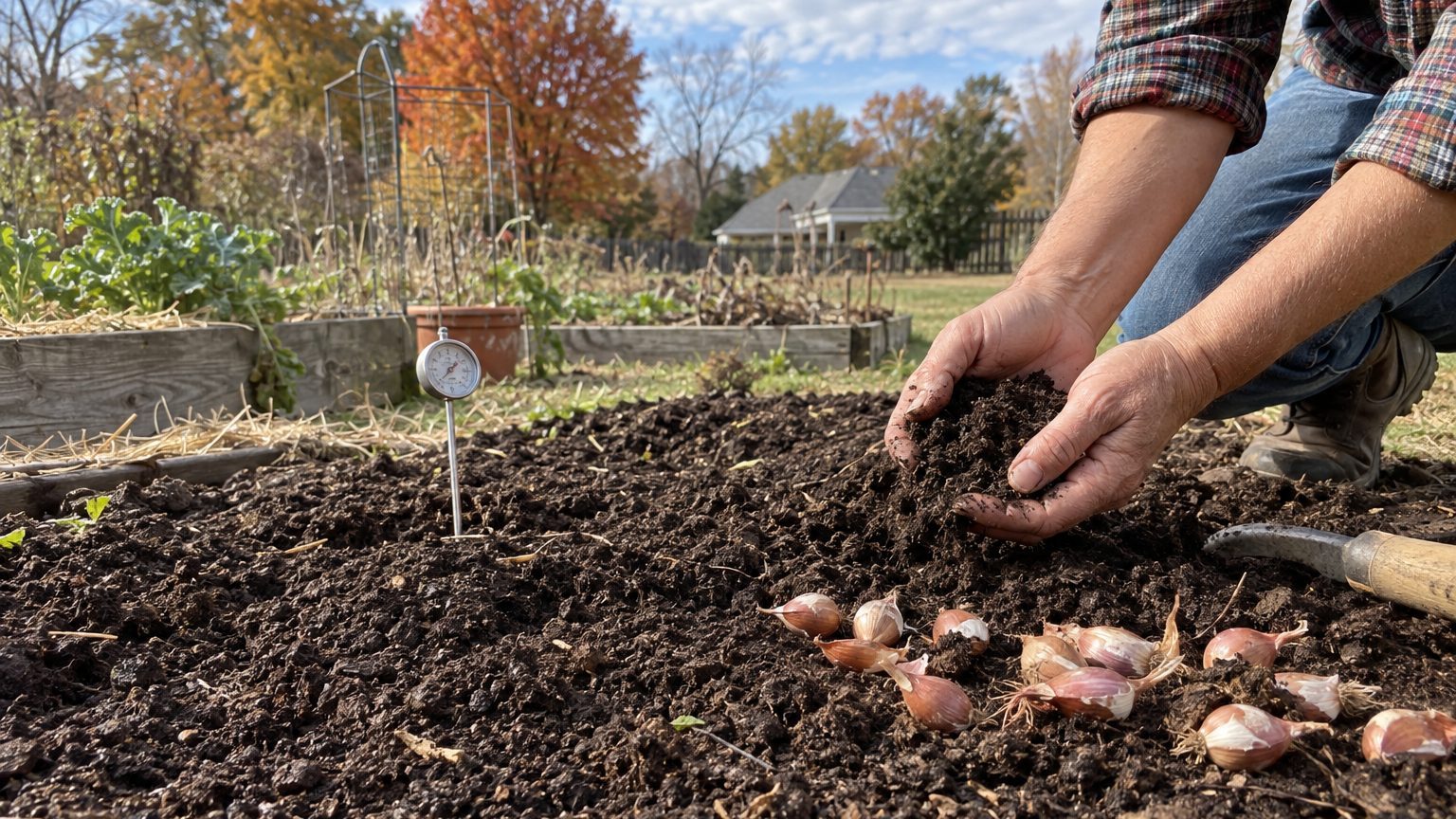
Shallots are a cool-season crop and tolerate chilly ground better than tomatoes or beans do. What they do not tolerate is standing water. A practical test: grab a handful of soil from planting depth and squeeze it. If it crumbles when you poke it, go ahead. If it stays in a slick, sticky ball, wait a few days. Sets pushed into muck can rot before they root, and that loss is permanent.
Where you garden matters as much as when. The St-Hubert figure describes one station on the south shore of Montreal. Northern and upland districts of Quebec run weeks behind it, and a river valley can run ahead of a hillside a few miles away. Treat May 6 as a starting reference, then watch your own beds. One more caution: Canadian normals cover 1981-2010, while the US figures elsewhere on this site cover 1991-2020, so a Quebec date and an Iowa date are not a clean like-for-like comparison.
Where garlic advice applies, and where it doesn’t
Shallots and garlic share a lot of practice, and this site’s garlic section covers autumn planting, mulching, curing, storage, and allium rotation in depth. Follow it for those basics instead of looking for a second copy here. The differences for shallots are small but real. Sets are smaller and go in shallower. Each one multiplies into a cluster of bulbs. And you should keep shallots out of beds that held any allium (onions, garlic, leeks) in recent seasons, because the soil diseases carry over.
Curing and storage touch food safety, so inspect, don’t assume. After lifting, dry the bulbs in an airy, shaded spot. Before storing any bulb, check the neck, which should be dry and tight, and the base, which should be firm and clean. A soft neck or a moldy base ends the question: that bulb goes in the compost, not the pantry. A bulb that merely looks sound is not proof it is sound, so check each one again during storage and pull any that soften.
For a general overview of the crop, see Growing Shallots: One Bulb In, a Handful Out.
How long the season lasts here
Count the days between the two mean dates from the same station. The average last spring frost is May 6 and the average first fall frost is October 5, which leaves a frost-free window of 152 days, a little under 22 weeks. Both dates come from Environment and Climate Change Canada’s normals for Montreal/St-Hubert A, and both are means, so a late spring or an early autumn can shave that window by a couple of weeks. Gardeners in northern or upland parts of the province should expect a shorter one.
What 152 days allows
Shallots are a long-cycle crop. They spend the first part of the season building leaves, and bulb size follows leaf growth. A plant that starts late has less time to build foliage, and the bulbing signal that comes with lengthening days won’t wait for it to catch up. So in this window the first planting is the one that matters. A second planting a few weeks later is not a fresh start. It tends to give small bulbs, which may suit you if you want little ones for pickling, but it is not a way to double the main harvest.
The window does leave room to be strategic. Planting sets in the first workable week gives them the full season, and the 152 days are enough for that to work well. Raising shallots from seed is tighter. It means starting indoors in late winter and transplanting, and at this latitude transplanting is worth the trouble only if you are careful with the roots. Check them before you plant: white, healthy roots mean the plug is ready to go out. If you tear them loose, you have spent a chunk of a short season on recovery.
The spaces that shallots leave behind are where succession planning pays off. Once bulbs are lifted and curing, the bed is free for a quick crop that finishes before the autumn frost. The succession sowing guide on this site lays out how to stagger plantings, and it fits better after shallots than around them.
For a milder-winter contrast, Growing Shallots in Oregon shows how a longer, gentler season changes the calendar. Growing Shallots in Iowa is a closer match for a hard-freeze, continental winter, though the dates differ.
Heat and water in Quebec
The data behind this page does not include a count of days above 32 °C (90 °F) or a summer rainfall total for the Montreal station, so I won’t quote either. What it does show is a province where cold, not heat, sets the limits. The mean daily minimum of the coldest month is -14.1 °C (6.7 °F), and Natural Resources Canada places Montreal in Canada’s plant hardiness zone 5b. That is the Canadian system, built on seven climate variables, and it does not convert to a USDA zone, so don’t read it against a US map.
That winter low decides the autumn-versus-spring question. In a place where the ground freezes hard and stays wet through thaws, autumn-planted sets are exposed to two problems: rot in saturated soil and heaving, when repeated freezing and thawing pushes the bulbs up toward the surface. A milder winter is what makes autumn planting worthwhile, because it yields the larger, earlier bulbs that fall-planted crops are grown for. Quebec’s winters make that a bet and not a routine.
| Factor | Spring planting | Autumn planting |
|---|---|---|
| Winter exposure | None for the sets | Freeze-thaw heaving, rot in wet soil |
| Bulb size and earliness | Smaller and later, on average | Larger and earlier, if sets survive |
| Risk level in Quebec | Lower | Higher; needs well-drained soil and mulch |
What a cool, damp summer brings
Without a verified heat count, the honest advice is to plan for the opposite problem. Cool, damp stretches in a northern summer favor fungal disease: downy mildew on the leaves, neck rot at the top of the bulb, and slow ripening that pushes harvest later into a season that ends with frost. Wet weather late in the crop is the worst case, because bulbs that finish ripening in damp conditions cure poorly and store worse.
The practices that help are plain. Plant in well-drained soil or raised rows. Space the sets so air moves between plants. Water by feel, not by schedule, and ease off once the tops begin to yellow and fall. Pull bulbs on a dry day and cure them under cover where air circulates. Mulch can hold moisture in a dry spell, but it also keeps beds wet in a rainy one, so pull it back from the bulbs if the weather turns soggy.
Which shallots suit Quebec
Choose by type, for reasons that follow from the facts above. A season of 152 days between average frosts, shorter in the north and uplands, favors the earliest-maturing types, because a bulb that finishes sooner has more room before an early autumn frost and more time to cure. Sets planted in spring will generally beat seed-grown shallots to maturity here, since seed adds weeks of indoor growing before the crop is even in the ground. That makes sets the lower-risk starting point for most home gardeners.
Humidity is the second filter. With cool, damp summers a real possibility, disease resistance should be the first thing you check on a seed or set description, ahead of color, flavor, or bulb shape. Look for types noted as tolerant of mildew and neck rot, and pair them with the airflow and drainage habits described above. If you garden in a warmer pocket of southern Quebec where summers run hot, the priority shifts to giving roots shade and mulch, but the first question stays disease.
Why this page names no varieties
You will not find a cultivar name here, and that is deliberate. A variety that thrives in one trial can sulk in another, and the only recommendation that means anything is one tested in your region’s soils and weather. This page does not have those trial results, and a name pulled from a catalog would be a guess dressed up as advice. Your best source is the provincial ministry, MAPAQ, along with local seed companies and growers who sell sets suited to Quebec conditions. Ask which types they have seen perform in your district, and ask about both bulb quality and disease in wet years.
A reasonable first season is modest: a small planting of an early type sold as disease-tolerant, put in as soon as the soil crumbles, with notes on dates and weather. A year of your own records will tell you more than any generic list.
Common questions
When should I plant shallots in Quebec?
In spring, once the soil is workable and crumbles in your hand instead of clumping. The average last frost at Montreal/St-Hubert A is May 6, but that is a mean date, so it can fall later in any given year. Northern and upland areas run weeks behind that station, so use it as a reference, not a deadline.
Can I plant shallots in the fall in Quebec?
It is possible, but it carries more risk than in milder regions. Montreal’s coldest-month mean daily minimum is -14.1 °C, and hard freezes combined with wet soil can rot or heave autumn-planted sets. If you try it, use well-drained soil and mulch, and keep a spring-planted batch as insurance. The garlic pages on this site cover autumn planting practice in detail.
How long is the growing season for shallots here?
Between the average last spring frost (May 6) and the average first fall frost (October 5) at the Montreal/St-Hubert A station, there are 152 days. Both are mean dates from the 1981-2010 normals, so any single year can run shorter or longer, and colder districts will have fewer days.
How do I know if cured shallots are safe to store or eat?
Inspect each bulb. The neck should be dry and tight and the base firm and clean. A soft neck or a moldy base ends the question, and that bulb should be discarded. Appearance alone does not prove a bulb is sound, so recheck stored bulbs periodically and remove any that soften or show mold.