
Growing shallots in Washington comes down to which side of the Cascades you live on. West of the mountains, the mild maritime climate gives shallots a long season, and both autumn and spring planting can work. East of them, the high desert has a far shorter season and a harder winter. The dates below come from a Seattle-area weather station, so treat them as a western Washington baseline.
When the soil is warm enough in Washington
The last spring frost at the Seattle-area reference station falls between February 27 and March 18. That range comes from NOAA NCEI 1991-2020 Climate Normals (station USW00024233) and covers the 30-70% band of 32°F freeze probability. A frost date is a probability, not a promise, so a late freeze after the window is always possible.
Even so, frost is only a stand-in for what shallots care about, which is the soil. Soil warms after frost risk ends, not at the same moment. In western Washington that gap is wide. Cold, wet ground and low winter light hold spring crops back well past the last freeze, so a mild frost date does not mean an early planting date. Sets pushed into saturated soil in late February sit and sulk. Some rot before they ever root.
A better test than the calendar
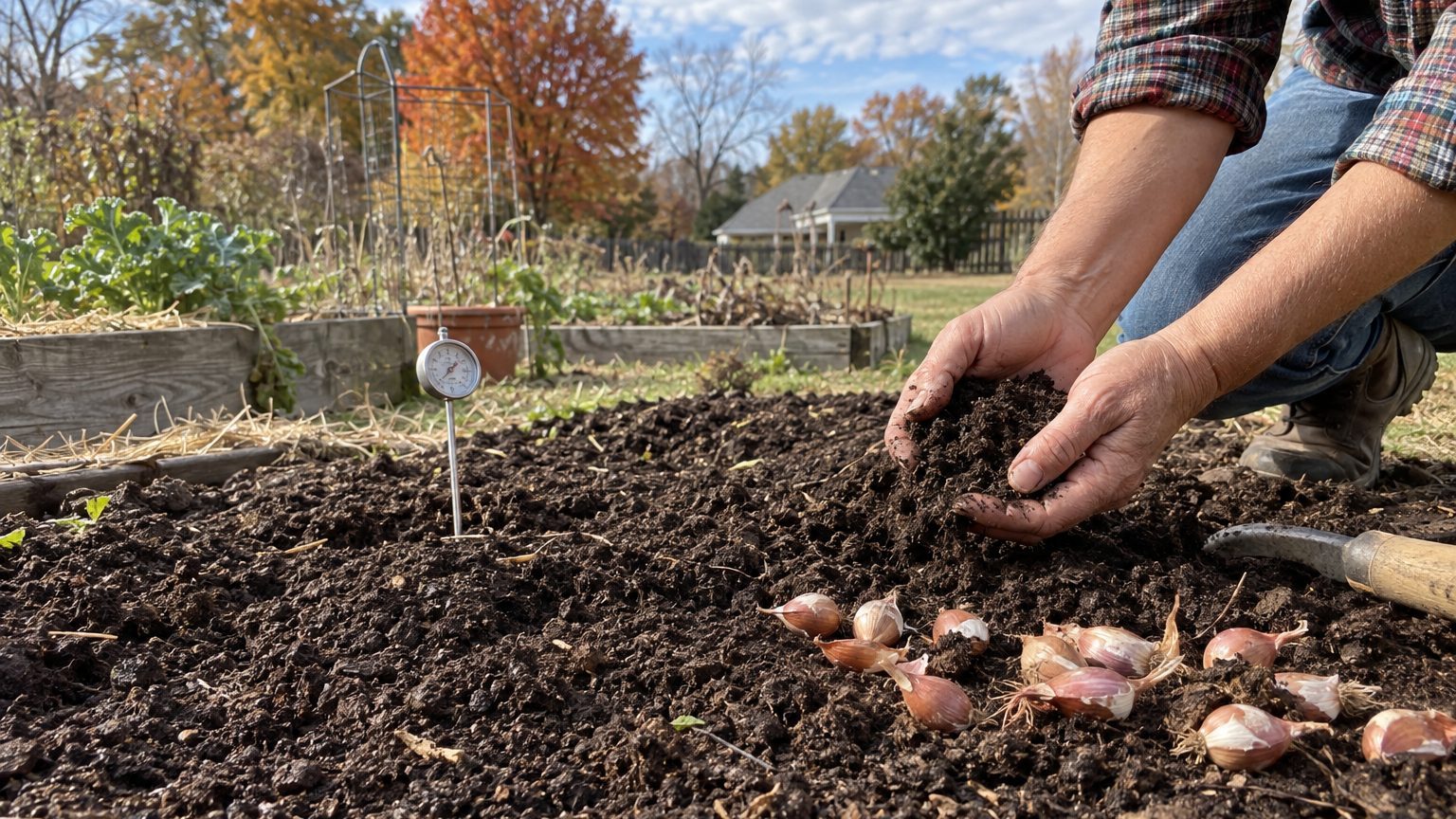
Grab a handful of soil from planting depth and squeeze it. If it crumbles when you poke it, the bed is ready. If it holds a slick, shiny ball or leaves water on your palm, wait. Beds raised even a few inches drain and warm sooner than flat ground, which is why so many Puget Sound gardeners plant shallots in raised rows or mounded beds.
Eastern Washington runs on a different clock. Beyond the Cascades the season is far shorter, and the frost window above does not apply. Statewide, the USDA Plant Hardiness Zone Map (2023 edition, based on 1991-2020 normals) places Washington anywhere from zone 4a to 9a. That is a huge spread, and one statewide planting date would be meaningless. Look up your own county’s frost data rather than borrowing Seattle’s.
Shallots share most of their planting logic with garlic. Autumn planting, curing, storage and allium rotation all work much the same way, and the garlic section of this site covers them in detail. The differences for shallots are practical. Each set multiplies into a cluster, so spacing has to leave room for that. The bulbs are smaller and shallower-rooted, so they dry out and rot faster than a garlic clove would. And shallots are less forgiving of waterlogged ground in their first weeks.
For the fundamentals of the crop itself, including how one bulb becomes a handful, see Growing Shallots: One Bulb In, a Handful Out.
How long the season lasts here
Both ends of the Seattle-area window come from the same NOAA station and the same probability band. The first fall frost arrives between November 13 and November 30. Subtract the dates and the frost-free stretch runs from about 240 days (March 18 to November 13) to about 276 days (February 27 to November 30).
| Marker | Date range | Source |
|---|---|---|
| Last spring frost | February 27 to March 18 | NOAA NCEI 1991-2020 Normals, station USW00024233 |
| First fall frost | November 13 to November 30 | NOAA NCEI 1991-2020 Normals, station USW00024233 |
That is a long window for a bulb crop, and what it allows matters more than the number. A long window means the first sowing is not your only chance. You can plant a spring batch and follow it with a second, later batch for a staggered harvest. You can also plant in autumn and spring in the same year to see which one your soil prefers. The succession sowing guide on this site shows how to space those plantings so the harvest does not all arrive in the same week.
Transplanting also becomes a real option. With a window this long, seed-grown shallots started indoors or in a cold frame have time to size up after they go outside. The catch is the root check. Before moving a transplant, lift one from its cell and look. White roots reaching the edges of the plug mean it is ready. A tangled, brown mass means it has waited too long. A short-season territory forces you to skip that step and sow once. Western Washington gives you the luxury of waiting for the roots.
Compare that with the cold edge of the continent. In Growing Shallots in Newfoundland and Labrador, the first sowing really is the only one, and every week counts. Western Washington lets you be more patient. A wet, cold spring can eat three weeks of that patience, but the window still leaves room for a second try.
None of this describes eastern Washington. The two frost dates here belong to a maritime station. Your county’s extension office can give you frost probabilities for your own town.
Heat and water in Washington
The question here is autumn against spring, and the winter low decides it. At the Seattle reference station, the mean daily minimum of the coldest month is 37.1°F (NOAA NCEI 1991-2020 Normals). That is a mild winter. The ground in the western lowlands seldom freezes hard or stays frozen, so autumn-planted sets are not threatened by cold itself. A milder winter is what gives autumn planting its payoff: roots form before the cold, and the bulbs come up larger and earlier than spring-planted ones.
The danger in western Washington is wetness, not cold. Winter ground that stays saturated rots autumn sets from the base up. That is the reason to plant in raised beds or on ridges, and to avoid heavy clay low spots. Where the ground freezes hard and stays wet (higher elevations, and the colder parts of a state that spans zones 4a to 9a), autumn-planted sets rot or heave out of the soil, and spring planting is the safer call.
What the figures I do have show is a maritime climate. West of the Cascades, the usual summer trouble is not scorching heat. It is a cool or damp stretch that slows ripening and invites disease. Downy mildew on the leaves and neck rot in bulbs that never dried properly are the problems to watch for. Space plants so air moves between them, water at the base instead of overhead, and pull the crop when the tops fall over, not weeks later.
The dry side of the state flips the problem. High-desert summers can be hot, and the soil dries quickly, so shallots there need steady irrigation and some shade or mulch at the root zone. For a hot, humid contrast to both, look at Growing Shallots in Mississippi, where heat and humidity pull the crop in a different direction altogether.
Harvest and curing matter more in a damp climate than most gardeners expect. Cure shallots somewhere dry, airy and out of the rain, and inspect every bulb before storing it. A soft neck or a moldy base ends the question, and that bulb does not go in storage. A firm-looking bulb is not proof of a sound one. Check the neck and base, and keep checking through the winter. Storage and curing details are covered in the garlic section of this site, and the same principles apply to shallots.
Which shallots suit Washington
The only recommendation that means anything is one from a trial run in your own conditions. A name pulled from a catalog tells you nothing about how it behaves in Puget Sound’s wet spring or an Okanogan summer. Instead, the Washington State University Extension office serving your county is the place to ask which varieties have been tried locally.
Reason by type from the facts above. For western Washington, where the main risks are wet soil and damp summers, disease resistance and drainage come first. Look for types that cure readily and have a reputation for sound necks. Bulb-grown (multiplier) shallots planted in autumn give the earliest, largest harvest where winters are mild. Seed-grown types suit a gardener who wants to use the long window for transplanting, and they avoid carrying disease over from last year’s bulbs.
- Wet, mild west side: disease resistance first, then types that cure well, planted in raised beds with good airflow.
- Cold or high-elevation sites: the earliest types, planted in spring so they finish before the season closes.
- Hot, dry east side: types given airflow and some shade or mulch at the root, with dependable irrigation.
When you buy planting stock, choose bulbs that are firm and dry, with no soft spots, and avoid anything from a source that cannot tell you where it was grown. Keep shallots out of beds that held onions, garlic or leeks recently. Rotation across the allium family keeps soil-borne disease from building up, and the garlic pages here explain how to plan it.
Common questions
Can I plant shallots in autumn in western Washington?
Often, yes. The coldest-month mean minimum at the Seattle reference station is 37.1°F, a mild winter. The risk is soggy soil, not freezing, so raised beds and good drainage matter more than mulch depth.
Does the February 27 to March 18 frost window mean I can plant then?
Not necessarily. That range is the last spring frost at station USW00024233, and frost is only a proxy. Cold, wet soil and low light can hold spring crops back well past it. Plant when the soil crumbles in your hand.
Do these dates apply east of the Cascades?
No. They describe a maritime station in western Washington. Eastern Washington is high desert with a far shorter season, and the state spans USDA zones 4a to 9a (2023 map). Ask your county extension office for local frost data.
How can I tell if my cured shallots are safe to store?
Inspect each bulb by hand. A soft neck or a moldy base means the bulb is out, however firm the rest looks. No curing method guarantees a keeping time, so check stored bulbs regularly and discard any that soften, sprout or smell off.