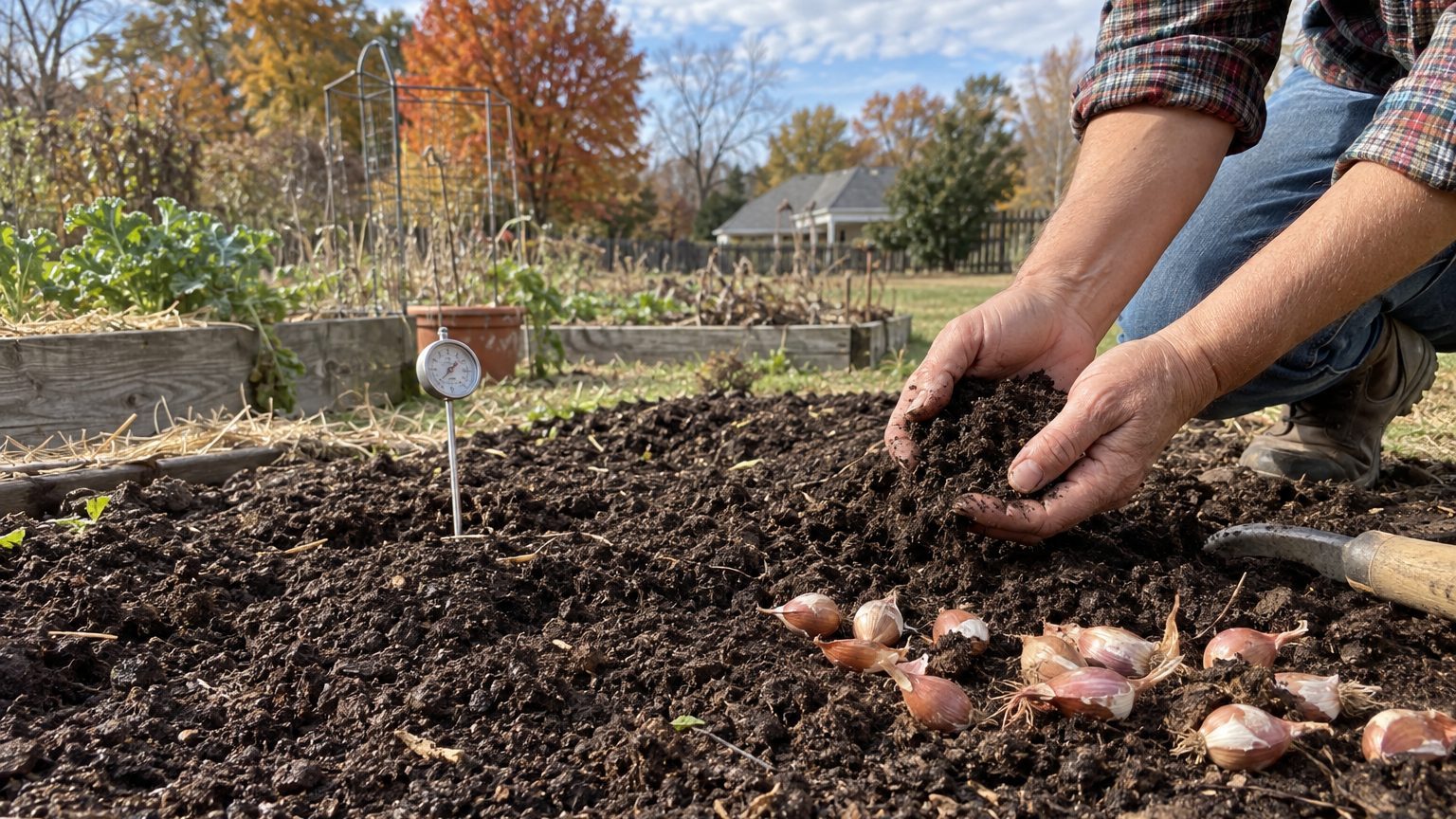

In Mississippi, autumn planting is the natural fit for shallots, with spring as the fallback for wet ground or a missed window. The coldest month at the Jackson reference station averages a nightly low of 36.6°F, so winter rarely hurts a bulb in the ground. Wet soil and humid summers do the damage. Every date below comes from one airport station, so shift it for your county.
When the soil is warm enough in Mississippi
Reading the frost date
The last spring frost at the NOAA station behind these figures falls between March 6 and March 22. That range comes from the NOAA NCEI 1991-2020 Climate Normals, using the 32°F freeze probabilities in the 30 to 70 percent band. It is a probability, not a promise, and a late freeze outside the band can still happen. Treat it as the reference-city figure, not a statewide rule.
Gardens outside the airport run later. Suburban and rural plots typically see the last spring frost one to two weeks after the airport does, and more than that at elevation. If you garden in the northern counties, add the extra time. Your county extension office can tell you how far your ground sits from the station.
Why soil, not frost, sets the day
The frost date is a proxy. Shallots planted in spring wait for workable, warming soil, and the soil warms after the frost risk ends, not on the same day. A bed can be frost-free on paper and still be cold, soggy clay that holds a set in place and invites rot rather than rooting.
A cheap soil thermometer settles the question better than a calendar. Push it a few inches down in the morning, take readings over several days, and watch the trend rather than a single warm afternoon. This page does not carry a verified soil-temperature threshold, so ask your state extension service for the number it recommends. Raised beds and amended, well-drained ground warm sooner than heavy clay, which can lag by days.
What carries over from garlic, and what does not
Garlic has its own section on this site, and the autumn planting logic, mulching, curing and allium rotation are covered there in detail. The shared practice is the same: plant in autumn after the heat breaks, mulch lightly, and keep alliums from following alliums in the same bed. What differs for shallots is that each set multiplies into a cluster. A single bulb in becomes a handful out, so spacing has to leave room for the clump. Shallots also sit shallow, with the tip at or just below the surface, and a deeply buried set is slower to emerge and more prone to rot in wet ground. The Growing Shallots: One Bulb In, a Handful Out guide covers the crop in general.
How long the season lasts here
The arithmetic
Both frost dates come from the same NOAA station. Here they are side by side:
| Event (NOAA NCEI 1991-2020, 32°F, 30-70% band) | Earliest | Latest |
|---|---|---|
| Last spring frost | March 6 | March 22 |
| First fall frost | November 7 | November 22 |
Count from the latest spring date (March 22) to the earliest fall date (November 7) and you get 230 days. Count from the earliest spring date (March 6) to the latest fall date (November 22) and you get 261 days. So the frost-free window at the reference station runs from roughly 230 to 261 days. Most backyards will see less, so check your county rather than assuming the airport applies.
What a window this long allows
A frost-free window is not the same as the shallot growing period. Shallots live through the cool months, so the crop runs well past the frost-free dates on either side. What the long window buys you is room to split the planting.
Here, a single planting is not the only option. A main autumn planting can be backed by a smaller spring planting, which hedges against a winter wet enough to rot some of the first batch. Staggering sets over a few weeks also spreads the harvest and the curing work, which matters in a humid state where a whole crop coming out in one wet week is a problem. The succession sowing guide on this site walks through how to stagger plantings without crowding beds.
Neighboring states run on different clocks. The Growing Shallots in South Carolina and Growing Shallots in Virginia pages show how the same crop shifts as you move east and north.
Heat and water in Mississippi
The figures this page does not have
The number of days above 90°F and the summer rainfall total would normally anchor this section. This page does not carry verified values for either, and a guessed figure would be worse than none. Pull both from the NOAA normals for the station nearest you, or ask your county extension office. What follows rests on the figures that are confirmed.
Mississippi summers are hot and humid enough that the question for a shallot grower is rarely whether it will be hot. It is how to get the crop dry, cured and out of the ground before that heat and moisture work against it.
Winter decides autumn against spring
The mean daily minimum of the coldest month is 36.6°F at the Jackson reference station (NOAA NCEI 1991-2020 normals). That is an average, so individual nights still dip below freezing. But it tells you the ground at Jackson rarely freezes hard and stays frozen. The freeze-thaw cycle that heaves autumn sets out of northern soil is much less of a threat here.
The USDA Plant Hardiness Zone Map (2023 edition, built on 1991-2020 normals) places the state in zones 7b to 9a. That system rests on a single variable, the average annual extreme minimum, and the range tells you the north and south differ. Use the Jackson figure for planning and treat other regions as colder or milder.
In a milder winter, autumn planting delivers what it is grown for: bulbs that root early and size up larger and sooner than spring sets. Where the ground freezes hard and stays wet, autumn sets rot or heave and spring is the safer call. Here the hazard is rot from standing water, not heave, so drainage matters more than depth. Raised beds, loose soil and a light mulch protect autumn sets. Where winter soil sits wet, shift to spring planting rather than gamble the whole crop.
Summer humidity and the curing problem
Shallots need steady moisture while they bulb, since their roots are shallow, and then drier conditions as the tops yellow and fall. Cut back irrigation once the tops start to go. A bulb finishing in wet, warm soil is an open invitation to rot.
Curing is where humidity bites hardest. Cure harvested bulbs in a shaded, airy, dry place, with air moving around every cluster. Garlic curing is covered in the garlic section of this site, and shallots follow the same logic with smaller, tighter bulbs. When you handle them, inspect each one. A soft neck or a moldy base ends the question: that bulb is out, however sound the rest of it looks. A bulb that looks fine can still be going bad inside, so appearance alone never proves one sound. This page makes no promise about how long cured shallots will keep, because that depends on your conditions and your inspection.
Which shallots suit Mississippi
This page names no cultivar, and that is deliberate. It cannot source a list of varieties trialled in Mississippi, and a variety name that turns out to be wrong or unavailable is the first thing a gardener notices. The varieties tested where you live are the only recommendation that means anything. The Mississippi State University Extension is the place to ask, and your county office can narrow it to your soil.
What this page can do is tell you which qualities to look for, reasoning from the state’s conditions.
Humidity comes first. In a damp climate, disease resistance is the first criterion, ahead of flavor, color or size. Fungal problems that a dry summer would suppress run freely here, so favor types with a record of holding up in humid conditions, and buy sets from sources that sell disease-free stock. Inspect every set before planting and discard any that are soft or moldy at the base.
Heat comes second. Because summers are hot, types that mature before peak heat have an edge over late finishers, and any type does better with airflow and shade at the root. Give each cluster room, mulch to keep the soil cooler, and avoid crowding that traps moisture around the necks.
There is also the choice between set-grown types, which come from bulbs and multiply into clusters, and seed-grown types, which start from seed and are usually transplanted or sown directly. Set-grown types suit autumn planting and are the usual starting point. Seed-grown types give you more control over timing, and your extension service can say which are worth the effort locally.
Whatever you choose, rotate. Keep shallots out of beds that held onions, garlic or leeks recently, and follow the allium rotation guidance in the garlic section for the reasoning. The interval your extension service recommends is the one to follow.
Common questions
When should I plant shallots in Mississippi?
Autumn is the natural fit given the mild winter at the Jackson reference station, where the coldest month averages a nightly low of 36.6°F. Spring planting is the fallback if winter ground stays wet or you missed autumn. For spring, wait for workable, warming soil rather than a frost date alone. The last spring frost at the NOAA station runs March 6 to March 22, and rural gardens typically run one to two weeks later.
How do I know if a cured shallot is safe to store or eat?
Inspect it. A bulb that is soft at the neck or moldy at the base is finished, and the rest of the bulb looking fine does not change that. Appearance alone never proves a bulb sound, and this page does not give a keeping time, because storage conditions vary too much to promise one.
Which variety should I grow?
Ask Mississippi State University Extension for the types trialled in your area. Put disease resistance first because of the humidity, then heat tolerance and early maturity. The zone range of 7b to 9a means the northern and southern parts of the state do not behave alike, which is one more reason a local recommendation beats a general one.