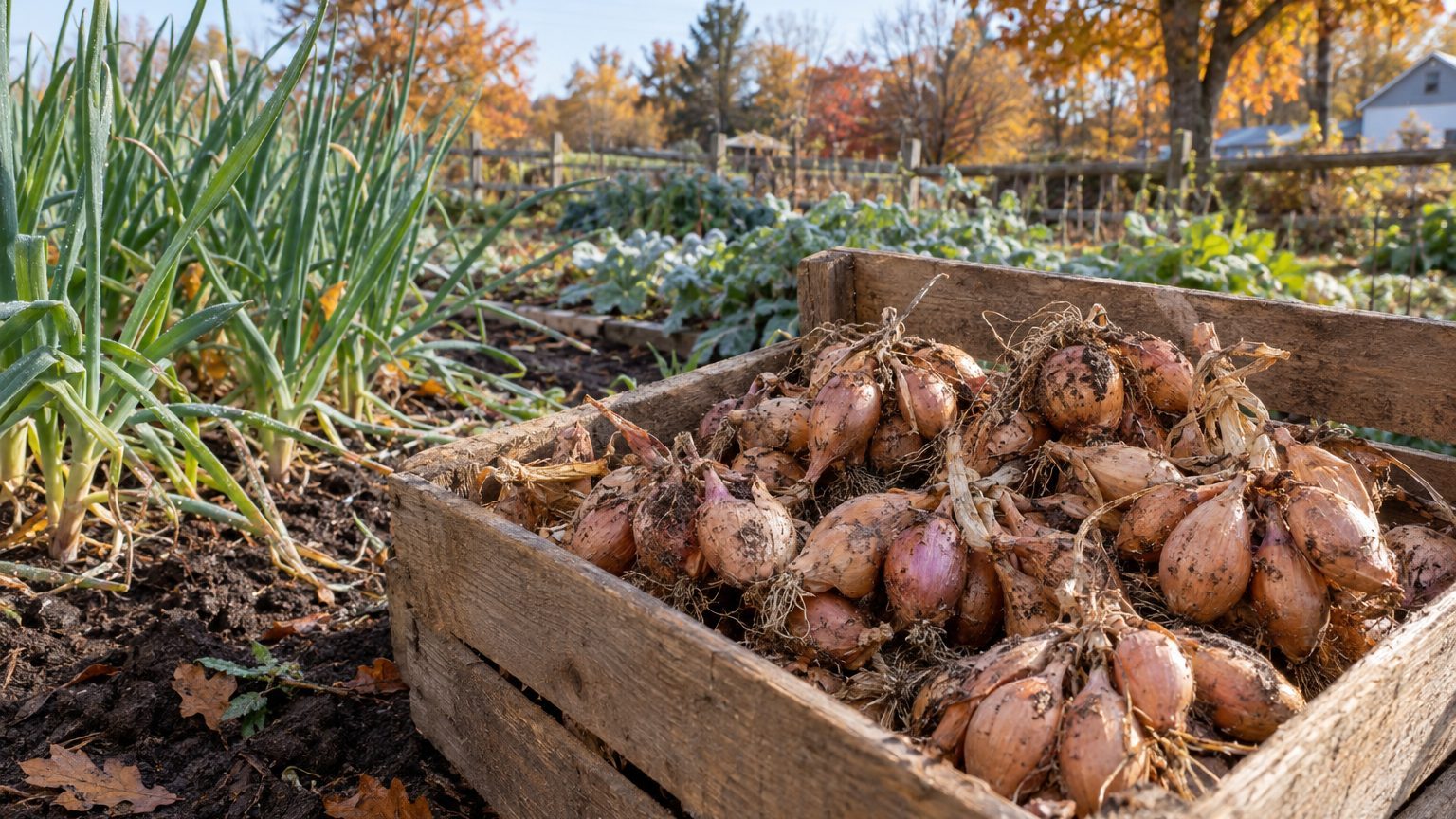

For most of California, the best shallots are bulb-grown types (the kind sold as small bulbs and planted in fall) in red, gray, or yellow, because they finish before summer heat. Seed-grown shallots suit the cold interior and higher ground better. Along the coast and in the south, where freezes don’t occur, fall planting and early-summer harvest are the pattern to build around.
The short answer for California
Choose by type, not by a brand name on a seed rack. California doesn’t have one shallot climate, but the Los Angeles reference station (NOAA 1991-2020 Climate Normals) shows what the mild end looks like: no freeze occurs in an average year, zero days at or below 32°F in 30 years of daily records, and a frost-free season listed as 365 days. The coldest month there still averages a daily minimum of 49.1°F. Frost isn’t the constraint in coastal and southern gardens. Heat, drought, and water restrictions are.
Why bulb-grown types lead in the mild regions
A shallot planted as a bulb has a head start. It already holds the energy to push roots and leaves, then splits into a cluster of new bulbs. With no freeze to stop it, that growth can run through the cool months, and the plant is ready to cure as the weather warms and dries. Seed-grown types take longer to reach size, and the extra weeks push them toward the hottest part of the year. Where summer heat is the limit, that’s the wrong trade.
Matching type to place
The table sets out the decision. Treat it as a starting point for the state as a whole, not a county-level prescription.
| Type | Best fit in California | Main risk |
|---|---|---|
| Bulb-grown, red or gray skinned | Coast, southern valleys, mild foothills, fall planting | Planted too late, bulbs stay small when heat arrives |
| Bulb-grown, yellow or “banana” shaped | Same areas; also colder interior with mulch | Soggy soil in a wet winter |
| Seed-grown | Northern California, Sierra foothills, higher elevation, spring sowing | Slow to size up where summers turn hot early |
Start with the planting window, then pick the type that fits it. The When to Plant Shallots in California page covers timing, and the broader Growing Shallots in California guide covers the crop from start to finish.
What will not work here
Spring planting in the south is the most common mistake. Gardeners in cold states plant in spring because the ground thaws late. In a place with 365 frost-free days, the same habit means shallots are just getting leafy when summer heat arrives, and the plant switches to finishing mode with a small bulb. You get thin necks and tiny cloves, not the plump clusters the photos promised.
Slow seed-grown types are the second casualty in hot, dry interior and southern summers. They need a long stretch of steady growth, and the weeks they need are the same weeks that heat and water limits squeeze. A gardener who irrigates once a week by habit will feel this twice: the shallow roots dry out between waterings, and the bulbs stall. Drought rules and watering restrictions make it worse. If your supply is limited, you can’t count on rescuing a late crop with extra water.
Mild winters also remove something northern gardeners take for granted. At the Los Angeles reference station the coldest month’s average minimum is 49.1°F, so there is no hard cold to hold plants still or to reset the garden. Shallots keep growing, which helps, but weeds, aphids, and leaf diseases don’t get a winter break either. A planting that stays wet through a damp coastal winter is asking for rot, so tight spacing and heavy soil are the combination to avoid. Raised rows or well-drained beds, with room between bulbs for air, do more good than any variety choice.
Don’t carry this advice north unedited. Northern California, the Central Valley, and the Sierra all freeze. A bulb-grown shallot planted in October in a Sierra garden may face a hard winter with no snow cover, and a heave-prone, freeze-thaw soil can push shallow bulbs out of the ground. Those gardeners need mulch, a later planting date, or a switch to spring sowing. The advice that works for Los Angeles can fail within a few hours’ drive.
Finally, storage types matter more than they sound. Some shallots keep for months once cured; others are best used within weeks. In a warm, humid kitchen or a hot garage, even a good keeper will sprout or soften early. If you can’t store at cool, dry, ventilated conditions, plant for fresh use and don’t expect a long shelf life from any type.
What changes across California
The USDA Plant Hardiness Zone Map (2023 edition, based on 1991-2020 normals) places California in zones 5a through 11a. That’s a spread of more than six zones inside one state, and it means there is no single answer. The zone system is built on one variable: the average annual extreme minimum temperature. It tells you about winter survival, not about summer heat, rainfall, or day length, all of which matter for shallots.
In practice, that spread splits the state into rough shallot regions. On the southern coast and in low-elevation southern valleys, the frost-free reality described above holds. Fall planting of bulb-grown types is the sensible default. In the Central Valley, winters bring freezes but summers bring serious heat, so the window between cold and heat is the one to catch. Plant early enough to size up, harvest before the hottest weeks. In northern California and the Sierra, the cold comes first and the season is shorter, so gardeners should lean toward mulched fall plantings of hardy bulbs or spring plantings of seed-grown types.
If you garden at altitude, shift everything later and expect slower growth. Cool springs delay the leafy stage, but the summer is milder, so seed-grown types that struggle in the lowlands can do well. A garden at the top of a ridge and one in the valley below it can sit in different zones, so don’t assume your neighbor’s calendar fits yours.
To find your own zone, use the USDA Plant Hardiness Zone Map and look up your ZIP code. Don’t guess from the state average, and don’t rely on a friend in another county.
Where to check this for your own county
Your state extension service is the best next stop. In California that is University of California Agriculture and Natural Resources, which runs local offices and Master Gardener programs across the state. Those volunteers answer questions from people growing in the same soil and weather you are.
Two things are worth looking for there. The first is a local planting calendar for onions, garlic, and shallots, or for alliums in general, written for your county or region. Dates vary a lot between a coastal county and an inland one, and a local calendar will reflect that. The second is any list of varieties trialled in your county. A trial tells you what actually produced, cured, and stored in your conditions, which is more useful than a catalog description written for the whole country.
Be direct with yourself about what this page is. It’s the state-level view. A county recommendation beats a state one every time, because California contains deserts, fog belts, mountain valleys, and irrigated farmland with very different growing conditions. Where the extension office’s advice and this page disagree, follow the extension office.
If your county office has no shallot-specific material, ask about onions and garlic. Shallots share much of their timing and disease picture with both, and staff can often tell you which they’d choose for your area. Many offices also run plant clinics or answer questions by phone or email, so a short note with your town and soil type can get you a more specific reply than any general guide.
Checking this against your own garden
Your own observations outrank every date on this page. Three are worth watching, and none needs a gadget.
- Soil warmth by feel. Push your hand into the bed in the morning. If the soil feels cool and damp, roots are still working and growth is steady. If it feels warm and dry a few inches down, you’re close to the point where shallots stop sizing up. A bed that warms early marks a warm microclimate, such as a south-facing wall or a sheltered corner.
- The first true leaves. Watch how quickly new green leaves appear after planting. Fast, upright growth means the plant is settled and your timing fits. Slow, yellowing tips suggest the soil is too wet or too cold, a clue about drainage and cold air pooling in that spot.
- The first flower stalk. A stalk rising from the center means the plant is bolting. Bolted shallots rarely make good storage bulbs. If it happens often, your planting date or your garden’s temperature swings are off, and next year you should plant earlier or later by a few weeks.
Keep a simple note each season with the planting date, the date of those three signs, and the harvest date. After two or three years, those notes will describe your garden better than any county calendar.
Common questions
Can I grow shallots in Southern California without any frost?
Yes. At the Los Angeles reference station no freeze occurs in an average year, and the frost-free season is listed as 365 days. Shallots don’t need frost to grow. Plant bulb-grown types in the cooler months and harvest before peak summer heat.
Are seed-grown shallots a bad choice for California?
No, they’re a poor fit mainly where summers turn hot early. In northern California, the Sierra, and higher elevations, where seasons are cooler and spring sowing makes sense, they can work well.
Does one hardiness zone cover the whole state?
No. The USDA Plant Hardiness Zone Map (2023) lists California as 5a-11a. That’s a range, and your own zone depends on where you live. Look it up on the map rather than assuming.
Where can I find varieties that have been tested in my county?
Start with University of California Agriculture and Natural Resources and your local county office. Ask for the local planting calendar and any variety trials for onions, garlic, or shallots.