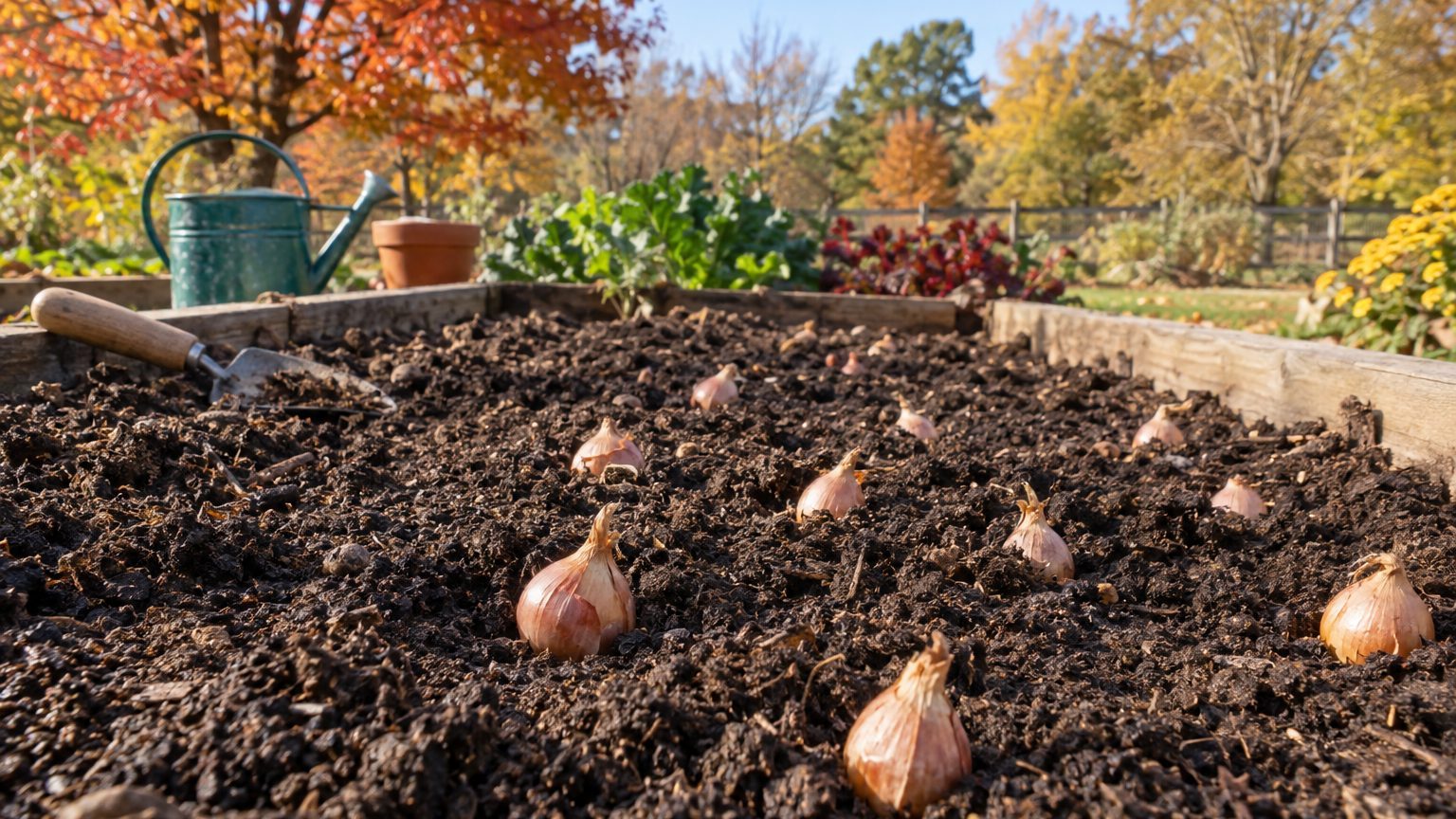

Plant shallots in Kentucky in fall, around the first frost window of November 2 to November 12, or in early spring once the soil can be worked, around the March 24 to April 4 window. Fall planting usually yields larger bulbs. Both windows come from Louisville weather records, though, and a rural garden may run on a tighter schedule. Here is how the numbers work and where they stop.
The short answer for Kentucky
Those two windows are not deadlines carved in stone. They are probabilities. NOAA’s 1991-2020 Climate Normals for the Louisville reference station give the dates when the chance of a 32°F freeze sits in a 30 to 70 percent band. So “March 24 to April 4” does not mean frost ends on a certain day. It means that in this stretch, another freeze is roughly a coin flip, and after it the odds fall away. The same logic runs in reverse in autumn. You can read the underlying data in the NOAA NCEI normals file.
| Marker | Window | What it measures |
|---|---|---|
| Last spring frost | March 24 to April 4 | Chance of a 32°F freeze in the 30-70% band |
| First fall frost | November 2 to November 12 | Chance of a 32°F freeze in the 30-70% band |
| Coldest month, mean daily minimum | 27.8°F | Average overnight low, not the record low |
What does that mean for a shallot? Shallots are not tender. They are closer to garlic than to tomatoes, and a late freeze does not need to scare you off a spring planting. The spring window is a landmark, not a gate. You do not have to wait for it to pass. You wait for the ground to be thawed, crumbly and not sticky with water, and that can happen before the window opens.
The fall window works differently. It marks the point where the comfortable growing season ends. Bulbs planted in fall need time to put down roots before the ground locks up, and the first-freeze window tells you roughly when the clock starts running out. Get bulbs in the ground by then and they enter winter anchored. Plant long after it and they sit in cold soil with little root to hold them.
The coldest-month figure helps too. The mean daily minimum in the coldest month is 27.8°F at the Louisville reference station. That is below freezing, but it is a long way from the deep cold that kills dormant alliums. Winter hardiness is rarely the problem here. Timing and soil moisture are.
One gap to state plainly: this page does not have a county-tested shallot planting date for Kentucky. What it has is the frost record, and the reasoning above is built on that. For variety choices that suit these windows, see The Best Shallots to Grow in Kentucky, and for the full growing picture, Growing Shallots in Kentucky.
What will not work here
Waiting for the last frost to pass before planting in spring is the first mistake. If you hold off until April or later because the window says April 4, you give up cool weeks that shallots need. They size up as days lengthen and temperatures climb, and Kentucky summers heat up fast. A bulb planted late has less time to build leaves, and leaf count largely decides bulb size. Late planters often end up with small, hurried bulbs.
The opposite error happens in fall. Planting too early, while the soil is still warm, can send up a lot of green top growth that winter then burns back. Hardy shallots generally recover, but you have spent energy for nothing. Anchoring the planting to the November 2 to November 12 frost window, rather than to the first cool weekend in September, keeps you out of that trap.
Kentucky’s humidity is the next problem. Summers are muggy, and that favors fungal disease in crowded foliage. Tight spacing that works in a dry Western climate leaves shallot clumps with poor airflow here, and the leaves stay wet longer after rain. Give each bulb real room, and do not pack a raised bed to the edges. A shallot multiplies into a cluster, so the crowding gets worse as the season goes on.
Drainage matters as much as the calendar. Winter in Kentucky is wet more often than it is hard-frozen, which means plenty of freeze-and-thaw cycles instead of one long deep freeze. Bulbs sitting in heavy, soggy clay through those cycles can rot before spring. A raised row or a bed amended to drain solves more shallot problems here than any date does. A thin layer of mulch after planting also smooths out the swings.
Finally, do not treat Louisville’s dates as your dates. The National Weather Service in Louisville explicitly warns that this urban station runs later in spring and earlier in fall than the surrounding rural parts of Jefferson County. Rural gardens should expect a tighter window. If your garden sits in open country, the figures here are a starting estimate, not a promise.
What changes across Kentucky
Kentucky is not one garden. The USDA Plant Hardiness Zone Map (2023 edition, built on 1991-2020 normals) places the state across zones 6a to 7a. That is a spread, not a single answer. The USDA system is built on one variable, the average annual extreme minimum temperature, so it tells you how cold the worst nights get. It says nothing directly about when frost arrives or how hot July runs.
Because the range is a range, there is no single planting date for the whole state. The Louisville dates on this page are a reference point. They describe one place. A gardener in a cooler part of the state, or at higher elevation, should expect fall freezes to arrive earlier and spring to loosen its grip later than the Louisville record suggests. For that gardener, the sensible shift is toward the early end of the fall planting window, or even a bit ahead of it, so roots are established before the ground freezes. In spring, expect to plant later than a Louisville neighbor, once the soil actually thaws and drains.
To find which zone your own garden falls in, use the USDA Plant Hardiness Zone Map and look up your ZIP code. Do not assume it from a neighbor’s or from the state average. Treat zone as a guide to winter survival, which shallots manage across this whole range, and the frost window as the guide to timing.
Where to check this for your own county
Your county’s extension office knows your conditions far better than a state-level page can. The University of Kentucky Cooperative Extension Service runs a presence in the counties across the state, and its staff and publications are the place to go for local detail.
Two things are worth looking for. The first is a local planting calendar. Ask whether the office publishes dates for fall-planted alliums such as garlic and shallots in your area, and how those dates compare with the Louisville-based windows given here. A county calendar accounts for your local frost record, your elevation and your typical soil. The second is the list of varieties that have been trialled in your county. A shallot that performs in a research plot close to you is a safer bet than one chosen from a catalog photo. Trial results also tell you which bulbs hold up under local disease pressure, which is a real issue in a humid state.
A county recommendation beats a state one. This page is built from a single reference station and a statewide zone range, and it cannot see the hollow that holds frost in your yard or the ridge that drains early. When the two disagree, go with the county’s advice.
If your county office does not publish a shallot-specific calendar, ask about garlic. The timing logic is close, and many extension offices have fall-planted garlic guidance even when shallots go unmentioned.
Checking this against your own garden
Your own observations outrank every date on this page. Two are worth watching, and neither requires equipment.
Soil warmth by feel. In spring, grab a handful of soil from planting depth. It should crumble rather than smear, and it should feel cool, not cold and heavy. If water squeezes out, wait. Do this in several spots. A sunny south-facing bed that crumbles a week before a shaded one has just shown you a real microclimate difference.
The first true leaves. Watch for the first real leaves on early weeds and on any shallots you planted in fall. Green shoots from fall bulbs breaking through the mulch show your garden has warmed enough for growth. Early weeds sprouting in one bed and not another point to a warmer pocket.
Keep a simple notebook for two or three seasons. Dates written down from your own yard will correct the Louisville numbers better than anything printed here.
Common questions
Is fall or spring better for shallots in Kentucky?
Fall planting generally gives larger bulbs because roots establish before winter. Spring planting works when fall slips by, as long as the ground is workable early enough.
Do I have to wait until after the last frost in spring?
No. Shallots tolerate cold, and the March 24 to April 4 window marks a 30 to 70 percent chance of a 32°F freeze, not a start date. Plant once the soil is workable.
Do the Louisville dates apply to my rural garden?
Only as a starting point. NWS Louisville warns the urban station runs later in spring and earlier in fall than surrounding rural Jefferson County, so rural gardens should expect a tighter window.
Which hardiness zone is Kentucky?
The USDA Plant Hardiness Zone Map (2023) shows 6a to 7a across the state. Look up your ZIP code on the USDA map for your own zone, and remember zones measure winter cold, not frost timing.