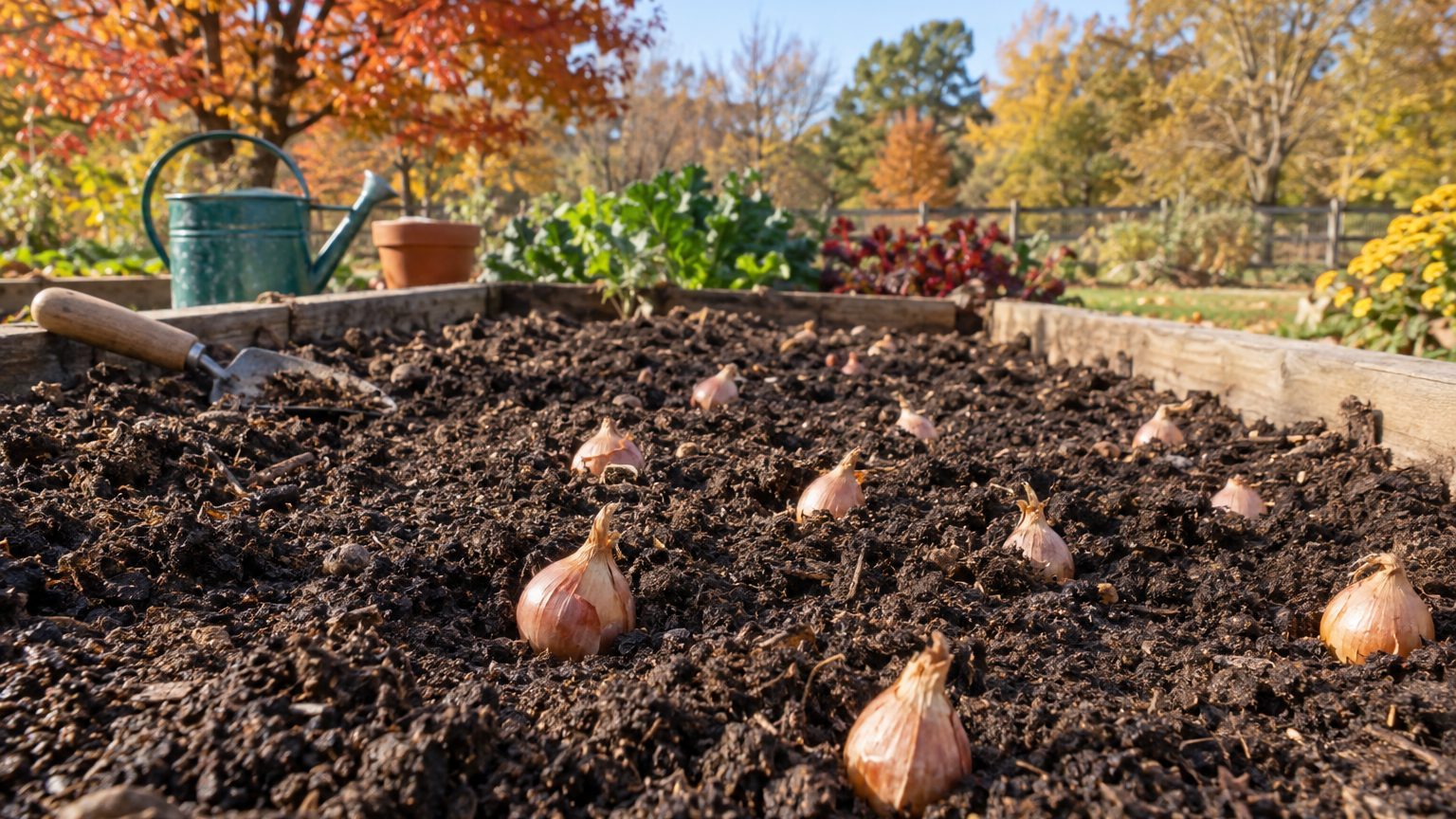

In frost-free coastal and southern California, shallots go in the ground in fall. Where winters freeze, as in the Central Valley, northern California and the Sierra, planting shifts to late winter, as soon as the soil can be worked. This page has no dated statewide window to give you, and the reasons say more than a date would.
The short answer for California
Start with the frost numbers, because they are unusual. NOAA’s 1991-2020 Climate Normals for the Los Angeles reference station show that no freeze occurs in an average year. The daily records show zero days at or below 32°F across 30 years, and the frost-free season is listed as 365 days. Spring and fall frost dates are normally a probability: the date after which a freeze becomes unlikely. Here the probability is simply “none” in a typical year, at that one station. That is a statement about an average year, not a guarantee for every winter and every neighborhood. It is also not a date you can count back from. You can check the source data in the NOAA NCEI normals.
So on the frost-free coast and in the south, the calendar is set by heat and water, not cold. The coldest month there averages a daily minimum of 49.1°F. Shallots do not stall at that temperature. Planting in fall lets the roots and leaves grow through the mild months, so the plant is large before summer heat arrives and bulbs swell as days lengthen. A shallot set pushed in late, with little cool season left, has less time to build the foliage that feeds the bulb.
The shallots grown from sets and the ones grown from seed follow different clocks, and your variety matters too. For help choosing, see The Best Shallots to Grow in California. For the full growing picture, start with Growing Shallots in California.
What this page does not have is a frost date for the places that do freeze. The sources behind it give no spring or fall freeze date for northern California, the Central Valley or the Sierra, and borrowing Los Angeles for them would be wrong. If you garden there, treat “late winter, when the soil is workable” as a direction, not a date. The county calendar covered further down is the right tool.
What will not work here
Counting back from a frost date fails first. The usual advice (“plant four to six weeks before the last frost”) needs a last frost, and the reference station has none. Gardeners on the coast who wait for a frost signal will wait indefinitely, and plant late by default.
Late planting is the real trap. With a 365-day frost-free season and a coldest-month low of 49.1°F, nothing in winter tells you to hold off, and nothing stops you from putting sets in during spring. Spring-planted shallots in warm regions race into summer heat with a small plant and a short growing window. The bulbs come out small. Shallots tolerate a lot, but they do their best work in cool weather.
A weekly-watering habit fails too. Shallots have shallow roots, so a deep soak once a week leaves the top few inches bone dry between waterings, exactly where the roots live. In a hot, dry summer, or under a drought restriction that limits irrigation days, that rhythm produces stressed plants and split or stunted bulbs. The workable approach is to time planting so most of the growth happens in the wetter, cooler months, then taper water as the tops begin to fall over. A fall start also keeps your heaviest watering out of the months when restrictions bite.
Then there is the biggest mistake: treating Los Angeles as California. The state’s USDA hardiness range runs from 5a to 11a, and a gardener in the high Sierra faces ground that freezes solid for months. Sets planted in fall on a mild-coast schedule there can heave out of the soil or be damaged by hard freezes before they root. The same advice that suits a coastal garden in October would be a poor bet at altitude.
The last failure is borrowing a calendar from another state. The extension materials in this page’s source set include maintenance calendars for lawn grasses from a South Carolina university. They cover turf species, not shallots, and they describe a different climate, so none of their dates appear here.
What changes across California
The USDA Plant Hardiness Zone Map (2023 edition, built on 1991-2020 normals) places California anywhere from zone 5a to 11a. That is seven numbered zones, and each full zone is a 10°F step in average annual extreme minimum temperature. There is no single California answer. The spread is wider than the gap between Minnesota and southern Florida’s mildest corners would suggest at a glance, and it all sits inside one state.
That zone is built on one variable only, the coldest night of a typical year. It says nothing about how hot your summer gets, how dry it runs, or how much water you are allowed to use. For shallots, which care a great deal about all three, the zone is a starting filter, not a planting date. Use it to sort yourself into a rough group, then let the county calendar do the finer work.
Readers in northern California, in inland valleys that see freezes, or at elevation should shift in a predictable direction. Plant later in the season than the mild coast does, aim for the point when the soil can be worked, and expect harvest to come later in summer. Where the ground freezes hard, a fall planting needs enough time to root before the freeze, and a gardener who cannot count on that is better off waiting for late winter.
I will not tell you which zone you are in. Zones shift block by block with elevation and slope, and a map lookup by address beats any guess. Check the USDA Plant Hardiness Zone Map for your location, then compare it to the range above to see where you sit in the spread.
Where to check this for your own county
The best next stop is University of California Agriculture and Natural Resources, the state’s land-grant extension service. It is listed in the USDA NIFA directory of land-grant extension programs, and it runs county offices across California. From its pages, find your county office and the Master Gardener program attached to it.
Once you are there, look for two things. The first is the local planting calendar for alliums: onions, garlic and shallots, the crops that share a schedule. A county that spans coast and foothills may even list separate windows. The second is the list of varieties trialled in your county. A shallot that performs in a cool coastal fog belt can sulk in inland heat, and trial results tell you which ones were actually grown and measured nearby.
A county recommendation beats a state one, every time. This page is the state one. It gives you the frost facts, the zone range and the reasoning, but it cannot know whether your valley cools down by October or your foothill town stays warm into November. Local extension staff watch those patterns year after year and publish dates tuned to them.
If the county office has no shallot-specific sheet, ask for the onion or garlic calendar and the name of a local grower or Master Gardener who keeps a shallot bed. A neighbor with three seasons of results is worth more than a general chart.
Checking this against your own garden
Your own observations outrank every date on this page. Three are worth tracking, and none needs a gadget.
- Soil warmth by feel. Push your hand a few inches into the bed in the morning. Soil that feels cool and slightly damp suits planting. Soil that feels warm even at dawn tells you your microclimate is hot, and planting should wait or shift earlier in the season.
- The first true leaves. After sets are in, note how many days pass before green shoots show and fresh leaves unfold. Fast growth means your site stays mild and roots quickly. A slow start suggests cold soil, shade or a spot that stays wet.
- Flower stalks. If any shallots, onions or garlic in your neighborhood send up flower stalks early, you have learned that stress or temperature swings hit your site harder than the general advice assumes. Plant earlier or choose differently next season.
Write the dates down once a year. After two or three seasons, you will have a calendar that fits your own yard better than any county sheet can.
Common questions
Can I plant shallots in winter in southern California?
In frost-free areas, winter is mild enough that nothing freezes in an average year, but earlier in fall gives plants more cool growing time. Late planting costs bulb size.
Does it freeze everywhere in California?
No. The Los Angeles reference station records no freeze in an average year, but northern California, the Central Valley and the Sierra do freeze.
What is California’s hardiness zone?
The USDA map lists a range from 5a to 11a across the state, so no single zone applies.
Is there one statewide planting date?
No. This page gives a direction by climate, and your county extension office is the source for dates.