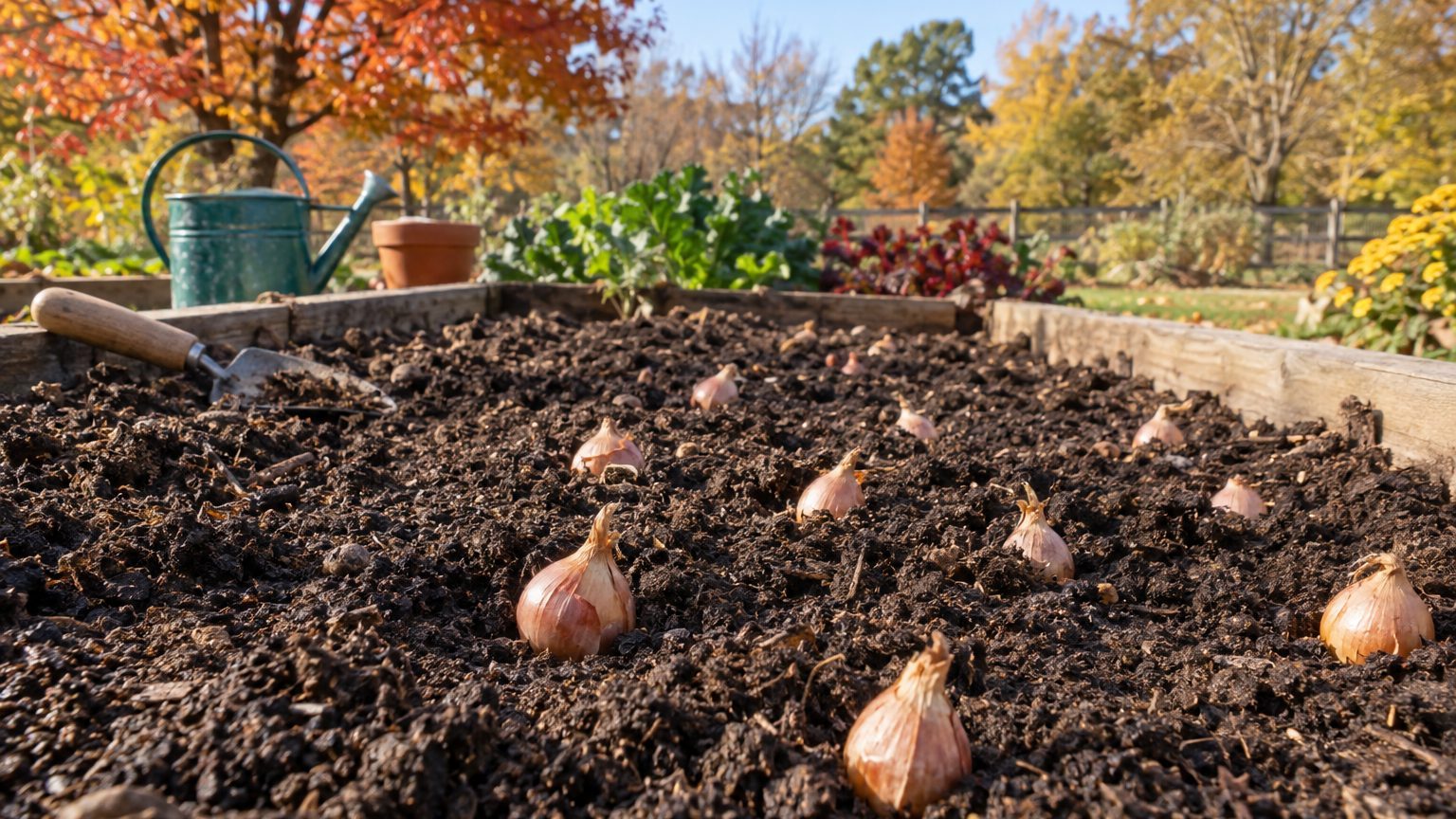

Most Iowa gardeners get the best results planting shallot sets in spring, as soon as the ground can be worked, which usually means mid-April. Fall planting in late October also works if you mulch well. Both windows hang on frost dates that are odds, not promises, and the details below show how to read them.
The short answer for Iowa
The spring window opens around April 12 to April 24, the range in which NOAA’s 1991-2020 Climate Normals put the chance of a 32°F freeze between 30 and 70 percent. The fall window opens around October 14 to October 25, measured the same way. These dates describe a probability of a freeze, not a date when frost stops or starts. A hard freeze on May 3 is unusual, but it happens.
Why does that matter for shallots? They are one of the more cold-tolerant crops in the vegetable garden. Sets can go into the ground before the last freeze, because the roots establish in cool soil and the green tops shrug off a light frost. So the spring rule is not “wait until the last frost date.” It is “plant when the soil is workable, and treat the April 12 to April 24 band as the point where the odds of a damaging freeze are fading.” In a wet March, workable soil can arrive late. In a dry one, it can arrive early.
The airport station behind these numbers sits in a warm urban pocket. Iowa State Extension county figures from 1950 to 2021 run about 4 days later in spring and 10 days earlier in fall. Treat the NOAA dates as the optimistic end of the range. If your yard is outside a city, shift your expectations toward the later spring date and the earlier fall one.
How the two windows compare
Spring planting gives bulbs a full run of lengthening days. Frost-free time between the last spring and first fall freeze runs roughly half a year, so a standard shallot has room to size up and cure before cold returns. Fall planting trades that simplicity for a head start. Sets go in after the first fall frost window, root in cold soil, and sit dormant until the ground thaws. The goal is roots but no top growth before winter.
For variety choices that suit this calendar, see The Best Shallots to Grow in Iowa. For the full growing picture, from soil prep to curing, start with Growing Shallots in Iowa.
What will not work here
The number that rules out the most mistakes is 13.8°F. That is the mean daily minimum of the coldest month at the Des Moines reference station, and it is the figure that decides whether a plant survives winter. Bare shallot sets planted in fall and left uncovered are gambling against it. Those averages mean many nights are colder than 13.8°F, and the swings between thaw and freeze can push shallow sets out of the soil. Fall planting without a layer of mulch is the most common way to lose a crop here.
Planting too early in fall fails for a different reason. If sets go in during September, while the soil is still warm, they send up green tops. A freeze then burns those tops back and spends energy the bulb needed. Wait until after the October 14 to October 25 freeze window, and in colder parts of the state, plan on the earlier end, since Extension county records show fall freezes arriving about 10 days sooner than the airport data. Waiting for that first frost is a quiet way to get the timing right without a soil thermometer.
Planting too late in spring fails more slowly. Shallots form bulbs in response to lengthening days and warming weather. A set that goes in during May has less time to build leaf area before the bulbing signal arrives, and the bulbs come out small. Iowa’s season is long enough that a shallot is not in danger of running out of summer. The risk is missing the cool, early weeks when roots and leaves do their best work.
Seed-grown shallots are a separate case. They need a long start, which means sowing indoors in late winter and transplanting once the same frost window has passed or is passing. Direct-sowing seed outdoors in late spring is a poor fit for a state where the odds of a freeze last into the second half of April and the Extension figures push that slightly later still.
One more failure is trusting a single date. A frost band is a spread of years, and a March warm spell that tempts you to plant in the first week of the month ignores the fact that the freeze probability is still well above 70 percent then. Early planting works only when you can mulch or cover on short notice.
What changes across Iowa
Iowa does not have one answer. The USDA Plant Hardiness Zone Map (2023, built on 1991-2020 normals) places the state across zones 4b to 6a. That spread is built on one variable, the average annual extreme minimum temperature, so it says a lot about winter survival and nothing about humidity, soil type, or summer heat. The Des Moines figures in this article are one reference point, not a stand-in for the whole state.
In practice, the colder end of that range, generally the northern part of the state, means a later spring opening and a harder case for fall planting. If you are in the colder zones, lean toward spring planting, or plan to fall-plant with a thick mulch layer and accept some losses. In the warmer southern reaches, the spring window opens earlier and winter is less likely to heave the sets, so fall planting is a more forgiving choice there. This page does not have a date table by zone, and it would be wrong to invent one. The shifts are directional: later and more cautious as you go north, earlier and more flexible as you go south.
Local terrain moves things too. A low spot where cold air pools can hold a freeze longer than a south-facing slope a few hundred feet away. A bed against a house wall is warmer than an open field. These differences can outweigh the gap between neighboring zones.
Do not take a zone label from a neighbor, a seed catalog, or a plant tag. The USDA map is interactive and lets you look up your ZIP code directly. Check it yourself, and treat the result as a winter-hardiness guide, not a planting date.
Where to check this for your own county
A county recommendation beats a state one, and this page is the state one. It describes the broad pattern. It cannot tell you whether your county’s soil stays wet into late April, or how much colder your township runs than the reference station.
Start with Iowa State University Extension. Local extension offices serve every county, and their horticulture staff and Master Gardener volunteers know the area’s quirks. Two things are worth asking for. First, the local planting calendar for alliums, meaning onions and shallots, or the closest crop they publish for. Second, any varieties trialed in your county or a nearby one, because a shallot that performs well in a research plot two counties away is a better bet than a catalog’s general claim.
This page does not have a county-level shallot calendar to point to, so say that plainly when you call or write. Ask which frost dates the office uses, and whether those dates come from the long-term record or from recent years. The difference matters, since the 1950-2021 county figures and the 1991-2020 NOAA normals do not match, and the gap runs about 4 days in spring and 10 in fall.
Checking this against your own garden
Every date above gives way to what your own soil and yard are doing. Three observations are worth making each spring and fall, and none needs equipment.
- Soil by feel. Squeeze a handful from planting depth. If it crumbles when you poke it, it is workable. If it holds as a sticky, shiny lump, wait. This tells you how fast your soil drains and warms compared with a neighbor’s.
- Early green growth. Note when chives, dandelions, or grass in your yard first push true leaves. If the same spots green up days ahead of other parts of your property, those are your warm microclimates, and the best place for earlier sets.
- Frost on the ground. Walk the yard on a clear, cold morning. White ground in one corner and green in another maps your cold pockets better than any zone number.
Write the dates down for a couple of seasons. Your own record will be more precise than any airport station.
Common questions
Can I plant shallots in the fall in Iowa?
Yes, after the first fall frost window (October 14 to October 25 by NOAA’s figures, possibly about 10 days earlier by Extension’s county records), and with a thick mulch layer. The colder your zone, the riskier it gets, since the coldest month’s mean daily minimum is 13.8°F at the Des Moines reference station.
Is April 12 too early to plant?
Not if the soil is workable. April 12 is the start of the range where freeze odds fall between 70 and 30 percent, and shallots tolerate light frost. Keep a cover or mulch on hand for a hard freeze, and in colder parts of Iowa, give it a week or two longer.
What if I miss the spring window?
Plant anyway, and expect smaller bulbs. Shallots planted later have less time for leaf growth before bulbing begins. Pick the earliest chance the soil allows, and water through dry spells.
Which USDA zone is Iowa?
Iowa spans zones 4b to 6a in the USDA 2023 map, so no single zone covers the state. Look up your own location on the USDA map, which is the only reliable way to find yours.
One last detail: the USDA zone is built on a single measure, the average annual extreme minimum. Two yards in the same zone can still have frost dates that differ by a week or more, which is why your own notes will outlast any chart.