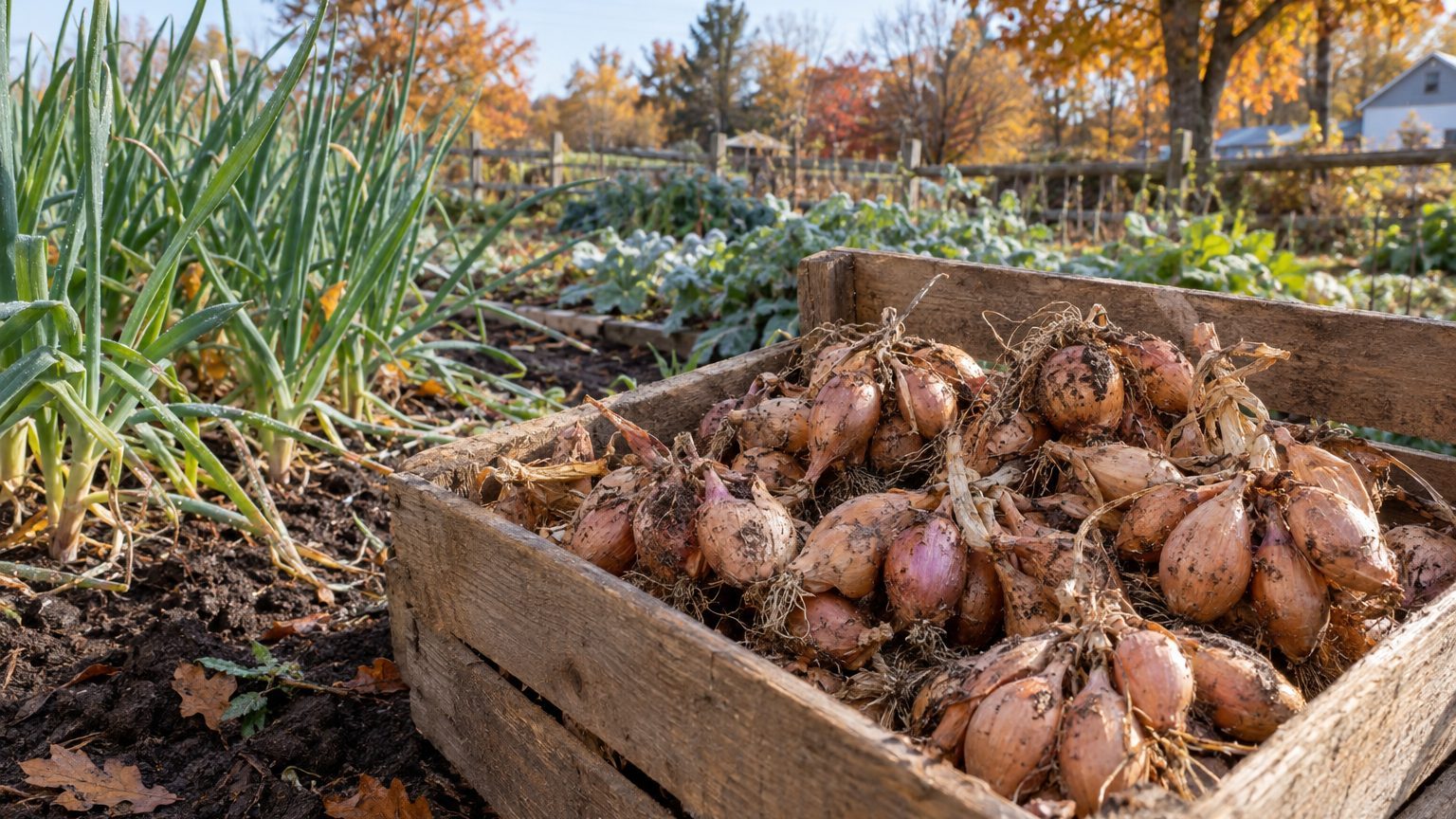

For most Montana gardens, the best shallots are hardy, set-grown (planted as small bulbs) types that go in as soon as the soil can be worked. In the milder valleys, a fall planting under mulch works too. Seed-grown shallots are the gamble: they need an indoor head start to finish before freeze. The deciding factor is season length, not variety name. More on that in Growing Shallots in Montana.
The short answer for Montana
The frost dates do most of the choosing. For Billings, the reference station, NOAA’s 1991-2020 Climate Normals put the last spring frost at April 29 to May 10 and the first fall frost at October 1 to October 14. Those dates are a probability, not a calendar promise. They mark the band where a 32°F freeze is 30 to 70 percent likely. A freeze on either side of that band can still happen.
Billings is also one of the milder valleys. The window it describes, a bit under five months between the last spring freeze and the first fall one, is about as generous as Montana gets. Elsewhere in the state, mountain valleys can frost in any month. A variety that finishes comfortably in Billings may run out of season at higher elevation.
So the choice by type looks like this:
| Type | When it goes in | Fit for Montana |
|---|---|---|
| Set-grown shallots (small bulbs) | Early spring, as soon as the soil is workable | Best all-round choice. Starts early and tolerates cold snaps. |
| Set-grown shallots, fall planting | Fall, then mulched heavily | Reasonable in milder valleys. Risky where winters run colder. |
| Seed-grown shallots | Started indoors, transplanted in spring | Workable only with a real indoor head start. Skip direct sowing. |
If you have to pick one, pick set-grown shallots and plant them in spring. They begin growing from a bulb that already holds stored energy, so they do not spend weeks of a short season building a first root system from scratch. That head start is the whole argument.
Shallots also tolerate cool soil and light frost better than many vegetables. That means the last-frost range is less of a gate than it would be for tomatoes or squash. What matters is workable soil, not a frost-free forecast. For dates tied to the frost bands, see When to Plant Shallots in Montana.
One thing this page does not have: variety trial results for Montana. The facts here cover climate, not named cultivar performance, so the advice is by type. A county trial, covered in the extension section below, is where named varieties get tested against local conditions.
What will not work here
Direct-sowing shallot seed in late May and hoping for full bulbs. Even in Billings, the first fall freeze can arrive as early as October 1 in a typical year, and the plants have to grow, size up and cure before then. Seed-grown shallots begin from a speck, and in a short season that start eats too much of the calendar. Elsewhere in the state, where frost can fall in any month, the odds are worse.
The slowest shallots fail for the same reason. Anything bred for long, mild growing seasons, often the large, heavy-bulbed types from warmer regions, needs time Montana does not reliably give. They produce leafy plants and small, unfinished bulbs that store poorly. Choose smaller, earlier-finishing types and accept a modest bulb.
Planting on Billings dates in a colder valley is a quieter mistake. A gardener at higher elevation who reads April 29 to May 10 as their own last-frost window may be planting weeks before the ground is ready, or trusting a frost-free stretch that does not exist. The CAUTION on the frost data is blunt: other Montana valleys can see a freeze in any month. A spring date from Billings is a starting guess elsewhere, not a rule.
Cold itself deserves a precise reading. The mean daily minimum of the coldest month at the Billings reference station is 17.9°F. That is the figure that decides whether a fall-planted crop survives the winter at all, and it is an average of nights, not the worst night. Real winters include colder snaps than 17.9°F, and the USDA zone range for the state, 3a to 6a, reflects that. In the colder part of that range, bulbs planted in fall without a thick mulch layer and without reliable snow cover are the ones most likely to heave out of the ground or rot.
The page does not have summer heat, rainfall or humidity figures for Montana, so it will not claim that a hot, dry summer or a wet one defeats any particular watering or spacing habit. What the facts do support is narrower: a short season and a wide cold range. Those two defeat late planting, slow varieties, seed sown outdoors, and unmulched fall beds in the colder zones.
What changes across Montana
The USDA Plant Hardiness Zone Map (2023 edition, built on 1991-2020 normals) places Montana in zones 3a to 6a. That is the average annual extreme minimum temperature, and the span covers four zones. There is no single answer for the state, and this page will not pretend there is one. A gardener in a 3a pocket and one in a 6a pocket are not growing the same crop in the same year.
The map does not cover everything. Zone numbers rest on one variable, winter extremes. They say nothing about how late the spring freezes run or how early fall ones arrive, which matter just as much to a crop that has to finish between them. Two gardens in the same zone can differ by weeks in usable season.
If you are in the north or at altitude, shift three things. First, favor spring planting of set-grown shallots over fall planting. A cold winter is the hardest thing to predict and the easiest to avoid. Second, if you do plant in fall, mulch heavily and accept some losses. Third, give up on seed-grown shallots unless you can start them well indoors. Each choice trades a little yield for a lot more reliability.
In the milder valleys, Billings being the reference, the cushion is bigger. Fall planting becomes a reasonable option there, and set-grown shallots in spring have room to finish before the October 1 to October 14 freeze band.
Which zone you are in is a question for the map itself. Look up your location on the USDA Plant Hardiness Zone Map rather than guessing from a neighbor’s garden, since a few miles and a few hundred feet can move the number.
Where to check this for your own county
Start with Montana State University Extension, the state’s land-grant extension service. Montana’s county offices see the local frost behavior, the soil, and what has actually grown there year after year. A state page cannot match that.
Look for two things. The first is a local planting calendar for your county, or the nearest one that shares your elevation. It should give spring and fall dates for onions and garlic-family crops, which is the closest family guidance for shallots. The second is any variety trial or recommended-varieties list. If your county, or one like it, has trialed alliums, those named results will beat anything a statewide article can offer.
Say it plainly: a county recommendation beats a state one, and this page is the state one. It sets reasonable defaults, flags what fails, and shows how wide the range is. It cannot know your valley.
If the extension office has no shallot-specific material, ask what they recommend for onions and garlic. The planting window and hardiness needs are similar enough to give a workable starting point. Our planting calendar for Montana shows how the frost bands translate into a window, and your county office can tell you how far to move it.
Checking this against your own garden
Your own observations outrank every date on this page. Three are worth watching, and none needs equipment.
- Soil warmth, by feel. Grab a handful from the bed in early spring. If it is sodden and clumps into a wet ball, wait. If it crumbles and no longer feels icy against your palm, it is workable. A bed that reaches that point two weeks before the one on the shady side of the house tells you where your warm microclimate is.
- The first true leaves. Note the day green shoots show on anything that overwinters, or the first real leaves on early seedlings. Write it down. Over a couple of years, that date becomes your own local calendar, tied to your site and not to Billings.
- Where frost lingers. On a clear, cold morning, walk the yard and see where white frost is still on the ground. Low spots and open hollows hold cold air and frost later in spring and earlier in fall. Plant the shallots on higher ground or near a wall if you can.
One caution on the second item: a fall-planted shallot that shows green shoots very early after a warm spell can be knocked back by a later freeze. Mulch is the usual cushion, and the shoots are tougher than they look. Still, a note on how early it came and what happened next is worth more than any chart.
Common questions
Should I plant shallots in spring or fall in Montana?
Spring is the safer default across the state. Fall planting is reasonable in the milder valleys, with Billings as the reference, if you mulch heavily. Where the zone falls toward the colder end of the 3a to 6a range, spring planting avoids the risk of winter loss.
Can I grow shallots from seed in Montana?
Only with a real indoor head start. The first fall freeze in Billings falls between October 1 and October 14 in the 30 to 70 percent probability band, and it can come earlier in colder valleys. Seed-grown shallots lose weeks building from nothing, so set-grown bulbs are the more dependable route.
Do I need to worry about frost on shallots in spring?
Less than with tender crops. The Billings last spring frost band runs April 29 to May 10, and it is a probability, not a guarantee. Shallots tolerate cold better than most vegetables, so workable soil matters more than a frost-free forecast. Watch the local forecast after planting anyway.
Is there a specific shallot variety recommended for Montana?
This page does not have variety trial data for Montana, so it will not name a winner. Choose by type, set-grown and earlier-finishing, and check with Montana State University Extension for county trials.