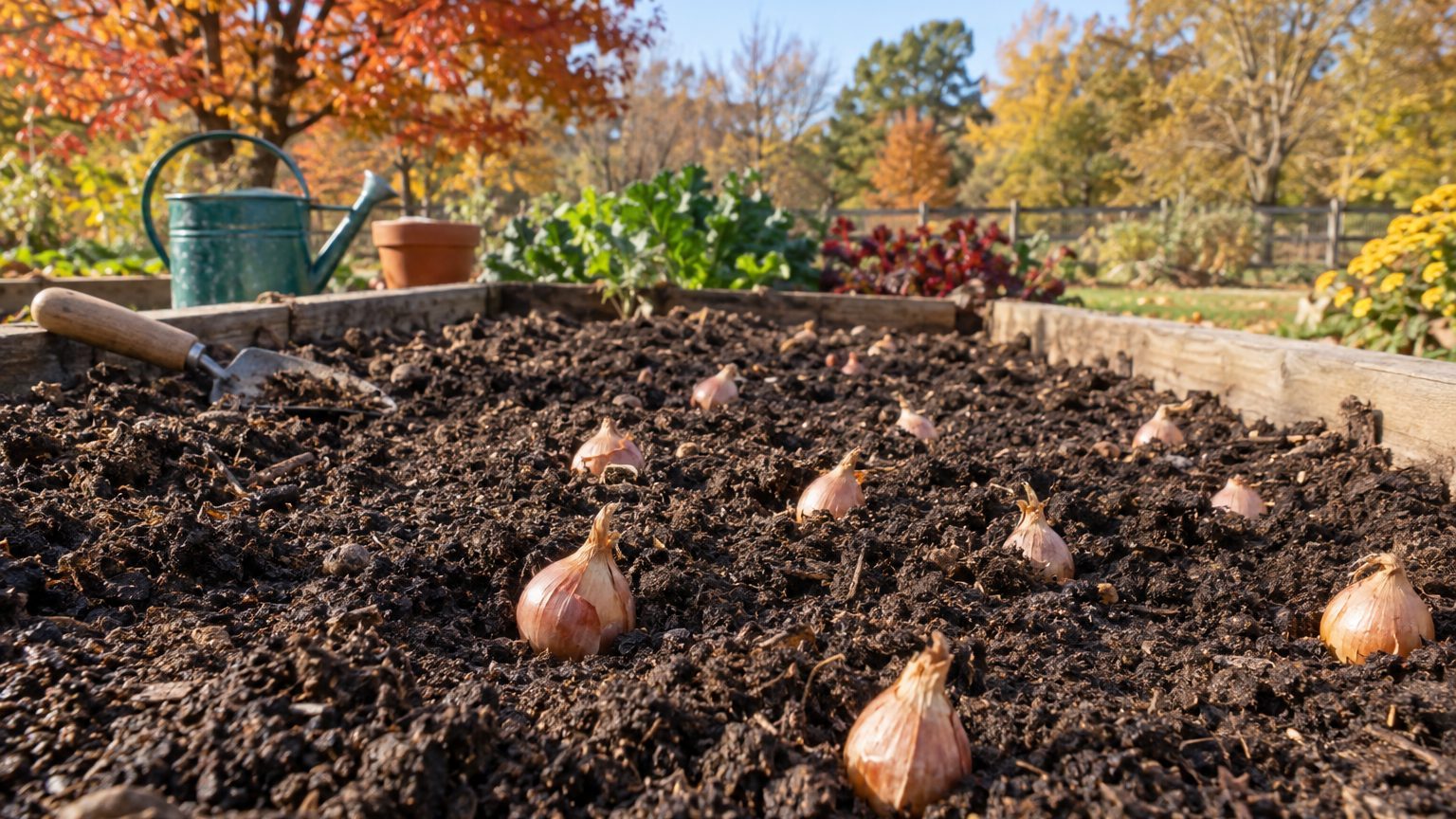

Shallots go into Montana ground twice a year: in early spring, as soon as the soil can be worked, or in fall, after the first hard freezes arrive. Which season suits your garden depends on a few dates and one cold-month number. Those figures come from Billings, though, and Montana stretches far beyond it. Treat them as a starting line, not a deadline.
The short answer for Montana
Plant shallots in spring around the last-frost window of April 29 to May 10, or in fall just after the first-frost window of October 1 to October 14. Both bands come from the NOAA NCEI 1991-2020 Climate Normals for Billings, and both are probabilities of a 32°F freeze: the dates between which the chance of a freeze falls in the 30 to 70 percent band. They are not guarantees. A freeze after May 10 is still possible, and one before October 1 is too.
Spring planting
Shallots are not tomatoes. Cold-tolerant alliums don’t need the frost window to close before they go in, so the practical trigger is soil that can be worked, not a calendar square. In a mild Billings-type spring, that lands in or just before the April 29 to May 10 band. In a cold, late year it may land inside it. Waiting past the band “to be safe” costs you weeks of cool growing time that bulbs use to build roots and leaves before the days get long.
Fall planting
Fall planting works like garlic. You set the cloves after the October 1 to October 14 band, when the soil is cooling but still diggable, so they root without pushing much top growth. Winter then does the rest. The coldest-month figure matters here: the mean daily minimum in January-type weather at Billings is 17.9°F, a typical night, not a record low. Real cold snaps run lower than that, which is why a fall planting needs a mulch blanket.
If you are weighing the two seasons, the broader Growing Shallots in Montana guide covers how each one plays out through the season. For this page, the dates are the whole story: spring near the first band, fall after the second.
What will not work here
Planting by a single statewide date
The biggest failure is treating Billings numbers as Montana numbers. The data itself carries a warning: Billings is one of the milder valleys, and mountain valleys elsewhere in the state can frost in any month. A gardener who copies “plant May 10” into a high valley may be setting out cloves into soil that is still frozen, or that will freeze again in June. The dates here are a reference point, nothing more.
Seasons too short for the slowest types
The gap between the last spring frost band and the first fall frost band is the whole growing season, and in the short-season corners of Montana it is tight. A shallot that needs a long, warm run to size up bulbs can fall short. The bulbs come out small, or the tops are still green when the freeze arrives. That is why variety choice matters more here than in a long-season state. The Best Shallots to Grow in Montana sorts out which types fit a short window.
Starting from seed outdoors in spring is the clearest example. Seed-grown shallots spend their first weeks as thin grass-like seedlings, and a Montana season gives them little room to catch up. Sets or cloves skip that stage.
Fall planting too early, or with no cover
Two fall mistakes show up again and again in cold-winter states. The first is planting too soon, so the cloves send up several inches of green before the ground locks. That tender growth takes the damage when a 17.9°F-type night turns into something colder. The second is planting and walking away. Bare soil in a Montana winter swings between freezing and thawing, and the cloves can be pushed out of the ground by the heave. A loose layer of straw or shredded leaves after the soil starts to cool keeps temperatures steadier.
Watering advice this page cannot give
The facts behind this page cover frost dates, winter minimums, and hardiness zones. They do not include summer heat or rainfall figures for Montana, so this page won’t tell you how often to water. If your summers are hot and dry, lean on your county’s guidance for that part.
What changes across Montana
The USDA Plant Hardiness Zone Map (2023 edition, built on 1991-2020 normals) runs from 3a to 6a across Montana. That is three full zones. The system rests on a single variable, the average annual extreme minimum temperature, so it says how cold the coldest nights get, not how long the season is or when the last frost lands. There is no single zone for the state and no single planting date.
For a reader in the northern part of the state, or anywhere at altitude, the shift is predictable even if the exact number of days is not. Spring thaw comes later, so the spring window opens after the Billings band. Fall freezes arrive earlier, so the fall window closes sooner. In the coldest zones, the margin between “planted deep enough to root” and “ground frozen solid” can be narrow. If you plant in fall there, plan for heavier mulch and a slightly earlier start than a Billings gardener would.
In the warmer valleys the opposite holds. A garden near the 6a end can plant in spring a bit sooner and has a wider choice of varieties, since a longer season forgives the slower types.
Which zone you fall into is not something this page can tell you. The USDA map lets you look up your ZIP code directly, and your answer there should override any regional guess. Then adjust the Billings dates in the direction your zone points: later in spring, earlier in fall, and more mulch the colder you go.
Where to check this for your own county
A county recommendation beats a state one. This page is the state one: it uses a single reference station and a territory-wide zone range. Your county’s office knows its own frost pockets, soils, and snow cover, and that local knowledge is worth more than any average.
Start with Montana State University Extension, which links to the office serving your county. Two things are worth asking for. The first is the local planting calendar, ideally one that names shallots or garlic, since fall-planted garlic follows nearly the same rhythm. The second is the list of varieties trialed in your county, because a type that sizes up in a milder valley may not finish where your season is shorter.
One honest limit: this page does not have a Montana extension shallot calendar to quote. The sources behind it give frost dates, winter minimums, and hardiness zones, and no county-level shallot schedule. If your extension office has one, use it and ignore the Billings dates above.
If the office has nothing written on shallots, ask a staff member or Master Gardener volunteer what dates they use for garlic and onion sets. Those are close cousins, and the answer will usually tell you more than a statewide average.
Checking this against your own garden
Your own observations outrank every date here. Three are worth watching, and none requires equipment.
Soil warmth by feel comes first. In spring, push a hand into the bed. Soil that crumbles, doesn’t clump into a wet ball, and doesn’t feel icy at finger depth is ready for shallots. If one corner by a south-facing wall reaches that state days before an open, shaded bed, you have learned something about your microclimate that no frost table can tell you.
Second, watch for the first male flowers, the catkins that hang from willows, cottonwoods, or aspens. Their timing varies with the year, but their order does not: if the catkins on the trees near your garden open earlier than a neighbor’s across town, your site runs warm. Many gardeners use that as a cue that soil work can begin, and it ties planting to the real season rather than the calendar.
Third, the first true leaves. Look for green tips on chives, last year’s shallots, or volunteer onions coming up. When they show, the soil is warm enough for alliums to grow. In fall, the same check works in reverse: if your newly planted cloves put up green before the ground freezes, you planted a bit early, and next year you can wait a week or so.
Keep notes for a couple of seasons. After two springs of recording when the bed was workable and when the first leaves appeared, you will have a calendar better than any this page can offer.
Common questions
Can I plant shallots in the fall in Montana?
Yes, after the first-frost window of October 1 to October 14 (Billings reference), once soil has cooled but can still be dug. Mulch the bed afterward. Colder or higher sites should plant earlier relative to their own first freeze.
Is May 10 too late for spring planting?
May 10 is the late edge of the 30-70 percent freeze band at Billings, not a cutoff. Shallots tolerate light frost, so planting around or before that date works. Later planting is possible but shortens the growing time the bulbs need.
Does a 17.9°F winter minimum kill shallots?
That figure is the mean daily minimum of the coldest month, not the lowest reading of the season. Mulched, fall-planted cloves are normally treated as winter-hardy where the soil stays covered, but colder zones within 3a-6a are riskier, so check your county’s advice.
What dates should I use in a mountain valley?
Use later spring dates and earlier fall dates than Billings. The source data warns that mountain valleys can frost in any month, so watch your own soil and leaves instead of relying on the band. Frost in July is rare but not unheard of in the high country.