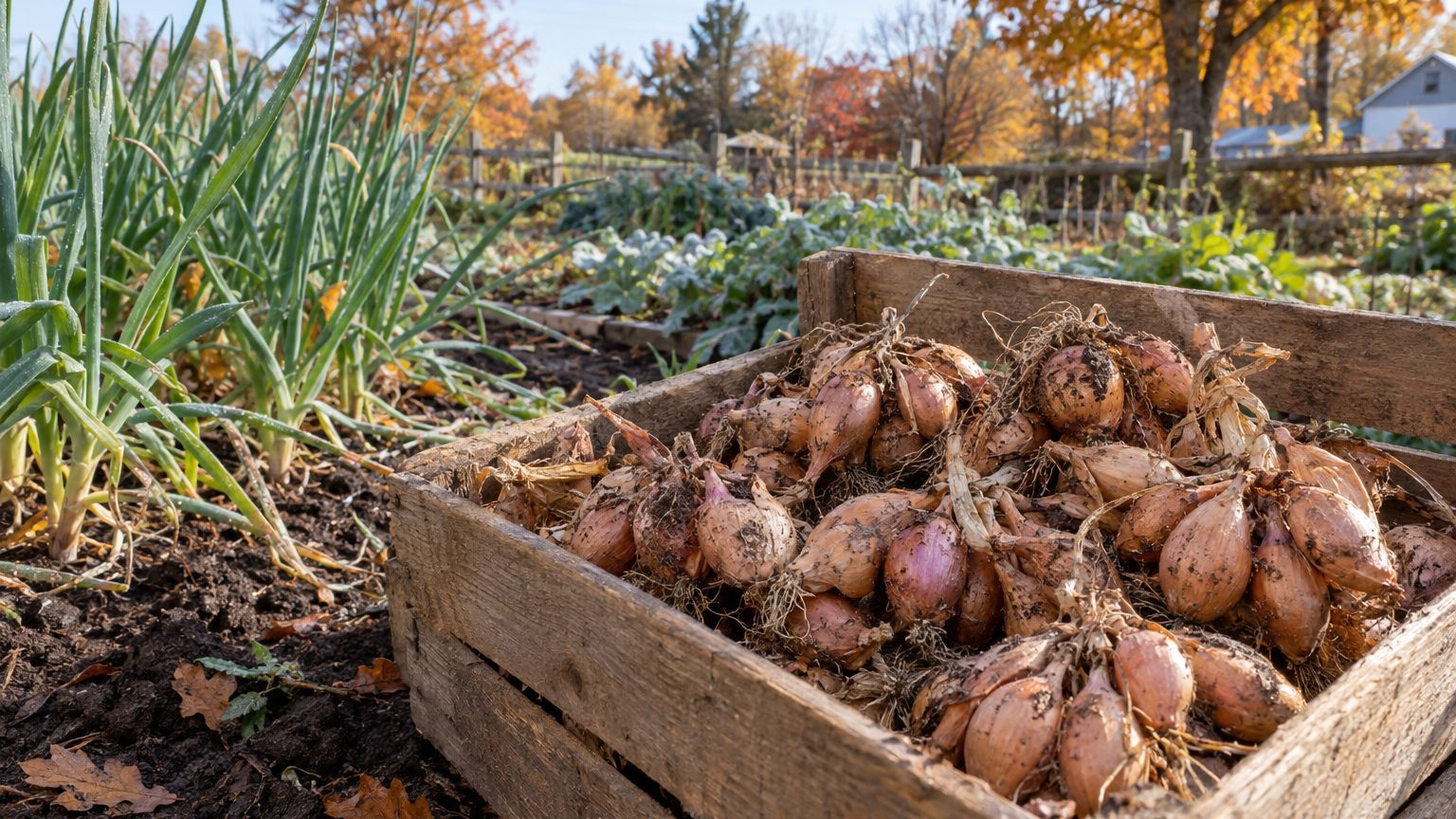

In North Dakota, the best shallots are multiplier types grown from bulbs planted in early spring. Seed-grown shallots come second, and fall planting is a gamble. The climate sets the order: USDA zones from 3a to 4b, winter nights that bottom out near zero, and a season that closes in late September or early October. Choose for speed and cold tolerance first, flavor second.
The short answer for North Dakota
Pick by type, not by catalog name. A multiplier shallot started from a bulb gets a head start that no seed-grown plant can match in a short season, and that head start decides most gardens here. The numbers explain why.
What the frost dates say
At the Fargo reference station, NOAA’s 1991-2020 climate normals put the last spring frost between May 4 and May 15, and the first fall frost between September 25 and October 5. Those are not guarantees. They describe the 30-70% probability band for a 32°F freeze, so on any date inside the window the odds of a freeze run from roughly one in three to better than one in two.
The warning that comes with those dates matters. They come from an airport station. Rural and suburban gardens usually see the last spring frost later and the first fall frost earlier, often by one to two weeks, and more at elevation. Your real window is shorter than the reference one.
Shallots are not planted on the frost-free date, though. The bulbs tolerate cool soil and light frost, so the real clock runs from the moment the ground thaws and dries enough to work until the tops fall over in summer. For more on timing, see When to Plant Shallots in North Dakota.
The decision by type
| Type | How it starts | Fit for North Dakota | Main risk |
|---|---|---|---|
| Multiplier shallots from bulbs | Planted outdoors in early spring | Best first choice | Rot in cold, soggy soil |
| Seed-grown shallots | Sown indoors, transplanted | Workable with a bright window and patience | Slow growth, short season to finish |
| Fall-planted multipliers | Planted before the ground freezes | A gamble in the colder zones | Winter losses, frost heaving |
This page does not have a ranked list of named cultivars tested in North Dakota, and it will not invent one. For the full growing picture, start with Growing Shallots in North Dakota.
What will not work here
Slow starts and cold feet
Sowing shallot seed directly in the garden and hoping for full bulbs is the first thing to drop. With a freeze possible into mid-May and returning by late September, outdoor-sown seed has little room to finish. Seed-grown shallots need a head start indoors, and even then they tend to produce smaller bulbs than the ones grown from sets.
Fall planting is the second casualty, or at least the riskiest one. The coldest month at Fargo has a mean daily minimum of 0.2°F. That is an average of the nightly lows, so individual nights run well below it. A fall-planted bulb that is not deeply mulched can heave out of thawing ground or simply die. Gardeners in zone 4 pockets with reliable snow cover have better odds than those in zone 3a, and nobody in the state should count on it without a backup batch planted in spring.
Wet ground and late planting
Heavy clay is common in the Red River Valley, and a bulb sitting in cold, saturated clay in April rots instead of rooting. Planting early only works if the soil has drained. Raised rows or beds a few inches higher than the surrounding ground protect bulbs in a wet spring, and they cost almost nothing to build.
Waiting for the “safe” frost-free date costs more than it seems to. Shallots want cool weather to build roots and leaves before summer heat triggers bulbing. If you hold off until mid-May because the frost window says so, you give away weeks of that growth. Planting soon after the soil can be worked, even with a freeze still possible, suits the crop better.
Then there is the end of the season. Bulbs need dry, warm days to cure after harvest, and an early fall frost can arrive before that happens, especially in a rural garden where the first frost may come one to two weeks ahead of the airport figure. A slow-maturing type that needs every last day will leave you pulling green, thick-necked bulbs that do not store.
What changes across North Dakota
There is no single North Dakota garden. The state spans USDA zones 3a to 4b, and that system rests on one variable: the average annual extreme minimum temperature. It says how cold the worst nights get, not how long the summer lasts or how wet the spring is.
That spread has practical weight. A gardener at the 4b end can sometimes get a fall planting through winter with heavy mulch. At the 3a end, spring planting of bulbs should be the plan, and fall planting should be an experiment on a small corner of the bed, not the main crop. The reference figures on this page come from Fargo, so they say little about the northern tier or higher ground elsewhere in the state.
If you garden in the north or at elevation, shift in three ways. Expect the frost window to run later in spring and earlier in fall than the Fargo dates. Favor the earliest-maturing multipliers you can find. Plant the day the soil allows, not a week later. Protecting beds with row cover during late freezes also buys time at both ends of the season.
Which zone you are in is not something this page can tell you. Look up your location on the USDA Plant Hardiness Zone Map and read the zone for your own address. Zone boundaries in the state can change within a county, and a low spot where cold air pools may behave like a zone colder than your neighbor’s ridge.
Where to check this for your own county
The best source for your own garden is NDSU Extension, the state’s land-grant extension service, which has offices serving each county. A county recommendation beats a state one every time, and this page is the state one. The frost dates above come from a single airport station and cannot account for your hills, river bottoms or windbreaks.
When you reach the extension site or your county office, look for two things. The first is a local planting calendar: spring and fall frost probabilities for a station near you, plus any guidance on when to put in cool-season bulb crops like shallots and onions. The second is a list of varieties that have been trialed in your county or in a similar part of the state. A shallot that did well in a research plot close to home tells you more than any national catalog description.
This page does not have an NDSU shallot calendar among its verified facts, so it does not quote one. If the extension publishes onion-family guidance, that is the closest match for shallot timing and spacing. Ask the county office whether anyone has seen shallots grown locally, and what survived the last hard winter.
Bring your own planting dates and results when you call. Extension staff can fit your notes to local conditions, and a few seasons of records turn into a personal calendar sharper than any published one.
Checking this against your own garden
Your own observations outrank every date here. Three are worth watching, and none needs equipment beyond your hands and eyes.
- Soil warmth by feel. Dig a handful in early spring. If it crumbles instead of smearing, and your hand does not ache after holding it, the bed is ready for bulbs. Test several spots: a bed against a south-facing wall may be workable a week or more before an open one, which tells you where your warm microclimate is.
- The first true leaves. On seed-grown seedlings, the first true leaves after the thin starter blades show the plant has settled in. On planted bulbs, the first green tips breaking the surface tell you how your site is running against the regional calendar. Later tips than a neighbor’s mean colder or wetter ground.
- The first flush of male flowers. If you grow squash, the first male blooms mark the point where summer has truly arrived in your garden. Use that as a marker for the season’s pace and a cue to watch your shallot tops, which should be yellowing and bending soon afterward.
Write the dates down each year. After three seasons, your notes will say more about your microclimate than any regional table.
Common questions
Can I plant shallots in fall in North Dakota?
You can, but it is a gamble, especially in zone 3a. Use heavy mulch, plant only a portion of your bulbs, and keep a spring planting as your backup.
Are shallots from seed or from bulbs better here?
Bulbs are the safer bet because they start with a head start. Seed-grown shallots work if you can start them indoors early, but the short season leaves less room for error.
Do shallots survive North Dakota winters?
The mean daily minimum in the coldest month at Fargo is 0.2°F. Bulbs in the ground without protection face real risk. Mulch and snow cover help, but spring planting avoids the question.
Which shallot variety should I buy?
This page does not have county-tested cultivar data, so it names none. Choose an early-maturing multiplier, then ask NDSU Extension or a local seller what has done well near you.