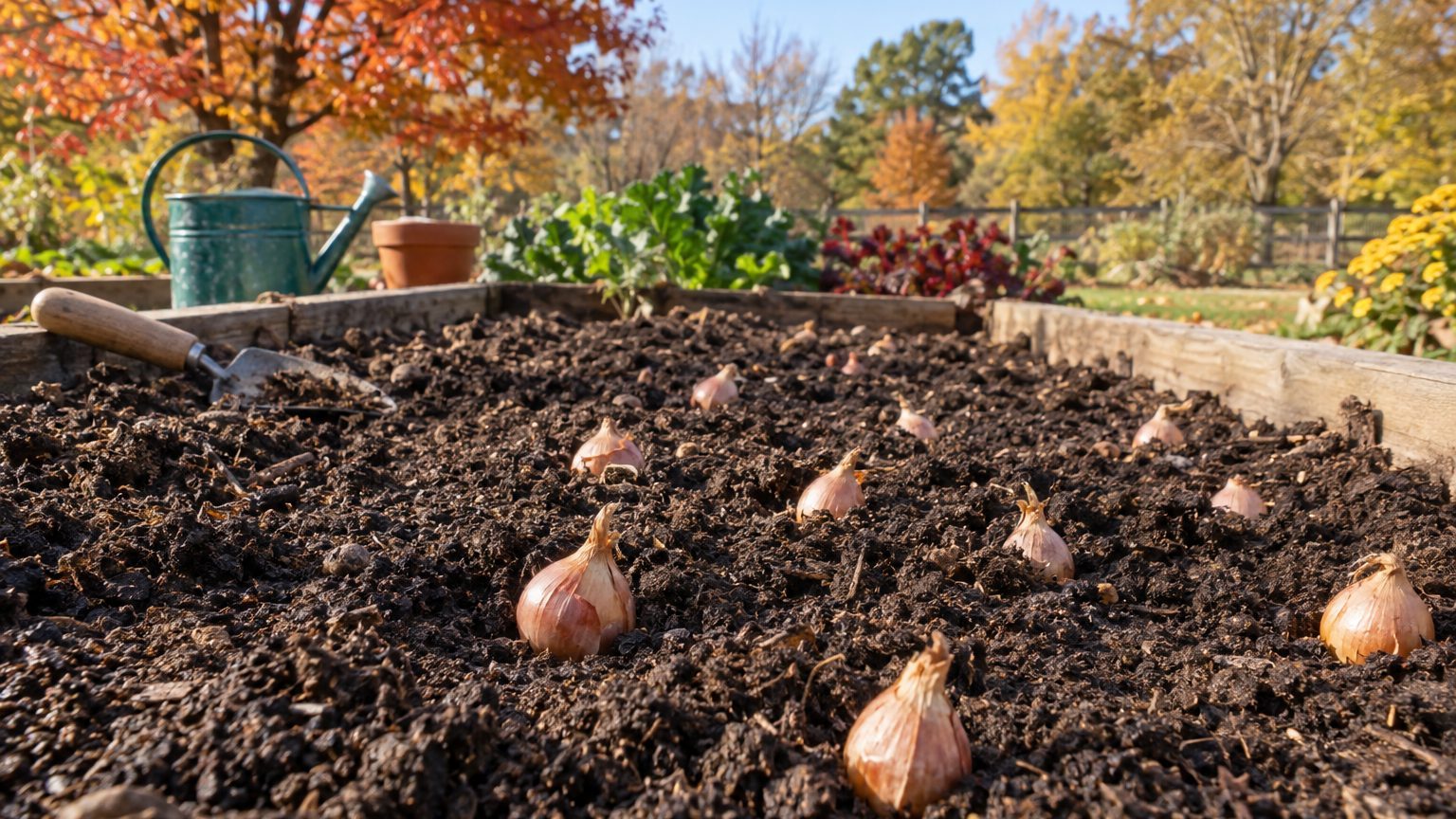

Plant shallots in North Dakota as soon as the soil can be worked in spring. If you want a head start, plant in October, after the first fall frost window has passed. Spring is the safer call for most of the state. The dates below come from Fargo’s airport weather station, so expect a rural or suburban garden to run a week or two behind them.
The short answer for North Dakota
For the reference city, NOAA’s 1991-2020 Climate Normals put the last spring frost between May 4 and May 15. The first fall frost falls between September 25 and October 5. Those aren’t deadlines. Each is a probability: the window where the chance of a 32°F freeze sits between 30 and 70 percent. On the spring end, that means a freeze on or after those dates is still close to a coin flip. A frost can show up later than May 15 in any given year.
Shallots shrug off that kind of cold. Sets planted in cool soil can sit through light frosts without much harm, so you don’t wait for the frost-free date. You aim for the weeks before the May 4 to May 15 window, whenever a handful of soil crumbles instead of smearing. Early planting matters because shallots build bulbs on lengthening days, and the longer the leaf canopy has to grow before then, the bigger the bulbs.
Fall planting works on the opposite logic. The goal is roots, not leaves. You wait until the first fall frost window has passed, then plant sets so they root in cooling soil and stay dormant above ground until spring. Mulch is non-negotiable.
| Approach | When | Main risk |
|---|---|---|
| Spring sets | As soon as the soil can be worked, ahead of the May 4 to May 15 window | Cold, soggy soil that rots sets |
| Fall sets | After the September 25 to October 5 window, with heavy mulch | Winter injury in the colder parts of the state |
Harvest comes once the tops yellow and flop over, usually in mid to late summer, well ahead of the fall frost window. That leaves time to cure the bulbs before cold weather. For the full picture of soil, spacing and care, see Growing Shallots in North Dakota.
One limit on this page: the facts here include frost dates and winter cold, but no North Dakota shallot trial data. Treat the planting windows as a reasoned starting point, not a tested prescription.
What will not work here
Waiting for May 15 and calling it safe is the first mistake. The window already includes a coin-flip chance of freeze, so waiting for certainty means losing the cool weeks shallots like best. Late-planted sets go into warm soil, rush through leaf growth, and bulb up small.
Slow, long-season types struggle for a similar reason. Between the last spring frost and the first fall frost, the reference city offers somewhere between roughly four and a half and five months, and that is the generous end. A rural garden with a later spring and earlier fall has less. Shallots grown from true seed, or varieties that need a long runway to size up, are a gamble in that window. They can work if started indoors well ahead of spring, but plan on small bulbs in a cool year. The The Best Shallots to Grow in North Dakota page sorts varieties by how forgiving they are of a short season.
Fall planting that goes in too early also fails. If sets go in during warm September soil, they push green tops that the first hard freeze burns off, and the plant spends energy it needed for roots. Wait until the frost window has passed, then plant.
The winter itself is a bigger test than most gardeners expect. Fargo’s mean daily minimum in the coldest month is 0.2°F. That is an average night, not the worst one. The extreme lows that set the hardiness zone run well below it. Bare, unmulched beds with shallow sets can heave or freeze in that cold, especially where snow cover is thin. A fall planting with a couple of inches of straw or shredded leaves is a different proposition from the same planting left exposed.
Last, trusting the airport number in a country garden. The reference figures come from one weather station. Suburban and rural gardens typically see the last spring frost later and the first fall frost earlier, often by one to two weeks, and more at elevation. A gardener who plants on Fargo’s dates in a cold hollow can find sets sitting in frozen mud or tops frosted by early October.
And wet ground deserves its own warning. Sets pushed into cold, saturated spring soil tend to rot before they root. If a squeezed handful drips or stays in a slick ball, wait a few days.
What changes across North Dakota
North Dakota doesn’t have one growing climate. Under the USDA Plant Hardiness Zone Map (2023 edition, built on 1991-2020 normals), the state runs from zone 3a to 4b. That system rests on a single variable, the average annual extreme minimum temperature, so it tells you about winter survival and nothing about frost dates. There is no single answer for the whole state, and the spread between the cold and mild ends is wide enough to change what you should do.
If you garden in the north, or at higher elevation, shift everything toward caution. Spring planting should slide later, tracking when your own soil thaws instead of the Fargo window. Fall planting becomes a bigger gamble the colder your zone, so a gardener in the 3a end of the range has more reason to choose spring sets and save fall planting for a small test row. Mulch goes on thicker. Choose faster-maturing varieties, and watch the calendar in late summer, because a shorter season leaves less margin for bulbs to size up and cure.
Toward the milder end of the range, near Fargo and in sheltered spots, fall planting with good mulch is more reasonable, and a spring crop has more time. Even there, the frost dates in this article are the reference city’s, not a guarantee.
I won’t tell you which zone you are in, because the answer depends on your exact location. The USDA Plant Hardiness Zone Map lets you enter a ZIP code and read it off directly. Use that to decide how risky fall planting is for you, then use your own frost observations to set the spring date.
Where to check this for your own county
NDSU Extension is the place to go next. It is the state’s land-grant extension service, with offices serving individual counties. On the site, look for two things. The first is a local planting calendar, ideally one tied to your county’s frost data instead of a single city’s. The second is a list of varieties trialled in your county or the nearest research site, because a shallot that thrives at one end of the state may sulk at the other.
If the extension site has no shallot-specific calendar, a garlic or onion calendar from the same office is a reasonable guide, since the timing logic is close. Call or email your county office and ask what planting dates local gardeners use for fall garlic and spring onions. Those answers are worth more than any figure in this article.
A county recommendation beats a state one, and this page is the state one. It rests on Fargo’s weather record and a state-wide hardiness range. It can’t know that your garden sits in a river valley that frosts late, or on a ridge that drains well and warms early. A calendar written for another state or another crop can’t know it either, so don’t borrow one just because it’s easy to find.
Checking this against your own garden
Your own observations outrank every date here. Three are worth watching, and none needs equipment.
Soil warmth and workability, by feel. Dig down a few inches in the planned bed and squeeze a handful. If it crumbles when you poke it, it’s ready. If it stays in a muddy lump, wait. Compare beds, too. If the sunny south side of the house thaws and dries days before the open vegetable patch, you’ve found a warm microclimate you can plant in first.
Chives and other early alliums. If chives, or any wild onion, are pushing green shoots through the ground, your soil has warmed enough for their cousins. The date they appear in your yard each year is a better local calendar than any state chart. Note it for a few seasons and the pattern emerges.
Where frost lingers. On cold mornings, look at which patches of lawn stay white longest. Low spots collect cold air and frost later in spring and earlier in fall. If your shallot bed sits in one, push planting later and harvest sooner. If it sits on higher or sheltered ground, you can push earlier.
After planting, the first true leaves are your report card. Green tips poking through mulch tell you the sets rooted well. If they’re yellow or flattened by freeze, you planted a bit early or the bed is colder than you thought. Use that to adjust next year’s date.
Common questions
Can I plant shallots in the fall in North Dakota?
Yes, in many areas, after the first fall frost window of September 25 to October 5 has passed and with heavy mulch. In the colder zones, spring planting is the safer choice.
Will a late spring frost kill my shallots?
Light frosts usually don’t. Shallots tolerate cold soil and cool nights, which is why planting before the May 4 to May 15 window works. A hard freeze after growth is well underway can burn leaf tips but rarely kills established plants.
Are Fargo’s frost dates right for my garden?
They are the reference-city figures. Rural and suburban gardens typically see the last spring frost later and the first fall frost earlier, often by one to two weeks, and more at elevation. Check with your county extension office.
When do I harvest shallots?
When the tops yellow and fall over, usually mid to late summer. Pull them before the fall frost window and cure them in a dry, airy spot.