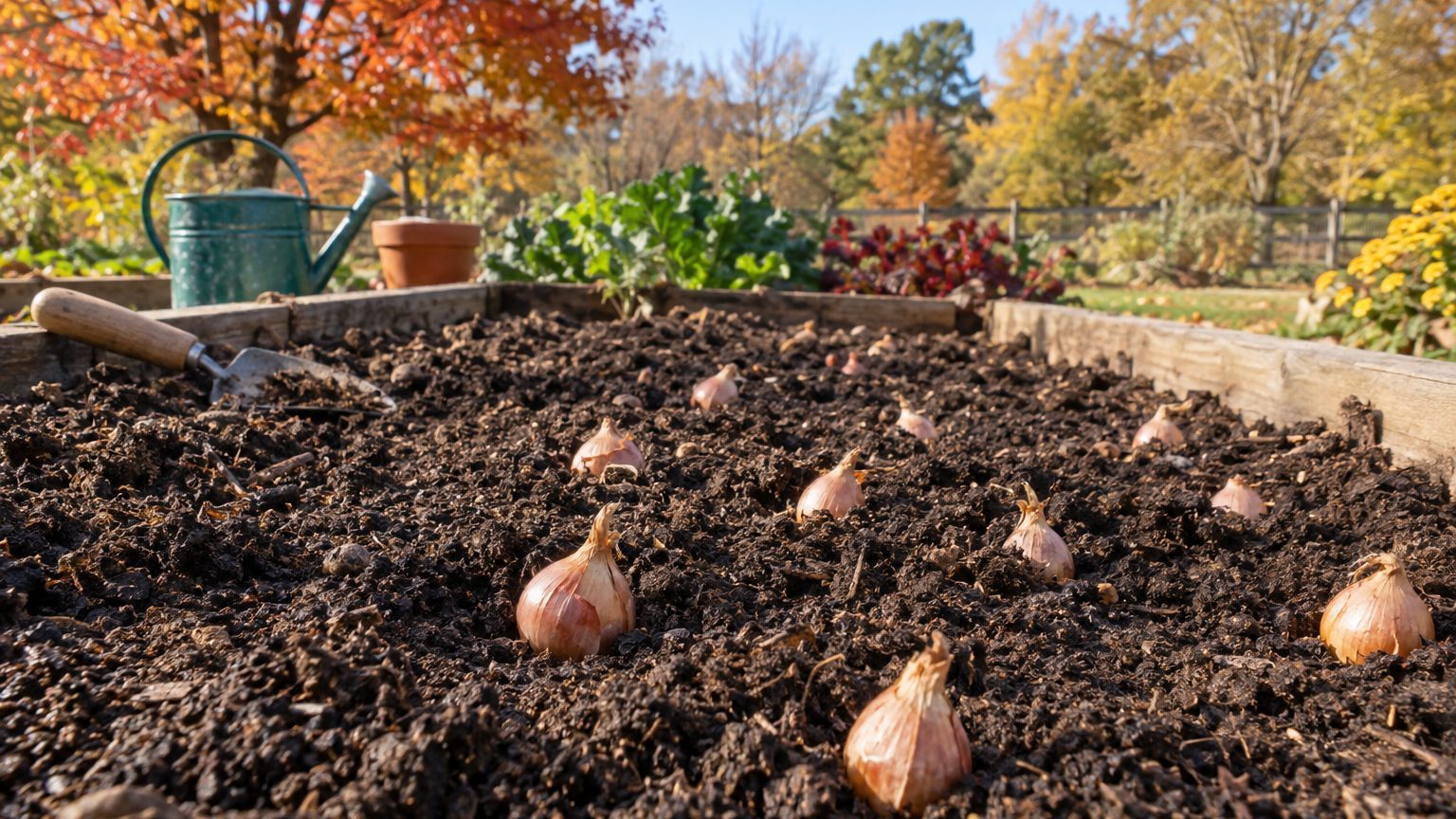

In South Carolina, shallots go in during fall, in the weeks around the first freeze, so the bulbs can size up in cool weather and finish before summer heat. The exact dates shift by several weeks between the coast and the Upstate. The numbers below are for Charleston, followed by how to adjust them for your own ground.
The short answer for South Carolina
Plant shallots in fall, timed to the first fall frost window of November 20 to December 5, and treat the last spring frost window of February 28 to March 17 as the deadline for any late-winter planting. Both windows come from the NOAA NCEI 1991-2020 Climate Normals for the Charleston airport station (USW00013880).
These dates are a probability of a freeze, not a promise. Each is the span in which the chance of a 32°F freeze sits between 30 and 70 percent. Before the November window, a freeze is still unlikely. After it, a freeze is more likely than not. The same logic runs in reverse in spring. A freeze on March 25 would be unusual, but nothing in the normals rules it out.
So the calendar has two anchors. In fall, you want roots working in cooling soil as the first freeze window approaches. In late winter, anything you plant late needs to be in the ground as soon as the soil can be worked, because the spring window marks how little cool weather is left. Shallots form bulbs as days lengthen and temperatures climb, and the more leaf they have built by then, the bigger the bulb. Leaf growth happens in the cool months, which is why fall beats spring here.
Cold itself is not the limit. The mean daily minimum of the coldest month at the Charleston reference station is 38.9°F. That figure is the average overnight low in the coldest month, not a record low, and it sits well within what a shallot tolerates. Winter will not kill your planting. Heat at the far end of the season is what runs out the clock.
One gap to flag: this page does not have a shallot-specific planting calendar from Clemson. The frost windows give you a defensible frame, and your county office can sharpen it (more on that below). For the broader growing picture, including soil, spacing and harvest, see Growing Shallots in South Carolina.
What will not work here
Planting in September fails more often than people expect. The first freeze at Charleston is typically a late November event, so a September planting sits for weeks in warm, damp soil. Sets in that soil tend to rot or push top growth too early, and a mild stretch can send them off before winter even starts. The frost window tells you when the season turns, and planting far ahead of it gains nothing.
Spring planting is the second trap. With a last frost window of February 28 to March 17, the soil warms quickly after that. A shallot set into the ground in April has only a few weeks of cool weather to build leaves, and the leaves are what feed the bulb. The result is small, often single-clove bulbs, and a harvest that is more disappointing than a fall planting would have been. Spring planting is a fallback, and the earlier in late winter it happens, the better.
Slow-maturing varieties struggle for the same reason. South Carolina’s growing season for shallots is bounded by heat at the back end, so a type that needs a long, cool spring to finish can stall before it bulbs fully. Variety choice matters more here than in the North, and The Best Shallots to Grow in South Carolina goes through it in detail.
Tight spacing is another failure, and it comes from the humidity, not the cold. A state with long, muggy stretches punishes crowded rows. Leaves stay wet, air barely moves, and fungal disease spreads from one plant to the next. A bed that would be fine at close spacing in a dry Western climate needs more room here, and thick, soggy mulch around the necks makes it worse.
Last, a quieter mistake: treating the frost dates as a hard line. A 30 to 70 percent band is wide. Waiting for a “safe” date before planting in fall, or skipping a planting because a freeze might follow, misreads the numbers. Established shallot tops handle a light freeze. What they cannot recover is the weeks lost by waiting.
What changes across South Carolina
South Carolina is not one garden. The USDA Plant Hardiness Zone Map (2023 edition, built on 1991-2020 normals) places the state in zones 7a to 9a. That is a span of several zones, so there is no single answer for the whole state. The zone system rests on one variable, the average annual extreme minimum temperature, so it tells you about winter cold and says nothing about how long your season is or when heat arrives.
The dates on this page are for Charleston, and even there the airport station is not the whole story. Peninsular Charleston is milder than the airport, so a downtown garden may see its first freeze later and its last one earlier than the windows above. Anyone gardening right at the water’s edge should expect to sit toward the late end of the fall window.
Move inland and north and the picture tightens. The Upstate runs several weeks tighter at both ends: the first freeze comes earlier in fall and the last one lingers later in spring. A reader there should plant earlier in fall than the Charleston window suggests, so roots are set before the ground chills, and should not borrow the coastal date for late-winter planting. The same goes for anyone at elevation along the northwest edge of the state, where cold arrives sooner and spring warms later.
I will not tell you which zone you are in, because the answer depends on your exact location, and a map does that better than I can. Look up your spot on the USDA Plant Hardiness Zone Map, then use the distance between your zone and Charleston’s as a rough gauge of how far to shift the dates.
Where to check this for your own county
The best next stop is Clemson Cooperative Extension, the state’s land-grant extension service. Its county offices answer questions grounded in local soil and local weather, which a statewide page cannot do. A county recommendation beats a state one, and this page is the state one.
When you get there, look for two things. The first is a local planting calendar for onions, garlic and other alliums in your county, since shallots follow the same cool-season rhythm and extension staff will often know the right fall window for your area. The second is any list of varieties trialled locally. A variety that performed in a coastal plain trial does not guarantee results in the Piedmont, and the county list tells you what has been grown near you, in your soil.
Clemson publishes its maintenance calendars by species, not by state. The ones on file for this page cover lawn grasses (bermudagrass, zoysiagrass, centipedegrass and St. Augustinegrass), and a cool-season and a warm-season lawn are worked in opposite halves of the year. That logic carries over to the garden: the right calendar is the one for the crop you are actually growing. A lawn calendar says nothing about shallots, so ask directly for allium guidance.
It is also worth asking about a soil test while you are in touch. Shallots dislike poorly drained ground, and a county office can tell you what typical soils in your area need before you plant.
Checking this against your own garden
Your own observations outrank every date on this page, and three of them are easy to track without any equipment.
- Soil warmth by feel. In fall, push your hand a few inches into the bed. Soil that feels cool, not warm like a sunny sidewalk, is ready for sets. If it still feels warm, wait a week or two. A bed that cools later than your neighbor’s is telling you about its sun and drainage.
- The first male flowers. In late winter, watch for the dangling catkins on oaks, the male flowers that signal spring warmth is arriving. Their timing in your yard marks when your cool window is closing, and it often runs ahead or behind the calendar.
- The first true leaves. After planting, note how fast green shoots appear. Quick growth means a warm, sheltered spot. Slow growth suggests cold pockets or heavy, wet soil.
Write down what you see for a season or two. A short log of planting dates, first shoots and harvest will tell you more about your microclimate than the state normals can.
Common questions
Can I plant shallots in spring in South Carolina?
Yes, as a fallback. Plant as early in late winter as the soil allows, before the February 28 to March 17 last frost window closes. Expect smaller bulbs than a fall planting would give, because the plants have less cool weather to grow leaves.
Will shallots survive a South Carolina winter?
Generally yes. The mean daily minimum of the coldest month at the Charleston reference station is 38.9°F, which is mild for the crop. Winter cold is rarely the problem. Heat late in the season is the bigger risk.
Are the Charleston frost dates my dates?
Only if you garden near Charleston. The windows come from the airport station, peninsular Charleston is milder, and the Upstate runs several weeks tighter at both ends. Treat them as a starting point and adjust for where you live.
What if a freeze hits after I plant?
Established shallot tops tolerate a light freeze. The frost windows are probabilities of a 32°F freeze, so a freeze after planting is part of the normal pattern. Waiting for a guaranteed freeze-free date costs you more than it saves.