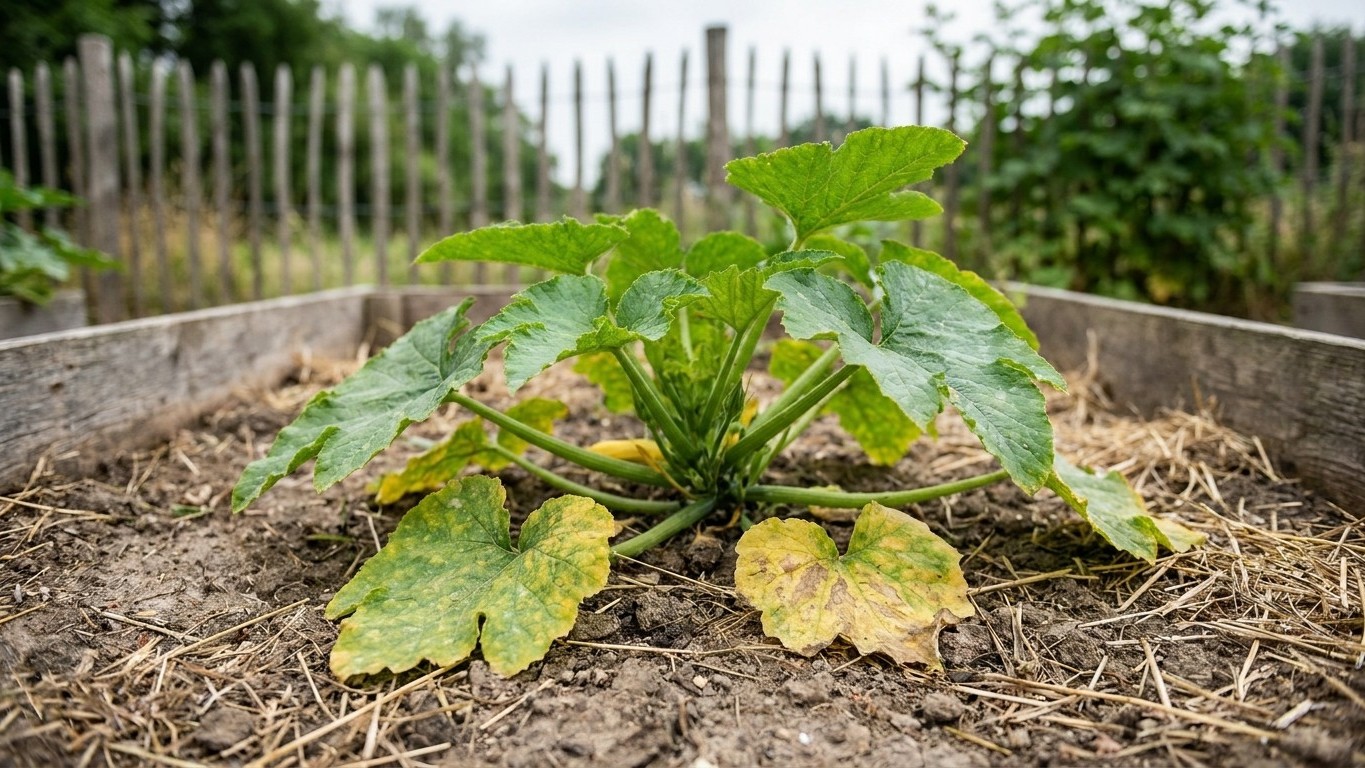

Pick summer squash about 55 days after planting, then every day or two for the rest of the season. Keep the fruit small, because a plant that ripens one fruit to full size stops setting new ones. The surplus problem has a firm answer too: summer squash holds about a week in the fridge and no longer. A glut goes into the freezer or the kitchen, never into a cellar.
The short answer for Illinois
The clock starts at planting and stops at frost. Clemson Cooperative Extension puts the first harvest at about 55 days after planting, so a May planting points to the first fruit around early to mid July. Summer squash is frost-tender, so planting waits for the last spring freeze. At the Chicago airport weather station, NOAA’s 1991-2020 normals put that between April 11 and April 22. Those dates are a probability, not a promise. They bracket the stretch when the chance of another 32F freeze falls in a 30 to 70 percent band. The first fall frost, by the same measure, lands between October 24 and November 3.
That is the reference-city figure, and your garden will probably differ. Suburban and rural plots typically see the last spring frost later and the first fall frost earlier than an airport does, often by one to two weeks. Your real harvest season may be a bit shorter than the dates above suggest. For a closer look at the whole growing cycle, see Growing Summer Squash in Illinois.
Small and often is the whole strategy
A squash plant is built to make seed. Once one fruit reaches maturity, the plant treats its job as done and slows or stops setting new fruit. Harvest frequency is the yield. Pick while the skin is still tender enough to dent with a thumbnail and the fruit is clearly smaller than it could be. Cut it with a knife or pruners, leaving a short stub of stem, rather than twisting it off.
Checking every day or two feels excessive in June and starts to feel reasonable by mid July. Fruit that looks like a baseball bat overnight is a sign the plant went unvisited for a weekend.
The glut has one rule
Unlike winter squash, which keeps for months, summer squash does not store. Clemson’s guidance is a plastic bag in the refrigerator for up to one week. After that, the options are:
- Shred it, then freeze it in flat bags for winter baking and soups.
- Slice it, blanch it briefly, and freeze it for sautés and casseroles.
- Bake it into bread, muffins and fritters, which then freeze well themselves.
- Give it away. A neighbor with no garden is the most reliable preservation method.
What will not work here
A cellar will not work. Gardeners used to harvesting potatoes and winter squash in October sometimes assume any squash can be stashed in a cool basement. Summer squash is picked immature, with a thin skin, and it softens and shrivels within days. Seven days in the fridge is the ceiling.
Planting on the frost date
Setting transplants out on April 11 because the reference-city window opens then is a gamble. The window runs to April 22, and a 30 percent chance of a freeze is not low when the plants are tender. In a suburban or rural yard, add one to two weeks to those dates. A single frosty night can erase a month of work, and squash planted into cold soil tends to sit and sulk rather than grow. Waiting costs little, since the plants catch up fast once the ground warms.
Heat, rain and the watering schedule
Chicago’s reference station averages 14.0 days a year at 90F or more. That is a moderate heat load, not a punishing one, so heat itself seldom stops squash here. The bigger risk is assuming rain will handle the watering. Summer brings about 12.1 inches across June, July and August (June 4.1, July 3.71, August 4.25), which works out to a bit under an inch a week. That sounds like plenty, but it arrives as storms, and a hard downpour mostly runs off rather than soaking in.
Soil changes the math. Sandy ground drains the rain within the day and may need watering every few days even in a wet stretch, while clay holds it for a week. July is the driest of the three months, and it is also when squash is carrying its heaviest fruit load. A rain gauge on your own plot settles the question better than any normal.
Crowding in a humid summer
Wet Junes and Augusts reward spacing. Plants packed together stay damp longer after each storm, and damp, stagnant foliage invites trouble. A bush plant needs more room than the tag-end of a bed offers. When pests do arrive, What Eats Summer Squash in Illinois, and When covers what to expect and when. Varieties matter here as well, and The Best Summer Squash to Grow in Illinois sorts them by type.
What changes across Illinois
Illinois is not one garden. The USDA Plant Hardiness Zone Map (2023 edition, built on 1991-2020 normals) places the state anywhere from zone 5a to 7b. That is a spread of six half-zone steps, so there is no single answer for the state.
The system is based on one variable, the average annual extreme minimum temperature. Winter lows matter for perennials, but squash is an annual killed by the first frost, so the zone is a blunt tool here. It does tell you the spread is wide. Frost dates tell you more, and the dates on this page come from one weather station in the northeast corner of the state. This page does not have frost dates for the rest of Illinois, and I won’t borrow figures to fill the gap.
The direction of the shift is still clear. A gardener in the colder northern part of the state should lean toward the later end of the planting range, and toward the later of the two spring frost dates. They should also expect the fall frost to arrive earlier in the season, which trims the tail end of harvest. A gardener in the warmer south has a longer runway on both ends and more heat to manage in midsummer, which puts more weight on mulch and consistent watering. Illinois has little elevation to speak of, so latitude, proximity to Lake Michigan, and the warmth of a city do the work that altitude does elsewhere.
Which zone you are in is a question for the USDA map, not for this page. Look up your ZIP code there rather than guessing from a neighbor’s garden.
Where to check this for your own county
Start with University of Illinois Extension, the state’s land-grant extension service. Its educators work in county-level offices and know the local soil, the local frost pockets and the pests that arrived last summer. Two things are worth looking for. The first is a local planting calendar, or at least a recommended planting window for warm-season vegetables in your part of the state. The second is a list of varieties trialled in your county, meaning plants grown side by side and rated on yield and disease tolerance, not just catalog descriptions.
If your county office has a Master Gardener program, ask whether it has local harvest and preservation handouts. Those often cover details a statewide page cannot, such as typical first-fruit dates in your own area.
A county recommendation beats a state one. This page is the state one. It is built from one reference station and a handful of statewide measurements, so treat its dates as a starting frame and let the county advice overrule it where the two disagree.
Checking this against your own garden
Your garden outranks every date above. Three observations are worth making each spring and summer, and none needs equipment.
Soil warmth by feel. Push your hand into the bed a few inches down in the morning. If the soil still feels cool and clammy, seeds will sit and rot. If it feels pleasantly warm, planting can go ahead. A bed that warms earlier than the one across the yard tells you about sun exposure and drainage, and that bed is where your first planting belongs.
The first male flowers. Squash plants typically open male flowers first, then female ones, which carry a tiny fruit at the base. A long gap between the two tells you the plant is under stress from cold, shade or crowding. When the female flowers open and bees visit, the 55-day harvest clock is running close to schedule.
The first true leaves. After the rounded seed leaves comes the first set of jagged true leaves. Slow, pale growth at that stage usually means cold ground or too little light. Watch where frost lingers on the lawn in autumn and where the first leaves blacken. That low corner of your yard has its own frost date, and it is earlier than any figure on this page.
Common questions
How often should I pick summer squash?
Every day or two once fruit starts coming. The plant stops setting new fruit when one matures, so frequent picking keeps it producing until frost.
Can I keep summer squash longer than a week?
Not fresh. Clemson Extension gives up to one week in a plastic bag in the refrigerator. For longer, freeze or cook it into baked goods that freeze well.
What do I do with oversized fruit?
Treat it as a shredding squash. Large fruit tends to be seedy and watery, so scoop out the seeds, shred the flesh, and use it in bread, fritters or frozen bags for baking. Then pick the rest of the plant more often.
When does the season end in Illinois?
At the first fall frost. At the Chicago reference station that falls between October 24 and November 3, but suburban and rural gardens often see it one to two weeks earlier. Check your county for local timing.