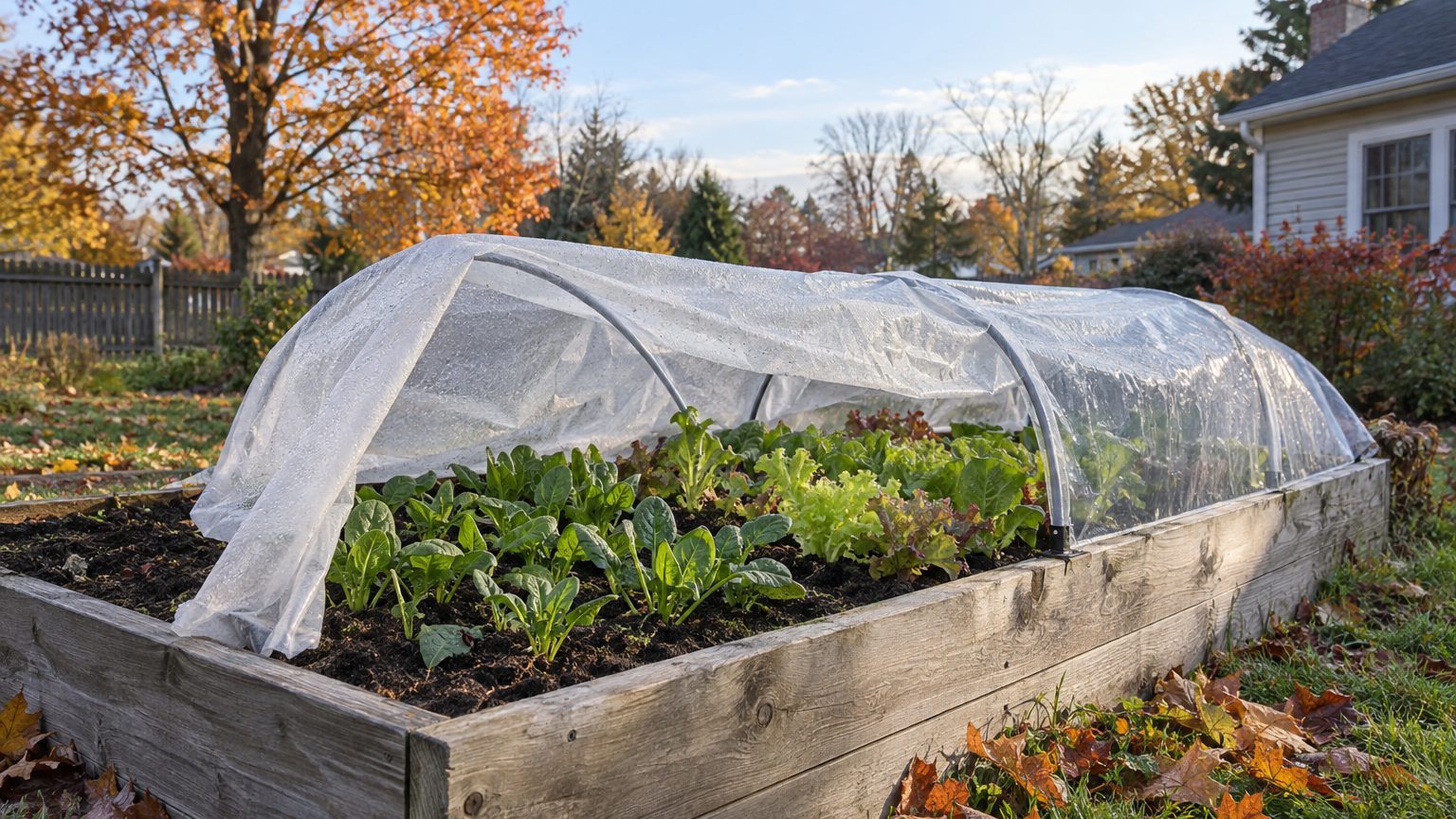

Rhode Island gardeners working from reference-city frost dates have a window of roughly 190 to 210 days between the last spring freeze and the first fall one. A cover stretches both ends of that window, but the calendar is the wrong thing to watch. Soil temperature and day length decide what a cover can do. The wider logic is in Extending the Season: What a Cover Buys, and What It Cannot.
When the soil is warm enough in Rhode Island
The date everyone asks about is the last spring frost. For the Providence-area airport station, the NOAA NCEI U.S. Climate Normals 1991-2020 put it between April 7 and April 17, using the 32°F freeze probabilities in the 30 to 70 percent band. That is a probability, not a promise, and some years will break it in either direction.
Those dates also describe an airport, and gardens are rarely at airports. Suburban and rural plots typically see the last spring frost one to two weeks later than the reference city, and more at elevation. Check your own county before you pencil anything in.
Frost is a proxy, soil is the answer
A frost date tells you when freezing air stops being a threat. It says nothing about whether seeds will sprout or roots will grow. Soil lags the air. It warms after the frost risk ends, not alongside it, because a bed that spent the winter cold has a lot of thermal mass to work through. Near the water, where the ocean and bay hold spring back, that lag can feel longer.
Season extension in spring is really a way of waiting less for that soil. A cover works because the ground soaks up sunshine all day and releases heat after dark. A cloche, tunnel, or frame traps that released heat in still air, and a second layer inside (a light fabric under a hooped tunnel, say) adds another pocket of still air. The gain is real but variable. It depends on the material, the night, the wind, and whether the ground was warm to begin with. Wind can strip the benefit in minutes if the edges are not pinned down.
Covers shift the limit. They do not remove it. A clear, calm night after a mild day is exactly when frost sneaks in, and a bed that someone believed was frost-proof can be lost in a single night. Tender crops under a cover still need the frost risk to be genuinely past, or a plan to add a layer when the forecast turns.
The practical move is to lay the cover over the bed a week or two before planting, so the soil warms under it. Then take a morning reading with a probe thermometer at planting depth and compare it with the minimum germination temperature on the seed packet. That number, not the date, is your green light. Everything here is passive. No heaters, lamps, or candles belong inside a covered structure, and the fire and carbon monoxide risks are why this site never suggests them.
One more rule for any closed structure. A cold frame shut in spring sun can cook its contents in an hour, even on a chilly day. Ventilation is not an option. Prop the lid open on every sunny morning and close it as the afternoon cools.
How long the season lasts here
Take the earliest and latest pairings of the reference-station dates. The shortest window runs from April 17 to October 24, which is 190 days. The longest runs from April 7 to November 3, which is 210 days. The first fall frost for this station falls between October 24 and November 3, again from the NOAA NCEI 1991-2020 normals. A suburban or rural garden might lose a week or two at each end, which could trim the window by two to four weeks.
So what does a window of that length allow? Mostly it allows a second sowing. With 190 or more days, a spring planting of quick crops can finish and make room for a late-summer sowing that matures in cooler fall weather. A short season, by contrast, makes the first sowing the only one. The succession sowing guide on this site walks through how to space those plantings, and Rhode Island sits comfortably on the side where it is worth doing.
The length also shapes the transplant question. Every transplant takes a root check, a few days of stalled growth after the move. In a short season, that pause can cost a crop its finish, so the choice is between direct sowing and a tough start indoors. Here the window is generous enough that direct sowing finishes most quick crops, and transplanting pays off mainly for heat-lovers that want a head start. A cover can make either route safer at the edges, protecting early transplants in April and late sowings in October.
This is also where the shoulder months earn their keep. The stretch before the last spring frost and after the first fall frost is when covers matter most, and a window that already runs about six to seven months means they are extending a season, not rescuing one. Gardeners in the middle of the country face a different balance. Compare it with Extending the Growing Season in Iowa and Extending the Growing Season in Kansas, where heat and winter cold arrive in different proportions.
Heat and water in Rhode Island
This page does not quote a count of days above 90°F or a summer rainfall total, because verified figures for those two measures are not part of the data behind it. That matters, because any such count would belong to a single reference station, not the whole state. Check the NOAA normals for the station nearest you before drawing conclusions about heat stress or watering schedules.
What can be said is how to read a northern, coastal climate. Where days above 90°F are few, heat is not the governing fact, and writing a hot-climate paragraph about shade cloth and root cooling would mislead. A cool, damp summer brings a different set of problems: mildew on leaves that stay wet, slow ripening in fruiting crops, and disease that spreads when air stops moving. Covers matter here because a closed one holds humidity, so airflow is the safeguard against rot.
Light and cold set the real limits
The Providence-area station sits at 41.72 degrees north. That latitude fixes the date in late autumn when daylight drops below the level plants need to keep growing. After that date, a cover no longer grows a crop. It holds a mature crop alive, like a refrigerator that happens to be outdoors. So fall plantings need to be nearly full size before the light fades, which means counting backward from that point and not from the first frost. Rhode Island is a small state, so latitude varies little across it, but check your own if you garden near the edge.
The coldest month then decides what kind of cover is enough. The mean daily minimum in the coldest month at the Providence reference station is 22.1°F, about ten degrees below freezing on an average night, and colder nights come with it. A light fabric laid over a bed is a fall tool, handy for the shoulder weeks. Deep winter keeping of hardy greens calls for a framed structure, such as a cold frame or an unheated tunnel with a second inner layer, and a closed frame on a bright winter day can still overheat, so vent it.
The USDA Plant Hardiness Zone Map (2023 edition, built on 1991-2020 normals) places Rhode Island in zones 6a to 7b. That system rests on one variable, the average annual extreme minimum, so it speaks to whether perennials survive winter. It says nothing about light or about how fast a bed warms in March, and the coast and the inland hills sit at different ends of that range.
Which season extension suit Rhode Island
Choose by type, not by cultivar. This territory’s facts point in a clear direction. The shoulder seasons are the constraint, since light and cold both limit late growth, so the earliest-maturing types of each crop make the most of a cover. Humidity makes disease resistance the first criterion for anything that will sit under a cover or in a crowded bed. And where summer heat does arrive, choose types that take airflow and some shade at the root.
This page names no varieties, deliberately. A cultivar recommendation is only worth anything if it was trialled in local conditions, and this page does not have those trials. The state’s land-grant extension service does. University of Rhode Island Cooperative Extension can point you to varieties that have performed locally, and to the diseases that are active this year. Treat their guidance as the final word on what to grow.
The cover itself matters as much as the crop. Here is how the main types compare for this climate:
| Cover type | Best use in Rhode Island | Watch for |
|---|---|---|
| Lightweight floating fabric | Spring sowings and the first weeks after the fall frost date | Wind lifting the edges; limited help on the coldest nights |
| Hooped low tunnel with fabric or film | Earlier spring planting and later fall harvests | Film types trap humidity and heat, so open the ends on sunny days |
| Cold frame | Hardy greens through the coldest month, seedling hardening | Closed in sun, it can cook the crop in an hour; vent every sunny day |
| Unheated tunnel or greenhouse | Winter holding of hardy crops with an inner second layer | Humidity and disease; needs airflow and side or end venting |
Whichever you choose, the gain is real but variable, and a cover shifts the limit without removing it. For a northern state with damp summers, spend the first dollar on airflow and drainage, not on thicker layers.
Common questions
When can I plant outside in Rhode Island?
Use the reference-city window of April 7 to April 17 as a starting point, then add a week or two if you garden in a suburban or rural spot. Confirm with a soil thermometer at planting depth and the minimum germination temperature on your seed packet. Hardy crops can go in earlier under a cover that has been warming the bed.
Will a cover protect my plants from a hard freeze?
It helps, but it does not make anything frost-proof. Trapped heat from the soil and still air raise the limit by an amount that depends on the material, the wind, and the night. Tender crops can still be lost, so hold them back until the frost risk has truly passed and add an extra layer when the forecast looks cold.
How late can I keep harvesting in fall?
The reference station’s first fall frost falls between October 24 and November 3, and rural gardens often see it one to two weeks earlier. A cover can carry hardy crops beyond those dates, but shrinking daylight in late autumn means a covered crop is held, not grown. Get plantings close to full size before the light fades.
Do I need to open a cover when it is cold outside?
Yes, whenever the sun is out. A closed cold frame or tunnel heats fast in direct light, even on a chilly day, and can damage a crop within an hour. Vent on sunny mornings, close in the afternoon, and never add a heater or flame inside.