
In New York, choose the earliest-maturing sweet potatoes you can find, and lean toward compact vines over sprawling ones. The season rewards speed, and speed shrinks as you move north. Variety names matter less than the days-to-maturity figure on the slip order form, and the rest of this page explains how to read that number against New York’s frost dates, heat, and rain.
The short answer for New York
Grow early, short-maturity types, and treat anything labeled “long season” as a gamble. A sweet potato is a tender, heat-loving root crop that needs a warm stretch to bulk up, and New York gives it a shorter, milder one than the Southeast does.
The numbers come from New York City’s Central Park station, NOAA’s 1991-2020 Climate Normals. The last spring frost falls between March 23 and April 3, and the first fall frost between November 14 and November 27. Those dates are the span where the probability of a 32°F freeze sits between 30 and 70 percent. They do not promise a freeze-free day. They are a statement about odds, at one dense urban site, so they describe New York City and not the state.
The frost window looks generous, but it misleads. Sweet potatoes do not go in at the last frost date, because cold soil stalls them long after the air stops freezing. What counts is the stretch of truly warm weather, and the city sees only about 12.2 days a year at 90°F or higher. That is a modest heat load. Sweet potatoes will grow in it, but they will not coast through it the way they do in Georgia.
That is why the choice runs by type, not by brand:
| Type | Fits New York when | Watch for |
|---|---|---|
| Early, short-maturity types | Almost anywhere in the state; the default choice | Smaller roots than long-season types can reach |
| Compact or bush-habit vines | Small beds, raised beds, containers | Less sprawl means fewer roots per plant, so plant a few extra |
| Standard vining, mid-season types | Warm, sunny sites in the lower Hudson Valley and on Long Island | Needs a full warm summer to finish |
| Long-season types | Rarely; a hedge only in the warmest city and coastal gardens | Fall frost can arrive before the roots size up |
Our guide to Growing Sweet Potatoes in New York covers the full season, and When to Plant Sweet Potatoes in New York turns these frost dates into a planting window.
What will not work here
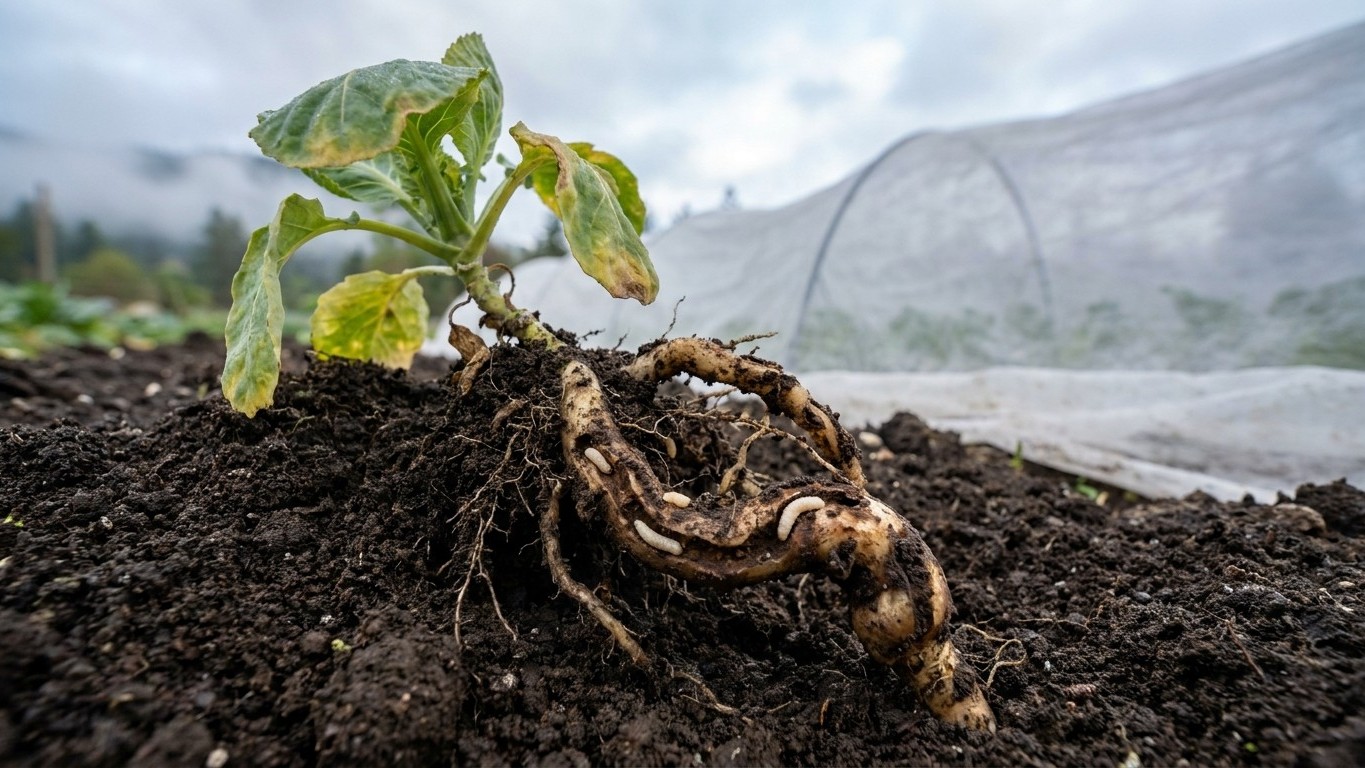
Slow varieties fail first. A type that needs a long, hot runway to size up its roots will run out of calendar in a state where the frost-date figures above apply only to New York City. Upstate and the Adirondacks frost far earlier in fall and later in spring, so a variety that barely finishes in the city may never finish at all in the north. The roots stay pencil-thin, and a frost that blackens the vines ends the season on the spot.
Planting by the frost calendar fails too. The March 23 to April 3 spring window is a freeze probability, not a planting signal. Slips set out the moment frost danger fades will sit in cold ground and sulk. Gardeners who plant on that logic often blame the variety when the real culprit was the date.
Weekly watering on a fixed schedule is a quieter failure, and it works the opposite way from the usual Southern advice. New York’s summers are not dry. Across June, July, and August, the reference station normally collects about 13.7 inches of rain: 4.54 in June, 4.6 in July, and 4.56 in August (49.5 inches over the year). Even the driest summer month brings 4.54 inches. A gardener who waters out of habit on top of that can drown the roots, and sweet potatoes in saturated, heavy soil are prone to rot and cracking.
The same rainfall figure can mislead from the other side. An inch of rain disappears from sandy ground within the day, while clay holds it for a week. Rain that comes as a single summer thunderstorm mostly runs off instead of soaking in, and the days at 90°F or higher speed evaporation from the surface. These numbers are normals for one station over 1991-2020. They are not a forecast, and a slope, a rain shadow, or a city block can change them. A cheap rain gauge on your own plot settles it better than any state figure.
Crowding is the last thing to avoid. Humid, rainy summers favor foliage that stays wet, and close spacing keeps vines damp and slow to dry. Give vining types room, or train them up a support, and prefer compact types if your bed is tight.
What changes across New York
There is no single New York garden. The USDA Plant Hardiness Zone Map (2023 edition, built on 1991-2020 normals) places the state anywhere from zone 3b to 7b. That is a spread of several zones inside one set of borders, and no single answer fits it.
A caveat applies here. The USDA system rests on one variable, the average annual extreme minimum temperature. Sweet potatoes are grown as annuals and die at the first hard frost anyway, so the winter low tells you little about whether a crop will mature. The zone is better read as a rough gauge of how far north, how high, or how exposed a site is. A lower zone number nearly always means a shorter frost-free season, and that is the number that decides sweet potatoes.
For the reference city, Central Park, the frost dates above are the right place to start. A gardener in the Adirondacks, the Catskills, or the northern tier should shift everything earlier in the catalog: shortest-maturity types, compact vines, the warmest and sunniest spot on the property, and a willingness to start growth indoors and harden plants off. Altitude matters as much as latitude. A south-facing slope or a raised bed that warms early can buy you weeks, while a frost pocket at the bottom of a hill can cost you the crop.
Which zone your address falls in is a matter for the USDA map itself. Look up your own location there instead of assuming a zone from the region you live in, because a few miles and a few hundred feet of elevation can move you a full zone.
Where to check this for your own county
The best next stop is Cornell Cooperative Extension, New York’s land-grant extension system, which has a presence in every county. Its local offices know the county’s soil, the frost pockets, and what neighbors have actually harvested.
Look for two things in particular. The first is a local planting calendar for warm-season vegetables, with dates tuned to your county and not to the whole state. The second is any variety trial or recommended-variety list: which sweet potato types were tested nearby, how long they took to mature, and how they yielded. A trial result from a farm or a demonstration garden in your own county outranks anything on this page.
This page is the state-level view, built on one reference station and a handful of climate normals. A county recommendation will always beat a state one, because a state this size covers too many climates. The facts behind this article do not include a New York sweet potato calendar from the extension, so the page does not give a county-by-county schedule. If your extension office has one, use it and let it overrule the general guidance here.
A phone call or email to the county office also works, and the staff and master gardeners answer exactly this kind of question every spring.
Checking this against your own garden
Your own observations outrank every date above. Three are worth watching.
- Soil warmth by feel. Push your hand a few inches into the bed in the afternoon. If the soil feels cool and damp against your skin, it is too early for slips. Warm, almost bath-like soil means the roots will grow. Beds that warm early are your warm microclimate, and the shaded ones will always lag.
- New leaves on the slips. A transplant that sits flat for a week and then pushes out fresh, true leaves has rooted in. If the first leaves yellow or the growth stalls, the ground was colder or wetter than the calendar suggested, and it tells you which corner to avoid next year.
- The first blackened leaf in fall. Note which part of the yard frosts first and the date. A low spot that burns weeks before the rest of the garden is a frost pocket, and it tells you where not to put long-season types.
Keep a few lines in a notebook each year. After two seasons, your notes will be a better planting calendar than any regional table.
Common questions
Can sweet potatoes grow in upstate New York?
Yes, but with shortened expectations. The frost dates on this page are for New York City, and upstate and the Adirondacks frost much earlier in fall. Choose the shortest-maturity types, warm the soil, and expect smaller roots than in the south of the state.
Should I plant at the last frost date?
No. For New York City, that window runs March 23 to April 3, and it is a 30-70 percent probability band for a 32°F freeze. Sweet potatoes need warm soil, which comes later than the end of frost, so wait until the ground feels warm.
Do I need to water sweet potatoes all summer?
Less than you might think. The reference station normally gets about 13.7 inches of rain across June, July, and August. Soil type and heat change how much of it reaches the roots, so check soil moisture by hand and use a rain gauge instead of a fixed weekly schedule.
Is the hardiness zone the best guide to which variety to pick?
Not really. The USDA zone, which runs 3b to 7b across New York, reflects winter minimums, and sweet potatoes are grown as annuals. Days to maturity, your frost dates, and your local extension office’s advice are more useful.