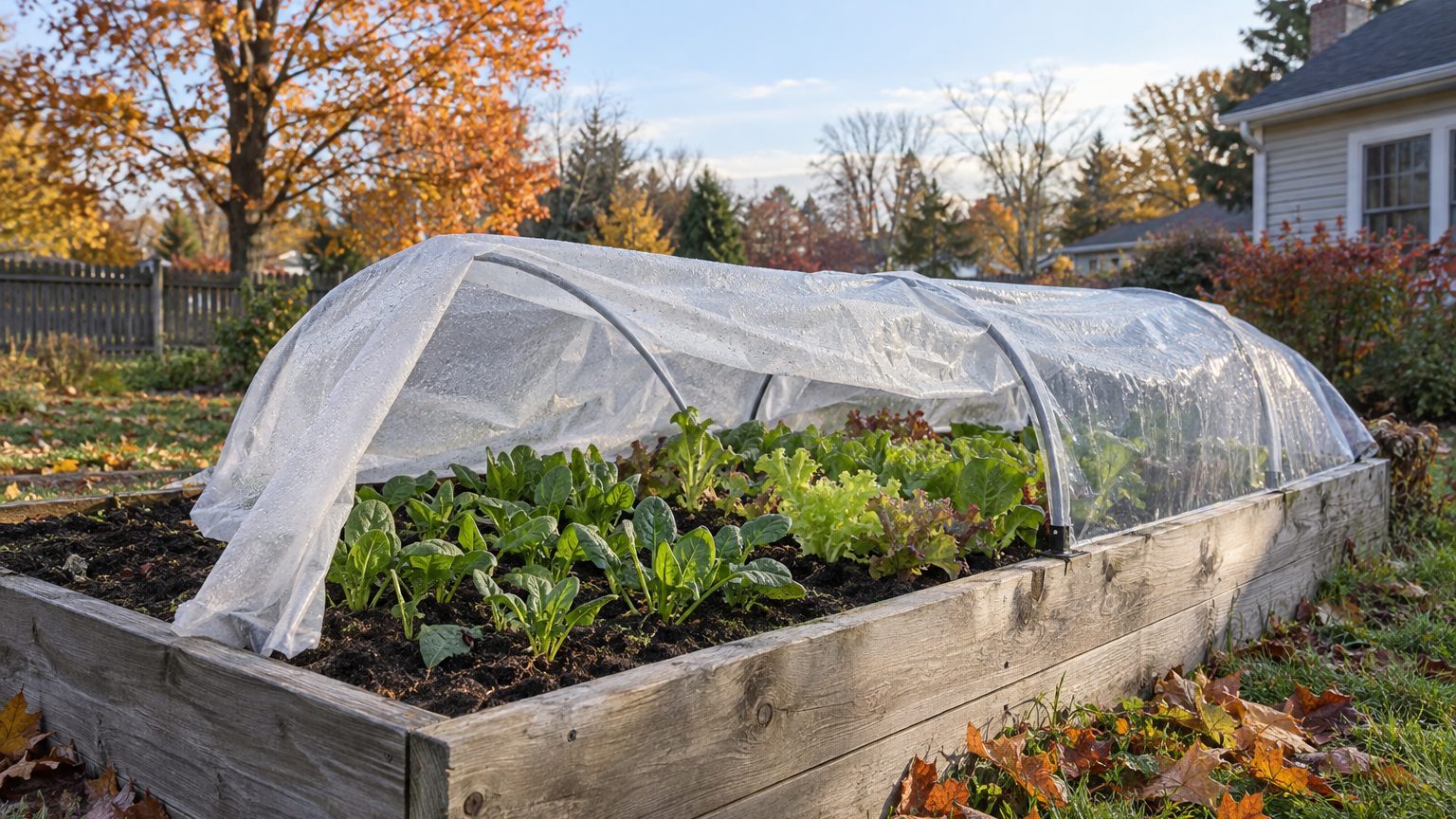

In Charleston, the last spring freeze typically falls between April 9 and April 23, and the first fall freeze between October 18 and November 1. Passive covers can stretch both ends of that window by a few weeks, not months. The limits are cold soil in spring and shrinking daylight in fall, and no cover changes either one. Elevation moves all of these dates.
When the soil is warm enough in West Virginia
The date most gardeners want is the last spring frost. For Charleston (NOAA station USW00013866, 1991-2020 Climate Normals), the 32 F freeze probability band of 30 to 70 percent puts it between April 9 and April 23. That is a probability, not a promise: some years the last freeze comes earlier, some years later.
Frost is only a proxy, though. Seeds and transplants do not care about the air temperature on a calendar date. They care about the soil, and soil warms more slowly than air. It lags behind the end of frost risk, not alongside it. Cold, wet ground in mid-April can stall a pea seedling or rot a bean seed even when the nights have stopped dipping to 32 F. A thermometer pushed a couple of inches into the bed tells you more than the date does.
This is where a cover earns its place. Soil absorbs sun during the day and gives that heat back at night. A row cover, low tunnel or cold frame traps part of that radiated heat and holds still air around the plants, and a second layer of fabric adds another pocket of still air. A cover set over the bed a week or two before planting also pre-warms the soil, which is often worth more than any night-time protection.
The gain is real but variable. It depends on the material, the wind, how clear the night is and whether the ground was warm to begin with. Clear, still nights are the dangerous ones, because heat escapes upward fastest then. A cover shifts the limit; it does not remove it. A hard freeze following a mild week can still take a bed, covered or not, so treat the cover as a buffer and keep watching the forecast.
Anything closed needs ventilation, and in spring that is a matter of whether the crop survives. A shut cold frame on a sunny April afternoon can cook its contents within an hour, even when the air outside is cool. Prop it open in the morning, close it before the sun drops. This site keeps everything passive: no heaters, lamps or candles inside a covered structure, because of the fire and carbon monoxide risks.
One caution on the dates. Charleston sits in a river valley. Hillsides and ridges across the state get their own frost patterns, and higher elevations freeze noticeably earlier in fall. For the general logic of what a cover buys, see Extending the Season: What a Cover Buys, and What It Cannot.
How long the season lasts here
The same station gives a first fall freeze between October 18 and November 1 (the same 30 to 70 percent probability band). Subtract the spring dates and the frost-free window comes out between 178 and 206 days. Pair the early spring date with the early fall date, or the late with the late, and you get 192 days either way. Those are Charleston numbers. A garden on a ridge will have fewer days, mostly lost at the fall end.
What roughly 192 days allows
A window that length is long enough for two plantings of many crops, and that changes how you plan. Spring peas or lettuce can come out in early summer and be followed by a fall sowing of the same family, timed backward from the first freeze. Bush beans can be sown more than once. The succession sowing guide on this site walks through the spacing of those sowings; the key point here is that the fall round is the one a cover rescues, since it ends in cold, shortening days.
Compare a short-season garden, where the first sowing is the only one. There, every week matters and transplants are tempting because they skip the slowest stage. Transplanting is a gamble on roots, though. A seedling pulled from a cell and set into cold soil often sulks for a week or more, and some crops, such as carrots and beets, resent the root disturbance altogether. With 192 days on the calendar, direct sowing under a cover is often the better bet: slower to start, but no setback.
Be careful with the early-start temptation. Getting a cover on the bed in late March might gain two weeks, but if the soil stays cold, the crop sits and waits, and the gain is on paper only. In this window the extra time is worth most at the end of the season, where warm soil from summer still gives a cover something to hold.
Neighboring regions run on different clocks. For comparison, see Extending the Growing Season in Kentucky and Extending the Growing Season in Missouri, which work from their own station data.
Heat and water in West Virginia
This page does not carry a verified count of days above 90 F or a summer rainfall total for a reference station, and a made-up figure would be worse than none. So the argument rests on what the sourced facts do show: this is not a territory where heat is the governing constraint on season extension. Cold and light are.
Start with light. Charleston sits at 38.38 degrees north. That latitude belongs to the city, not the whole state, so a gardener in the far north of the state or the southern counties should check their own. Latitude sets how fast daylight shrinks in autumn, and there comes a date when the days are too short for most crops to put on real growth, whatever the thermometer says. After that date, a cover holds a crop alive rather than growing it. Mature spinach and kale can wait under cover for weeks, but a seedling sown after that point will barely move. So the fall sowing deadline should be counted back from the light, not from the first freeze.
Day length also governs bulbing crops. Onions respond to hours of daylight, not to warmth, which is why variety choice by day-length type matters in a way that frost dates never will.
Then the cold. The mean daily minimum of the coldest month at Charleston is 26.1 F. That is an average low, not a record, which means many winter nights go below it. For hardy greens, that is a range where light fabric alone often runs out of room, while a framed structure with a second layer has a better chance, though the gain varies with the night and the wind. The USDA Plant Hardiness Zone Map (2023) puts the state in zones 5a to 7a, based on the average annual extreme minimum. That is a wide range. Look up your own location instead of assuming Charleston’s.
On the wet side, the honest expectation is a humid, often damp growing season, especially in the mountains, where cooler summers are common. What that brings is not scorched foliage but mildew, slow ripening and fungal disease. Covers make this worse if they are left closed: trapped moisture and still air are exactly what these diseases want. Open ends, spacing and morning ventilation matter more here than shade cloth. Where an afternoon in the valley does run hot, a cover left on a sunny day can overheat a bed quickly, so vent first and ask questions later.
Which season extension suit West Virginia
The choice here is by type, not by cultivar, and the reasoning follows the state’s facts. A frost-free window around 192 days at Charleston, and shorter on higher ground, favors the earliest types of any crop, because a few weeks lost in a cool spring are hard to recover. A humid climate makes disease resistance the first thing to look for in any variety. Hot spells in the valleys favor types with airflow and shade at the root. None of that points to one named plant.
| Cover type | Best use in West Virginia | Watch for |
|---|---|---|
| Lightweight row cover | Pre-warming soil, insect barrier, small frost buffer in spring and early fall | Runs out of room on the coldest nights; trapped dampness if left closed |
| Low tunnel with a second layer | Hardy greens into late fall and early spring | Wind lifting the edges; vent on sunny days |
| Cold frame | Seedlings, hardening off, winter greens near the house | Overheating within an hour of spring sun if closed |
| Shade cloth | Short hot spells, root protection for cool-season crops | Too much shade in cool, damp weather |
Notice that no heating device appears anywhere in that list. Everything depends on trapped sun, still air and a second layer, and every closed structure needs a ventilation routine, not an occasional glance.
For varieties, this page deliberately names none. The only recommendations that mean anything are the ones trialed in West Virginia soil, humidity and elevation, and this page does not have those trial results. West Virginia University Extension does, along with county agents who know your elevation. Ask them which varieties of the crop you want have done well locally, and which resist the diseases your area gets. Declining to guess here is the right answer, because a wrong variety recommendation costs a season.
Common questions
When can I plant after the last frost date?
Charleston’s last freeze usually falls between April 9 and April 23, but plant by soil temperature, not the calendar. Warm-season crops want warm ground well after the frost risk ends. Cool-season crops can go in earlier, especially under a cover that has already been warming the bed.
Does a cover make my plants frost-proof?
No. A cover traps heat radiating from the soil and holds still air around the plants, and the gain is real but varies with the material, the wind and the night. A hard, clear night can still beat it. Check the forecast and add a second layer when a freeze is expected.
How much earlier will frost arrive on my hillside?
Higher elevations across the state freeze noticeably earlier in fall than Charleston does, and the station’s dates cannot tell you by how much. Your county extension agent can, and your own first-freeze records will confirm it within a season or two.
Do I need to open a cold frame every day?
Yes, on any sunny day, even a cool one. A closed frame can overheat within an hour in spring sun. Prop it open in the morning and close it as the sun drops. Humid weather adds another reason: closed, damp air invites mildew and other diseases.