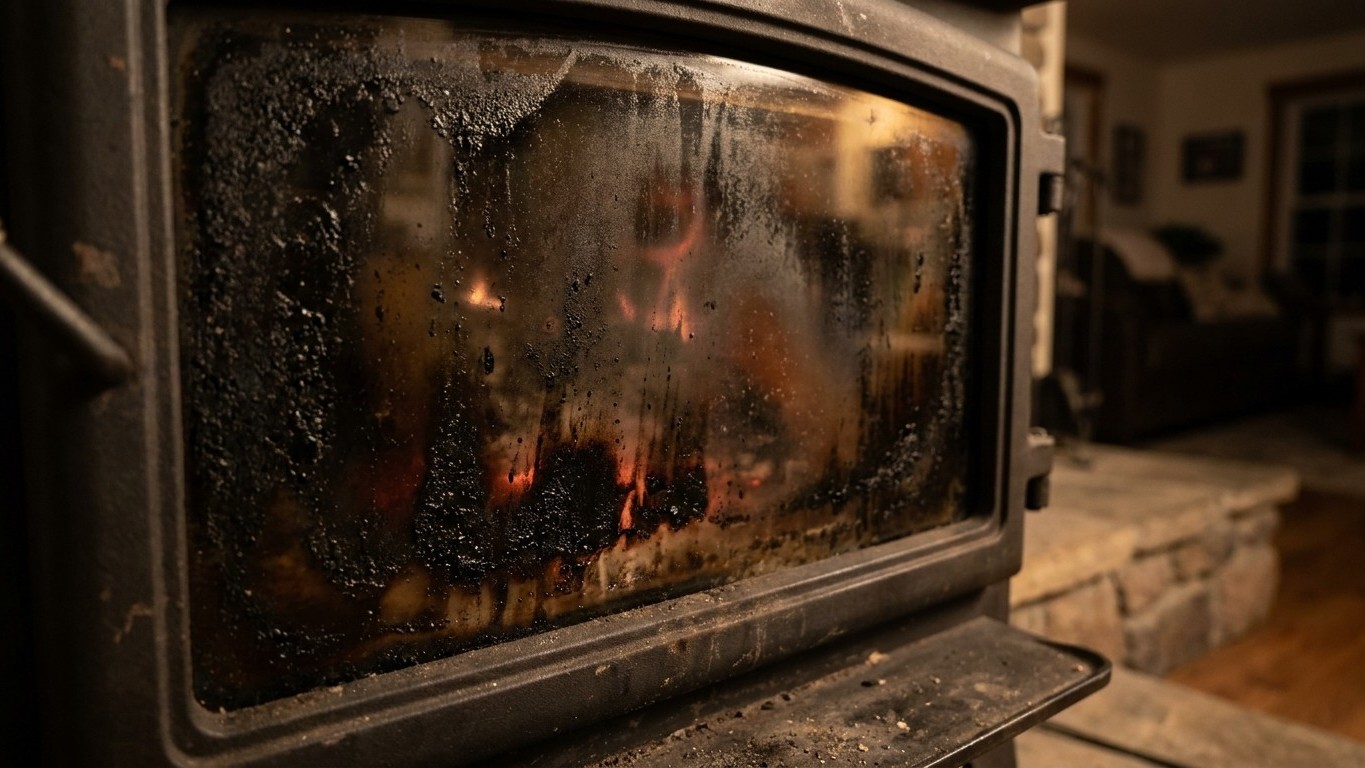

Black glass on a wood stove almost always means one thing: the wood is too wet or the fire isn’t burning hot enough to fully combust the smoke before it hits the glass. Creosote and soot are byproducts of incomplete combustion, and they stick to cool glass surfaces the same way bacon grease clings to a cold pan. Fix the fuel and the airflow, and the glass usually clears up within a few fires.
What’s Actually Coating the Glass

That black film is a mix of unburned carbon particles, tar, and creosote vapor that condensed the moment it touched the cooler glass surface. Wood smoke contains hundreds of compounds, and when a fire burns cool or oxygen-starved, those compounds don’t fully break down into carbon dioxide and water vapor. Instead they drift upward as smoke, and some of it settles wherever there’s a cold surface nearby, including your glass door.
Newer stoves with airwash systems are designed to push a curtain of air down the inside of the glass specifically to keep this from happening. But airwash only works when there’s enough heat and oxygen flowing through the firebox. Feed a stove wet, unseasoned wood and even the best airwash system gets overwhelmed. Three logs into a damp load and you’ll already see the haze forming.
Firewood Moisture Is the Main Culprit
Wood fresh off a tree, what folks in the trade call “green” wood, can carry 50 percent or more of its weight in water. Burning that kind of wood means a huge chunk of your fire’s energy goes toward boiling off water instead of producing heat and clean combustion. The EPA’s Burn Wise program recommends firewood with a moisture content of 20 percent or less for efficient, cleaner burning. Anything wetter and you’re essentially trying to light a wet sponge on fire.
A cheap moisture meter, the kind sold at most hardware stores for under $20, takes the guesswork out of this. Split a piece of firewood, press the probes into the freshly exposed face (not the weathered exterior), and read the number. If it’s consistently above 20-25 percent, that’s your answer for why the glass keeps blacking out.
How Long Seasoning Actually Takes
Most hardwoods need six months to a full year of proper seasoning to drop below that 20 percent threshold, and dense species like oak can take up to two years. Softer woods like pine or poplar dry faster, sometimes in three to six months, but they also burn hotter and faster, which changes how you’d manage the fire. Wood stacked in a covered, single-row pile with good sun and wind exposure dries far faster than wood tossed in a shaded pile against a fence line. Split wood also dries faster than whole rounds, since more surface area is exposed to air.
Buying “seasoned” firewood from a seller doesn’t guarantee it’s actually dry. Plenty of firewood sold as seasoned has simply sat for a few weeks, not months. Testing a few splits with a moisture meter before you commit to a cord is a five-minute habit that saves a season of blackened glass and disappointing fires.
Species and Storage Matter Too
Not all wood burns the same way even at identical moisture levels. Resinous softwoods like pine and spruce contain more volatile compounds and pitch, which produce more smoke and soot even when properly seasoned. That’s why a lot of stove manuals recommend seasoned hardwoods, oak, maple, ash, hickory, as the primary fuel, with softwoods reserved for kindling or shoulder-season fires when you don’t need a long, hot burn.
Storage conditions between seasoning and burning count too. Wood that’s dried properly but then sits uncovered through a rainy week can reabsorb surface moisture. That outer layer of dampness is enough to smolder and smoke when it first hits the firebox, even if the core of the log is bone dry. Keeping a small supply of wood indoors or in a dry porch area for a day or two before burning helps it perform closer to its actual moisture reading.
Burning Technique Makes a Bigger Difference Than People Expect
Even with perfectly dry wood, how you build and run the fire affects glass clarity. A fire that’s choked down too early, air controls closed to “save wood” or stretch the burn overnight, drops the firebox temperature and starves combustion. That’s a recipe for smoldering, smoky fires that coat glass fast. Most manufacturers recommend running the stove with air controls wide open for the first 15 to 20 minutes after adding wood, letting the fire establish a hot, active flame before throttling back.
Loading a stove too full, or stacking logs right up against the glass, also causes localized soot buildup, since flames and smoke have less room to circulate and burn cleanly before contacting the cool glass surface. Leaving a few inches of clearance between the top log and the glass door, and between the wood pile and the airwash channel, gives the system room to actually do its job.
Cold Starts and Damp Weather
The first fire of a cold morning, or any fire started in a cold flue, tends to produce more smoke and blackening simply because the chimney hasn’t built up its draft yet. Cool flue air is denser and doesn’t pull smoke upward as efficiently, so more of it lingers in the firebox and settles on the glass. Building smaller, hotter kindling fires to warm the flue before adding larger splits reduces this effect. Some stove owners keep a bundle of dry, thin kindling specifically for this purpose, using it to get a fast, hot flame going before loading heavier wood.
Cleaning the Glass Without Damaging It
Once the glass is coated, most of that soot layer wipes off with a damp paper towel dipped in the cold ash from the firebox itself. Wood ash contains just enough mild abrasive quality to lift soot without scratching ceramic glass, and it’s free. For tougher creosote buildup, a stove-specific glass cleaner works well; regular household glass cleaners can leave streaks or, worse, seep into gaps around the gasket. Never scrape the glass with metal tools or abrasive pads, since ceramic glass can scratch, and scratches become permanent collection points for future soot.
Cleaning only the symptom without fixing the fuel or airflow problem means you’ll be back to a black door within a day or two. Glass that reblackens quickly after a thorough cleaning, even with dry wood and proper technique, sometimes points to a worn gasket letting in too much cool air, or an airwash channel that’s clogged with old creosote. Both are worth checking if the problem persists despite good firewood and good habits.
When Black Glass Signals a Bigger Issue
Occasional light haze on the glass, especially overnight during a low, slow burn, is normal and not a sign of a problem. But glass that blackens within an hour of a hot, active fire built with wood that tests well below 20 percent moisture suggests something mechanical is off, whether that’s a damaged door seal, a stove that’s undersized for the room and constantly run at low output, or a chimney draft problem pulling insufficient air through the firebox. In those cases, the fix isn’t better firewood, it’s a service call or a look at the stove’s air intake and gasket seals.
Persistent heavy creosote buildup on glass also often means the same buildup is happening inside the flue, which raises the risk of chimney fires. The National Fire Protection Association recommends annual chimney inspections for wood-burning systems regardless of how the glass looks, since creosote accumulates in places you can’t see from the firebox.
A moisture meter, a covered stack of split hardwood with at least six months of drying time, and a habit of running the air controls wide open for the first stretch of every fire solve the black glass problem for most households before winter is even halfway through. The wood you’re burning tonight tells you almost everything about what your glass will look like tomorrow morning.