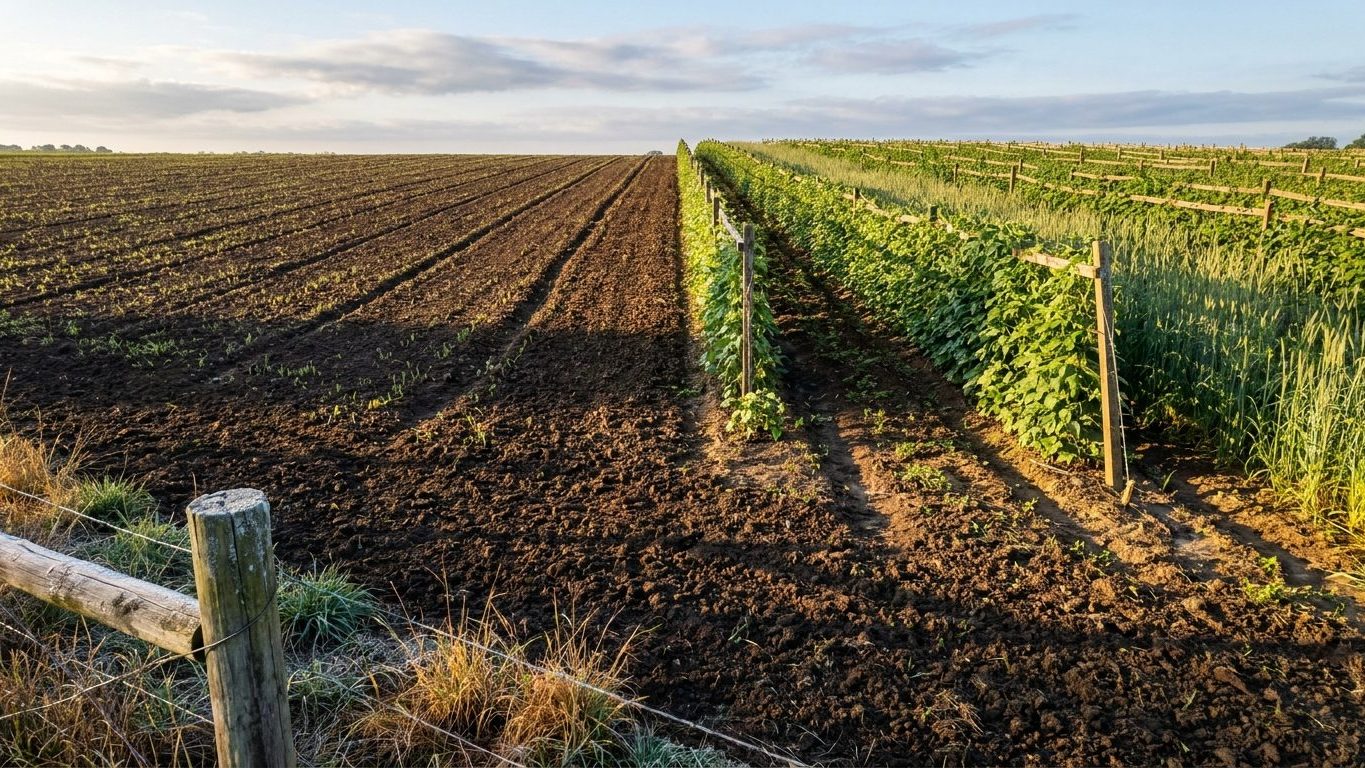

In Idaho, sow frost-hardy cover crops from late summer into early fall, ahead of the first hard freeze, and sow frost-tender ones in spring once the last freeze has passed. Boise’s frost dates anchor that window. Most of the state sits higher and colder, so the calendar moves earlier in fall and later in spring as elevation climbs.
The short answer for Idaho
Two windows matter: spring, after the last freeze, for frost-tender covers, and late summer into early fall, counted backward from the first freeze, for hardy ones. At the Boise reference station, the last spring frost falls between April 23 and May 7, and the first fall frost between October 7 and October 21.
Those dates are a probability, not a deadline. They come from the NOAA NCEI 1991-2020 Climate Normals (station USW00024131) and mark the stretch where the chance of a 32°F freeze sits in the 30 to 70 percent band. Inside that stretch, a freeze is anywhere from unlikely to more likely than not. Gardeners who treat it as a hard line get caught by the odd late cold snap in May or an early one in early October.
| Window | Boise frost band (32°F) | What belongs in it |
|---|---|---|
| Spring sowing | Last frost April 23 to May 7 | Frost-tender covers such as buckwheat go in after the band. Hardy ones such as oats and field peas can go in earlier, once soil is workable. |
| Fall sowing | First frost October 7 to October 21 | Sow ahead of the band so seedlings can root. Winter rye is the exception and tolerates the latest sowing. |
The logic behind the fall window is simple. A seed needs warm enough soil to sprout and some weeks of growth to anchor itself before the ground cools. Sowing on the day the first frost arrives gives you a bare bed with seed sitting in it. Sowing a couple of weeks before the band opens gives the seedlings a head start. This page has no day-count for that lead time, so treat the band as the point to be well past, not the point to aim at.
Spring works the other way around. Hardy covers shrug off a late freeze, so they can go in early. Tender ones are a bet on the weather until the band has fully closed. Which species fits which window is covered in The Best Cover Crops for Idaho.
What will not work here
Copying Boise’s dates across the whole state is the first mistake. The Boise station sits in a low valley. Most of Idaho is higher and colder, with far shorter seasons, so a sowing date that works at the Boise station can leave a high-country bed with seedlings caught by frost before they establish.
Late sowing of anything but the toughest covers is the second. Boise’s first frost falls between October 7 and October 21. A frost-tender or slow cover sown in late September is already in trouble in a cooler spot, and one sown in mid-October is just seed waiting for spring. Slow-growing legumes such as hairy vetch suffer most, because they need a stretch of mild weather to build any size. Winter rye is the safe bet when the calendar has run away from you.
Sowing tender covers early in spring is the third. Buckwheat sown inside the April 23 to May 7 band is a roll of the dice, since the freeze odds there run between 30 and 70 percent. One cold night can erase the stand, and reseeding costs more than waiting a week.
Then there is water. Much of southern Idaho gardens on irrigation rather than rain, and this page carries no rainfall figures, so it cannot say how dry a given summer will be. What it can say is that a cover crop sown in the heat and watered once a week will fail. Seeds need steady surface moisture for germination, and a weekly soak dries out in between. Late-summer sowings need either a drip or sprinkler schedule you can keep up or a delay until cooler, damper fall weather.
Finally, winter hardiness. The coldest month at the Boise reference station has a mean daily minimum of 25.4°F. That is an average of the nights, not a floor, and real nights run colder. Hardy covers like rye ride that out. Frost-tender and semi-hardy ones, such as oats and field peas, often die over winter in colder zones. That is fine, even useful, if you want a cover that winterkills and leaves a tidy mulch. It is a surprise if you expected it to resume growing in spring.
What changes across Idaho
Idaho has no single answer. The USDA Plant Hardiness Zone Map (2023, built on 1991-2020 normals) places the state in zones 3b through 7b. That is a spread of several full zones inside one set of borders. The USDA system rests on one variable, the average annual extreme minimum temperature, so it measures winter cold and says nothing about summer heat or season length.
The Boise numbers in this article describe the low valley around the reference station. A reader in the north, or anywhere at altitude, should shift the whole calendar. Fall sowing moves earlier, because the first freeze arrives earlier. Spring sowing of tender covers moves later, because the last freeze lingers. The hardiest options gain ground, because the cold zones punish anything marginal. In the coldest parts of the range, a cover that is dependably hardy in Boise may not be dependable at all.
Which zone you are in is not something this page can tell you. Look up your location on the USDA Plant Hardiness Zone Map, and keep in mind that a hillside, a creek bottom and a town center a few miles apart can differ. Use the map to decide how far to lean from the Boise dates, earlier in fall and later in spring as the zone number drops.
For the bigger picture of why and how to use cover crops in the state, start with Cover Crops for Idaho Gardens. This page only handles the timing.
Where to check this for your own county
The best next stop is University of Idaho Extension, the state’s land-grant extension service. County offices work with the actual soils, elevations and irrigation setups in their area, and that is where the planting advice gets specific.
Two things are worth looking for there:
- The local planting calendar for your county, ideally with frost dates for a station near you rather than Boise.
- The cover crop varieties that have been trialled in your county, not just recommended in general.
A county recommendation beats a state one, and this page is the state one. It rests on a single valley station and a statewide zone range, which makes it a starting frame rather than a prescription. If the county office gives you a different sowing window, go with the county.
One caution on sources. This page does not have an Idaho county calendar for cover crops, and it will not borrow one from another state. Guides written for other climates use other frost dates and other species lists, and some are lawn calendars that do not apply to a cover crop bed at all. Stick to Idaho material when you look for local timing.
Checking this against your own garden
Your own observations outrank every date above. Three are worth watching, and none needs equipment.
Soil warmth by feel comes first. Push a bare hand a few inches into the bed in spring. If it feels distinctly cold, tender covers are not ready to sprout. Compare a sunny south-facing spot with a shaded or low corner. A noticeable difference tells you how much your own beds lag behind or run ahead of the regional picture.
The first flush of male flowers on squash or similar crops comes second. They often open before the female flowers, and when they appear tells you how fast your site warms. Note the date each year. If yours come early compared with neighbors, your microclimate runs warm and your sowing windows may open sooner.
The first true leaves are third. Sow a small test strip of a cover crop, and watch for the first true leaves, the ones that look different from the seed leaves. How quickly they arrive in late summer tells you whether your fall window is still open. If seedlings stall at the seed-leaf stage as nights cool, the season has outrun your sowing date.
If you follow the almanac, here is when to plant cover crops by the moon. It is a tradition, not a proven method.
Common questions
Can I sow cover crops in spring in Idaho?
Yes. Hardy covers such as oats and field peas can go in once the soil is workable. Tender ones such as buckwheat should wait until the last freeze has passed, which at the Boise reference station falls between April 23 and May 7.
Do Boise’s dates apply to the whole state?
No. Boise is a low valley, and most of Idaho is higher and colder, with far shorter seasons. Statewide hardiness zones run from 3b to 7b, so the farther north or higher you garden, the more you should shift fall sowing earlier and tender spring sowing later.
How late can I sow in fall?
The Boise first-frost band runs from October 7 to October 21, and most covers need to be sown well ahead of it. Winter rye tolerates the latest sowing. This page has no day-count for the lead time, so ask your county extension office for one.
Are the frost dates a deadline?
They are odds. The band reflects a 30 to 70 percent probability of a 32°F freeze, so a date inside it is a bet, not a cutoff. Some years a freeze comes after May 7 or before October 7.