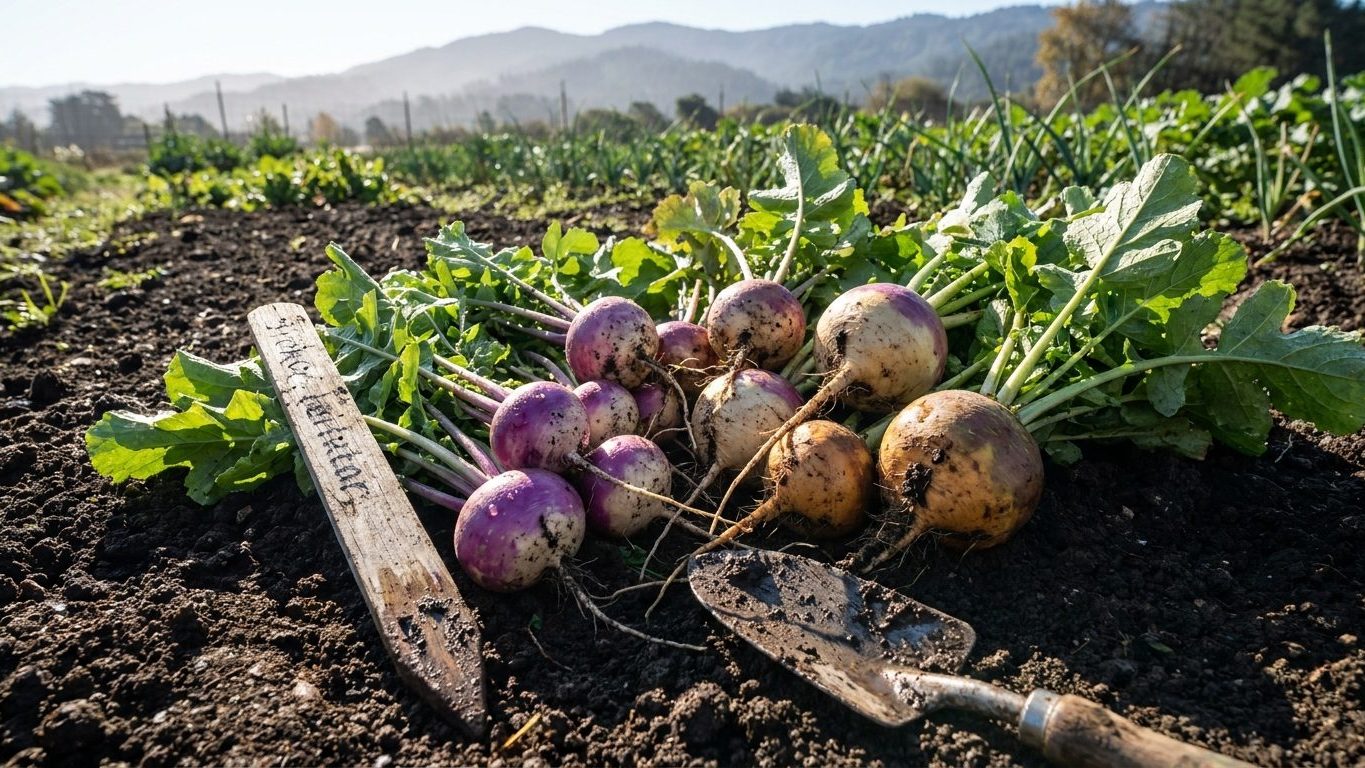

In Arizona’s low desert, the best turnips are fast-maturing types sown for a cool-season harvest, and rutabaga is the gamble. In the high country around Flagstaff, the answer flips. Both crops work there, and rutabaga makes good use of a long cool season. Type and timing matter more than any single variety name, and this page sorts out which type fits which part of the state.
The short answer for Arizona
For the low desert, pick quick turnips (small white salad types, standard purple-top globes, or types grown mainly for greens) and treat rutabaga as optional. For the high country, grow both and give rutabaga the long, cool stretch it needs.
The reasoning starts with Phoenix, the reference station for the numbers here. NOAA’s 1991-2020 normals put the mean daily minimum of the coldest month at 45.3°F, and the frost-free season at 365 days. Phoenix reached 32°F in only 6 of 30 springs. Cold almost never ends the season in the low desert. Heat does, and a turnip is a cool-season root. When warmth arrives before the root has bulked up, it bolts, turns woody, and takes on a sharp, hot flavor.
That is why days to maturity on the seed packet is the number to read first. A short-season turnip finishes before the heat catches it. A slow one gets caught. Rutabaga is the slowest of the group, which is the whole problem for low-desert gardeners.
| Type | Low desert (Phoenix reference) | High country (Flagstaff area) |
|---|---|---|
| Small white salad turnips | Best bet; quickest to size up | Works; confirm local timing |
| Purple-top globe turnips | Good if harvested on the early side | Works well; stores better |
| Turnips grown for greens | Forgiving; pick leaves young | Works; usable all season |
| Rutabaga | Risky; needs a long cool run | Best use of a long cool season |
This page does not give sowing dates. When to Sow Turnips in Arizona handles timing, and Growing Turnips and Rutabaga in Arizona covers the broader basics. Here the question is only which type to buy.
What will not work here
A frost-based calendar fails first. Most turnip advice says to sow so many weeks before the last spring frost or after the first fall one, and low-desert Arizona has no dependable dates for either. NOAA lists a 365-day frost-free season for Phoenix, and a rare cold snap that brings 32°F falls between late December and mid January, if it comes at all. Counting back from a frost that never arrives gets you nothing.
Sowing into summer fails next. The heat that shuts down fruit set on tomatoes and peppers for months does the same kind of damage to a turnip patch. Seedlings may sprout, but the roots that follow are small, fibrous, and bitter. Skipping the hot months entirely beats any attempt to push through them.
Weekly watering fails too, and the dry heat explains why. Turnips have shallow feeding roots, and a bed that swings from bone dry to soaked produces split, tough roots. In sandy desert soil, a deep soak once a week can leave the top few inches dry for days. Light, regular watering that keeps the upper soil evenly moist works much better, and a thin mulch helps hold it.
Rutabaga in the low desert is the other likely disappointment. It wants a long stretch of cool weather to swell, and the low desert’s cool window is short and often interrupted by warm spells. Gardeners sometimes get a small, edible root, but a dependable crop is a stretch. If you want to try it, give it a single experimental row and keep the turnips as your main planting.
What does not need worry is winter itself. With a coldest-month average low of 45.3°F, roots do not freeze in the ground in the low desert, and row cover is rarely needed. Young turnips shrug off a cold night better than most vegetables. The protection you need there is shade and moisture, not warmth.
What changes across Arizona
Arizona is not one garden. The USDA Plant Hardiness Zone Map (2023 edition, built on 1991-2020 normals) runs from zone 4b to zone 10b across the state. That is seven numbered zones, from mountain towns that freeze hard to desert valleys where freezing is the exception. No single answer covers that spread, and anyone who gives you one is guessing.
The zone system rests on one variable only, the average annual extreme minimum temperature. It tells you about winter cold. It says nothing about summer heat, and for turnips in the low desert, heat is the limit. So a high zone number does not help you pick a variety. It only confirms that winter will not be the obstacle.
In the north and at altitude, the logic reverses. Flagstaff and the high country freeze hard, so frost is a real planning date there, unlike in Phoenix. Summers are cooler, which lets turnips sit in the ground longer without bolting and gives rutabaga the time it needs. A gardener there should shift toward the larger globe turnips and rutabaga, plan around frost the way a Midwest gardener would, and keep row cover handy for cold snaps at either end of the season. This page does not have frost dates for the high country, so those need to come from a local source.
To find where your own address falls, use the USDA Plant Hardiness Zone Map and look up your ZIP code. Zones can shift over short distances with elevation, so a neighbor in the next valley may land in a different one.
Where to check this for your own county
The best next stop is University of Arizona Extension, the state’s land-grant extension service. It has county offices, and county staff know what grows in your valley, not just in the state as a whole.
Look for two things there. The first is the local planting calendar for vegetables in your county. Arizona has low-desert counties, mountain counties, and plenty of mixed ground between them, so a calendar written for one will mislead in another. The second is the list of vegetable varieties trialled in your county. A variety that has been grown and evaluated locally is a better bet than one that simply sounds right on a seed packet.
If you can, call or visit your county office or ask about local Master Gardener volunteers. They often know which turnip types have worked in nearby yards, which late warm spells have caught people out, and when the local growing window opens.
A county recommendation beats a state one, and that includes this page. What you are reading is the state-level view, built from Phoenix as the reference station and a statewide zone range. It tells you which type to lean toward and why. Your county’s extension office can tell you what to sow, and when, on your side of the mountains.
Checking this against your own garden
Your own observations outrank every date on this page. A garden against a south-facing block wall runs warmer than one in an open yard, and a low corner can hold cold air that the rest of your property never sees. Three things are worth watching, and none needs equipment.
- Soil warmth by feel. Push your hand into the top few inches of bed in late afternoon. If the soil feels warm like bathwater, it is too hot for turnip seed to sprout well. If it feels cool and slightly damp, sowing makes sense. A bed that stays warm long after neighbors’ beds cool off is telling you about reflected heat.
- The first true leaves. After the rounded seed leaves come the first jagged true leaves. If seedlings stretch tall and thin, or wilt in the midafternoon, the spot is too hot or too shaded. Sturdy, low, deep-green seedlings mean the site suits them.
- The first flower stalk. When turnips, mustard, or arugula in your yard or a neighbor’s shoot up a flowering stalk, the season has turned. Note the date from year to year. It marks the point at which your microclimate stops favoring roots.
Write those dates down for a couple of seasons. They will describe your yard better than a statewide average ever could.
Common questions
Can I grow rutabaga in the Phoenix area?
It is a gamble. Rutabaga needs a long, cool run to size up, and the low desert’s cool window is short. Try one experimental row if you are curious, but plan your main harvest around turnips.
Do I wait for the last frost before sowing turnips in the low desert?
No. Phoenix reached 32°F in only 6 of 30 springs, and NOAA lists a 365-day frost-free season. Heat, not frost, sets your window there. The high country is different, and frost dates matter.
Which turnip type is best if I mostly want greens?
Any turnip will give leaves, but types grown for tops are the more forgiving choice. Pick the leaves young, before heat makes them bitter and tough. Greens also give you a harvest even if the root never bulks up.
Does my hardiness zone tell me which variety to plant?
Not by itself. The USDA zone uses only the average annual extreme minimum temperature, so it describes winter cold. Arizona’s turnip problems in the low desert come from heat, which the zone does not measure.