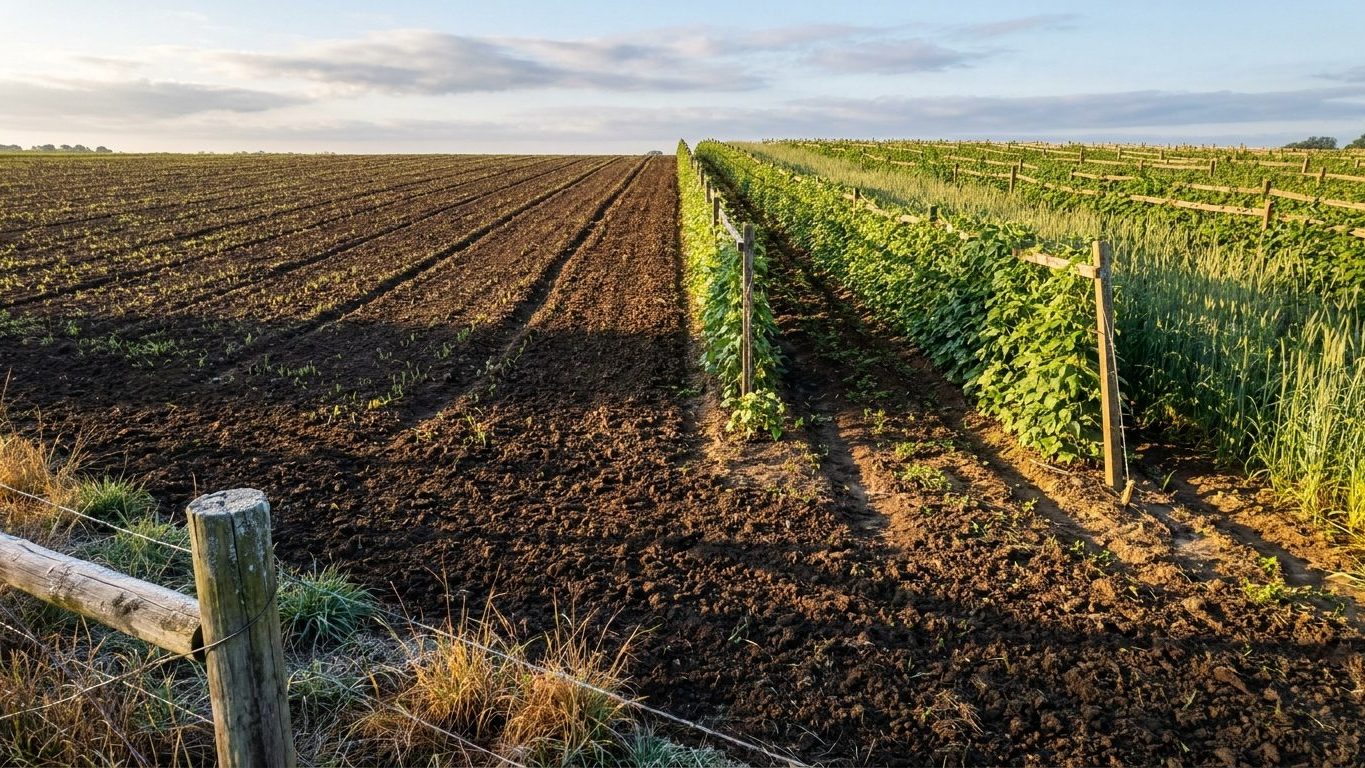

Indiana gardeners have two sowing windows for cover crops: late summer into early fall, ahead of the first 32°F freeze, and early spring, once the soil is workable and the last freeze has passed. At the Indianapolis reference point, those freeze dates run April 9 to April 21 in spring and October 21 to October 30 in fall. Across the state they shift by a fortnight or more, so treat them as a starting point.
The short answer for Indiana
Sow fall cover crops before the first 32°F freeze, which at Indianapolis falls between October 21 and October 30. Sow spring cover crops after the last one, between April 9 and April 21. Those ranges are probabilities of a 32°F freeze, not calendar guarantees. They come from NOAA’s 1991-2020 Climate Normals for the Indianapolis station, and they mark the band where the chance of a freeze sits between 30 and 70 percent.
Read that band as the middle of the odds, not the edges. On the early date of each range, a freeze is still fairly likely in spring and fairly unlikely in fall. By the late date, the odds have flipped. Purdue adds a caution worth taping to the shed door: roughly a 10% chance of a 32°F event remains after the published spring date. A cover crop that can’t take a freeze, set out on April 9, needs a sheet or row cover standing by.
The frost date matters for a different reason in each season. In fall, a cover crop is racing the freeze. It needs enough growth before cold and short days stop it, and a bigger stand holds more soil over winter. In spring, the same dates mark when frost-tender species become safe, while hardy ones can go in earlier, as soon as you can work the ground. Which species suits which window is covered in The Best Cover Crops for Indiana.
| Measure (Indianapolis reference) | Value | What it tells you |
|---|---|---|
| Last spring 32°F freeze, 30-70% band | April 9 to April 21 | When tender spring cover crops stop being a gamble |
| First fall 32°F freeze, 30-70% band | October 21 to October 30 | The deadline to get fall seed established |
| Mean daily minimum, coldest month | 20.9°F | Whether a species survives winter here |
That last row is the one people skip. A mean daily minimum of 20.9°F means plenty of individual nights run colder than that. It is the figure that sorts overwintering species from the ones that die back, and it matters as much as the sowing dates. The Cover Crops for Indiana Gardens overview covers how the choice between winter-killed and overwintering covers fits your beds.
What will not work here
Sowing a tender species in fall and expecting it to green up in April. With a coldest-month mean minimum of 20.9°F, anything that dies at a hard freeze will be mulch by spring. That’s useful if mulch is the goal, since winter-killed residue is easy to plant into. It is a letdown if you wanted living roots through winter.
Sowing late. A fall cover crop that goes in after the October 21 to October 30 range is sowing into odds that have already tipped toward freeze. Seed may sprout and then sit as tiny seedlings, with little root or top growth to protect the soil. The slowest-establishing species suffer most. Late sowing is common in practice, because summer vegetables often occupy beds until the first frost threatens them, and by the time the bed is clear, the window is nearly shut. Plan the sowing date around the cover crop, not around when the tomatoes finally quit.
Setting out spring cover crops on the early edge of the range without a backup. April 9 sounds like a safe date until you remember the 10% chance of a 32°F event after it. One bad night can wipe out a bed of tender seedlings. Hardy species shrug that off, which is why the calendar depends on the plant as much as the place.
Using one set of dates for the whole state. Indianapolis is a reference point, not the average of Indiana. Southern Indiana runs earlier in spring and later in autumn than the north by a fortnight or more. A northern gardener who borrows the Indianapolis fall window may be sowing after the first freeze has already hit. A southern gardener who follows it may sow earlier than needed and find a hot stretch still pushing growth.
Borrowing a calendar from another state. Southern recommendations assume a longer growing season and milder winters, and what works there can fail on a Hoosier bed. This page has Indianapolis-station numbers and the Indiana-wide zone range, and nothing for other states. If a sowing guide doesn’t name its frost dates and its source, treat it with suspicion.
What changes across Indiana
The USDA Plant Hardiness Zone Map (2023 edition, built on 1991-2020 normals) places Indiana in zones 5b to 7a. That is a spread of several zones across one state, so there is no single answer. The zone system rests on one variable, the average annual extreme minimum temperature. It describes how cold winters get, and nothing about when frost arrives.
That distinction matters for sowing. Frost dates decide your calendar, and the zone helps decide what survives the winter. A reader in the north, where winter lows are harsher, should lean toward hardier, faster-establishing species and sow at the early end of the fall window. The Indianapolis dates run about a fortnight or more behind what the north needs in fall, so the north’s deadline arrives sooner. Spring runs the opposite way: expect to wait longer than April 9 to April 21 before tender species are safe.
A reader in the south gets the reverse. Fall freezes arrive later, which stretches the fall window, and spring warms earlier, so sowing can start sooner. Gardens near the southern edge sit in the milder end of the zone range, so overwintering species face less risk of cold damage. None of this is a license to skip checking. A fortnight is a rough figure, and local hills, river bottoms and town heat all change it.
Look up your own zone on the USDA map instead of guessing from a neighbor’s tag. Enter your ZIP code, read the result, and treat it alongside the frost range here. The map gives you winter cold. The Indianapolis dates give you a rough shape for the seasons. The rest is local.
Where to check this for your own county
Purdue Extension is the state’s land-grant extension service, and it has county offices staffed by people who know the soils, frost pockets and common failures near you. Start there before you buy seed in bulk.
Look for two things. The first is a local planting calendar, or any county-level guidance on sowing dates, which will account for the north-south spread this page can only describe. The second is the list of cover crop varieties trialled in your county. A species that performs well in one trial plot may not suit your soil type, and trial results beat general advice because they come from Indiana conditions, not an out-of-state catalog. Ask the county office whether the dates they give refer to your area or to the state as a whole.
A county recommendation beats a state one. Plainly put, this page is the state one. It rests on a single reference station and a zone range that covers 5b to 7a, which is useful for planning but too coarse for deciding a sowing date on your particular lot. If the county office and this page disagree, go with the county.
If you can’t find a county-specific calendar, ask for one. Extension staff often answer questions by phone or email, and a short note about what you want to grow and what the bed did last year gets a better answer than a vague one.
Checking this against your own garden
Every date on this page is an average of other people’s years. Your own garden tells you more, and three things are worth watching.
- Soil warmth by feel. Push your hand into the top few inches of a bed. If it feels cold and clammy in spring, hold off on tender seed. If it feels warm and crumbly, the bed is ahead. Compare a sunny south-facing spot with a shaded corner and you’ll see how much your microclimate varies within a single yard.
- The first male flowers on your squash. Squash plants typically produce a flush of male blooms before the female ones appear. When they show up, the soil and air have been warm long enough for tender growth. The date they arrive, year to year, tells you whether your garden runs early or late compared with the neighborhood.
- The first true leaves on your cover crop seedlings. The first leaves to emerge are seed leaves. The true leaves come next, and they mean the seedling has rooted and started photosynthesizing. In fall, if your seedlings haven’t reached that stage when the freeze range approaches, the sowing was late for your site. Sow earlier next year.
Write the dates down. Three seasons of notes will be worth more than any calendar, this one included.
If you follow the almanac, here is when to plant cover crops by the moon. It is a tradition, not a proven method.
Common questions
Can I still sow cover crops after October 30 in Indiana?
You can, but the odds are against good establishment. October 30 is the late end of the Indianapolis range, past which a 32°F freeze is more likely than not. Only the hardiest species have a chance, and results will be thin. Check with your county extension office for what is worth trying that late.
Do the Indianapolis frost dates apply to northern Indiana?
Not directly. Indianapolis is the reference point. Southern Indiana runs earlier in spring and later in autumn than the north by a fortnight or more, so a northern gardener should expect fall freezes sooner and spring warmth later than the Indianapolis dates suggest.
How likely is a frost after April 21?
Purdue puts the chance of a 32°F event after the published spring date at roughly 10%. That’s low, but not zero. If you sow tender cover crops near the early edge of the April 9 to April 21 range, keep row cover or sheets ready.
Does my hardiness zone tell me when to sow?
No. The USDA zone, which runs 5b to 7a across Indiana, is based on the average annual extreme minimum temperature. It helps predict winter survival but says nothing about frost dates. Use the zone for hardiness and the frost range for timing.