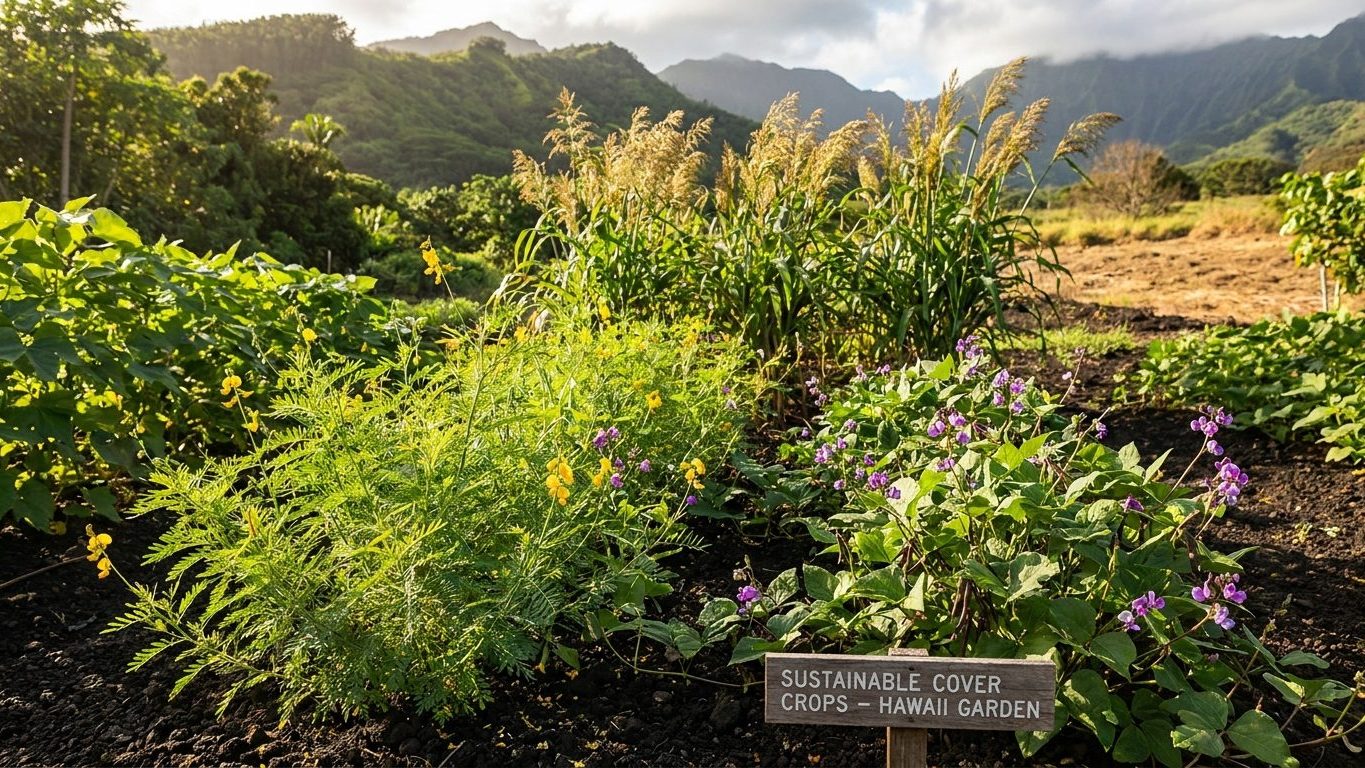

Cereal rye is the safest bet for most of Indiana, because it’s the only common cover crop that reliably survives the state’s coldest winter nights and still fits into a planting window that opens after fall harvest. Legumes like hairy vetch work too, but timing and location matter more than most seed catalogs let on.
The short answer for Indiana
Start with what the state’s climate actually allows. Indianapolis, used here as the reference station, sees its first fall frost between October 21 and October 30 and its last spring frost between April 9 and April 21. That gives a frost-free stretch of roughly six months, but cover crops don’t care about the frost-free window the way tomatoes do. What matters more is the coldest month’s average daily minimum, which sits at 20.9°F in Indianapolis, and the broader hardiness range for the state, which USDA places at zone 5b to 7a.
Those two numbers together point straight to cereal rye as the default choice statewide. It germinates in cool soil, keeps growing after a light frost, and shrugs off nights well below the 20.9°F average minimum without blinking. Farmers and gardeners from the Michigan line to the Ohio River plant it after corn or soybean harvest, often into late October, and it still establishes enough root and top growth to hold soil through winter.
Hairy vetch is the second reliable option, mainly for anyone who wants nitrogen fixation rather than just soil cover. It’s hardy enough for zone 5b, which covers the coldest pockets of northern Indiana, and it pairs well with cereal rye in a mix. Crimson clover is a step less hardy. It performs consistently in the warmer 6b-7a counties along the Ohio River but is a gamble farther north, where a harsh winter can wipe it out before spring.
Oats and tillage radish belong in a different category. They’re chosen specifically because they winterkill, saving the trouble of terminating a living cover crop in spring. But winterkill isn’t guaranteed everywhere in this state, which the next section gets into.
If the goal is simple, low-maintenance winter cover with no spring termination fuss and no gamble on hardiness, cereal rye is the answer for the whole state, not just a region of it. Everything else is an upgrade or a trade-off layered on top of that baseline.
What will not work here
Warm-season cover crops planted with winter cover in mind are the most common mistake. Buckwheat, cowpeas, and sorghum-sudangrass are useful as fast summer fillers between a spring vegetable harvest and a fall planting, but none of them tolerate anything close to the 20.9°F average minimum of an Indiana January. The first fall frost, arriving as early as October 21 in the Indianapolis area and often earlier in the north, kills these species outright. That’s fine if the plan was always to terminate them by frost. It’s a real problem if someone plants buckwheat in September expecting it to protect soil through winter.
Tillage radish planted too late is another failure mode specific to this state’s frost timing. Radish needs somewhere around 60 to 90 days of growth to bulb out and do the deep soil-loosening work it’s known for. With first frost landing between October 21 and October 30, that math means radish has to go in the ground by early-to-mid September at the latest. In practice, a lot of Indiana gardeners and farmers plant it after a late soybean harvest in late September or early October, which leaves undersized, stringy roots that don’t accomplish much. The crop survives; the benefit doesn’t.
Crimson clover seeded too late in northern counties is a third trap. It needs enough fall growth to build the root reserves that carry it through winter dormancy. Sown after the first week of October in a zone 5b county, it often doesn’t get there before growth stops, and a winter with lows near or below the 20.9°F coldest-month average can finish it off. Farther south, closer to zone 7a, the same seeding date usually works fine, which is exactly the kind of regional gap a statewide seed bag label won’t tell you about.
Finally, relying on a single species as a cure-all rarely holds up. A cereal rye monoculture handles winter survival well but does nothing for nitrogen. A pure clover stand fixes nitrogen but can leave gaps in coverage in the coldest counties. Most agronomists working in this state lean toward simple two-species mixes, rye with vetch or rye with clover, specifically to cover for each other’s weak points.
What changes across Indiana
Indiana is not one climate, even though it’s a single state on a seed packet. The USDA hardiness range spans zone 5b to 7a, which is a real spread, not a rounding error. Zone 5b areas, generally the northern tier, deal with average extreme winter minimums well below zero. Zone 7a areas, generally the strip closest to the Ohio River, see extreme minimums closer to 0°F to 5°F. That difference decides whether a marginally hardy legume like crimson clover survives winter or doesn’t.
Frost timing shifts the same way. Indianapolis is the reference point for the dates in this article, but the caution attached to that data is worth repeating: southern Indiana runs earlier in spring and later in autumn than the north, by two weeks or more. That means a county near Evansville can effectively have close to a month more growing season each year than a county near South Bend. For a cover crop that needs a certain number of fall days to establish before dormancy, that extra month is the difference between a clover stand that thrives and one that limps into winter half-grown.
There’s also roughly a 10% chance, per Purdue’s own caution on this data, of a 32°F freeze event after the published spring frost date. That matters most for anyone terminating a legume cover crop and transitioning to tender vegetables on the early edge of the frost window; a rye-vetch mix can take a late frost in stride, but whatever gets planted right behind it might not.
None of this means a reader can look at a single zone number and know what to plant. The spread is too wide for that. It means checking where a specific county falls on the current USDA Plant Hardiness Zone Map before locking in a legume choice, rather than assuming the whole state behaves like Indianapolis.
Where to check this for your own county
This page gives the state-level picture, built around Indianapolis as a reference station. That’s useful for a general sense of timing and hardiness, but a county recommendation will always beat a state one, and Purdue Extension is where that county-level detail lives.
Purdue’s extension service can be reached to learn more. Once there, the two things worth hunting down are the local planting calendar for cover crops in the specific county, and any variety trial results for that same region. Purdue’s agronomy specialists and county educators run cover crop trials across different parts of the state precisely because a rye variety or a clover cultivar that performs well near Lafayette doesn’t always perform the same way near the Michigan border or along the Ohio River.
Worth searching for specifically:
- The county’s local frost date estimates, which can differ from the Indianapolis dates used here by a week or two in either direction
- Any cover crop variety trial data published for that district, since seed performance varies by soil type and local rainfall as much as by temperature
- Seeding rate and timing guidance tailored to whether the ground was in corn, soybeans, or a vegetable rotation
A statewide article can flag that hairy vetch is generally hardy enough for zone 5b and that crimson clover is a better fit farther south. It can’t tell a reader in a specific township whether last year’s trial plot near them held up through the winter, or whether a particular seed lot performed poorly in wet clay soil. That level of detail only exists at the county level, through Purdue’s own network.
Checking this against your own garden
Every date in this article is a regional average built from decades of weather records. A reader’s own backyard beats it every time, and none of the signs to watch for require anything more than paying attention.
Soil warmth by feel is the first check. Cereal rye and oats will germinate in soil that still feels cool and slightly damp to the hand, well before a thermometer would call it “warm.” If a handful of soil crumbles easily and doesn’t feel cold against bare skin, fall-seeded covers are likely to establish fine even if the calendar says it’s a bit early or a bit late compared to Indianapolis norms.
The second thing to watch is how volunteer plants behave nearby. Weeds that reliably green up early each spring in a specific yard or field are a good proxy for local soil warming, often a more accurate one than a regional frost date, since they respond to the same microclimate the cover crop will experience.
The third is the timing of the first hard frost on tender plants already in the ground, tomatoes, peppers, basil, anything frost-sensitive. The date those plants blacken and die is a personal, local frost record that often differs from the Indianapolis-based range by several days depending on elevation, tree cover, and how close the property sits to a lake or river. A yard that consistently freezes a week before or after the stated October 21 to October 30 window isn’t an anomaly; it’s simply telling its own story, and it’s the story worth trusting when deciding exactly when to get seed in the ground.