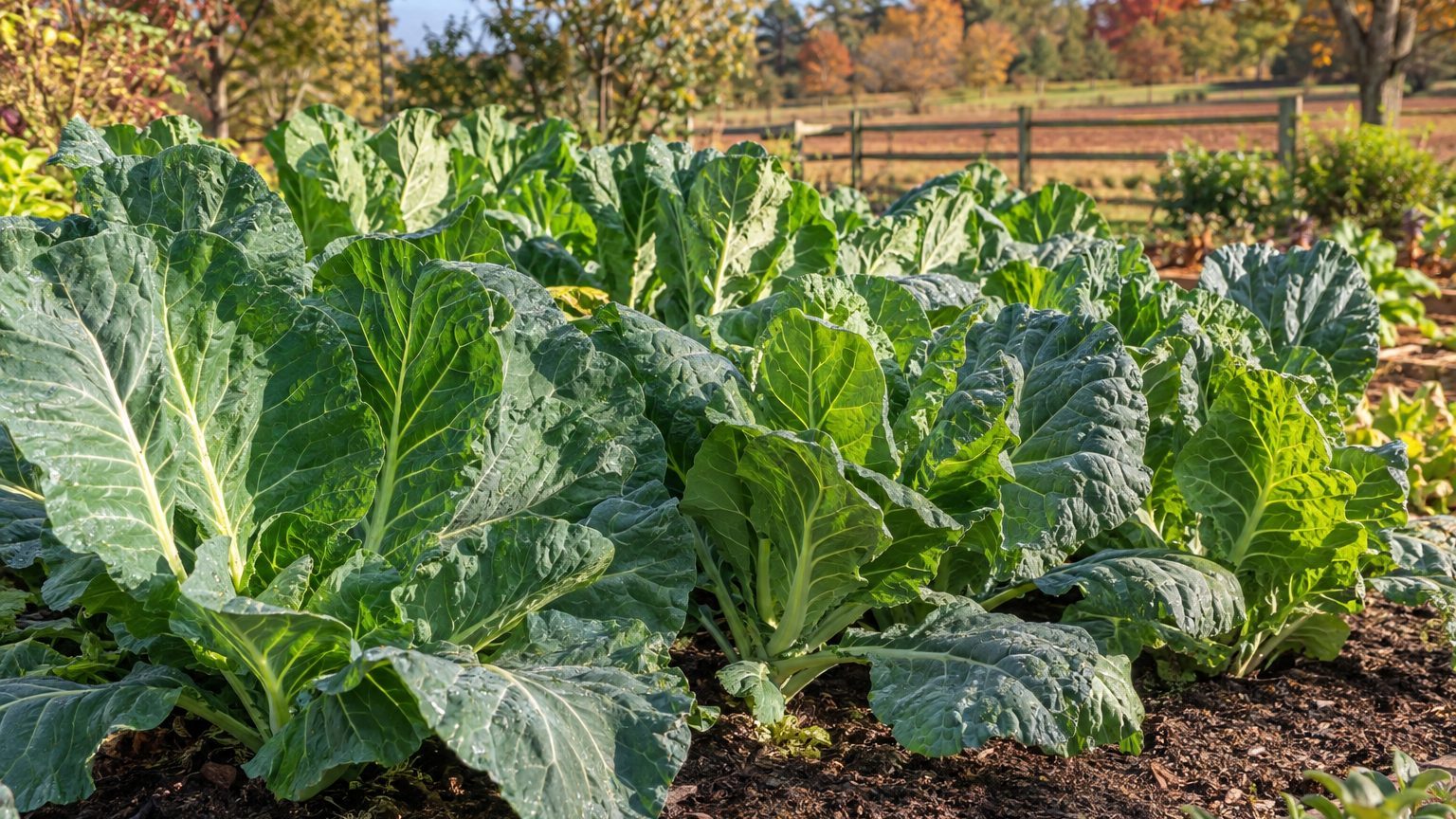

For most Nevada gardens, the best collards are a Southern open-leaf type such as Georgia or Champion in the low desert, and a faster, more compact type such as Vates or Flash in the cold north and at altitude. Kale and chard fill in where collards struggle. Nevada spans enough climates that the type matters more than the variety name.
The short answer for Nevada
Choose by season length and heat, not by brand. Nevada’s USDA hardiness zones run from 4a to 10a, so the state holds both a garden where collards are a fall-through-spring crop and one where they must finish between last spring frost and first fall frost.
The Las Vegas airport shows the warm extreme. NOAA’s 1991-2020 normals put the 30-70% probability band for the last spring 32°F freeze between January 7 and February 1, and for the first fall freeze between December 8 and December 23. Those dates are probabilities that a freeze will still happen (or start) on or after a given day, not guarantees. They also come from a desert urban heat island. Reno, Carson City and anywhere at elevation freeze months earlier in fall and months later in spring, so those dates are not a planting window for most of the state.
The coldest month at that same Las Vegas station has a mean daily minimum of 39.6°F. Winter rarely threatens collards there. The summer does, which is why the warm-desert calendar runs from fall into spring and avoids the hottest months. The full timing logic sits in When to Plant Collards in Nevada, and the broader how-to is in Growing Collards in Nevada.
Match the type to the garden
Three types cover nearly every Nevada situation:
- Southern open-leaf heirlooms (Georgia, Champion): tall, loose, with big smooth leaves. They reward a long cool season and tolerate heat better than most brassicas, which suits the low desert.
- Compact hybrids (Vates, Flash): smaller plants that reach harvest sooner. They suit short seasons, small beds and containers.
- Kale and chard as partners: kale handles hard cold at altitude, and chard keeps producing through heat that would stall collards.
Collards are a cool-season crop that tolerates both frost and some heat, and the leaves sweeten after cold nights. A grower with a long mild stretch can pick the heirloom for volume. A grower racing a short summer is better served by the compact type, started as transplants.
What will not work here
The most common failure is planting by the calendar of another part of the state. A Las Vegas schedule applied in Reno puts seedlings out before the soil and nights are ready. A Reno schedule applied in Las Vegas leaves plants maturing into the worst of the heat.
Summer sowing in the low desert is the second trap. Collards started in late spring or early summer meet intense sun, hot soil and very low humidity at once. Plants stall, leaves toughen and turn bitter, the flower stalk shoots up, and aphids move in on stressed foliage. Collards that need to be tender should reach size during cool weather, which means starting them for fall and winter in the south.
Weekly watering fails almost everywhere in Nevada. Dry air pulls moisture out of leaves and the top layer of soil quickly, and a once-a-week soak leaves the root zone swinging between wet and parched. Greens grown that way turn tough and bitter. Watering that keeps the soil evenly moist, combined with a thick mulch, works much better. Many Nevada soils are also alkaline and low in organic matter, and some have a hard caliche layer below. Collards need good soil, so a bed without added compost will produce thin, pale leaves no matter which variety you pick.
The slowest heirlooms fail where the season is short. A tall Southern collard started late in a cold-winter valley may barely reach harvest size before hard freezes, because it needs a long run of growth. Frost does not kill it. The problem is that it never gets enough time. Wind is the other limit in open high-desert sites, where it damages the large leaves of tall plants and dries out young transplants.
Finally, a mild winter is not a reason to relax in the south. At a mean daily minimum of 39.6°F in the coldest month, nights seldom stress plants, so gardeners there sometimes leave collards standing into warm spring. Once temperatures climb, the plants bolt and the leaves go strong and bitter. Pull them or cut them back before that happens.
What changes across Nevada
The USDA Plant Hardiness Zone Map (2023 edition, built on 1991-2020 normals) spans zones 4a to 10a in Nevada. That is a spread of six full zones, and it means there is no single answer for the state. The system rests on one variable only, the average annual extreme minimum temperature, so it describes winter cold and says nothing about summer heat or the length of the growing season.
At the warm end, in the low desert of the south, collards are a cool-season crop grown through fall, winter and early spring. The varieties that do best are the long-season heirlooms, since the growing window is long and the winter mild. Heat is the limit on the other end of the calendar.
In the north and at altitude the logic reverses. Spring comes late, frost returns early, and the garden may have only a stretch of the year between the two. Readers there should shift later in spring, lean on transplants started indoors instead of direct sowing, and choose compact, faster types. Row cover and mulch help protect plants at both ends of the season. In the coldest zones, treat collards as an annual, and plan to grow kale alongside because it holds up better in a freeze.
Elevation can change things sharply within a few miles, and valley floors often hold cold air that nearby slopes escape. For your own zone, use the USDA map and enter your ZIP code. Do not guess from a neighbor’s garden or a nearby city, because zones can differ across a single metro area.
Where to check this for your own county
The best source of local information is University of Nevada, Reno Extension. It is the state’s land-grant extension service, and it has offices and Master Gardener programs that work with the specific conditions of each county.
Two things are worth looking for. First, a planting calendar for your county or area that lists spring and fall windows for cool-season vegetables, including collards and other brassica greens. Second, any list of varieties that have been grown or trialed locally. A variety that performs well in a university trial at your elevation and soil type is a much safer bet than one that did well in a catalog photo.
If the website does not list collards by name, call or visit the county office and ask about brassica greens. Extension staff can also tell you about local pests, soil amendments and irrigation habits that suit your area. Soil tests are often available through the same channels and are worth doing before a first planting, since alkaline soils and low organic matter are common problems.
A county recommendation beats a state one. Nevada is large enough that any statewide advice, including everything above, is an average of very different places. A calendar built for your county accounts for your frost dates, your elevation and your typical summer heat in a way no state-level summary can.
Checking this against your own garden
Your own observations outrank any date in a table. Three of them are easy to make without special equipment.
Soil warmth by feel. Push your bare hand a few inches into the bed in the morning. In spring, soil that still feels cold is not ready for tender transplants, and seeds will sit. In the southern desert in early fall, soil that feels hot after watering tells you it is still too early to set out seedlings. The difference between a sunny south-facing bed and a shaded one can be larger than you expect.
The first true leaves. Seedlings first put out a pair of rounded seed leaves, and the first true leaves that follow look like small collard leaves. How quickly those appear, and how sturdy they are, shows how well a spot suits the crop. Slow, pale, leggy seedlings suggest too little warmth or light. Fast, sturdy ones suggest the bed is a good microclimate for an early start.
Where frost lands first. On a clear, calm morning in fall or spring, walk the yard and see where frost lies on the grass, roofs and car windows. Low corners and open areas freeze first, while spots against a south wall or under tree cover often stay clear. That pattern is your frost map, and it tells you where to plant first, where to cover plants and where to delay.
Keep notes for a season or two, and your garden will give you better dates than any state average.
Common questions
Can collards grow through a Las Vegas summer?
They can survive, but they rarely do well. Hot soil, dry air and intense sun push plants toward bolting and bitter leaves. Starting them for the cool months, then harvesting through winter and early spring, gives much better results. Chard is a better choice for the summer months.
Will collards survive winter in Reno or at higher elevations?
Collards tolerate frost and light freezes, and they often sweeten after cold nights. In the coldest zones of the state’s 4a to 10a range, however, hard winters can outlast them. Treat them as a spring-to-fall annual there, and use row cover to extend the season at either end.
Are collards or kale the better pick for Nevada?
Collards handle heat better and make the more generous leaves in the low desert. Kale handles deep cold better, so it is the safer choice at altitude and in the north. Many Nevada gardeners grow both, plus chard as a heat-proof backup.
Should I start from seed or buy transplants?
Transplants are the safer path wherever the season is short or the weather unpredictable, because they get a head start in the bed. Direct sowing works well in the mild south for a fall crop, as long as the soil has cooled enough that seedlings are not stressed by heat.