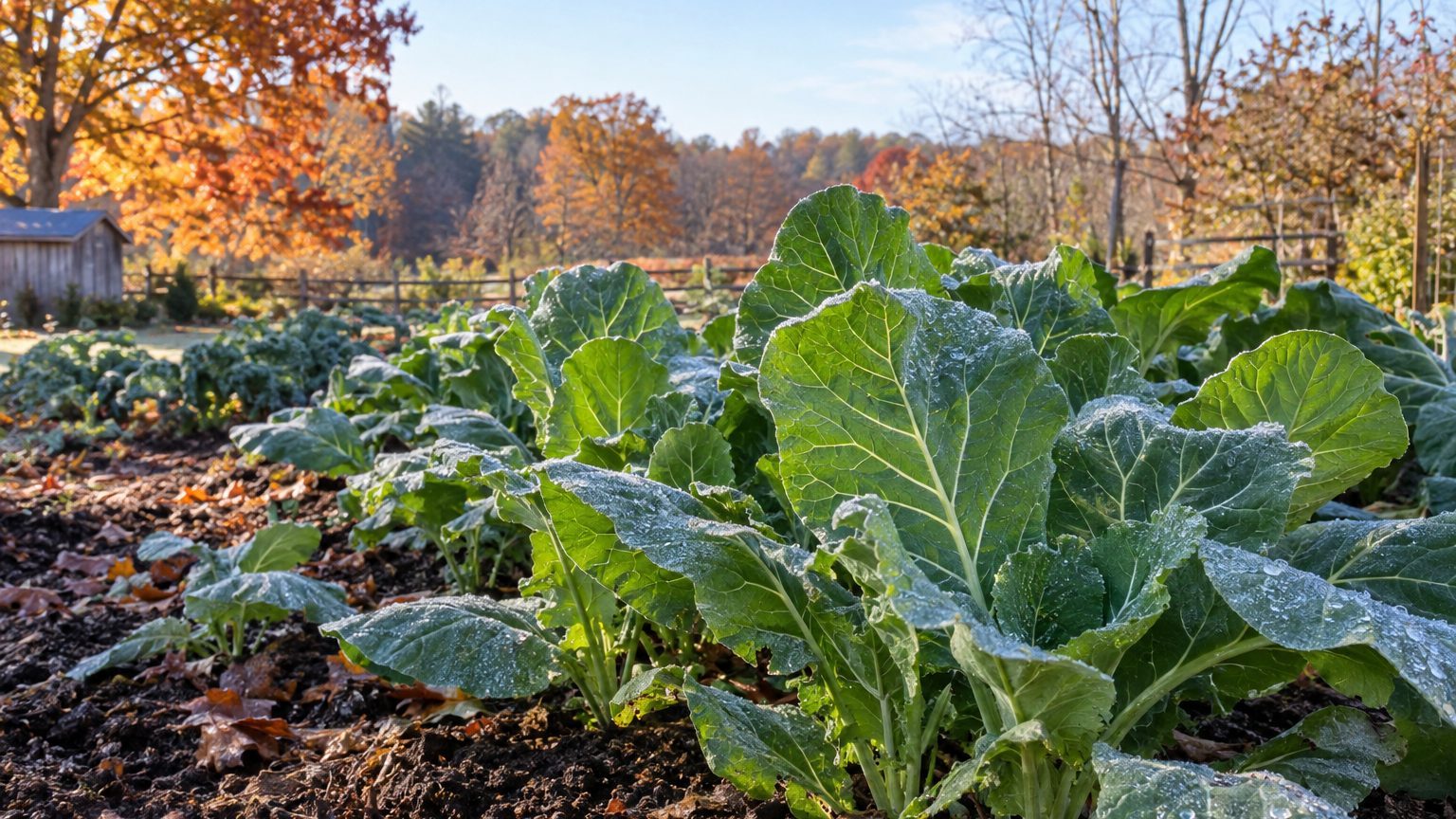

In New York City, collards go in twice. Transplants set out from mid-March to early April make a spring crop, and seeds or seedlings started from late June into early August make a fall crop that gets sweeter after frost. Upstate and at altitude, spring planting slides later and the fall crop has to start earlier. The calendar below is built on New York City frost data, so adjust it for your own location.
The short answer for New York
For New York City, the last spring freeze at 32°F falls between March 23 and April 3, and the first fall freeze between November 14 and November 27. Those are NOAA 1991-2020 climate normals from Central Park, and each is a probability, not a promise. The span marks where the odds of a 32°F night sit between 30 and 70 percent, so a freeze after April 3 or before mid-November can still happen.
Central Park is a dense urban site. It runs warmer than the suburbs, and well upstate the freeze dates differ a lot, so treat these as New York City figures and not statewide ones. Collards shrug off light frost, which is why the calendar works around the frost window instead of waiting for it to clear. Here is how the dates translate for the city:
| Task | Timing for New York City |
|---|---|
| Start spring seeds indoors | Mid-February to early March |
| Transplant spring seedlings outside | Mid-March to early April |
| Sow spring seed directly in the garden | Late March to mid-April, once soil is workable |
| Sow fall crop (indoors or in a seed row) | Late June to mid-July |
| Transplant fall seedlings | Mid-July to early August |
| Harvest fall crop | October through the first freeze and often well beyond |
The coldest month in the city has a mean daily minimum of 27.9°F. That is the average night, not the record low, and it sits only a few degrees under freezing. Collards tolerate that range, which is why a fall planting can keep producing into early winter. Hard cold snaps below the average are what finally burn the leaves.
Packet maturity counts depend on how you plant. For seed sown directly in the ground, the days run from sowing. For transplants, they run from the day the seedling goes into the bed. Either way, wait for a full harvest, though you can pick young outer leaves earlier.
What will not work here
Sowing seed outdoors in January or February fails, even though the frost window is only weeks away. Soil lags well behind air temperature. Seed sitting in cold, wet ground germinates slowly and unevenly, and some of it rots. Wait until the bed can be worked without turning into mud, or start seed indoors under light.
Planting the spring crop late fails too. Transplants set out in May reach picking size in July and August, when New York summers turn hot and humid. Leaves toughen and turn bitter, and plants bolt, sending up a flower stalk. A spring crop belongs in the ground by early April so most of the growth happens in cool weather.
The fall crop has its own cutoff. Seed sown in mid-September leaves little time before the first freeze window opens on November 14. Days are shortening by then and growth slows, so plants stay small. Sow in late June or July so plants are well along when October nights turn cool.
Humidity punishes tight spacing. Collards set close together form a canopy that stays wet after summer thunderstorms and morning dew, which invites leaf spot and gives cabbage worms and loopers plenty of cover. Give each plant room and pick lower leaves as you go to keep air moving. Weekly watering is rarely the problem in a humid climate. Sitting foliage is.
Copying city dates upstate is the biggest mistake of all. Frost arrives earlier in fall and leaves later in spring away from the city, so a July sowing that works on Long Island can leave a short-season garden with half-grown plants. The slowest collards, the ones that need the longest stretch to size up, are the first to fail. The Best Collards and Greens for New York covers which types finish in a shorter season.
Finally, an average low of 27.9°F does not mean plants need no protection. Frost-hardy is not the same as invincible. A cold snap with a hard wind can still damage leaves in an open bed, so keep a row cover or a layer of straw mulch handy for late fall.
What changes across New York
The USDA Plant Hardiness Zone Map (2023, based on 1991-2020 normals) places New York in zones 3b through 7b. That system rests on one variable, the average annual extreme minimum temperature, and the two ends of the state differ widely on that measure. There is no single answer for the state, only a spread, from the Adirondacks at the cold end to New York City and Long Island at the mild end.
If you garden in the north or at altitude
Shift both ends of the calendar. Spring transplanting moves later by a few weeks, and it makes sense to wait until soil has thawed fully and the hard freezes are behind you. Fall moves earlier. Count back from your own first fall frost and give the crop plenty of growth before it arrives, which means sowing in June instead of July. Fast-maturing types and a layer of row cover over young plants make up for a short season. Collards are among the hardiest of the cool-season greens, so the extra effort is worth it. For the broader picture of how the crop behaves statewide, see Growing Collards in New York.
If you garden near the coast
Long Island and the city hold heat longer into fall, so the fall crop has more room. The extra warmth also means summer heat arrives earlier, and the spring window closes sooner. To find your own zone, look up your address or ZIP code on the USDA Plant Hardiness Zone Map. Do not assume it matches a neighbor in the next county, because elevation and lakes can change it within a few miles.
Where to check this for your own county
New York’s land-grant extension service is Cornell Cooperative Extension, with an office in nearly every county. A county recommendation beats a state one. Statewide dates like the ones above are a frame, and the county office knows how your local soil, frost pockets, lake effect and growing season actually behave.
Look for three things when you visit the county office or its website:
- A local vegetable planting calendar, ideally with dates for spring and fall brassicas such as collards, kale and cabbage.
- Varieties trialed in your county, which tell you what finished in your conditions and not just in a catalog photo.
- Local pest alerts and timing for cabbage worms, flea beetles and root maggots, which vary by region and year.
County offices often run Master Gardener helplines and soil testing as well. A soil test is cheap and worth doing before planting, since collards are heavy feeders and respond well to a well-prepared bed.
Checking this against your own garden
Your own observations outrank every date above. Three are worth watching, and none requires a gadget.
Soil warmth by feel. Push your hand into the bed in the morning. If it feels cold and clammy, or sticks to your fingers in clumps, wait. Soil that crumbles and feels cool but not icy is ready for spring seed. A bed that warms days ahead of a neighbor’s tells you about a sunny slope or a south-facing wall. One that lags is likely shaded or low.
The first flush of male flowers. Catkins, the dangling male flowers on birch, willow and hazel, loosen and shed pollen in early spring, and forsythia blooms around the same time. When they appear in your yard, spring planting is close. If they come a week or two later than in the city, your garden runs cooler, and you should push your own dates back by about that much.
The first true leaves. Collard seedlings first show two rounded seed leaves, then the first real leaves, which look like small versions of the mature leaf. Seedlings that stay stocky are ready to harden off. Seedlings that stretch and flop need more light. Outdoors, slow true-leaf growth in a particular corner flags a cold or shaded spot.
Write down the dates when each of these happens for a season or two. A short notebook turns a statewide calendar into one that fits your own yard.
The Moon calendar is a separate, older custom: see when to plant collard greens by the moon, written as tradition rather than fact.
Common questions
Can I plant collards in July in New York?
Yes, in most of the state. A July sowing is the standard fall timing near the city. Farther north, move it to June so plants have time to size up before cold weather.
Will collards survive a New York winter?
It depends on where you are. The coldest-month mean minimum of 27.9°F in New York City is well within what collards tolerate, and plants often keep going into early winter there. Winter survival is decided by the coldest nights, not the average, so upstate and in the colder zones the crop should be treated as a fall harvest and not expected to overwinter.
Is spring or fall better for collards?
Fall usually wins. Leaves sweeten after a few frosts, heat-driven bolting is no longer a risk, and the harvest runs longer. A spring crop is still worth planting early for a first picking of greens.
Should I start collards from seed or transplants?
Either works. Transplants give spring a head start. In summer, direct sowing or a shaded seed row works well because warm soil germinates seed quickly, and young seedlings need shade and steady moisture at first.