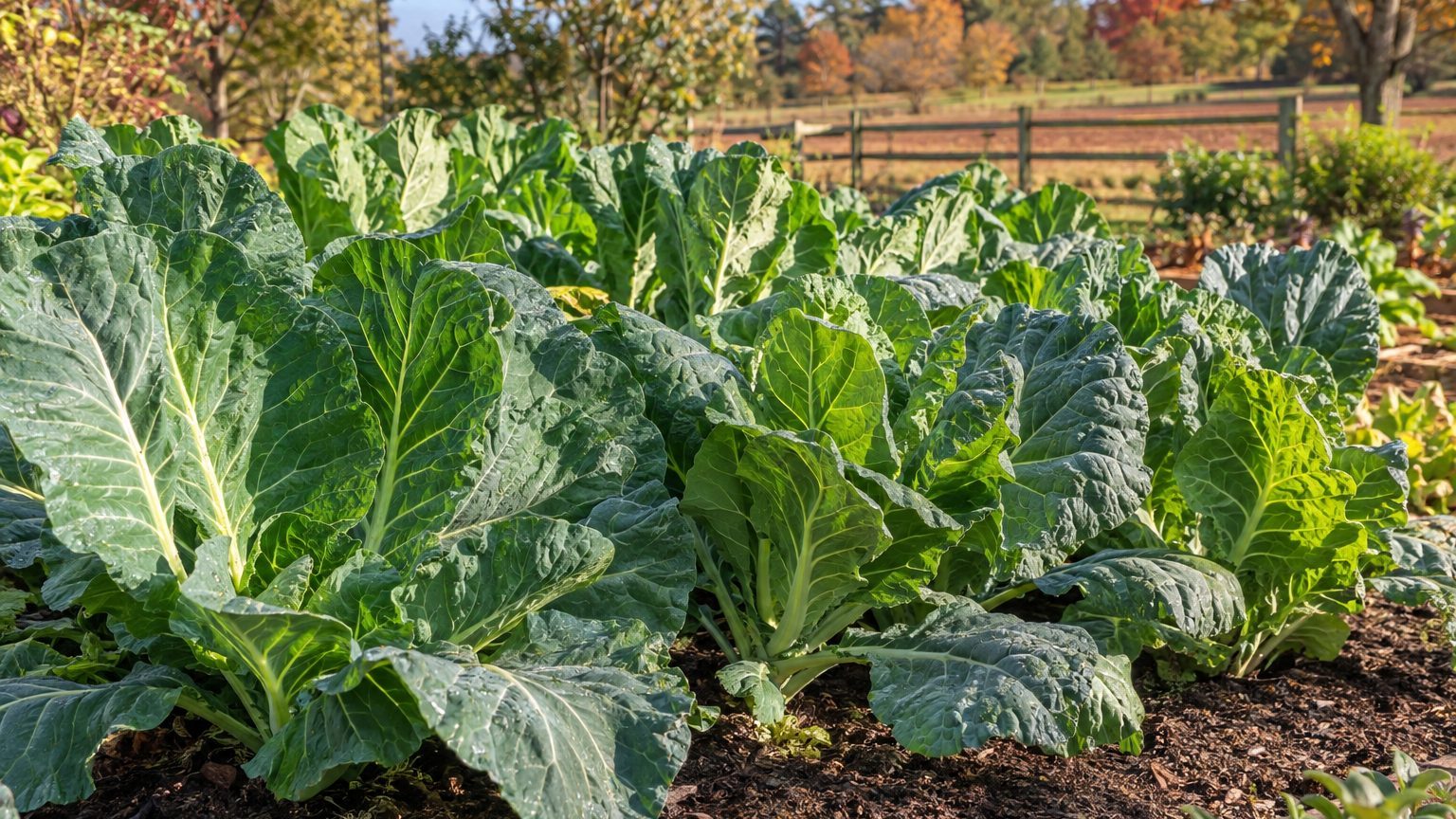

For most New York gardeners, the best collards are standard open-leaf types such as Georgia-style or Vates, set out as transplants in spring and picked through fall. Heading types like Morris Heading need a longer, warmer run. Kale and mustard greens fill in where collards run short of time. Where winters are severe, earliness matters more than flavor.
The short answer for New York
Choose by type, not by brand. In and around New York City, the frost-free stretch is long enough for any standard collard: open-leaf types such as Georgia-style and Vates, and slower heading types such as Morris Heading. Farther north, favor the fastest open-leaf types, and pair them with kale, which handles short seasons and cold better than collards do.
The numbers behind that call come from NOAA’s 1991-2020 climate normals for Central Park. The last spring frost falls between March 23 and April 3, and the first fall frost between November 14 and November 27. Both ranges are the 30-70% probability band for a 32°F freeze, so they describe the odds of a freeze, not a date when frost becomes impossible. They are New York City figures. Central Park is a dense urban site, and upstate New York and the Adirondacks freeze far earlier in fall and later in spring.
Match the type to the season
A frost-free window of roughly seven to eight months suits a crop that wants a long, steady run. Collards are slow growers. They are also unusually tolerant of cold, and a few light frosts in autumn sweeten the leaves, so the mid-to-late November frost dates in the city work in the grower’s favor. The table sorts the main choices by how they fit the New York season.
| Type | Habit | Best fit in New York |
|---|---|---|
| Open-leaf collards (Georgia-style, Vates, Champion) | Loose rosette of large, flat leaves, picked leaf by leaf | The default across the state, including the Hudson Valley and Long Island |
| Heading or cabbage collards (Morris Heading) | Leaves fold into a loose head | The city, Long Island and the lower Hudson Valley, where the season is longest |
| Kale (Lacinato, Winterbor) | Curly or crinkled leaves, faster and hardier | Upstate, higher elevations, and as a companion to collards anywhere |
| Mustard and turnip greens | Quick, peppery leaves | Early spring and late fall fill-ins, when collards are too slow |
The practical default
Start with one open-leaf variety and one kale. Set the collard transplants out around the spring frost window, harvest the lower leaves from summer on, and let the fall frosts finish the job. The full timing, week by week, is laid out in When to Plant Collards in New York, and the broader growing basics are in Growing Collards in New York.
What will not work here
A Deep South plan fails in New York. Southern growers sow in late summer and pick all winter. With a coldest-month mean daily minimum of 27.9°F in New York City, and far colder readings to the north, collards here behave as a spring-to-fall crop. They are not an evergreen one. A fall planting that is expected to stand through January will often be flattened by then, especially upstate.
The slowest types in a short season
Heading collards are the first casualty as the season shortens. The city’s seven-plus months give them room to fill out, but a gardener in the Adirondacks or the Tug Hill region may see frost arrive well before a heading type has formed anything worth cutting. A plant that spends its best weeks as a seedling indoors, then goes out late, has little growth left before hard frost. The result is a plant that is all stem and thin leaves.
The same logic applies to direct sowing. A collard seed pushed into cold, wet ground in April sits there, and the gardener loses weeks that the plant needed. Transplants started indoors are the New York way, because they bank growth before the soil warms.
Dates that belong to another place
Using the New York City frost dates for a garden in Watertown or Lake Placid is the most common timing mistake. Those dates describe a warm, built-up site. Upstate frost can return weeks later in spring, and a transplant set out on the city’s schedule may meet a freeze it was never hardened for. Collards shrug off light frost. A hard freeze on a soft, newly planted seedling is another matter.
Tight spacing in humid summers
New York summers are humid, and crowded collards stay wet. Leaves that touch trap moisture, dry slowly, and invite leaf spot and a steady stream of aphids. Imported cabbageworms, the green caterpillars of the white butterflies that drift over the bed, hide easily in a dense canopy. Spacing the plants generously and picking the lowest leaves improves airflow. It is a small habit with an outsized effect on how clean the harvest looks in August.
Last, a collard in a shaded city yard sulks. Greens tolerate less light than tomatoes do, but collards still want a good part of the day in direct sun to put on the broad, thick leaves they are grown for.
What changes across New York
New York is not one garden. The USDA Plant Hardiness Zone Map (2023 edition, built on 1991-2020 normals) places the state in zones 3b through 7b. No single answer exists, and any recommendation has to be shifted by where the bed actually sits.
Zones are built on one variable, the average annual extreme minimum temperature. That tells a gardener whether a perennial survives winter. It says little about how many frost-free weeks a collard gets, which is the number that matters for an annual crop. Two places in the same zone can have quite different growing seasons, particularly when one is near a lake and the other in a valley that traps cold air.
In the Adirondacks, the North Country and the higher parts of the Catskills and Southern Tier, shift in three ways. Choose the fastest open-leaf collards and kale rather than heading types. Start transplants indoors and set them out later than the city dates suggest, then protect them with row cover if a late freeze is forecast. Count on the fall frosts arriving earlier, which means the sweet, cold-finished harvest comes sooner and ends sooner. Black plastic mulch or a south-facing slope can warm the soil and buy back some of the days a short season takes away.
Gardeners on Long Island and in the lower Hudson Valley sit closer to the city’s pattern, and the water moderates swings along the coast. The Finger Lakes and the Lake Ontario shore fall in between, where the lakes delay fall cold. To find which zone a particular address falls in, use the USDA map and enter a ZIP code. It takes a minute and settles the question better than any state generalization.
Where to check this for your own county
The best local source is Cornell Cooperative Extension, New York’s land-grant extension service. Each county has its own association, staffed by people who know the local frost pockets, soils and pests. Look up the county office and ask for two things.
- The local vegetable planting calendar, with spring and fall dates for cole crops such as collards, kale and cabbage
- The varieties that have been trialed or recommended in that county, so the seed order reflects what has actually grown there
Many county offices also run a gardening helpline, offer soil testing guidance, and publish pest alerts when cabbage worms or aphids start to build. A soil test is worth doing before the first planting, since collards are heavy feeders and the result tells you how much nitrogen to add.
A county recommendation beats a state one. State-level dates, like the New York City figures above, are averages over places that differ by weeks, and a county agent can say what the same calendar looks like in a specific valley or on a specific shoreline. Treat the state guidance as a starting frame and the county office as the final word on dates and varieties.
Checking this against your own garden
Your own observations outrank every date in a guide. Three are worth watching, and none needs equipment.
Soil warmth by feel. In spring, push a hand into the bed. Soil that crumbles when squeezed and feels cool rather than cold to the wrist is ready for transplants. A bed that stays soggy and numbingly cold well after the neighbor’s bed has dried is a slow, shaded or low-lying spot, and it will run later all season.
The first true leaves. A seedling first shows two rounded seed leaves, then the first true leaves, which look like small versions of the adult collard leaf. When those appear and the plant has some sturdiness, it is ready to start hardening off. If they come slowly, the indoor spot is too dim or too cool, and the seedlings will reach the garden behind schedule.
The first white frost on the grass. In fall, check the lawn and the beds early on clear, calm mornings. If frost shows up in your yard days before the forecast says it should, you have a cold pocket, and the fall harvest window is shorter than the regional numbers suggest. If the frost arrives late, you can keep picking longer.
Common questions
What is the best collard variety for New York?
An open-leaf type such as a Georgia-style or Vates collard is the safest choice statewide, since it produces usable leaves sooner than heading types. Gardeners in and near the city with a long season can add Morris Heading for a different texture and look.
Can collards grow in upstate New York?
Yes, as a spring-to-fall crop. Use early open-leaf varieties, start transplants indoors, and rely on kale as a backup. Expect the harvest to end with the first hard freeze, which arrives well ahead of the November dates for New York City.
Should I grow kale or collards?
Kale matures faster and tolerates colder weather, so it is the more reliable choice in the north and at elevation. Collards give larger, sturdier leaves and hold up better to long cooking. Many New York gardeners grow both, which spreads the risk across a short season.
Will collards survive a New York winter?
Not reliably. A coldest-month mean daily minimum of 27.9°F in New York City means plants can stand well into late fall, but the state’s zones run as low as 3b, and collards are best treated as annuals. In the mildest spots, mulched plants occasionally push through, though the leaves are rarely worth picking by spring.