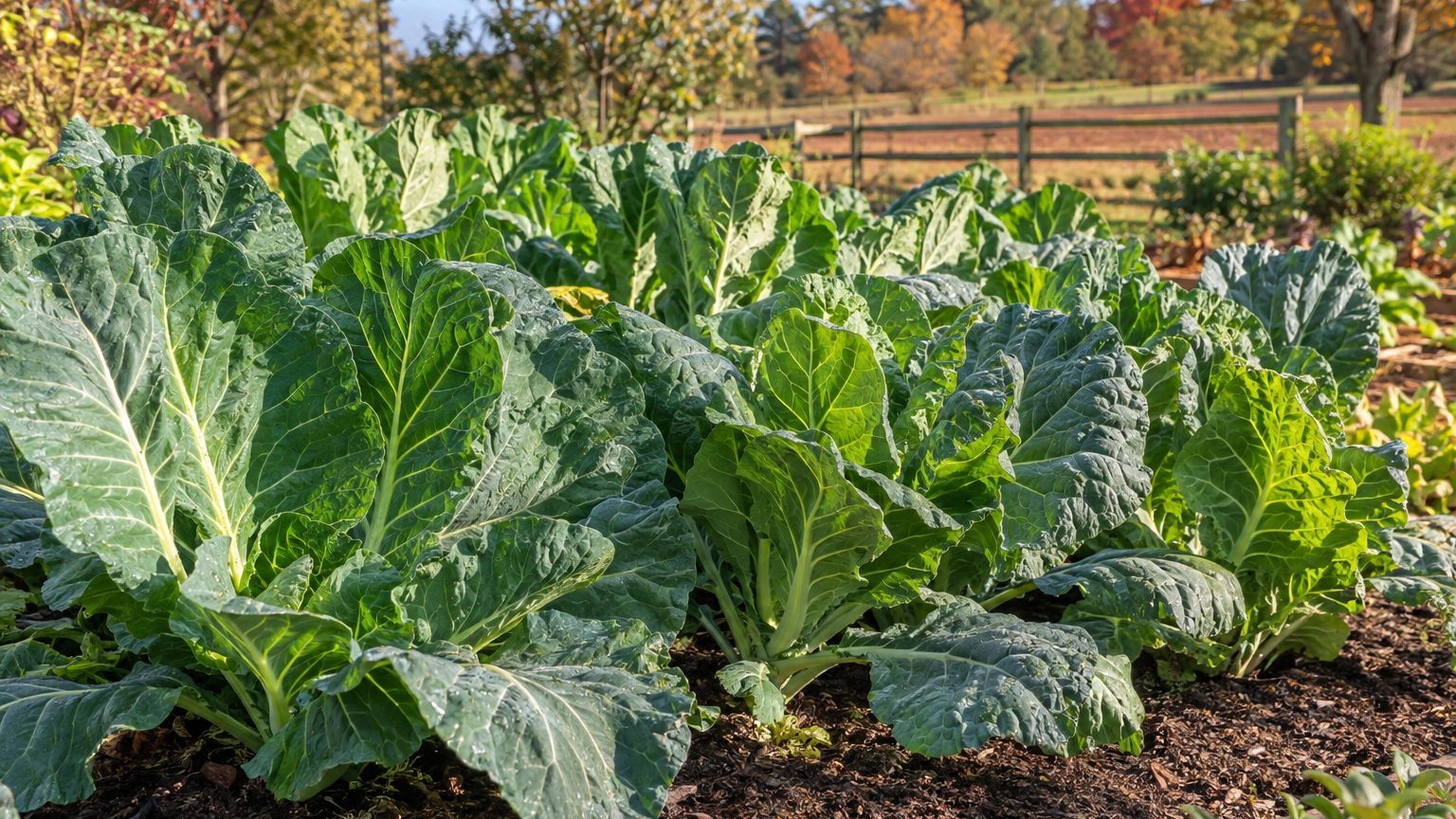

North Dakota gardeners get the best results from early-maturing collards set out as spring transplants, with kale, mustard greens and Swiss chard filling in where the season runs short. The slow, tall Southern heirlooms are the poor fit. Frost dates at the Fargo reference station, a coldest-month average low near zero and a hardiness range of 3a to 4b all point the same way: choose speed and cold tolerance before anything else.
The short answer for North Dakota
Choose early collards and grow them as a spring-planted annual, started indoors and moved out as transplants. Back them with kale, mustard and chard, which tolerate cold nights and a short runway with less fuss.
Why the calendar decides it
At the Fargo reference station, the last spring freeze (32°F) lands between May 4 and May 15, the band where the chance of a freeze is 30 to 70 percent. These dates are probabilities, not promises. The first fall freeze falls between September 25 and October 5 on the same measure. Counting from the late end of the spring band to the early end of the fall band gives about 133 days. Counting from the early end to the late end gives about 154. That is the frost-free stretch at an airport station.
Rural and suburban gardens usually do worse than the airport. The last spring frost tends to come one to two weeks later and the first fall frost one to two weeks earlier, with more of a gap at elevation. So the true window for many home gardens is shorter than those 133 to 154 days. Collards partly make up for it, because they shrug off light frost. Transplants can go out before the last-frost band ends once they are hardened off, and the plants stand through the first fall frosts. The When to Plant Collards in North Dakota guide turns that into a sowing and transplanting schedule.
How the main greens compare
| Green | Cold tolerance | Speed | Fit for North Dakota |
|---|---|---|---|
| Early collards | Good, handles light frost | Moderate | Best collard choice |
| Late Southern heirloom collards | Good | Slow | Risky, often runs out of season |
| Kale | Very good | Moderate to fast | Dependable backup |
| Mustard greens | Good | Fast | Good for quick spring and fall crops |
| Swiss chard | Fair to good | Moderate | Dependable through summer |
On the seed packet, look for the shortest days to maturity in the collard section and treat that number as a minimum. Cool springs and cold soil add time that the packet does not count.
What will not work here
Several common Southern habits fail in North Dakota, and most of them fail for the same reason: the season is too short and the winter too hard.
Slow varieties and a late start
Large-framed heirloom collards bred for long Southern seasons need months of steady growth before the leaves reach full size. With a frost-free stretch of roughly 133 to 154 days at best, and less in the country, a slow variety sown outdoors in late May is still small when fall frost arrives. A small plant is edible, but it yields a fraction of what the seed catalog photo suggests.
Direct sowing collards in the garden suffers the same problem. Starting seed indoors ahead of time recovers weeks that cold spring soil would otherwise waste. Planting on the airport’s frost date, instead of allowing for the later dates typical of rural gardens, loses plants to a late freeze in low ground.
Overwintering and summer stress
Overwintering is off the table. The mean daily minimum of the coldest month at Fargo is 0.2°F, and collards are not a crop that survives that. Mulch does not change the outcome. The Southern habit of picking collards all winter does not translate, so plan on a single season and pull the plants after hard freezes.
Summer is the quieter problem. Collards are a cool-season crop, and a hot, windy stretch on the open plains can toughen leaves, push the plants toward bolting and dry the top few inches of soil quickly. Watering once a week, enough for a lawn, is often not enough for shallow-rooted greens in a dry spell. Deep, steady moisture and a layer of straw mulch keep the leaves tender. Mustard greens bolt in the heat, so sow them for spring and fall rather than July.
A fall collard crop sown in midsummer is a gamble in most gardens. The first-freeze band of September 25 to October 5 at the reference station leaves limited time, and a rural plot may lose a week or two of it. Fast greens like mustard are better candidates for fall.
What changes across North Dakota
North Dakota does not have a single hardiness zone, and there is no single answer to what grows best. The USDA Plant Hardiness Zone Map (2023 edition, built on 1991-2020 normals) places the state in zones 3a through 4b. That covers four half-zone steps, and the system rests on one variable, the average annual extreme minimum temperature.
The spread inside the state
Zones tell you whether a perennial survives winter. Collards are grown as annuals here, so the frost-free stretch matters more for them than the zone number does. Two gardens in the same zone can have very different seasons because of wind exposure, soil, slope and distance from open fields. Use the USDA map to see where your own area sits, since the range is wide enough that a neighbor several counties away may sit in a different zone. The map is the right place to find yours, not a general statement about the state.
What to shift in the north and on higher ground
The colder end of the range pushes everything later in spring and earlier in fall. Gardeners in the north and on higher ground should lean toward three adjustments:
- Pick the fastest collard varieties and add kale or mustard as a second option.
- Start seed earlier indoors, but transplant later, after the soil has warmed and the last freeze has passed.
- Use windbreaks, row cover or a south-facing wall to hold heat around young plants.
Gardens in the warmer east and in sheltered valleys sit closer to the reference-station numbers, though still often a week or two behind them. If your garden is in an open field with wind on every side, plan for a shorter season than any date on a general calendar shows.
Where to check this for your own county
The state’s land-grant extension system is the best source for local detail. NDSU Extension has county offices staffed by people who know the local soil, weather and pests, along with research-based publications on vegetable gardening.
What to look for there
Two things matter most. The first is a planting calendar for your county, with local last-frost and first-frost dates. These are more useful than a reference-city figure because they reflect where you actually garden. The second is a list of varieties trialled in your area. A variety that performed well in a nearby trial has been tested against the same wind, cold springs and short season you will face, which a general catalog description cannot promise.
Ask the county office about local frost pockets, soil quirks and any pest pressure that affects brassicas. Cabbage-family crops, collards included, draw pests, and local timing advice for row cover or sprays comes from people who see the pests every year.
State advice versus county advice
A county recommendation beats a state one. This article is the state-level view, built on one reference station and a statewide hardiness range. Where the two disagree, trust the county. For the full routine from soil preparation to harvest, Growing Collards in North Dakota covers the details that stay constant across counties.
Checking this against your own garden
Your own observations outrank every date in this article. Three things are worth watching, and none requires equipment.
Soil warmth by feel
Push your hand a few inches into the bed in the morning. If the soil feels cold enough to make your fingers ache after a minute, wait. Collards tolerate cool ground better than tomatoes do, but seedlings stall in truly cold soil. A bed that warms early, such as one against a south wall, tells you where to put the first transplants.
First true leaves on your seedlings
The first pair of leaves on a seedling are seed leaves. The true leaves come next and look like small collard leaves. When seedlings have a couple of true leaves and thick, stocky stems, they are ready for hardening off. Tall, floppy seedlings mean too little light, which says something about your windowsill, not your climate.
Frost on the lawn
On a cold spring morning, walk the yard and note where frost lingers longest. Low corners and spots away from buildings hold cold air and stay white well after the high ground clears. Those are your frost pockets. Keep tender transplants out of them, and note the date of your first killing frost in the fall. After a few seasons that record is more useful than any airport band.
Common questions
Can collards survive a North Dakota winter?
No. The mean daily minimum of the coldest month at the Fargo reference station is 0.2°F, which is far colder than collards tolerate. Treat them as a one-season crop and plan to pull them after hard freezes.
Is kale a better choice than collards?
Kale is the more forgiving green in a short, cold season, and it handles frost well. Early collards are still worth growing for their broad, sturdy leaves, so many gardeners plant both and see which does better in their own plot.
Can I grow collards for a fall harvest?
It is possible but riskier than spring planting. At the reference station the first fall freeze comes between September 25 and October 5, and rural gardens often see it a week or two sooner. Collards stand light frost, but the plants need to be well established before it arrives. Fast greens like mustard are the safer fall option.
How early can I set transplants outside?
Hardened-off collard transplants tolerate light frost, so many gardeners set them out a week or two before the last-frost band for their area, with row cover on hand for hard freezes. The May 4 to May 15 band is a probability range from an airport station, and rural gardens usually see the last frost later, so check your county’s dates first.