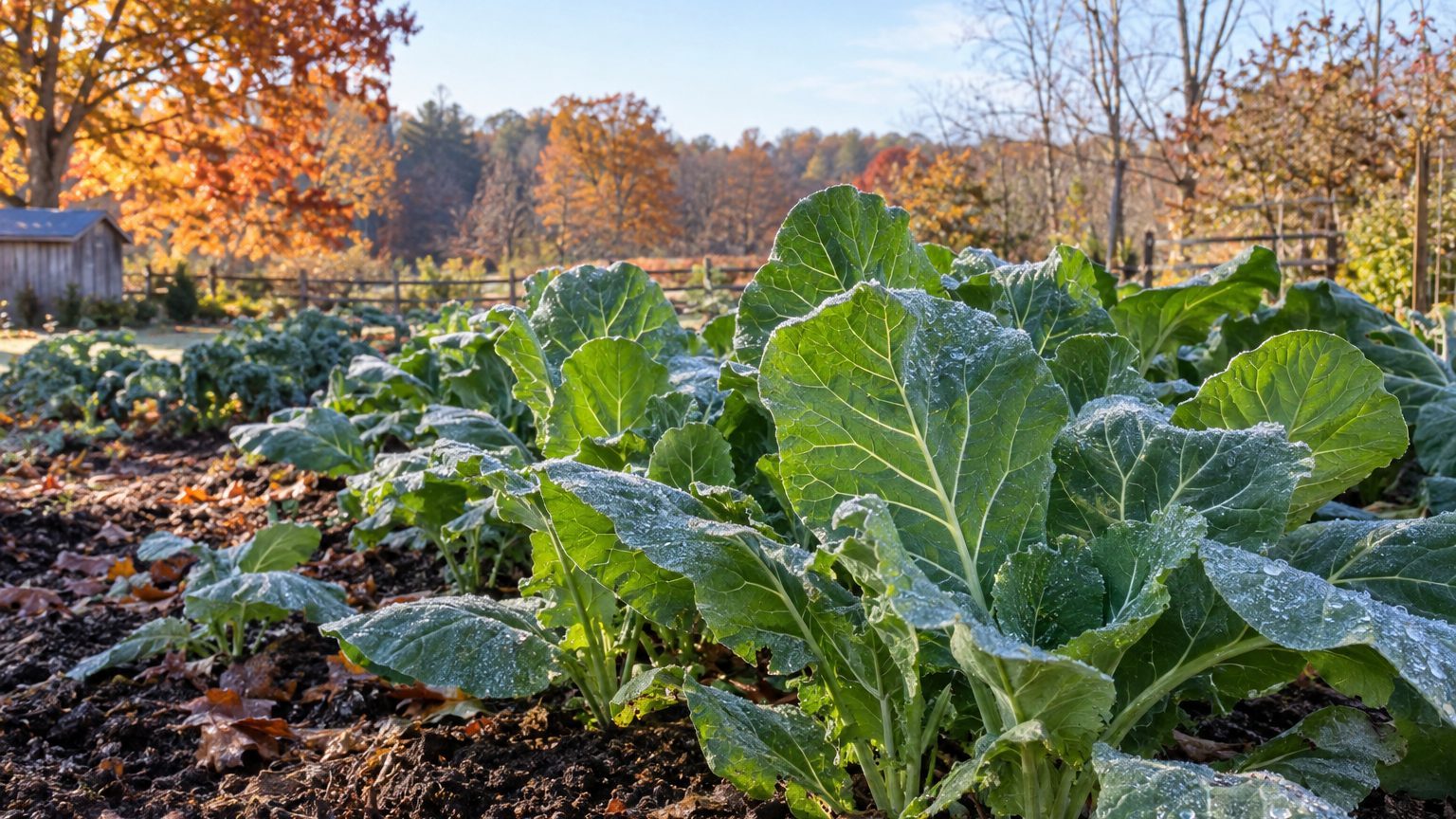

Collards go in the ground twice in Ohio: early spring and midsummer. The midsummer sowing is the better bet, because the plants mature in cool fall weather and the leaves sweeten after frost. Spring plants have to finish before summer heat turns them tough. The exact dates depend on where your frost dates fall.
The short answer for Ohio
Sow collard seed indoors from about March 10 to April 3 for a spring crop, and sow seed outdoors from mid-July to early August for a fall crop. Those windows come from the frost dates for zone 6a: a last spring frost from May 5 to May 15 and a first fall frost from October 5 to October 15. Both ranges are average dates. They mark the middle of a spread, so a frost after May 15, or one before October 5, will happen in some years.
Collards tolerate light frost, which is why the spring schedule counts backward from the last frost and the fall schedule counts backward from the first. The plants need roughly two to three months from planting to a good harvest of full-size leaves, and you can pick young leaves sooner.
What does the planting calendar look like?
| Task | Window (zone 6a dates) |
|---|---|
| Start spring seed indoors | About March 10 to April 3 |
| Spring direct sowing outdoors | April, once soil is workable |
| Set spring transplants outside | Early April to about May 1 |
| Sow fall seed outdoors | Mid-July to early August |
| Set fall transplants outside | Late July to mid-August |
Why does the fall window run so early?
A July sowing feels wrong when the soil is hot and the beds are full of tomatoes. But the plants need weeks of growth before days shorten and cool. Seed sown in mid-July has about twelve weeks before the earliest average first frost. Seed sown in early August still has about ten weeks before the latest. A plant that is already large when frost arrives keeps producing for weeks afterward. A plant that is still small stops growing and gives you only a handful of leaves.
Spring is the shorter game. Collards set out in April get cool weather, then heat arrives. That is enough for a respectable first picking, and the plants often keep going into summer if you keep them watered and pick the lower leaves.
What will not work here
Sowing collards outdoors in late May or June for a “spring” crop will not work. Those plants grow into July and August heat, and the leaves turn tough and strongly flavored. The plants also attract cabbage worms and flea beetles. Ohio summers are humid as well as warm, and leaf spots and rot follow when the foliage stays wet.
Planting in the first warm week of April with no protection is a gamble too. The last spring frost averages May 5 to May 15, so a hard night after you transplant is entirely possible. Collards are hardy, but seedlings that never hardened off are not. Give them days outdoors, in part shade, before they go into the bed. Keep a row cover or old bedsheet within reach.
Late fall plantings also have limits. If seed goes in after mid-August, the plants hit the October frost still small. The slowest, largest-leaved types suffer most because they need the longest runway. A faster type is the safer choice for a late sowing, and The Best Collards and Greens for Ohio sorts varieties by speed to harvest.
Will collards overwinter in Ohio?
Do not count on it. At the Columbus reference station, the mean daily minimum of the coldest month is 22.0°F. Collards often hold up through mild stretches, especially under a mulch of straw or leaves, but a hard January can finish them off. Plan your harvest to run from the first fall frost into early winter, and treat any plants that survive into spring as a bonus. Those survivors will bolt as soon as the days lengthen.
Crowding is the last mistake to avoid. Plants set close together stay damp after rain and dew, and humid Ohio summers and early falls give leaf diseases an easy start. Wider spacing costs you a few plants per bed and saves you the rot. For a full planting overview, see Growing Collards in Ohio.
What changes across Ohio
The USDA Plant Hardiness Zone Map (2023 edition, built on 1991-2020 normals) puts Ohio in zones 5b to 6b. That is a spread in average annual extreme minimum temperature, so no single answer fits the whole state. The dates above belong to zone 6a, which is the middle of that range.
Gardeners in the cooler parts of the state, meaning the north and higher ground, should lean toward 5b. Expect spring to arrive later and fall to arrive earlier. Move spring starts and transplants back a little. Move the fall sowing earlier by the same margin, since the first frost can come before October 5 in a cold pocket. Aim for mid-July instead of later.
Gardeners in the warmer south, nearer the Ohio River and into zone 6b, get the opposite. Spring opens sooner, so the April transplants can go in toward the early end of the window. Fall frost comes later, so an early August sowing still has time to size up. Warmth is not entirely good news, though. Midsummer heat is harder on germination, so shade the fall seed row and keep it moist.
Your own hardiness zone can differ from the one a neighbor two counties away has. Look up your location on the USDA map instead of guessing from the nearest big city. Then shift the calendar earlier or later according to whether you sit warmer or cooler than the 6a baseline.
Where to check this for your own county
Your county’s calendar will be more accurate than any statewide one, and Ohio State University Extension is the place to find it. Every Ohio county has an extension office, and the staff there know local frost patterns, soil, and pests. The dates in this article are written for the whole state, so a county recommendation should override them wherever the two disagree.
When you reach the extension site, look for two things. The first is a planting calendar for your county or region that lists cole crops, the family collards belong to, with spring and fall dates. The second is any record of varieties trialled locally. A variety that did well in a county trial has handled your local weather, pests, and disease pressure. A variety that merely sounds good in a catalog has not.
If the website does not answer your question, call or visit the county office. Many have Master Gardener volunteers who field exactly this kind of question. Ask when they usually see the last spring frost in your area, when fall seed has gone in successfully, and which pests have been worst recently. Their answers cost nothing, and they come from your own ground.
Checking this against your own garden
Your own yard outranks every date in print. Three things are worth watching, and none of them needs equipment.
- Soil warmth by feel. In spring, work a handful of soil. If it crumbles instead of clumping, and your hand does not go numb pushing into it, the bed is ready for transplants. A bed that stays cold and soggy after neighbors’ beds have dried out tells you that your ground is slow, so shift everything later.
- The first true leaves. Seedlings first show two rounded seed leaves. The first true leaves are the ones with the familiar collard shape. Once a seedling has true leaves, it can handle hardening off and transplanting. If your indoor starts stall before that stage, the spot is too cool or too dim, and the transplant date should slip with them.
- The first frost on your lawn. Check the grass on cold mornings in October. If frost shows up on your lawn or car windshield earlier than the calendar says, your garden sits in a cold pocket. Sow the next fall crop earlier. Frost that arrives later than expected says the opposite.
Keep a note of what you see each year. In time, your own log of soil, seedlings, and frost will match your garden better than the statewide averages do.
If you follow the almanac, here is when to plant collard greens by the moon. It is a tradition, not a proven method.
Common questions
Can I plant collards in Ohio in summer?
Yes, if you mean midsummer for a fall crop. Sowing from mid-July to early August works. Sowing in June for harvest in July or August does not, because heat and pests overwhelm the plants.
Should I start collards indoors or sow them outside?
For spring, indoor starts give you a head start before the April-to-May frost risk passes. For fall, direct sowing works well, though transplants started in a shaded flat can also go out in late July.
Do collards survive Ohio winters?
Sometimes. With a coldest-month mean daily minimum of 22.0°F at Columbus, plants often come through mild winters under mulch but may die in a harsh one. Count on the fall and early winter harvest.
When is the last frost date in Ohio for planting collards?
For zone 6a, the last spring frost averages May 5 to May 15. Collards tolerate light frost, so transplants can go out from early April. Cooler parts of the state, in zone 5b, run later than that baseline, and warmer parts run earlier.