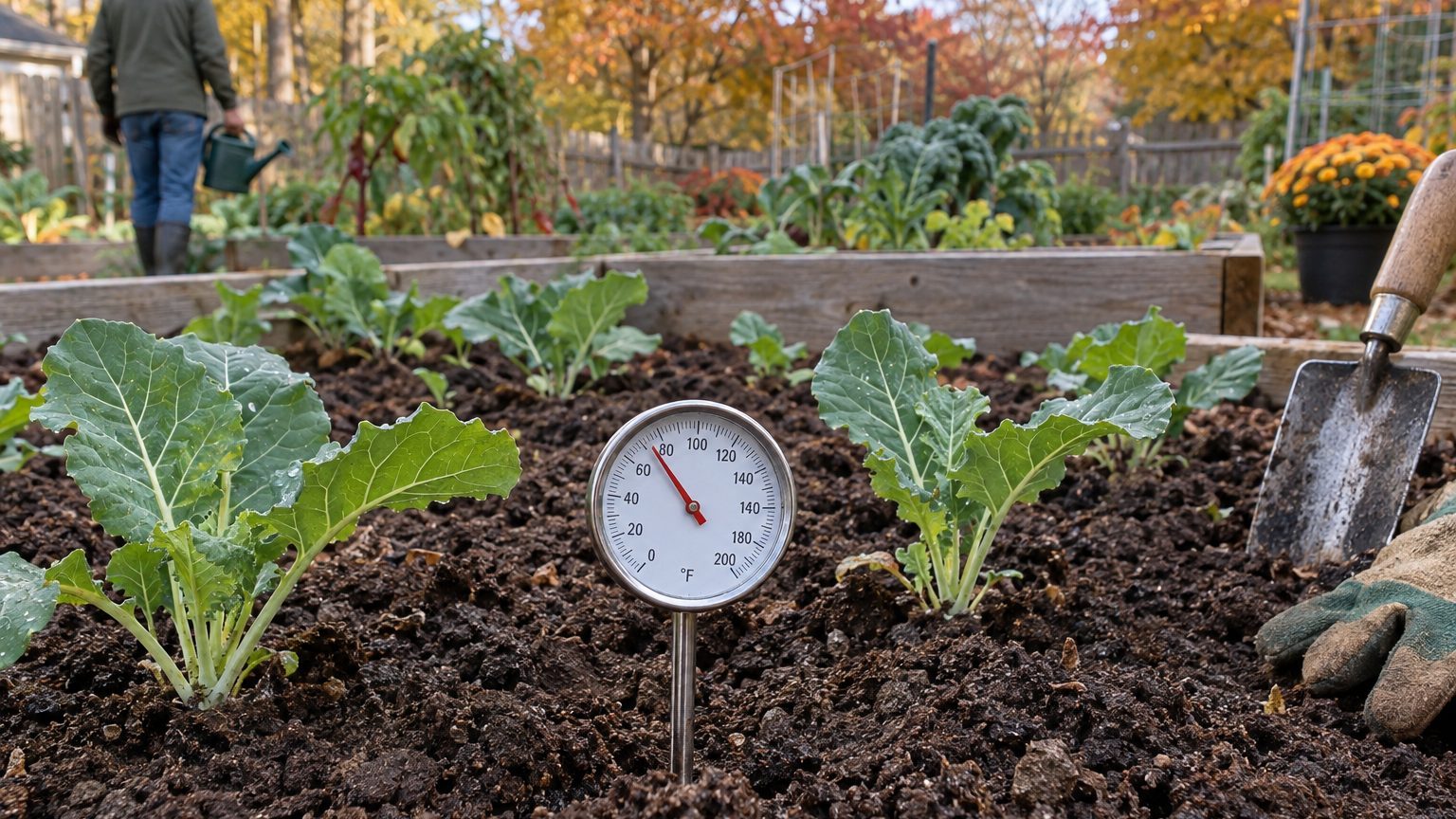

In most of Ohio, collards go into the ground once the soil has shaken off its early-spring chill, typically after the last frost window closes in mid-May. Whether that planting turns into an autumn-only crop or one that keeps producing leaves into winter depends less on the calendar than on how cold your particular county actually gets, since Ohio spans USDA zones 5b to 6b.
When the soil is warm enough in Ohio

Ohio State University Extension’s Ohio Gardening Calendar puts the last spring frost at May 5 to May 15 for the state’s zone 6a areas, the range most gardeners across central and southern counties plan around. That date matters, but it’s a proxy, not the real trigger. Collards don’t respond to a calendar square; they respond to the soil around their roots, and that soil keeps warming for a week or two after the frost risk has technically cleared. Planting the moment the frost date arrives often means young roots sitting in cold, slow ground that does little for early growth.
A frost date is a probability, not a promise, and treating it as a guarantee is how a late cold snap catches a gardener off guard. The safer approach is to let the frost date mark the start of a watching period rather than the planting day itself. Once the risk has passed and the soil has had a few warm, sunny days to shed its spring dampness, transplants go in with far less shock, and direct-seeded beds germinate faster and more evenly.
Bed prep matters as much as timing. Collards are brassicas, and so are cabbage, kale, mustard, turnip, and rutabaga. Any bed that grew one of those crops in the last few years carries the same soil-borne troubles collards are prone to, and moving collards into a spot that just finished a cabbage crop is not a rotation at all, just a change of label. Anyone setting up a new bed should check the site’s crop rotation guide before deciding where collards land this season.
Soil that drains well after a spring rain, rather than staying soggy for days, tends to warm fastest and gives young collard roots the oxygen they need to get established. Raised beds and slightly mounded rows help in the clay-heavy soils common across much of Ohio, where standing water after a storm is a familiar sight in low-lying gardens.
How long the season lasts here
Stack the two frost dates from OSU Extension against each other and the frost-free window in zone 6a Ohio runs from roughly 143 days on the tight end (last frost May 15 to first frost October 5) up to 163 days on the generous end (last frost May 5 to first frost October 15). That’s a real spread, and which end of it a given garden falls on depends on local terrain, elevation, and how close it sits to a lake, a river valley, or an urban heat pocket.
A window that long changes the math for collards, because they don’t need the whole season to mature. With 143 to 163 frost-free days on the table, there’s room for more than one sowing: an early planting that comes off well before the heat of midsummer, and a second one timed to mature as the weather cools back down in fall, often the sweeter of the two harvests since a light frost tends to improve the flavor of the leaves rather than ruin them.
Whether a second sowing makes sense depends on how the first one is managed. Direct-seeded beds are simple to restart once the first crop is cleared, but transplants for a second round need healthy, disease-free starts, which means checking any nursery stock or home-grown seedlings carefully before they go into a bed that just finished its first collard crop. Anyone weighing a second planting should look at the site’s succession sowing guide, since spacing that second sowing correctly against the first fall frost date is where the real planning happens, not just deciding to do it.
On the short end of the window, 143 days is still enough for a single strong crop but leaves little room for error if the first planting is delayed by a cold, wet spring. That’s the scenario where sticking close to the earlier end of the frost date range, rather than waiting for the latest safe day, actually pays off.
Heat and water in Ohio

The number that quietly decides how a collard bed gets planned in Ohio isn’t a summer figure at all. NOAA’s 1991-2020 Climate Normals, using Columbus as the reference station, put the coldest month’s average daily minimum at 22°F. That’s the figure to write down, because it settles the question of whether collards behave as a standing winter crop here or not.
In territories where the coldest month stays mild, collards can be picked leaf by leaf from November straight through March, a true standing crop that never really finishes. Columbus’s 22°F average minimum rules that out for most of Ohio. That’s a hard freeze on an average night in the depths of winter, not an occasional dip, and it means collards here behave as an autumn crop: planted in spring or again in late summer, harvested through fall, and finished off by the first hard freeze rather than tucked under snow and picked all winter. Row cover or a cold frame can stretch the harvest a few extra weeks into December in a mild year, but that’s an extension of the autumn crop, not a true standing season.
Summer brings its own pressures, even without a specific heat-day count to cite for this territory. Ohio’s humid continental summers mean warm, muggy stretches are the norm rather than the exception, and that moisture sitting on leaves overnight is exactly what downy mildew and other fungal problems look for. Spacing plants for airflow, watering at the base rather than overhead, and avoiding a densely packed bed do more to prevent trouble here than any amount of extra fertilizer. A cool, damp stretch in early summer tends to slow ripening and invite disease rather than speed anything up, which is a reason to resist crowding the second sowing too close to the first.
The practical takeaway is that Ohio gardeners are planning around a winter low, not a summer high. Decide the bed’s fate by asking whether that 22°F average minimum will let a late fall harvest run a few extra weeks, not whether the plant can survive January outright, because in most of the state it can’t without real protection.
Which collards suit Ohio
None of this points to a specific variety, and that’s deliberate. This page can name the types worth favoring here, but it has no business inventing a cultivar name it can’t actually source or vouch for in Ohio conditions.
Given a frost-free window in the 143 to 163 day range, an earlier-maturing type gives the most flexibility for fitting in a second, fall-timed sowing rather than gambling the whole season on one planting. Given a humid summer prone to fungal pressure, a type bred or selected for disease resistance is worth prioritizing over one chosen purely for leaf size or color. And given a winter that ends the season with a hard freeze rather than letting it run into standing harvest, there’s little reason to chase the latest-maturing types that need a long, mild finish to reach their best.
- Earlier-maturing types, for fitting a second sowing into the season
- Types with documented resistance to downy mildew or other common leaf diseases
- Types suited to a defined autumn harvest rather than an extended standing season
The right way to turn those three preferences into an actual seed order is to check which varieties have been trialled and recommended for Ohio conditions specifically, and that information lives with Ohio State University Extension, not on a general gardening page. County offices and the statewide vegetable production guides track which types perform reliably against Ohio’s particular mix of humid summers and a cold, if not brutal, winter minimum.
Bed placement still comes back to rotation. Since collards share their pest and disease pressures with every other brassica, cabbage, kale, mustard, turnip, and rutabaga included, a bed that grew any of those crops in the past few seasons isn’t a clean start, no matter how good the soil looks on the surface. Working through the site’s crop rotation guide before placing this year’s collards is a smaller task than dealing with a soil-borne problem that shows up mid-season with nowhere else in the yard to move the crop.