
Pennsylvania works for sweet potatoes. The southeast makes it easy, and the northern tier and the Alleghenies make it more of a project. The rule is the same across the state: set rooted slips into warm soil a while after the last spring frost, then dig before the first fall frost. These are tropical roots, so the temperature of the ground matters more than the date on the calendar.
When the soil is warm enough in Pennsylvania

The last spring frost at Philadelphia falls between March 29 and April 6, based on the 30 to 70 percent probability band for a 32 F freeze in the NOAA NCEI U.S. Climate Normals 1991-2020. Philadelphia is the mildest corner of the state. The northern tier and the Alleghenies run two to four weeks later in spring. Those dates describe odds, so a late freeze can still show up after them.
Nobody plants sweet potatoes on that date. The ground holds winter cold long after the air turns mild, so soil warms weeks after the frost risk ends. A slip set into cold, wet soil stops growing and can rot where it stands. Warm nights matter as much as warm days, because the roots keep swelling only while the bed stays warm around the clock.
How do you tell the soil is ready for sweet potato slips?
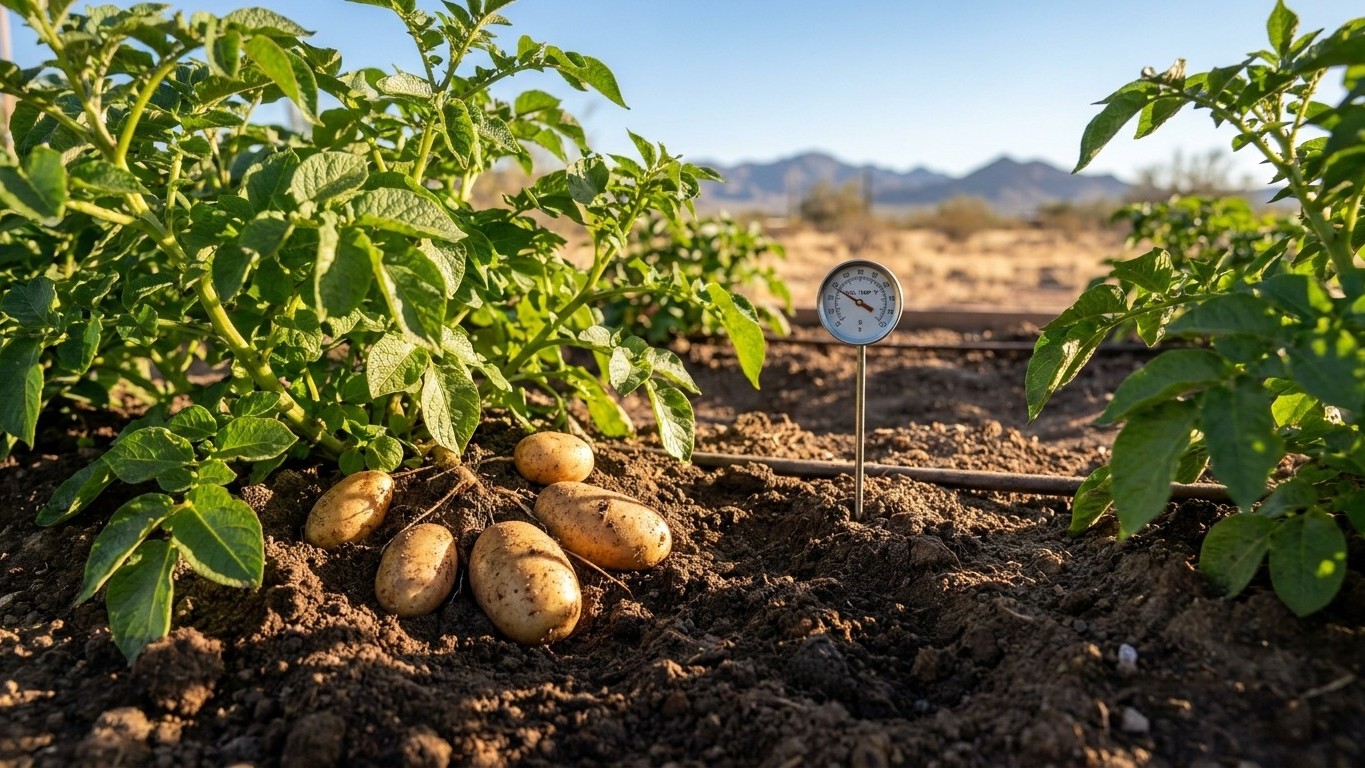
A soil thermometer tells you more than any date. Read it in the morning, when the ground is at its coolest, and wait until the readings hold steady for several days. A single warm afternoon after a cold week doesn’t count. Your county Penn State Extension office can give you the reading it wants for your part of the state.
You can speed things up. A bed covered with black plastic before planting warms faster than bare ground, and a raised ridge drains and heats earlier than a flat row. In the southeast corner you may not need either. Farther north and at elevation, they often decide whether the crop works at all.
Is a sweet potato a yam or a potato?
It is neither. A sweet potato is a relative of morning glory, it is not a nightshade, and it has no kinship with the white potato. That means it does not rotate with potatoes or tomatoes, and the “yam” label in the supermarket is wrong. True yams are a different tropical plant, rarely seen in Pennsylvania grocery stores. For the full planting sequence, from starting slips to curing, see Growing Sweet Potatoes: Slips, Heat, and a Careful Cure.
How long the season lasts here
The reference station at Philadelphia has roughly 213 to 232 days between the mean last spring frost (March 29 to April 6) and the mean first fall frost (November 5 to November 16). That is a long stretch by northern standards. Sweet potatoes only use the warm part of it, because slips go out weeks after the last frost, once the soil has caught up.
In the southeast, the length of the window gives you some room. You can stagger plantings, putting out a first batch of slips when the soil is ready and a second batch later. That spreads out the digging and covers you if a cold snap or a bad batch of slips sets back the first planting. The main crop still wants as much of the warm season as it can get, so a late second planting is a backup more than a bonus.
Farther north, the picture changes. The northern tier loses those two to four weeks at the front of the season, and cold nights tend to return earlier in fall. The first planting becomes the only one. That makes the quality of the slips worth a closer look before they go in the ground. Check that each one has a healthy set of roots, harden them off outdoors, and plant out only when the soil thermometer agrees. A lost planting can’t be replaced in a short season.
The fall end of the window matters too. Frost blackens the vines, and roots chilled in the ground can break down once they are dug. Aim to dig before a hard frost, or promptly if frost has already hit the vines. After digging, the roots need curing in a warm, humid spot, and the main guide linked above covers that step by step.
Storage needs one firm warning. Never put sweet potatoes in the refrigerator or a cold cellar. Cold injury below their storage range is irreversible, and it is the most common way a good harvest gets ruined afterward. Keep them somewhere at ordinary indoor temperatures, and inspect them regularly. A soft patch or a weeping spot ends the question for that root, however sound the rest of it looks. Gardeners comparing neighboring conditions can see how the timing shifts in Growing Sweet Potatoes in Illinois and Growing Sweet Potatoes in Colorado.
Heat and water in Pennsylvania

Philadelphia averages 24.0 days a year at 90 F or more, according to the NOAA NCEI Climate Normals 1991-2020. That count comes from one reference station, and it measures how much hot weather a summer delivers. Twenty-four days is enough that sweet potatoes are a reasonable crop in the southeast, though far fewer than the Deep South sees. It does not describe a ridge in the Alleghenies or a valley in the northern tier, where the number is likely smaller.
Where summers run cooler, the crop becomes a project. Black plastic warms the soil, ridges lift the roots above cold, wet ground, and the earliest types give the roots time to size up. A cool, damp summer also brings its own trouble: mildew on the foliage, slow ripening, and rot diseases that thrive in soil that stays wet. Warm nights are the other half of the equation. Steady warmth builds more root than a string of cool days and nights does.
How much rain do sweet potatoes get in a Pennsylvania summer?
The reference station records about 12.7 inches of rain across June, July and August, out of 44.1 inches for the whole year. That is the normal for 1991-2020, so treat it as what the region can usually expect and not as a forecast.
| Month | Rainfall at the Philadelphia reference station (inches) |
|---|---|
| June | 4.04 |
| July | 4.38 |
| August | 4.29 |
June is the driest of the three, and it is also when newly planted slips are establishing and need steady moisture. Later in summer, the danger shifts. Roots that swell steadily through even moisture tend to stay sound, while a long dry spell followed by a heavy soaking can split them near the end of the season. Hot days speed evaporation, and a rain that arrives as one thunderstorm mostly runs off the surface.
Soil changes the answer. The same inch of rain drains from sand within the day, while clay can hold it for a week. A wet summer on sandy ground can still call for watering every couple of days, and heavy clay is the reason ridges are worth building. A rain gauge on your own plot settles what the regional number can’t, since a slope, a rain shadow or a city nearby shifts the totals.
The USDA Plant Hardiness Zone Map 2023 puts Pennsylvania across zones 5a to 7b, a wide range. Because sweet potatoes are grown as annuals and killed by frost, winter lows matter little here. Summer warmth and the length of the frost-free stretch do the deciding.
Which sweet potatoes suit Pennsylvania
Choose by type first. Where the season is short, the earliest-maturing types are the safest bet. That covers the northern tier, higher ground and any garden that warms late. In the warmer southeast, you have more freedom, and a type that takes a full season is a fair gamble if you start with warm soil.
Pennsylvania’s humid summers make disease resistance the first criterion for many gardeners. Look for types described as resistant to the common rots and soil diseases, and buy slips from a supplier that sells certified disease-free stock. Give the vines airflow, so leaves dry quickly after rain, and set the roots under some shade from their own foliage. Compact, bush-habit types suit small beds and containers.
Rotation is simpler than with potatoes. Sweet potatoes share no family with tomatoes, peppers or white potatoes, so those crops don’t pass anything to each other. Even so, avoid planting them in the same bed year after year, because soil diseases build up in a bed that hosts the same crop repeatedly.
Which varieties should you grow in Pennsylvania?
A variety that performs well in one county can sulk in another, and the only recommendation worth trusting is one tested in Pennsylvania conditions. Penn State Extension and your county office can tell you which varieties have been trialled in your part of the state and where to buy slips. Ask them about the cooler ground in the north and west, and about disease problems they see in wet summers. A named variety borrowed from a Southern gardening forum can cost you a season, while one tested near you gives you a head start.
Common questions
Can you grow sweet potatoes in northern Pennsylvania?
Yes, with extra work. The northern tier’s last spring frost runs two to four weeks later than Philadelphia’s, so the usable season is shorter. Early types, black plastic and ridges all help the soil warm sooner and give the roots time to size up. Expect smaller roots in a cool summer, and check with your county extension office for what has worked locally.
Do I need black plastic for sweet potatoes in Pennsylvania?
In the southeast, it is optional in most years. In cooler parts of the state, it is one of the most reliable ways to warm the soil before planting and keep it warm at night. Lay it a couple of weeks ahead and check soil temperature with a thermometer before you plant through it.
Is a sweet potato the same as a yam?
No. True yams are an unrelated tropical plant, and what most stores label “yam” is a sweet potato. Sweet potatoes are also not potatoes, and they are not nightshades, so they don’t follow the same rotation rules.
Where should I store sweet potatoes after harvest?
Cure them first in a warm, humid place, then keep them at ordinary indoor temperatures. Never use a refrigerator or a cold cellar, because cold injury is permanent and often shows up only after the damage is done. Check them regularly, and discard any root with a soft patch or a weeping spot.