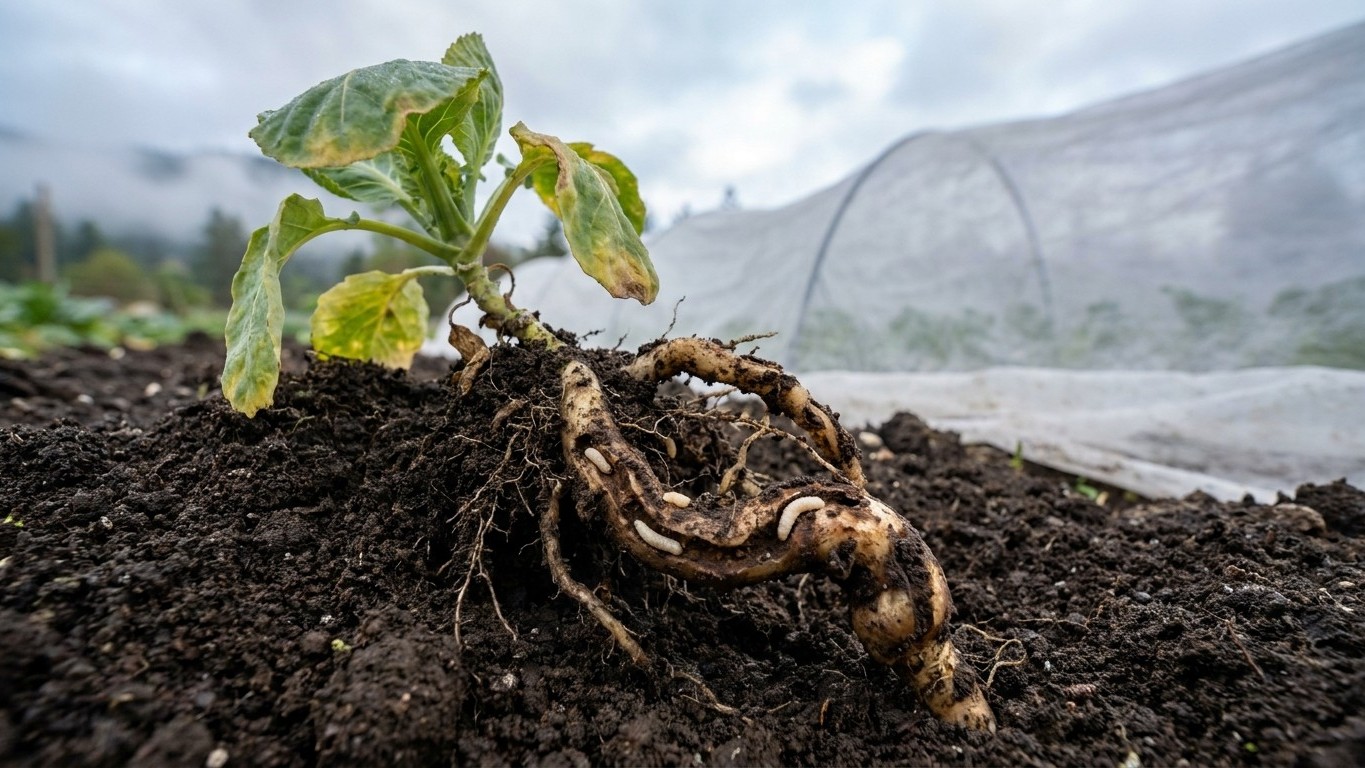

Sweet potatoes can be grown in Wyoming, but the crop needs help. The season is short, summer nights cool off fast, and the soil lags well behind the calendar. Black plastic, a row cover, slips set out late and an early-maturing type separate a real harvest from a handful of pencil-thin roots. The details below are keyed to the Cheyenne reference station.
When the soil is warm enough in Wyoming

The mean last spring freeze falls between May 7 and May 18 (NOAA NCEI 1991-2020 Climate Normals, 32F freeze probabilities in the 30-70% band, station USW00024018). Those dates are odds, and in some years a freeze lands after them. At higher elevations, frost is possible in any month. Count on the later end of that window for tender plants.
The frost date only stands in for what a sweet potato actually needs, which is warm ground. The soil warms after the frost risk ends, often by a couple of weeks or more in a cold spring, and slips set into cold soil stall. Wait for warm soil before you plant, even if the air has felt like summer for days.
The crop is also easy to mislabel. Sweet potato is a morning glory relative, and the supermarket “yam” label is wrong. It sits outside the nightshade family, so it never counts as a potato in a rotation plan. A bed that grew potatoes last year is neither better nor worse for it.
How do you tell the soil is warm enough for sweet potatoes?
Use a soil thermometer a few inches deep and read it in the morning, when the ground is coolest. A reading taken at 3 p.m. flatters the bed. Your state extension service publishes the soil temperature target it recommends for transplanting. Black plastic laid over the bed for a couple of weeks beforehand speeds the warming, and a raised ridge drains and heats faster than flat ground. If mornings still read cold, keep the slips in pots in a bright, warm room until the bed catches up.
What if a freeze hits after planting?
Watch the forecast through the end of May and into June. When a freezing night is predicted, cover the plants with row cover, an overturned bucket or a low tunnel before dusk. Frost blackens the vines, and a plant that loses its first leaves loses weeks it cannot spare in a short season.
How long the season lasts here
The reference station has about 130 frost-free days between the mean last spring frost (May 7 to May 18) and the mean first fall frost (September 24 to October 5), at 6,000 feet. Higher ground has fewer, and frost is possible in any month.
That window allows one planting. A long Southern season can take a second round of slips set out weeks after the first, and Wyoming cannot. Succession sowing pays off with radishes, lettuce and spinach, which finish fast. A sweet potato planted late gets cut off by fall frost before the roots size up. One planting, no second chance is the rule, so the first set of slips has to be good.
Sweet potatoes are grown from slips, which are rooted sprouts, so the check happens at transplant time. Look for firm stems, green leaves and some white roots, and discard slips with a black or mushy base. In a short season there is no time to replace a failed slip in July. The general guide, Growing Sweet Potatoes: Slips, Heat, and a Careful Cure, covers slip handling in more depth.
The USDA Plant Hardiness Zone Map (2023) puts Wyoming in zones 3a to 6a, a wide spread. The zone rests on the coldest winter night, which matters little for a tender annual, but the range shows how much elevation and location change the answer. Treat Cheyenne’s numbers as a reference and expect the Bighorn Basin, a mountain valley or a south-facing slope to differ.
Season extension is standard practice here:
- Black plastic mulch to warm the soil before and after planting
- Low tunnels or row cover for cold nights in late spring and early fall
- Raised ridges that drain and heat faster
- A windbreak or a south-facing wall for shelter
Heat and water in Wyoming

Cheyenne averages 10.4 days a year at 90F or more (NOAA NCEI Climate Normals 1991-2020). That is a low count. Sweet potatoes want accumulated warmth and warm nights, and in a place with many 90F days the crop is routine. With so few, it becomes a project of plastic, ridges and an early type, and the nights at elevation drag the average down further. Nebraska, with its warmer plains summers, shows the easier version in Growing Sweet Potatoes in Nebraska.
Cool summers can bring slow ripening and root growth that stops short of a decent size. In a damp cool summer, mildew and rot would be added to that list. Wyoming runs dry, so the first problem is a lack of warmth. Humid eastern gardens meet the fungal side instead, as Growing Sweet Potatoes in Connecticut explains.
Rainfall at the reference station (NOAA NCEI Monthly Climate Normals 1991-2020, station USW00024018) runs about 5.8 inches across June, July and August, out of 15.4 inches for the whole year:
| Month | Rainfall (inches) |
|---|---|
| June | 2.16 |
| July | 2.11 |
| August (driest summer month) | 1.52 |
Do sweet potatoes need extra watering in Wyoming?
Usually yes. Those normals are a regional expectation and not a forecast for your plot. Soil changes the story: rain drains through sand within the day, while clay holds it for a week. Summer rain here often arrives as a single thunderstorm, and much of that runs off the surface rather than soaking in. A sandy bed under black plastic can dry out quickly even in a month with decent rainfall.
Steady moisture matters because roots swell evenly when the soil stays evenly damp. A long dry spell followed by a downpour is what splits them near harvest. Mulch and a drip line help, and a rain gauge on your own plot settles how much water the bed actually received. Slopes, wind and nearby buildings all change the numbers from the station.
Which sweet potatoes suit Wyoming
Choose by type. A short, cool season makes earliest-maturing types the first criterion, and compact, bush-habit vines that stay tight to the plastic come next. Disease resistance matters less here than it does in humid states, because dry air keeps most fungal trouble down.
| Type | Why it fits | What to watch |
|---|---|---|
| Earliest-maturing | Sizes up within a short window | Still needs warm soil at planting |
| Compact, bush-habit | Stays near warm plastic, easier to cover | Smaller plants, so roots may be fewer |
| Late, long-vined | Suited to long Southern summers | May run out of season before roots mature |
Variety names are best taken from University of Wyoming Extension and your county office. A cultivar that does well in a Carolina catalog tells you little about 6,000 feet, cool nights and 130 frost-free days. Only varieties trialled in Wyoming’s own conditions are worth buying, and the extension service knows which ones have been tried.
How should you cure and store sweet potatoes after harvest?
Dig before a hard freeze, since the first fall frost arrives between September 24 and October 5, and handle the roots gently because the skin bruises easily. Cure them in a warm, humid spot; your extension office gives the exact conditions. After curing, store them somewhere dry, ventilated and indoors at ordinary room-like conditions.
Cold injury is irreversible and is the most common way a good home crop is ruined after harvest. It shows up later as hard centers, off flavor and rot. Inspect roots regularly. A soft patch or a weeping spot ends the question, and the root goes in the trash. A root that looks sound can still be unsafe or on its way to spoiling, so keep checking, and treat any keeping time as unknown.
Common questions
Can you grow sweet potatoes in Wyoming?
Yes, with help. The frost-free window is about 130 days at 6,000 feet, and only 10.4 days a year reach 90F at the Cheyenne reference station. Warm the soil with black plastic, plant slips after the last freeze risk, and choose an early type.
When should you plant sweet potato slips in Wyoming?
Wait until after the May 7 to May 18 last-freeze window, and then until the soil is warm in the morning at planting depth. In cold springs that can mean late May or June. Higher elevations wait longer.
Do sweet potatoes need black plastic in Wyoming?
It is strongly advised. The plastic warms the soil before planting and holds heat through cool nights. Low tunnels add protection on cold evenings in spring and fall, and a ridge helps the bed drain and warm.
Can you store sweet potatoes in the refrigerator?
Cure the roots warm, then store them dry and indoors, checking often. Any soft or weeping spot means the root is finished.