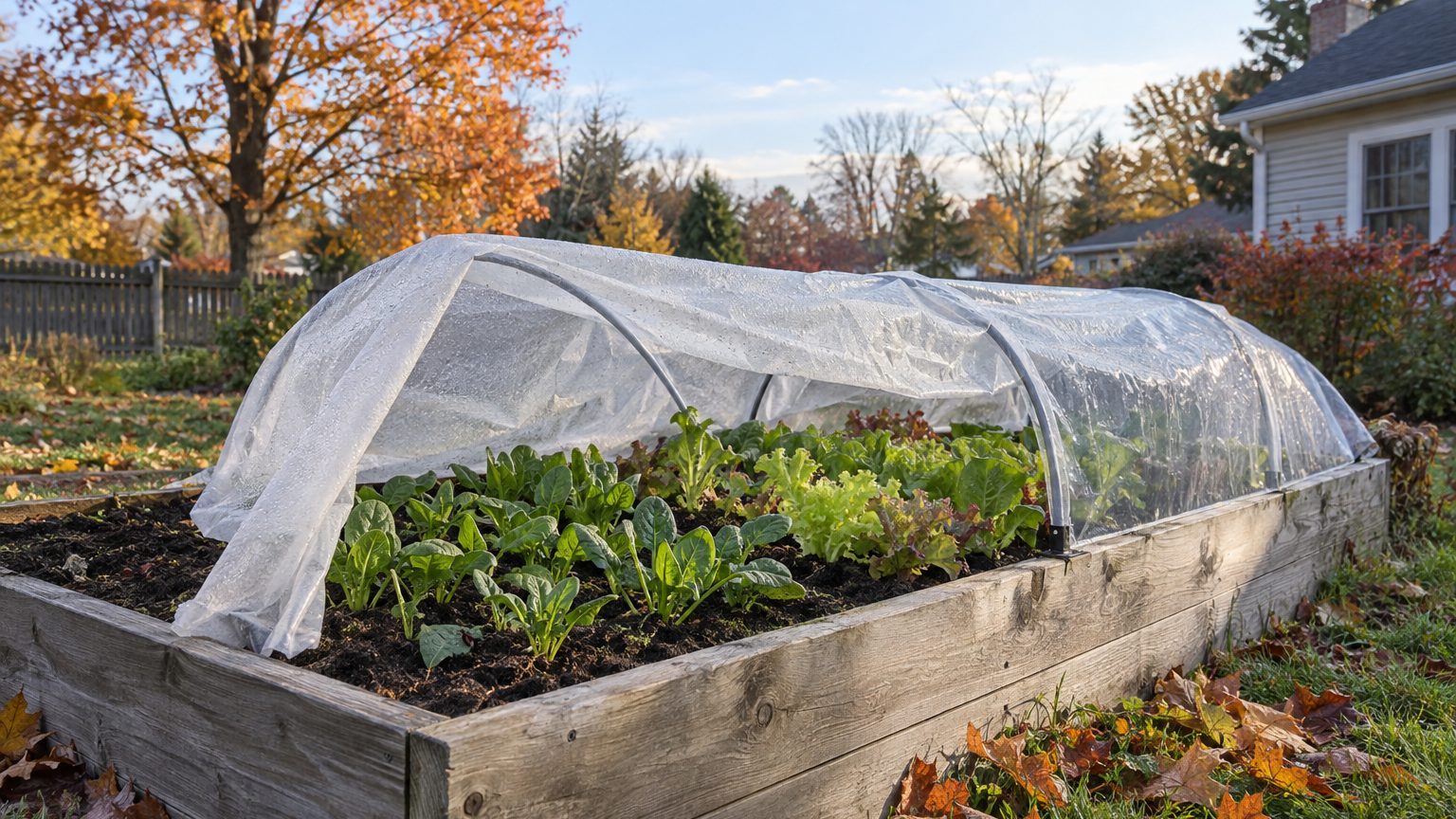

Season extension in New Mexico starts from the Albuquerque airport station. Its 1991-2020 normals put the last spring freeze between March 31 and April 12 and the first fall freeze between October 29 and November 9. A cover can stretch both ends of that window, but the gain varies with the night, the wind and how warm the soil already was. Most gardens outside the city have less room, and the general case is laid out in Extending the Season: What a Cover Buys, and What It Cannot.
When the soil is warm enough in New Mexico
The date most gardeners want comes from the NOAA NCEI U.S. Climate Normals 1991-2020 for the Albuquerque station: a last spring freeze (32 F) between March 31 and April 12. That is the 30 to 70 percent probability band, so some springs freeze later and some earlier. Suburban and rural gardens usually freeze later in spring than the airport, often by one to two weeks, and higher ground by more. Check the dates for your own county before you mark a calendar.
A frost date only says when the air stops falling to 32 F. Seeds and roots respond to the soil, and soil lags the air in spring. It warms after the frost risk has passed. Beans, squash, tomatoes and peppers stall in cold ground even on a frost-free night. Peas, spinach, radishes and other cool-season crops germinate in cold soil, which is why they go in first.
How can you tell the soil is ready?
Push a soil thermometer in at planting depth first thing in the morning, and do it several days running. One warm afternoon proves little. Clear, dry air lets sun heat the top inch of ground fast, but the same air lets that heat escape by dawn. Sandy soil swings the most. A raised bed warms sooner in spring and also cools sooner on a clear night.
A cover can pre-warm a bed. Set fabric or film over the planting area one to two weeks ahead and the soil stores more of the day’s sun. On sunny days, open the ends or lift the sides, because a closed cold frame or tunnel in spring sun can cook what is inside within an hour. Ventilation protects the crop, and it is not optional.
What does a cover do on a cold night?
Soil soaks up sun all day and gives the heat back after dark. A cover traps part of that heat and keeps the air around the plants still. A second layer, such as fabric laid inside a hooped tunnel, adds another pocket of still air. The gain is real, but it depends on the material, the wind, whether the night is clear and calm, and how warm and moist the ground was at sunset. Nobody can promise a fixed number of degrees.
A cover shifts the limit of a crop, and it does not remove it. A hard freeze after a mild week can still take the whole bed. Keep everything passive: no heater, lamp, candle or flame inside any covered structure. Fire and carbon monoxide are real risks, and trapped sun is the only warmth you need.
How long the season lasts here
The reference station has about 200 to 223 frost-free days between the last spring freeze (March 31 to April 12) and the first fall freeze (October 29 to November 9). Those are airport figures. A garden in a suburb or on a rural lot typically starts later and ends earlier, often by one to two weeks at each end. Higher elevations lose more. The USDA Plant Hardiness Zone Map (2023) runs from zone 4b to 9a across the state. That map is built on the average annual extreme minimum, and the spread shows how differently a mountain town and a river valley behave. Use the Albuquerque dates as a reference and then adjust for your own ground.
What does a long window allow?
A window of this length leaves room for a second sowing. Fast, direct-sown crops such as bush beans, carrots, radishes, lettuce and spinach can go in again from midsummer into early fall. For direct-sown crops, the days on the seed packet count from sowing. Count back from the first fall freeze band, then add a cushion, because shortening days in autumn slow growth even before the cold arrives. A cover adds days at both ends of the window, though how many varies. The succession sowing guide in this series sets out how to space those rounds.
When is transplanting worth it?
Where the window is short, as in high-elevation towns, the first sowing is often the only one. Transplants of tomato, pepper and eggplant earn their keep there, because they start weeks ahead of anything sown in the ground. Packet days for those crops count from transplanting. The catch is the root check. Slide one plant out of its pot before buying or planting. White roots holding the soil together are a good sign, while a dense mat of circling roots means the plant will stall once it is in the ground. Loosen those roots by hand, or choose a different plant.
In the longer valley window, direct-sown beans, squash, cucumbers and melons usually catch up with transplants, so the extra effort buys little. Save transplanting for the crops that need the head start.
Heat and water in New Mexico
Low-elevation summers are hot, the air is dry, and most of the year’s rain falls as monsoon thunderstorms in summer. Higher towns run much cooler. For season extension, though, heat is not the governing fact. Light and cold are, and they act together.
How does latitude change what a cover can do?
Albuquerque sits at 35.04 degrees north. At that latitude the days shorten through autumn until plants nearly stop growing. After that point, a cover holds a crop alive and no longer grows it. Winter sun here is bright, so a framed structure warms fast on clear days and needs venting even in January. A gardener in the far north or far south of the state should check their own latitude, since the date growth slows shifts with it.
Is light fabric enough in the coldest month?
The mean daily minimum of the coldest month at Albuquerque is 26.4 F. That is an average, so many nights run colder. Light fabric handles the shoulder-season nights near freezing in spring and fall. In midwinter, only a framed structure with a second layer inside will hold hardy crops such as spinach, kale or carrots, and even then the gain varies with the night. Tender crops will not survive. A closed frame still needs opening on sunny days.
Water works differently under a cover. Fabric and film keep rain off the bed, and dry wind pulls moisture from the soil, so check the ground by hand and water as needed. Anchor edges well, since spring wind lifts loose fabric. During monsoon weeks, a sealed tunnel can hold humid air that invites mildew, so open the sides and give plants room. In midsummer, shade cloth over a hoop frame cools the seedbed for fall sowings of lettuce and spinach, which resist germinating in hot soil. Gardeners in the low desert will find the same pattern in Extending the Growing Season in Arizona.
Which season extension suit New Mexico
Choose by type of cover and type of crop, and let your elevation decide which matters more.
| Type | What it does | What to watch |
|---|---|---|
| Light fabric laid over the crop | Holds a little ground heat on shoulder-season nights | Anchor against wind; it will not hold a midwinter freeze |
| Low tunnel on hoops | Adds a pocket of still air and can take a second layer | Open the ends on sunny days |
| Cold frame (lidded box) | Holds hardy crops through winter | Prop the lid open in sun; it can overheat within an hour |
| Shade cloth on hoops | Cools the seedbed for late-summer sowings | Remove it as days shorten |
A short season, as at higher elevations, favors the earliest-maturing types of each crop, because they finish before the first fall freeze. A hot low-elevation summer favors types that tolerate heat, with airflow around the plants and mulch to shade the root zone. Monsoon humidity, and the damp that builds under closed covers, makes disease resistance the first thing to look for on a label or in a catalog. Where summers are humid all season, as on the East Coast, disease pressure is far higher, and Extending the Growing Season in North Carolina shows how that changes the choices.
No variety is named here because performance shifts from one valley or mountain town to the next. The only recommendation worth following is one from trials near you. New Mexico State University Extension and your county office know which varieties have been grown locally, and they can give you the local freeze records. A min-max thermometer left in your bed through one season will also show how far your ground runs from the airport dates.
Common questions
When can tomatoes go outside in Albuquerque?
After the last-freeze band (March 31 to April 12) has passed and the soil has stayed warm in morning readings for several days. A cover can protect early plantings on borderline nights, but it will not carry them through a hard freeze.
Does row cover make plants frost-proof?
No. It holds some of the ground’s heat and still air around the plants, and the gain varies with the night. A hard, clear, windy freeze can still kill what is under it.
Do cold frames need venting in winter?
Yes. New Mexico’s winter sun is strong, and a closed frame can overheat in an hour on a clear day. Prop the lid open in the morning and close it before the temperature drops.
Are the Albuquerque frost dates right for my town?
They are a reference. Suburban and rural gardens typically freeze later in spring and earlier in fall, often by one to two weeks, and higher towns by more. Ask your county Extension office for the dates near you.