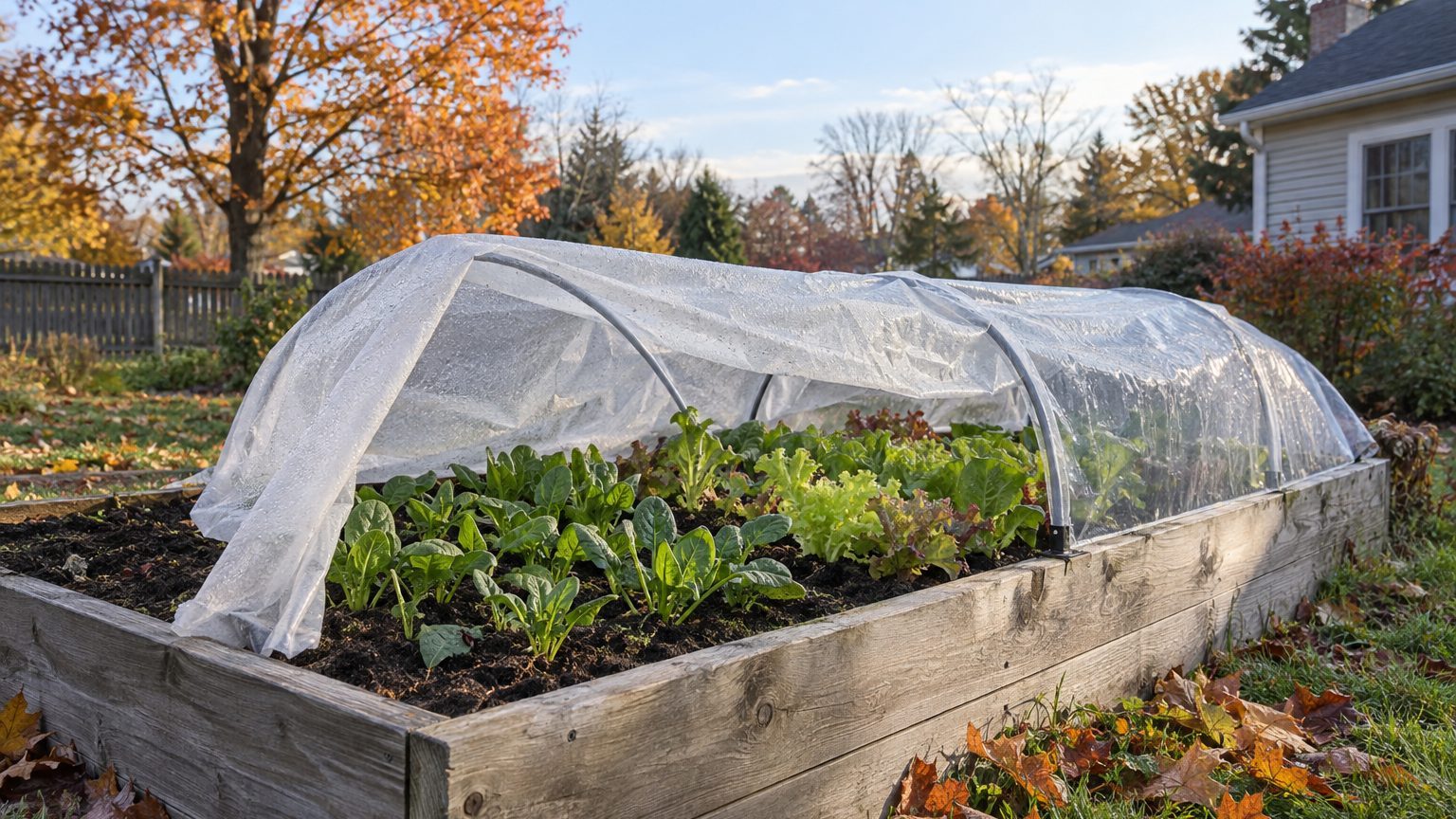

Season extension in Ohio works at both ends of the year. A cover lets hardy crops go in earlier in spring and keeps them producing well into fall, and a framed structure can hold greens alive through much of winter. It cannot make a tender crop frost-proof, and it cannot grow plants once winter daylight is too short. The Extending the Season: What a Cover Buys, and What It Cannot overview covers the general rules.
When the soil is warm enough in Ohio
In zone 6a, the last spring frost falls between May 5 and May 15, according to the Ohio State University Extension gardening calendar. That is an average, so a frost after the window shows up in some years. The date also shifts later toward Lake Erie and earlier along the Ohio River.
Frost date and planting date are two different things. Freezing air stops first. Soil lags behind because it holds winter cold, and wet spring ground warms slowly. Seeds of beans, squash and cucumbers sit and rot in cold soil, and transplants of tomatoes and peppers stop growing in it even when the air feels mild. Season extension waits for warm soil, and that arrives after the frost risk ends.
A cover works because soil soaks up sun by day and gives that heat back after dark. Fabric, plastic or a glazed lid traps part of that radiated heat and keeps the air around the plants still. A second layer, such as fabric inside a low tunnel, adds another pocket of still air. The gain is real but it varies with the material, the wind, the night, and how warm the ground was at sundown.
Can a cover let you plant before the last frost date?
For hardy crops, yes. Peas, spinach, lettuce, radishes and onion sets already tolerate light frost, and a cover widens the margin. Tender crops are a different case. A cover shifts the limit and does not remove it, and a clear, calm night after a cold day can still kill tomatoes under fabric. Check the forecast and keep an extra layer on hand.
Anything closed needs ventilation. A shut cold frame in spring sun can cook its contents in an hour, even when the air outside is cool. Prop the lid open in the morning and close it in late afternoon. Everything described here is passive: the only heat is what the sun puts into the soil and the structure.
How do you know the soil is warm enough?
Push a soil thermometer to seed depth in the morning, when the soil is at its coolest, and check over several days instead of one sunny afternoon. A handful of soil that crumbles instead of clumping into a wet ball is ready to work. Covering a bed with clear or black plastic ahead of planting warms the top layer, which helps if the calendar says May and the ground still feels cold.
How long the season lasts here
Zone 6a has a frost-free season between the mean last spring frost (May 5 to May 15) and the mean first fall frost (October 5 to October 15).
That is long enough for most gardeners to sow twice. A spring planting of lettuce, radishes or bush beans comes out in early summer and leaves the bed free for a second round. Fall crops go in during late summer and finish as the first fall frost approaches, with a cover stretching that finish by weeks. Tender summer crops get the whole warm stretch, so a tomato transplant has time to recover from the move.
The length of the window also decides how much risk a transplant is worth. With a window this size, starting brassicas, tomatoes and peppers indoors or buying transplants makes sense, because there is room to absorb a few slow days after planting. Crops that resent root disturbance, such as carrots, beets and beans, do better sown directly. The days listed on the packet count from sowing for those, so a bed sown in early summer still has time to mature before frost.
The far north of the state, near Lake Erie, and the southern counties along the Ohio River run on different calendars. A garden in either place should shift these dates and check with the county extension office. Pennsylvania has a similar window across the eastern border, and Extending the Growing Season in Pennsylvania shows how the same tools work there. For a place where the long window is the problem and heat is the limit, Extending the Growing Season in Florida is the contrast.
The succession sowing guide in this series sets out how far apart to space each round so a bed never sits empty or floods the kitchen with a single harvest.
Heat and water in Ohio
Central Ohio summers are warm and humid, with rain falling through the season. Heat arrives in spells and does not last all summer, and most crops will keep going through it. Light and cold set the limits here, and humidity shapes the disease problems.
Do hot, humid summers matter for season extension in Ohio?
Mostly for what they bring with them. Warm, damp weather favors mildew and leaf spots on squash, cucumbers and tomatoes, and cool wet stretches slow ripening. A covered bed makes this worse if it stays shut, because trapped moisture sits on leaves. Open the ends of tunnels on mild days, space plants for airflow, water at the root in the morning, and keep leaves dry. Cool-season crops such as lettuce bolt and turn bitter in a hot spell, so a bit of afternoon shade helps them more than any cover.
When does daylight stop growing crops in Ohio?
Columbus sits at 39.99 degrees north, the latitude of NOAA station USW00014821. After that date a cover holds a crop alive and no longer grows it. Spinach, kale and lettuce sown too late reach winter small and stay small until days lengthen again. The practical rule is to sow fall crops early enough that they reach harvest size before the days shorten, then use cover to preserve them. Gardeners in northern Ohio near Lake Erie, or in the far south, should check their own latitude, because a few degrees shift that date noticeably.
The coldest month decides how much structure is needed. At Columbus the mean daily minimum in the coldest month is 22.0°F (NOAA NCEI Climate Normals 1991-2020), and individual nights run colder than that average. The USDA Plant Hardiness Zone Map (2023) puts the state in zones 5b to 6b, so some counties are colder than the reference city. Light fabric on its own handles frost and light freezes for hardy greens. Through deep winter nights, a framed structure with a second layer inside gives hardy crops a sturdier margin. Even then the gain varies from night to night, and a sunny winter day can overheat a closed frame, so vent it.
Which season extension suit Ohio
Match the tool to the job and the crop to the cold. Ohio’s window is mid-length, so the earliest-maturing types of a crop make the most of both ends of the year. Where summers are humid, disease resistance comes first. Where roots run warm, mulch and airflow come before shade.
Which structure fits which job?
- Floating row cover: a light fabric laid over the crop, good for frost nights in spring and fall and for keeping pests off.
- Low tunnel: hoops with fabric or plastic over a bed, which gives a still-air layer for early planting and late greens.
- Cold frame: a glazed box for hardening off seedlings and holding hardy greens, which needs daily venting in sun.
- Walk-in high tunnel: a framed structure for tender crops and winter harvests, with ends and sides that open for airflow.
For spring planting of transplants, choose the earliest types in each crop. For fall and winter, choose types listed as cold-hardy and slow to bolt. Humidity is the other filter, and tomatoes, squash and cucumbers with listed disease resistance spend less of the season fighting mildew and blight under cover.
Who recommends varieties for Ohio?
Local trials do. A variety that performs on the Lake Erie shore may sulk in the Ohio River valley, and only trials run in the state can say which ones hold up under the state’s humidity and cold. For that reason no specific variety is named here. Ohio State University Extension and county offices publish the varieties that have been tested locally. Ask there before buying seed.
Common questions
When can I plant tomatoes outside in Ohio?
After the frost risk ends, which in zone 6a means May 5 to May 15 on average, and once the soil has warmed. A cover can add a margin, but the soil still has to be warm for roots to grow.
Will a cover protect plants from a hard freeze?
It helps, but only to a degree that depends on the material, the wind, the night and how warm the ground was. A cover shifts the limit and does not remove it, so tender crops can still be lost on a clear, hard-freeze night.
Do I need to vent a cold frame in Ohio?
Yes. On a sunny day a closed frame can overheat plants within an hour, even in spring or fall when the air outside is cool. Open the lid in the morning and close it when the sun drops.
Can I grow greens through an Ohio winter?
Hardy greens can survive under a framed structure, though they will mostly hold in place after daylight drops in late fall. Sow early enough for them to reach size first, and expect growth to resume as days lengthen in late winter.