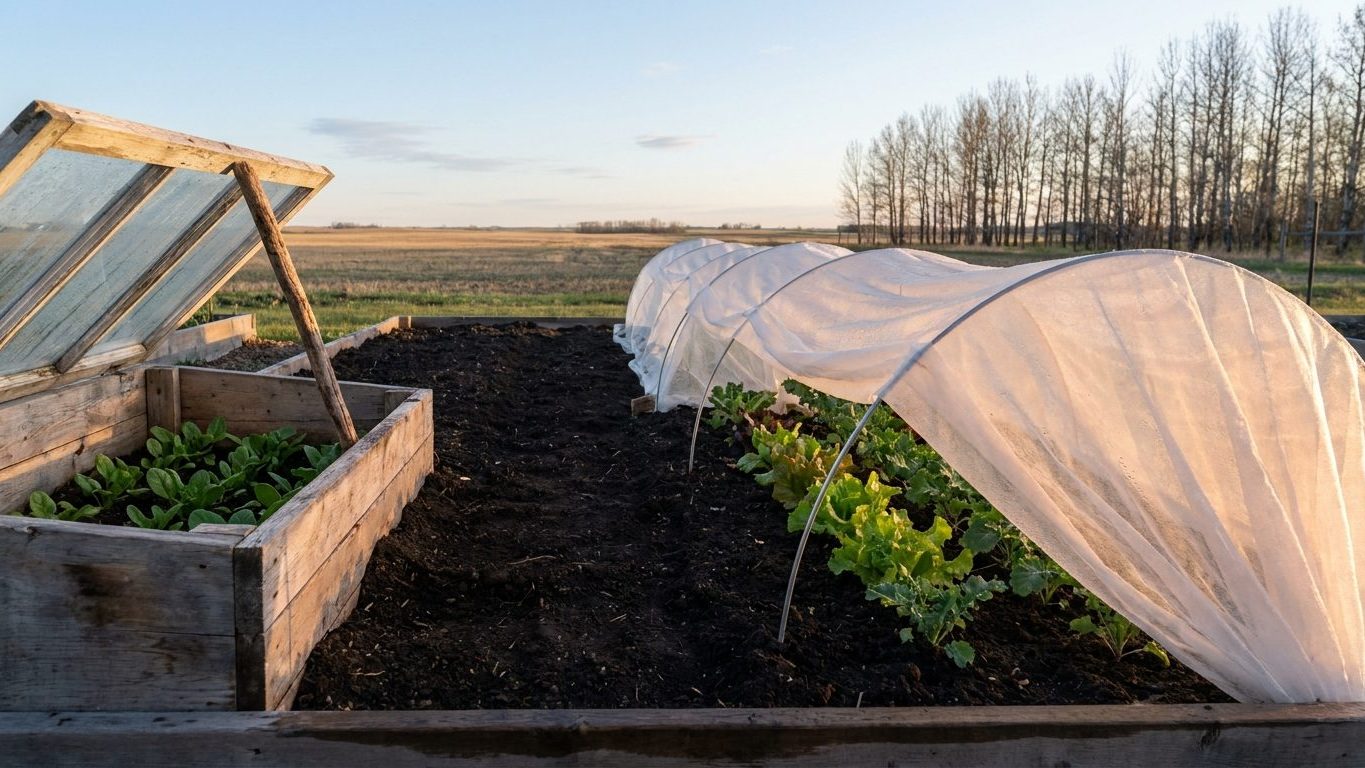

In North Dakota, the extenders that pay off are floating row cover, low tunnels, cold frames and black plastic mulch. Each one adds a few weeks of growing time at either end of the season. None of them changes the winter. The cold here is deep enough that a cover buys you spring and fall, not January.
The short answer for North Dakota
Start with the frost dates, because they set what an extender has to accomplish. At the Fargo airport station, the 32°F freeze probabilities from NOAA’s 1991-2020 climate normals put the last spring frost between May 4 and May 15. The first fall frost lands between September 25 and October 5. These dates describe the chance of a freeze: in the middle of those bands, a freeze is roughly as likely as not. A frost can still come after the later date in spring and before the earlier date in fall.
Gardens outside the airport run tighter. Suburban and rural plots often see the last spring frost one to two weeks later and the first fall frost one to two weeks earlier than the Fargo figures, and more so on higher ground. A cover that adds a few degrees of protection matters most in those margins.
Latitude explains why the fall end is harder to stretch. Fargo sits at 46.93 degrees north, so days shorten quickly after the equinox. A cover adds warmth but not daylight. Plants under cover in October keep surviving, but they grow slowly because the light is thin. In spring the opposite happens: days lengthen fast, and covers start working as soon as the soil begins to thaw.
Here is how the main options compare for this climate:
- Floating row cover laid over crops or hoops handles light frost and wind-driven cold nights at both ends of the season.
- Low tunnels (hoops with plastic or fabric) warm the soil for early transplants and hold hardy greens into late fall.
- Cold frames suit lettuce, spinach and other greens, and they start seedlings before the ground is workable.
- Water-filled cloches, often called wall-style protectors, shelter individual tomato or pepper transplants set out early.
- Black plastic mulch warms the soil for warm-season crops and does nothing for air frost.
For timing the covers, see When to Cover Your Garden in North Dakota.
What will not work here
A single thin layer will not carry tender crops through a hard freeze. The coldest month at Fargo averages a daily minimum of 0.2°F, which is the number that decides what survives winter here. Gardeners who leave a lone row cover over greens into December, expecting them to overwinter, lose them. Even a well-sealed cold frame with no added insulation freezes through in the deepest cold.
Extenders also cannot rescue crops that need a much longer season. A few extra weeks will not turn a short-season garden into a long-season one. Melons, sweet potatoes and other slow, heat-hungry crops stay a gamble even under plastic. Choose varieties that mature early, and treat the cover as insurance on those, not as the reason to plant something too slow.
Wind is the quiet killer of covers. The prairie gives a hoop house or a loose sheet of fabric nothing to hide behind. Unpinned row cover ends up in a neighbor’s field, and hoops pushed only a few inches into the soil can lean or flatten. Anchor every edge with soil, boards or sandbags, and push hoops deep. Heavy, wet spring snow can also collapse a low tunnel or a tall plastic structure that was never meant to bear weight, so brush it off or remove the plastic.
Clear plastic without venting fails on sunny spring days. A cold morning can be followed by an afternoon when the air under the plastic climbs far above the temperature outside. Seedlings cook, and transplants stall. Prop the ends open on any day that looks sunny, and close them again before evening.
Finally, setting out tomatoes or peppers on the first date in the May 4 to May 15 band, with nothing over them, is a mistake the frost dates do not forgive. That band marks the middle of the odds, not the end of the risk. Keep a cover on hand for the following two weeks, and expect to use it on at least one night.
What changes across North Dakota
North Dakota is not one garden. The USDA Plant Hardiness Zone Map (the 2023 version, built on 1991-2020 normals) places the state across zones 3a to 4b. That system rests on a single variable, the average annual extreme minimum temperature, so it says how cold a plant must endure and says little about how long the season runs. No single answer fits the whole state, and the spread from 3a to 4b is wide.
The Fargo figures belong to the southeast corner. A gardener in the far north, or on higher ground in the west, can expect a colder winter, a later last frost in spring and an earlier first frost in fall. If you live north or west of Fargo, plan on a shorter season than the dates above and add a layer of protection at each end. A heavier row cover, doubled over hoops, gives you an extra margin. Sturdier hoop anchoring and a snow plan matter more where winters are harsher.
Latitude matters in the same direction. The 46.93 degrees north that belongs to Fargo moves higher in the northern counties, which means shorter days sooner in the fall. Extending the fall harvest of greens is possible there, but growth slows earlier, so sow fall crops sooner than you would farther south.
To find your own zone, use the USDA map and enter your ZIP code. Do not rely on a neighbor’s zone or on the general reputation of your town, since river valleys, shelterbelts and hills can shift conditions within a few miles. A fuller discussion of how to stretch each end of the year is in Extending the Growing Season in North Dakota.
Where to check this for your own county
The state’s land-grant extension system is the best place to confirm what works in your county. NDSU Extension runs county offices staffed by people who see the local weather every year, and they know what has held up in the ground near you.
Two things are worth looking for. The first is the local planting calendar, which gives frost dates and sowing windows for your area. The second is the list of varieties trialled in your county. A tomato or pepper that ripens at the research station may be a poor fit 100 miles north, and the county trial results show which early varieties actually finish.
A county recommendation beats a statewide one. The dates and advice above are state-level reference figures drawn from Fargo, a weather station at an airport. Frost timing on your own plot can differ by one to two weeks from that station, with the last spring frost later and the first fall frost earlier. If your county office gives you a different last-frost date, go with theirs.
When you call or visit, bring specifics: the crops you want to extend, the type of cover you own, and how exposed your garden is to wind. An agent can tell you whether your plan fits local conditions, and whether a shelterbelt or fence nearby changes things. That information is free, and it saves you from learning the hard way.
Checking this against your own garden
Your own observations outrank every date in this article. Three of them are easy to read without any instrument.
The first is soil warmth by feel. Push your hand a few inches into the bed. If the soil feels cold and damp, seeds and transplants will sit and wait. Do this in a covered bed and an uncovered one on the same morning. The difference tells you how much warmth your cover is actually adding in your yard, which depends on your slope, shade and soil.
The second is the first flush of male flowers on squash and cucumbers. Male flowers open before female ones, and when they start, the plants have gathered enough warmth to move into flowering. Watch when they appear in different spots, and you learn which corner of the garden runs warmest.
The third is the first true leaves on seedlings. The first pair of leaves are seed leaves. The true leaves come next and look different in shape. When they show up, the plant has begun to grow on its own. If true leaves appear on schedule under cover but lag in the open bed, your cover is doing real work. If they lag in both, the spot is too cool or too shaded.
Common questions
Is row cover enough to protect plants from a frost in North Dakota?
Floating row cover handles a light frost and gives a few degrees of protection, which is often all a spring or early-fall night requires. A hard freeze calls for a second layer or a tunnel. Always secure the edges, because wind can strip off a loose cover.
Can I use a cold frame through the winter?
A cold frame can hold hardy greens into late fall and wake them early in spring. Through the coldest weeks, when the daily minimum averages 0.2°F at Fargo, an uninsulated frame will freeze through. Banking soil or straw around the sides helps, but expect to restart crops after the worst of the cold.
Should I use clear or black plastic?
Use black plastic on the soil to warm it before planting warm-season crops. Use clear plastic over hoops to trap heat in the air around seedlings. Clear plastic needs venting on sunny days, or the air underneath overheats and damages the plants.
When should I take the covers off?
Remove or vent covers when daytime temperatures climb well above freezing, and put them back before evening. Squash and other plants that need pollinators must be uncovered once flowers open, or no fruit will set. Check your county’s local last-frost date before you stop covering for the season.