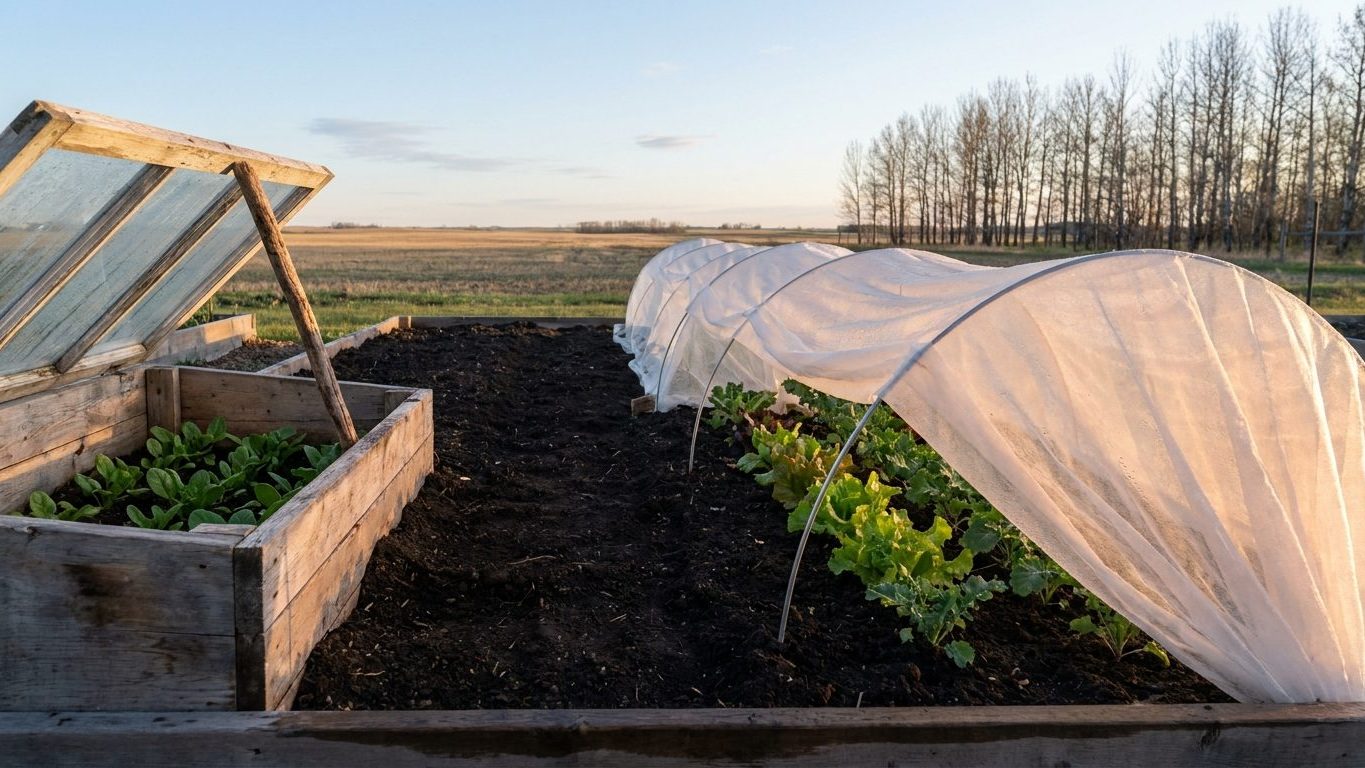

In most of Nevada, the extender that earns its keep is lightweight floating row cover held up on hoops. Add a cold frame for fall and winter greens, and keep shade cloth on hand for the hot end of the season. Clear plastic tunnels overheat fast under Nevada sun. Which tool matters most depends on whether you garden in the Las Vegas valley or in the northern and mountain parts of the state.
The short answer for Nevada
Use hooped row cover as your all-purpose extender. Add a cold frame for greens and root crops after the first hard freezes, and use shade cloth where summer heat, not cold, is what cuts the season short.
The reasoning starts with the air. Nevada’s dry, clear nights lose heat quickly after sundown, and fabric or glass over a bed slows that loss by trapping warmth that rose out of the soil during the day. Covers do not make heat. They hold what the soil already stored, which is why a damp, sun-warmed bed protects better than dry, cold ground.
Cold varies enormously across the state. The USDA Plant Hardiness Zone Map (2023 edition, built on 1991-2020 normals) places Nevada anywhere from zone 4a to zone 10a. At the Las Vegas airport station, the coldest month has a mean daily minimum of 39.6°F, and the chance of a 32°F freeze sits between 30 and 70 percent from January 7 to February 1 in spring and from December 8 to December 23 in fall. Those dates describe a desert city that holds heat like a brick oven. They are an extreme, and Reno, Carson City and any garden at elevation freeze months earlier in fall and months later in spring.
A rough match between tool and job looks like this:
| Extender | Best job in Nevada | Watch out for |
|---|---|---|
| Floating row cover on hoops | Frost nights in spring and fall; wind and insect protection | Needs anchoring in wind; light weights add only a few degrees |
| Cold frame | Winter greens, hardening off seedlings | Must be vented on sunny days |
| Low tunnel with plastic | Early spring warmth in cold, high-elevation beds | Overheats within hours on a clear day |
| Wall-style water cloches | Single tomato or pepper transplants set out early | Slow to warm in cold soil; fiddly at scale |
| Shade cloth | Stretching cool-season crops into late spring and restarting them early in fall | Too dense a weave starves plants of light |
Which extender gives the most protection per dollar?
Row cover, by a wide margin. A roll costs little, folds into a drawer, and the same fabric can shield plants from a frost in April, then keep flea beetles off in May. Hoops from electrical conduit or fencing wire do the rest. A cold frame is worth building if you eat greens through winter, and you can make one from an old window.
What will not work here
Using Las Vegas dates for your own planting plans will not work anywhere else in Nevada. A last-frost window of January 7 to February 1 belongs to a heat-island airport. A gardener in Reno or Carson City who sowed tomatoes by those dates would lose the whole planting to a late freeze. Even within the valley, a house with a block wall and pavement runs warmer than open ground.
Closed clear plastic is the next failure. Nevada’s high, bright sun can push the air under a sealed tunnel far above what seedlings tolerate, even when the morning started near freezing. Plastic only works if someone opens it every sunny day, and most people cannot do that on a workday schedule. Spun fabric forgives a missed morning. Plastic does not.
Wind defeats loose covers. A row cover held down with a few rocks will end up in the neighbor’s yard, tearing the plants as it goes. Bury the edges in soil or pin them with landscape staples, and add more hoops than you think you need.
In the low desert, winter protection is often wasted effort. With a coldest-month mean minimum of 39.6°F, cold-hardy crops like kale, chard, carrots and most lettuces usually need nothing more than an occasional light cover on a hard-freeze night. The real season limit in the Las Vegas valley is heat. A heavy tunnel there would cook the bed by February, and the extender that matters is shade cloth in late spring and early fall. Hot, dry summers also defeat anyone who waters once a week under a cover, because shallow beds dry out between visits and shaded plants still need regular moisture.
Covers cannot change day length, either. At 36.07 degrees north (the Las Vegas latitude, so a gardener in far northern Nevada should look up their own), onions decide when to bulb from the hours of daylight. A tunnel can keep transplants warm, but it will not make a long-day onion bulb sooner or a short-day one hold off.
What changes across Nevada
Hardiness zones from 4a to 10a span the coldest and warmest parts of the state. That is a wider spread than most people cross on a road trip from Minnesota to Florida. No single answer fits, so the right extender depends on where you garden.
In the north and at altitude, the job is protection from freezes that arrive early and linger late. Plan on heavier fabric, or two layers, for fall and spring. A cold frame or low tunnel can pay off in early spring, since soil there warms slowly and freezes can come well after the date you would otherwise set out transplants. Start looking at the weather forecast earlier in fall than you expect, because the first hard freeze can arrive while tomatoes are still ripening. The guide to when to cover your garden in Nevada covers how to time those nights.
In the south, the logic flips. Shade cloth takes priority, followed by light row cover for the few frost nights. Gardeners in the valley are extending the cool season at both ends, which means starting spinach, lettuce and peas early in fall and shading them as spring warms. Mid-elevation towns sit between the two, with real winters but longer shoulder seasons than the north.
Look up your own zone on the USDA Plant Hardiness Zone Map by ZIP code instead of guessing from a neighbor’s garden. Zones track average annual extreme minimum temperature, so they tell you what survives the winter. They say little about when frost ends, which is a separate question that your county office can answer. For the broader picture, see Extending the Growing Season in Nevada.
Where to check this for your own county
Start with University of Nevada, Reno Extension, the state’s land-grant extension service. It has county offices and Master Gardener programs that answer exactly these questions for local conditions.
Two things are worth looking for. The first is the local planting calendar for your county, with frost-date guidance that fits your valley or elevation, not the state average. The second is the list of varieties trialled where you live. A tomato that ripens in a long-season valley may never color at a higher, cooler site, and extension trials show which ones do.
Ask the office about covers too. Staff know which wind conditions shred fabric, which months overheat tunnels, and whether your soil’s alkalinity and dryness change how you should water under a cover.
A county recommendation beats a state one every time. Nevada’s climate shifts with every mountain range and valley floor, and a statewide guide has to average across all of that. Use it to choose the right type of extender, then let your county office set the dates.
Checking this against your own garden
Your own observations outrank any date in a guide. Three are worth watching each season.
Soil warmth by feel. Push your hand into the bed and hold it there to feel the moisture. If the soil feels cold enough to ache, warm-season seeds will sit and rot. Try this in several beds. The one against a south-facing wall will warm first, and the low corner where cold air pools will warm last. That difference shows you where a cover pays off most.
The first flush of male flowers on squash and cucumber vines is the second signal. Male blooms open before the females, and they show up when nights and soil are warm enough for steady growth. If they appear late in a covered bed, the cover is not holding enough heat, or the spot gets too little sun.
Third, watch for the first true leaves on seedlings. The first pair to emerge are seed leaves, and the true leaves that follow look different, usually with a rougher or more lobed outline. If they come in on schedule under a cover but stall outside, you have measured your microclimate better than any weather table could.
Common questions
Do I need row cover in Las Vegas?
Seldom for winter. Hardy greens usually tolerate the valley’s mild nights, and frost can be rare. Row cover is still useful for the occasional freeze night in a spring bed of tomatoes, and for blocking wind and pests. Shade cloth does more for the season there.
What works best for hard freezes in northern Nevada?
Doubled row cover on hoops, or a cold frame for low crops. Anchor the edges well, because wind can lift a loose cover. For tender plants like tomatoes and peppers, cover them before dusk on freeze nights so the day’s heat stays in.
Is shade cloth really season extension?
Yes. Spinach, lettuce and peas bolt when heat arrives, and a light shade cloth over the bed keeps them harvestable longer in late spring. Used again in early fall, it cools the soil enough to restart cool-season sowing sooner.
Can I leave plastic over a tunnel all day?
Only if you vent it. On a sunny day, a closed tunnel can overheat quickly. Open the ends or lift the sides in the morning and close them before the evening chill. If you cannot do that daily, use fabric instead.