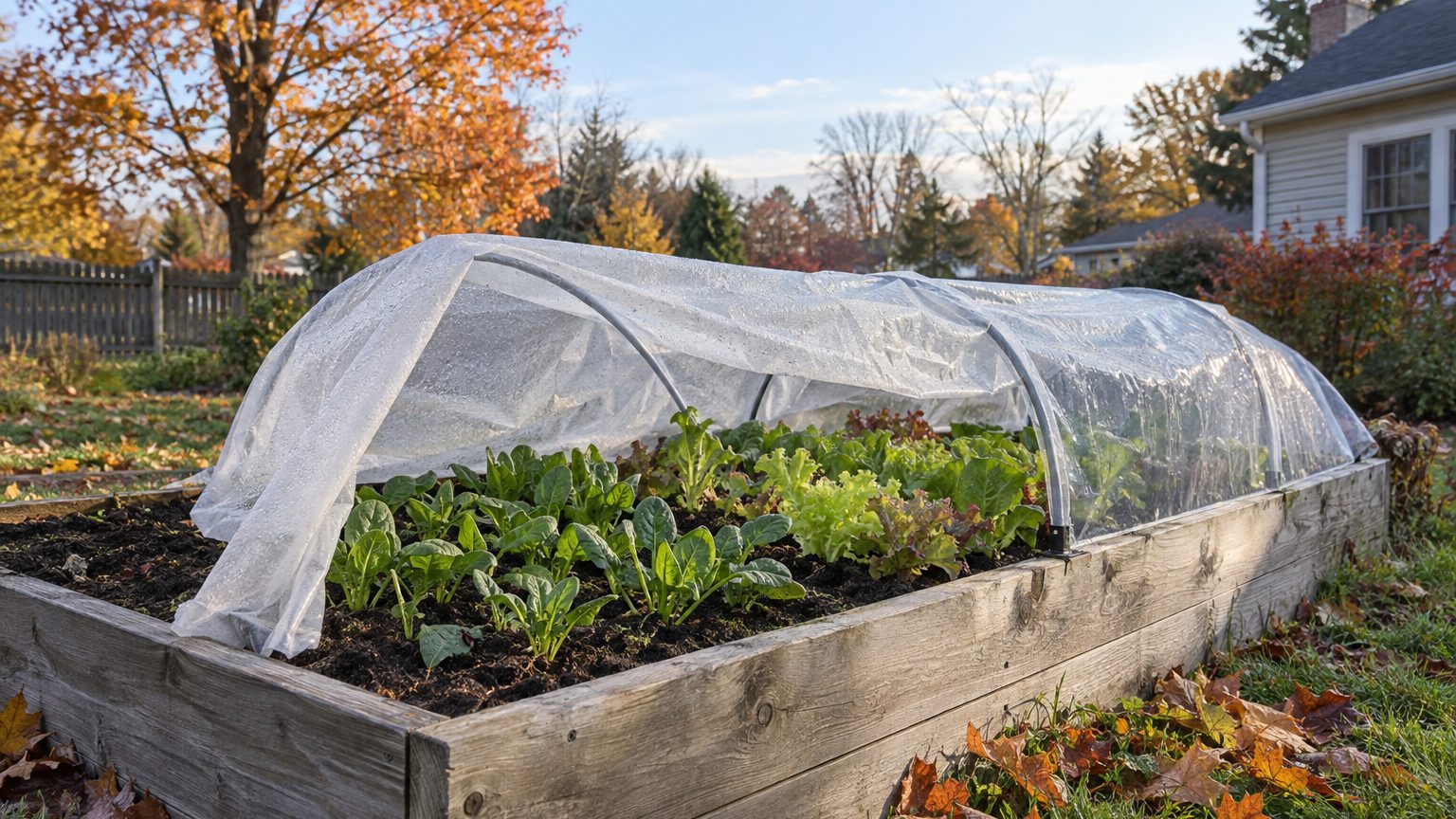

A cover can start the Nova Scotia season earlier in spring and hold it open later in fall, but it works within cold soil, short winter days and a damp maritime climate. At Halifax, the mean last spring frost is May 7 and the mean first fall frost is October 18. Covers move both edges by a few weeks. In midwinter they keep hardy crops alive without making them grow.
When the soil is warm enough in Nova Scotia
At Halifax Stanfield International Airport, Environment and Climate Change Canada’s 1981-2010 normals put the last spring frost, on average, on May 7. That is a mean date, so in one year out of two the last frost falls later. Treat May 7 as the middle of a window. Inland and northern districts run weeks behind the airport, and the normals cover 1981-2010, while the US figures on this site cover 1991-2020.
Seeds and transplants care about soil more than the calendar. Soil warms after the frost risk ends. Wet ground heated by thin spring sun and cooled by Atlantic air takes its time. A soil thermometer pushed a couple of inches deep, read in the morning, tells you more than the date. Beans, squash and tomato transplants want soil that has warmed through, and they sit idle in anything colder.
How does a cover warm the soil sooner?
Sunlight warms the soil under a clear or translucent cover. The soil gives that heat back at night, and the cover slows its escape by holding still air around the plants. A second layer, such as a light fabric inside a low tunnel, adds one more pocket of still air. Laying a cover over the bed a little before sowing gets the soil warming earlier than bare ground.
The gain is real but varies a great deal. It depends on the material, the night, the wind and whether the ground was warm when the sun went down. A cover shifts the limit a plant can take. It does not remove it, and a clear, still night after a cold day can still freeze everything underneath. Never treat a covered bed as frost-proof.
Any closed structure also needs venting. A cold frame shut under spring sun can cook its contents, even when the air outside is cool. Prop the lid open on every sunny morning and close it again late in the afternoon. Everything described here is passive and runs on sun and stored soil heat.
How long the season lasts here
The reference station has a mean last spring frost on May 7 and a mean first fall frost on October 18, but treat these as the midpoint of a window rather than a safe date. Both are means, so in roughly half of all years the first fall frost arrives before October 18. Plan with some slack at both ends, and expect fewer days inland and at higher elevations.
That is a moderate window, and it decides what you can sow. It is long enough for quick crops to be sown twice. Radishes, lettuce, spinach and other fast greens can follow each other through the summer. A midsummer sowing of beets, carrots or fall greens still has time to size up before frost. The succession sowing guide on this site lays out the spacing between sowings.
The window is short for long-season crops. Winter squash, melons and most peppers and tomatoes get one planting and no second chance. Their packet days count from transplanting for transplants and from sowing for direct-sown seed, and the cool-soil wait in spring eats into the total. Transplanting can make up that lost time, but only if the roots are handled gently, because a root check in cold ground can stall a seedling. Starting plants in a protected spot and setting them out once the soil passes the warm-crop mark usually beats rushing them into cold ground.
Covers matter most at the ends of the window. A low tunnel or fabric over hoops can protect an early sowing from a late frost, and the same cover can carry fall crops past the first hard frost. For a wider look at what covers can and cannot add, see Extending the Season: What a Cover Buys, and What It Cannot. Gardeners who compare Atlantic Canada with colder or milder US states can read Extending the Growing Season in Minnesota and Extending the Growing Season in Connecticut.
Heat and water in Nova Scotia
Does Nova Scotia get hot enough to stress crops?
Rarely. The ocean keeps summers mild along the coast, and heat waves are short when they come. A count of days above 90 °F (32 °C) would be small at Halifax, and a count from one station cannot describe the whole province. Inland valleys run hotter than the shore. Shade cloth and root cooling, the main concerns in hot climates, matter little for most gardens here.
Cool, damp, foggy summers cause the real trouble. Leaves stay wet for long stretches, so mildew shows up on squash and cucumbers, and blight can move through tomatoes and potatoes. Ripening slows, and fruit that needs heat may be late or never finish. Rain falls through the year without a true dry season, so overhead watering is seldom needed. Under a cover the situation flips, because the fabric or plastic keeps rain out and the bed can dry out while the air around it stays damp. Water the soil directly, space plants for airflow, and open the sides on warm, humid days.
What do latitude and winter cold decide?
Light and cold set the limits more than heat does. Halifax sits at 44.88 degrees north. Near 45 degrees north, daylight shortens sharply in fall, and a reader near the edge of the territory should check their own latitude. During those three months most crops barely grow, even in a warm tunnel. A cover holds a crop alive and keeps it harvestable, but it does not push growth. Fall crops need to be near full size before early November. Readers in Cape Breton or the far southwest of the province should check their own latitude, since it shifts that date.
The coldest month decides how much structure you need. At Halifax the mean daily minimum in the coldest month is -10.4 °C (13.3 °F), and individual nights run colder than that mean. Natural Resources Canada places Halifax in plant hardiness zone 6b under the Canadian system, which is built on seven climate variables and does not convert to a USDA zone. Light fabric can handle a frosty spring or fall night. A midwinter harvest of hardy greens and roots usually calls for a framed structure, with fabric laid inside it for an extra layer of still air.
Which season extension suit Nova Scotia
A moderate window with cool soil in spring favors the earliest types. Quick-maturing and cold-tolerant crops get the most from a cover: spinach, lettuce, kale, radishes, peas and hardy roots. For warm-season crops such as tomatoes, peppers and squash, pick early-maturing types and set out transplants rather than seed. The earliest types finish before the first fall frost, which can arrive earlier than October 18 in roughly half of all years.
Humidity moves disease resistance to the top of the list. Where summers run cool and wet, choose types that resist mildew and blight before any other trait, then give plants room, prune for airflow and water at the root. Heat tolerance is a lower priority. In a covered bed, summer sun can still overheat the air, so roll up the sides or open the ends of a tunnel on warm days. A closed structure with no vent can ruin a crop in one sunny afternoon.
Match the structure to the job. Fabric over hoops guards early sowings and late fall crops against light frost. A cold frame suits hardening off seedlings and growing greens in the shoulder seasons, as long as the lid is propped open on sunny days. A walk-in unheated tunnel carries hardy crops through winter, and a fabric layer inside it adds protection on the coldest nights. All of these are passive, and none makes a crop frost-proof.
Cultivar names are left out on purpose. The only recommendations worth following are varieties trialled locally. A type that does well in a sheltered inland valley can struggle on a foggy Atlantic shore. The Nova Scotia Department of Agriculture is the place to ask which varieties perform in your district.
Common questions
When can I plant outdoors in Nova Scotia?
Start with soil temperature. Hardy crops like peas and spinach can go in once the ground is workable and near 5 °C (40 °F). Tender crops wait for soil near 15 °C (60 °F), usually well after the mean last frost of May 7 at Halifax.
Can a cover protect plants from frost completely?
No. A cover traps heat and still air, which raises the temperature around the plants by a variable amount. A hard, clear night can still get through. Treat a cover as extra margin and watch the forecast.
How often should I vent a cold frame?
Open it on every sunny day, even a cool one, because the inside can overheat. Close it in late afternoon so it holds some warmth for the night. On cloudy, cold days it can stay shut.
Can I grow vegetables through a Nova Scotia winter?
Hardy greens and roots can be harvested through winter under a framed cover, but they grow very little between early November and early February because daylight is short. Sow so crops reach near full size by early November, then harvest from the bed as needed.