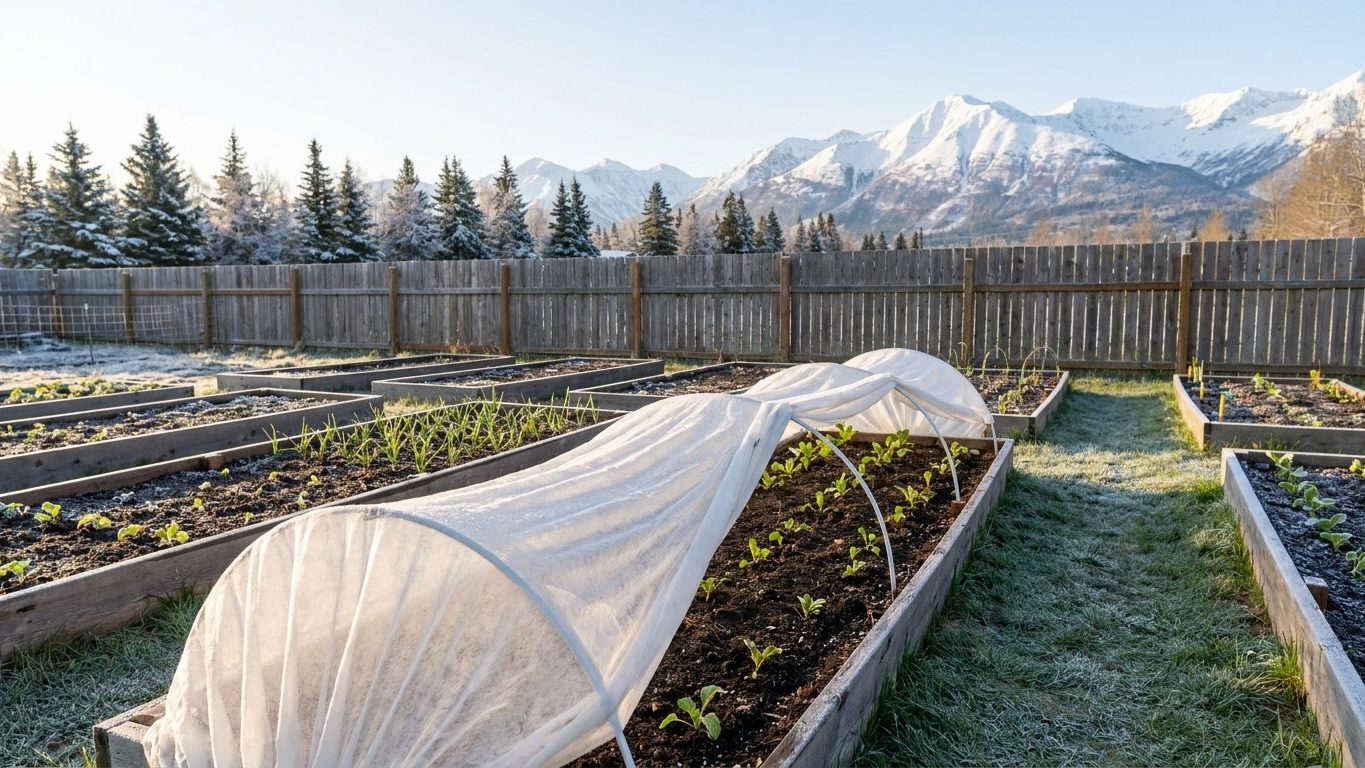

In western Washington, cover beds in late winter, take the covers off once spring freezes are behind you, and put them back on in early November. In between, cover on any night when the forecast low sits near 32°F. Covers do more than block frost. They warm cold soil and shed rain, and those jobs often matter more than the freeze dates.
The short answer for Washington
Start covering in the last days of February and keep covers handy until about the middle of March, which is the window for the last spring freeze (February 27 to March 18). In fall, have them back on the beds before the first freeze window (November 13 to November 30). Both windows come from NOAA’s 1991-2020 Climate Normals for the Seattle reference station, so they describe western Washington, the mild maritime side of the Cascades. East of the mountains the season is far shorter, and these dates do not carry over.
Each window is a probability of a 32°F freeze, taken from the band where the odds run between 30 and 70 percent. A freeze after March 18 is still possible in some springs. A freeze before November 13 turns up in some falls. Treat the windows as the zone where covers should be within arm’s reach, not as a switch that flips on one date.
When should you cover in spring?
Cover twice, for two different reasons. The first is to warm the soil: lay clear plastic or fabric over a bed a couple of weeks before sowing, and the ground will be ready sooner than the open garden beside it. The second is frost protection for seedlings and transplants. Keep cloth within reach until the late end of the window, and drape it on any evening when the sky is clear, the air is still and the forecast low is near freezing.
The last freeze date marks when freeze risk fades. It does not mark when to plant. In western Washington, cold wet soil and low light hold spring crops back well past the last freeze, so tender plants such as tomatoes, peppers and squash sit idle under covers if they go out too soon. Hardy crops like peas, spinach, lettuce and radishes tolerate the cool better, and covers speed them up.
When should you cover in fall?
Start watching the forecast in late October and expect to use cloth through November. A warm-season crop slows well before the first freeze, once nights turn cool and the days shorten, so covers in early fall are mostly about ripening and keeping rain off. Late fall covers protect leafy crops and roots from the occasional hard night.
The coldest month at the Seattle reference station has a mean daily minimum of 37.1°F, so a typical winter night stays above freezing. That is why kale, chard, leeks, carrots and many other hardy crops come through winter there with only light help. Cold snaps still happen, and covers earn their keep on those nights. For choosing between row cover, low tunnels, cold frames and cloches, see Which Season Extenders Work in Washington, and for the larger planning picture, Extending the Growing Season in Washington.
What will not work here
The plans that fail in Washington are mostly borrowed from drier, colder, sunnier places.
Why does planting right after the last frost fail?
The last freeze date says the air has stopped dropping below 32°F. It says nothing about the soil. In the weeks after the window closes, western Washington soil is often still cold and soggy. Seeds of warm crops rot in it, and transplants sit without growing. A cover helps most when it goes on before the planting date, to dry and warm the bed, and stays on afterward as a modest boost. Cover will not rescue a tomato planted into cold mud on March 20.
Day length adds a second limit. The Seattle reference station sits at 47.44 degrees north, and winter days there are short. No cover changes the hours of daylight, so growth slows to a crawl in the darkest weeks even under good protection. Onions respond to day length too, not warmth, when deciding to stop making leaves and start making a bulb. Planting them under cover early will not hurry the bulb along. Plan winter harvests from plants that were already mature when the light faded.
Can you leave covers sealed all winter?
Sealed plastic works against you in a wet climate. On a mild sunny afternoon, a closed tunnel can overheat seedlings. Through the long damp stretches, trapped humidity feeds gray mold and gives slugs a sheltered place to feed. Vent tunnels and cold frames on every mild day, and pull lightweight fabric back when the sun is out and the forecast is above freezing. Pitch the covering so water runs off. A flat sheet that pools rain will sag onto the plants.
Does the Seattle calendar work east of the Cascades?
No. Eastern Washington is high desert with a far shorter season. Its freezes arrive earlier in fall and linger later in spring, and covers there have to handle wind and bigger swings between day and night. A gardener in Spokane, Yakima or the Tri-Cities who covers on the Seattle dates will cover too late in fall and uncover too early in spring.
What changes across Washington
Washington is not one garden. The USDA Plant Hardiness Zone Map (2023 edition, built on 1991-2020 normals) runs from 4a to 9a across the state. Zones are drawn from a single variable, the average annual extreme minimum temperature, so that spread shows how far apart the coldest corners and the mildest lowlands are. There is no single answer for the whole state, and no single set of cover dates.
Puget Sound and the coastal lowlands sit at the mild end, where winter lows rarely do real damage and covers are mainly about wet soil and spring warmth. Mountain valleys, the northeast and the basins east of the Cascades sit toward the cold end. There, covers are protection against real freezes, and the seasons they cover begin later in spring and end earlier in fall. A zone number also says little about frost dates, because it measures how cold winter gets, not when the last freeze lands.
The 47.44 degrees north figure belongs to Seattle. Washington spans several degrees of latitude, so a gardener near the Canadian border or in the far south of the state should expect day length and light to differ. Altitude pushes in the same direction as a colder zone. At higher elevations, shift planting later in spring, start fall covering earlier and give covered beds more weeks of work.
Where to check this for your own county
Your state extension service holds the local numbers. Washington State University Extension runs county offices across the state, and their local gardening resources are the next stop after this article. Look for two things: the planting calendar for your county, with last and first freeze dates for the nearest weather station, and the vegetable varieties that have been trialled in your county’s conditions.
When you call or visit an extension office, ask three questions. What is the typical last spring freeze for my town, and how late has it come in recent years? Which crops do well under low tunnels or cold frames in this county? How early can I plant warm-season crops under cover? The answers usually come from people who have watched local gardens for years, and they will tell you things a state average cannot.
Checking this against your own garden
Your own beds outrank every date above. A south-facing wall, a low pocket where cold air settles and a bed that stays wet will each behave differently from the reference station, even in the same yard. Three things are worth watching, and none needs equipment.
- Soil warmth by feel. Push your hand into the bed in the morning. If it feels cold and clammy, warm crops will sit. If it feels cool but crumbles, hardy crops can go in. Beds that warm sooner than the rest of the garden mark your warmest spots.
- First male flowers on squash and cucumbers. Males open first. When they appear, the plants have settled in. Take covers off during the day then, so bees can reach the flowers. Plants that flower late show a cool or shady spot.
- First true leaves on seedlings. The first pair are seed leaves. The next pair are true leaves, and when they come in healthy and green, roots are working. Pale or stalled true leaves mean the bed is still too cold or too wet, so keep the cover on.
Common questions
Should I cover plants when the forecast low is 36°F?
Usually not, but it depends on the sky. A clear, still night can drop the ground a few degrees below the forecast, so tender plants in an open bed may need cover even at 36°F. Cloudy, windy nights stay warmer. When in doubt with tomatoes, peppers or basil, put a cloth on.
When do I take covers off in spring?
Take them off in daytime on mild days to prevent overheating, and put them back on at dusk while freeze risk remains. Take them off for good after the late end of the window (mid-March at the reference station) once nights are reliably above freezing and the soil has warmed. Remove covers on squash and cucumbers when flowers open so pollinators can reach them.
Can I cover crops all winter in western Washington?
Yes, with hardy crops and with venting. Kale, chard, leeks, carrots and cabbage family greens tolerate the winter, and a cover keeps rain off and adds a little protection. Growth is slow in the short days, so harvest what grew in fall. Open ends or lift covers on mild days to cut mold.
Do the Seattle frost dates apply in Spokane or Yakima?
No. The February 27 to March 18 and November 13 to November 30 windows describe western Washington. East of the Cascades, in high desert, the season is far shorter and the dates differ. Ask your county’s WSU Extension office for the dates for your own town.