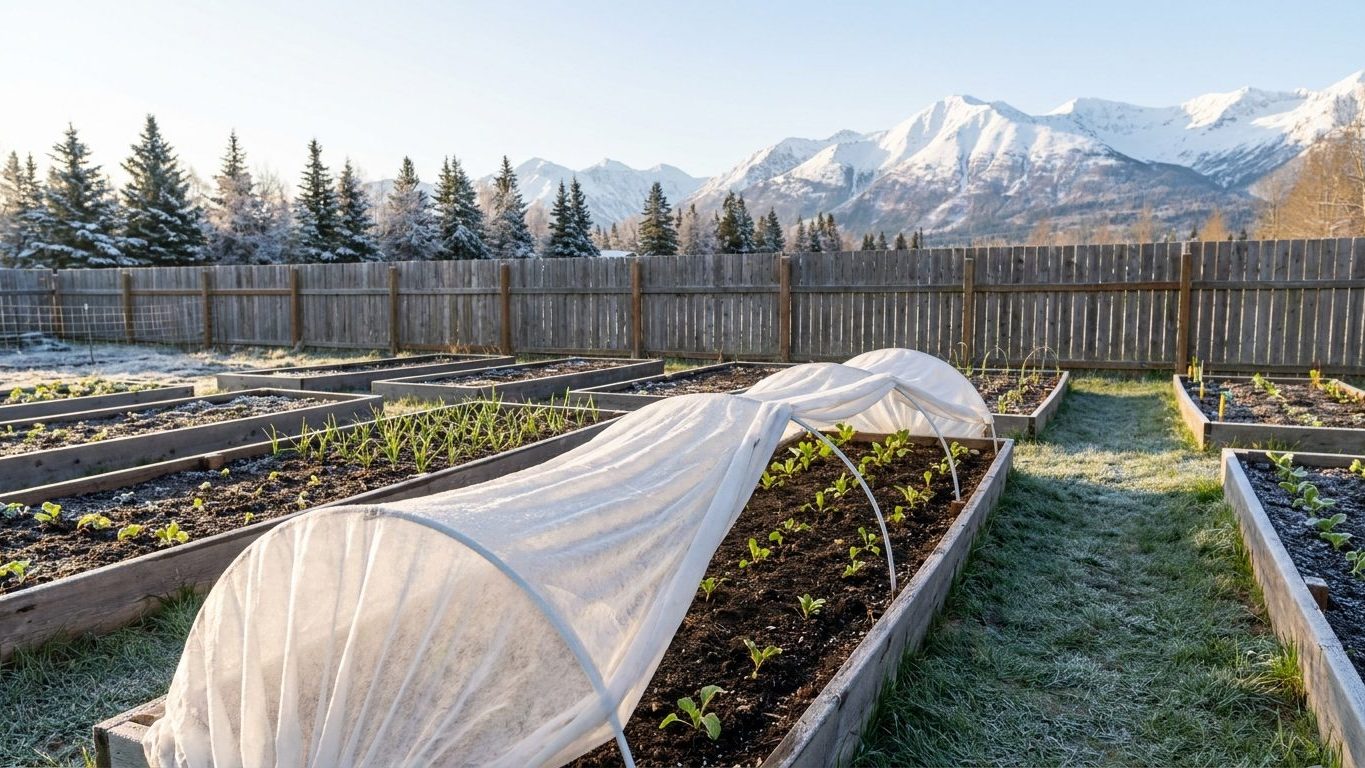

Cover plants on any night the forecast low reaches 32°F. On the Virginia coast, that means being ready from mid-November, when the first fall freeze arrives, until the first days of April. Inland and in the mountains, the covering season starts earlier in fall and ends later in spring, sometimes by weeks.
The short answer for Virginia
Cover tender plants whenever the forecast low is 32°F or colder, and keep covers within reach until the spring freeze risk has passed. At the Virginia Beach reference station (NAS Oceana), NOAA’s 1991-2020 Climate Normals put the last spring freeze between March 20 and April 3. The first fall freeze falls between November 10 and November 24. Those dates mark the band where the odds of a 32°F freeze run between 30 and 70 percent. A freeze can still arrive before or after that band.
| Season | Coastal reference window | What it means for covers |
|---|---|---|
| Last spring freeze | March 20 to April 3 | Keep fabric or plastic handy for tomato, pepper and squash transplants until this band has passed. |
| First fall freeze | November 10 to November 24 | Tender crops need covering from here. Hardy greens can wait for colder nights. |
| Coldest month | Mean daily minimum of 31.6°F | A typical January night dips just below freezing, so hardy crops under cover are working nearly every night. |
What temperature should trigger covering plants?
For frost-tender crops such as tomatoes, peppers, beans, squash and basil, 32°F is the line. Cover them when the forecast is at or just above it, because a clear, calm night often runs colder in a low spot than the forecast for the town. Hardy crops such as kale, collards, spinach and carrots shrug off light frost. They want covers only when a hard freeze is coming, or when you want to keep them growing through the coldest weeks.
When do covers come off in spring?
Pull them in the daytime as soon as the air warms, and put them back at dusk whenever the forecast is near freezing. Take them off for good once nights stay well above 32°F. Don’t judge by the calendar alone. March 20 is the early edge of the coastal window, and a garden that planted tomatoes that day has planted them on a coin flip.
The 31.6°F coldest-month figure says something useful about winter. Coastal nights hover right at the freezing line, so a low tunnel or cold frame is enough to hold hardy crops through most of the season. Midwinter days are so short that growth slows almost to a stop even under cover. Covers keep crops alive and harvestable. They won’t make them grow. The guide to Which Season Extenders Work in Virginia covers which material fits which job, and Extending the Growing Season in Virginia gives the wider picture.
What will not work here
Covering by the calendar fails first. Tarping a bed on October 15 because “frost is coming” wastes effort on the coast, where the first freeze is typically still weeks off (November 10 to November 24). Humid fall weather makes it worse. A bed kept under fabric through mild, damp days stays wet and warm, and that invites fungal disease on lettuce, spinach and brassicas. Cover when the forecast calls for it, and uncover the next morning.
Sealed clear plastic is the second failure. Virginia springs and autumns often swing from a frosty dawn to a sunny afternoon well above 60°F. A closed plastic tunnel on a day like that gets hot enough to scorch seedlings and to push cool-season greens toward bolting. Plastic needs its ends or sides opened every sunny morning. If you can’t be home to vent it, lightweight row fabric is the safer choice, because it breathes.
Third, covers do not fix cold soil. The March 20 to April 3 window is the frost date for the coastal reference station only. Soil takes longer to warm than air does. Okra, melons, sweet potato slips and beans sulk in cold ground whether or not the leaves are protected. Covering a bed in early March does warm the soil somewhat, but a transplant set into 50°F ground still stands still.
Fourth, a light cover will not carry a crop through a hard, prolonged cold snap. A single sheet of fabric buys a few degrees of protection, enough for a 30°F night, but not for a deep freeze in the teens. Winter storms add weight problems. Wet snow or ice can collapse hoops and fabric, and a plastic tunnel catches wind like a sail, so anchor it well.
The last failure is copying the coastal dates inland. The Blue Ridge and southwest Virginia run weeks later in spring and earlier in fall. A gardener in the mountains who uses the Virginia Beach window can lose a whole planting of tomatoes to a late April freeze, or cover too late in October. Season extension that fits Norfolk can fail in Roanoke or Abingdon.
What changes across Virginia
Virginia is not one garden. The USDA Plant Hardiness Zone Map (2023, built on 1991-2020 data) puts the state anywhere from zone 5a to 8b, four full zones apart. There is no single zone for Virginia and no single covering date. Zone is built on one variable, the average annual extreme minimum temperature, so it describes winter survival of perennials. It says less about when the last spring frost falls. Still, the spread tells you how far apart the state’s coldest mountain valleys and its warmest coastal strip really are.
The reference city for the dates above, Virginia Beach, sits at 36.82 degrees north. It is the mild end of the state. Gardeners in the northern counties or at altitude should expect later last freezes and earlier first freezes than the coastal band shows. In the mountains, a bed that sits a thousand feet higher can be days or weeks behind a bed in the valley. Latitude matters for day length as well. Winter light shrinks faster the farther north you are, which limits how much growth covers can sustain in midwinter. If you live near the northern edge of the state, check your own latitude and don’t lean on the coastal figure.
Practical shifts follow from that. In the north and at altitude, count on starting row covers earlier in fall, and keep them in reserve into late April or beyond in spring. Think of a cold frame or low tunnel as standard equipment for winter greens there, since nights stay below freezing for longer stretches. Use the USDA Plant Hardiness Zone Map to look up your ZIP code rather than guessing, because the map is finer-grained than any county label. A garden in a river valley, on a ridge or beside a city wall will still differ from the next one over.
Where to check this for your own county
Your county office of Virginia Cooperative Extension is the best place to firm up these dates. It answers to the same land-grant university system that trials crops across the state, and its agents and Master Gardener volunteers know the local frost pockets and typical dates for their own counties.
Two things are worth looking for there. The first is the local vegetable planting calendar, which lists spring and fall dates for your area rather than a statewide guess. The second is the list of varieties that have been grown and evaluated in your region. A variety that handles a cold, wet spring in the mountains may differ from one that suits the humid coast, and the trial results will say so.
A county recommendation beats a state one. The coastal dates above describe a single station, and any statewide rule of thumb averages places that can differ by weeks. If the extension calendar and a general date disagree, go with the calendar. If it names a different last-frost window for your area, shift your covering schedule to match.
Extension offices also take soil samples, identify problems and answer questions about covers, such as how to vent a tunnel or what fabric weight suits a given crop. Call or visit before you buy hoops and plastic in bulk.
Checking this against your own garden
Your own beds outrank any date in print. A south-facing wall, a low corner where cold air pools and a windbreak hedge can each shift the frost date by days, and three observations will show you how yours behaves.
- Soil warmth by feel. Push your hand into the bed to wrist depth. If the soil feels cool and makes your fingers ache after a few seconds, it is too cold for warm-season transplants, covered or not. A bed that warms sooner than its neighbor is a good spot for early plantings.
- The first male flowers on squash and cucumbers. Male blooms open before female ones, and their arrival tells you the plants are settling in and growing. If your squash under a cover flowers days earlier than an uncovered row, you know the cover is paying off in your garden.
- The first true leaves on seedlings. The first pair are seed leaves. The true leaves that follow have the shape of the mature plant. Seedlings that stall before true leaves appear are sitting in cold soil or cold air, which means your schedule needs another week or two.
Write down the date of each observation for a couple of seasons. Your own notes will soon give you a more accurate calendar than any statewide table.
Common questions
Do I cover plants if the forecast low is 35°F?
For tender crops, yes, when the night is clear and calm. Cold air settles in low spots, and your garden can run several degrees below the forecast. Hardy greens do not need it.
Can I leave row cover on all day?
Lightweight fabric can stay on in cool weather, but pull it off or vent it when the day turns warm and humid. Clear plastic must be opened on any sunny day.
Is March 20 a safe planting date for tomatoes on the coast?
No. It is the early edge of the band for the last spring freeze at the coastal reference station, so a freeze is still close to a coin flip. Wait until the band has passed, or plant early and keep covers ready.
Do I need covers in winter in Virginia?
On the coast, hardy crops like kale and spinach often get by with a low tunnel or fabric during the coldest spells, since the coldest-month mean minimum is 31.6°F. In the mountains and the northern counties, covers matter more, and growth stops for much of the winter regardless.