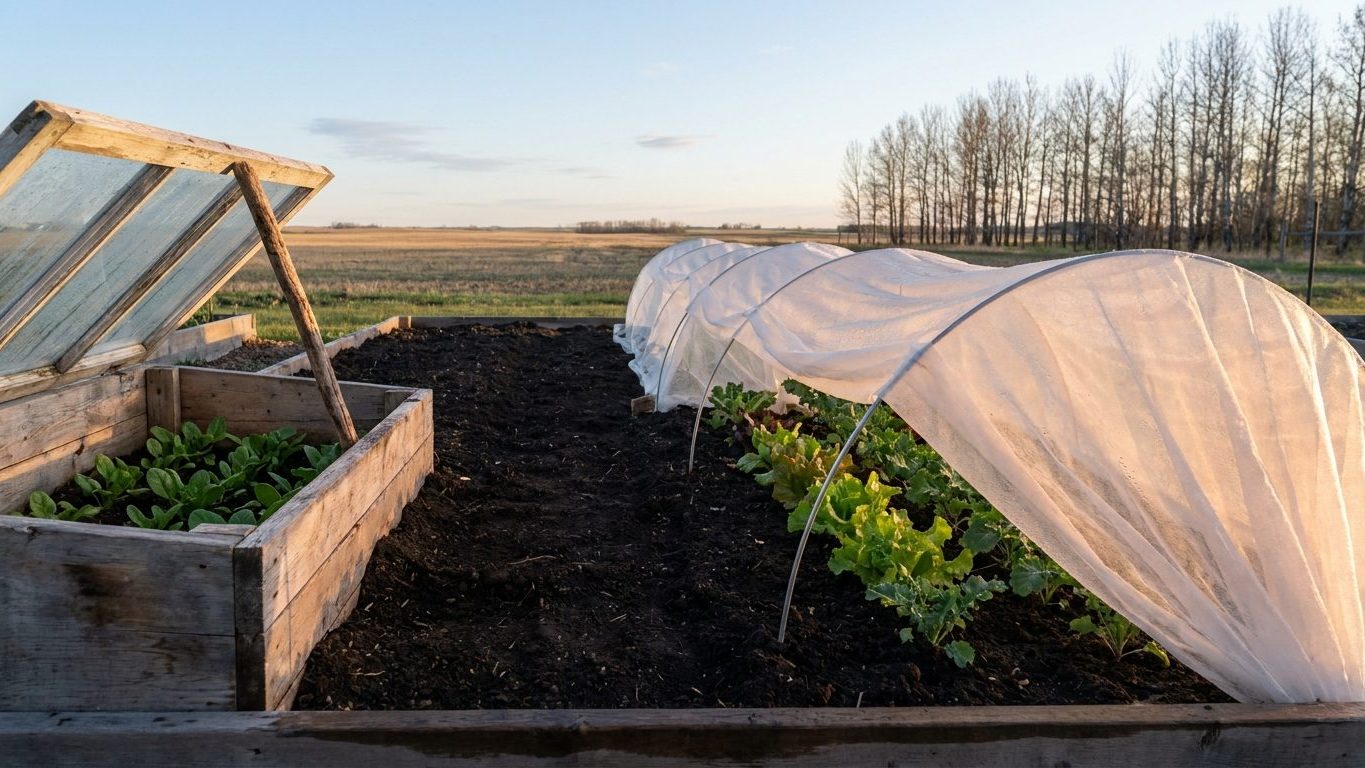

West of the Cascades, low tunnels, cold frames and light row cover earn their keep, because the trouble there is cold wet soil and short winter days more than hard frost. East of the mountains the season is far shorter and the cold is real, so the covers have to be sturdier. Choose the extender for your side of the state first, then the crop.
The short answer for Washington
For most gardeners west of the Cascades, a low tunnel covered with row cover or clear plastic, plus a cold frame for starts and winter greens, gives the best return on money and effort. East of the Cascades, where the high desert season is far shorter, the same tools work but need heavier framing and firm anchoring. A greenhouse or hoop house pays off on both sides if you want to grow through the dark months, though it costs a good deal more.
How much does the frost date tell you?
At the Seattle reference station, the last spring frost falls between February 27 and March 18, and the first fall frost between November 13 and November 30. Those dates are the band where the chance of a 32°F freeze sits between 30 and 70 percent, so a freeze can still show up after the early date and often skips the late one. The mean daily minimum of the coldest month is 37.1°F. Hard freezes happen, but they are the exception.
That mildness changes what an extender is for. Nobody on the west side needs a cover mainly to survive hard winter cold. The jobs are warming soil that stays cold and soggy into spring, keeping rain off crops, and holding a few extra degrees on the chilly nights of late fall. A frost date in late February does not mean you can plant in late February. Cold wet soil and low light hold spring crops back well past the last freeze, so the extender’s real value is closing that gap between “no more freezes” and “soil warm enough to grow.”
Which season extender suits which job?
| Extender | Best job on the west side | What to watch |
|---|---|---|
| Floating row cover | Fall frost cover for greens and roots, insect barrier in spring | Thicker fabric cuts light in the darkest months |
| Low tunnel (hoops with plastic or fabric) | Warming and drying spring beds, protecting winter crops from rain | Vent on sunny days, anchor against wind |
| Cold frame | Hardening off starts, holding salad greens through winter | Overheats fast under a closed lid |
| Cloche or hot cap | Single transplants of squash, tomatoes and peppers | Needs daily attention once days warm up |
| Hoop house or greenhouse | Year-round growing, heat-lovers that stall outdoors | Cost, ventilation, snow load on the east side |
Row cover is the cheapest place to start. For a fuller look at the options, see Extending the Growing Season in Washington.
What will not work here
Sealed plastic over a bed through a wet, mild winter is the most common failure on the west side. With nights that rarely drop below freezing, a tight tunnel holds humidity instead of heat, and the result is gray mold on leaves and slugs thriving in the dark. Tunnels need ends you can open, and on any sunny day they need to be open.
Planting early because the frost date allows it fails for a similar reason. A last freeze that can arrive as early as February 27 tempts people to sow warm-season crops too soon. Under a cover the air may be fine, but the soil is still cold and wet, and seed rots before it sprouts. Transplants sit without growing. A cover helps, but it cannot make a March day any longer, and heat-loving crops need both warmth and light.
Heavy fabric in midwinter is another miss. At 47.44 degrees north (the latitude of the Seattle reference station), winter days are short, and a thick frost blanket cuts what little light there is. Lettuce and spinach under heavy cover may survive, but they barely grow. Light fabric or clear plastic over hoops, with the sides lifted when it is dry, keeps more light on the plants.
East of the Cascades, the problem flips. The high desert has a much shorter season and real cold, so a plan built on the west side’s long shoulder seasons falls apart. A light row cover that suits Seattle will not carry a crop through a hard eastern freeze, and the slowest approaches, such as trying to ripen a long-season crop with a fall cover after the season has already closed, run out of time. Wind is the other killer. Hoops with loose plastic act like sails, and a heavy snow load will flatten a flimsy tunnel overnight. Build lower, anchor deeper, and plan to brush snow off or take plastic down in the worst of winter.
Watering habits matter under cover as well. Fabric and plastic keep rain off, so a bed under a tunnel can dry out while the lawn next to it is soggy. Check the soil with your finger rather than assuming the weather is doing the watering. For timing the cover itself, When to Cover Your Garden in Washington walks through the decision.
What changes across Washington
The USDA Plant Hardiness Zone Map (2023 edition, built on 1991-2020 normals) places the state anywhere from zone 4a to 9a. That is an enormous spread, and it means there is no single answer for “the” Washington garden. The zone is based on one variable, the average annual extreme minimum temperature, so it tells you what survives winter and says little about how fast spring warms the soil or how long the days run.
The Seattle figures above describe a mild maritime garden. Move across the Cascades and the picture changes: colder winters, hotter and drier summers, and a much shorter stretch between the last and first frost. Gardeners in the north of the state or at altitude should shift the whole calendar. Covers go on earlier in fall, come off later in spring, and the structures need to handle snow and wind. The latitude of 47.44 degrees north belongs to Seattle’s reference station, so a reader well north of it should check their own latitude. Day length is what tells an onion to stop making leaves and start making a bulb, and it shifts with latitude even when temperatures look similar.
Nobody can tell you your zone from a statewide overview. Look up your own location on the USDA map, then compare it with the extremes above. A garden in a mild Puget Sound neighborhood and one in a high valley east of the mountains might as well be in different countries when it comes to choosing an extender.
Where to check this for your own county
Start with Washington State University Extension, the land-grant extension service for the state. Washington State University Extension runs county offices and publishes gardening guidance written for local conditions. Two things are worth finding there. The first is the local planting calendar for your county, which gives sowing and transplanting windows tied to your own frost pattern and soil. The second is the list of varieties that have been trialled in your county, so you know which lettuce, kale or tomato has actually performed in your climate.
A county recommendation beats a state one every time. Statewide advice averages together gardens that differ by several hardiness zones, so treat it as a starting point and let the county office correct it. If your county office or its Master Gardener volunteers hold a plant clinic or workshop, ask them directly what covers local growers use and when they put them on. People who garden in your valley year after year know things that no climate table captures.
Checking this against your own garden
Your own observations outrank every date on a calendar. Three of them need no equipment, and each says something about your microclimate.
- Soil warmth by feel. Push a bare hand into the bed at planting depth. If it feels cold and clammy, seeds will sit and rot. Compare a bed under cover with one in the open. If the covered bed feels warmer, the extender is doing its job, and the gap tells you how much it buys you.
- The first flush of male flowers. Squash and cucumber plants open male blooms before female ones. When they appear, the plant has put on enough growth in your conditions. A bed that flowers days ahead of another shows which spot runs warmer, perhaps one near a south-facing wall.
- The first true leaves. The first pair of leaves a seedling shows are seed leaves, and the true leaves come after. If true leaves come in slowly or the stems stretch and lean, light or warmth is short. Moving the bed away from shade, or lifting the cover sides, often fixes it.
Write down what you see for a season or two and you will have a calendar no statewide table can match. Note which corner thaws first and which low spot collects cold air on clear nights. Those details decide where each extender belongs.
Common questions
What is the cheapest season extender for a Washington garden?
Floating row cover is the lowest-cost option for most gardeners. Draped over a bed or hoops, it gives modest frost protection for fall greens and roots, and it doubles as an insect barrier in spring. Choose a lighter weight for the darkest months so it does not cut too much light.
Can I plant tomatoes early under a cover in western Washington?
You can protect them, but you cannot make the soil warm on a schedule. The last spring freeze at the Seattle reference station falls between February 27 and March 18, yet cold wet soil and low light slow warm-season crops long after that. Wait until the soil feels warm to your hand, and use a cloche or tunnel to shave off the cool nights.
Do season extenders work east of the Cascades?
Yes, but the demands are higher. The high desert has a far shorter season and colder winters, so structures need to resist wind and snow. Low, well-anchored tunnels and cold frames hold up better than tall plastic hoops.
Should I use plastic or fabric?
Fabric breathes and is forgiving, which suits frost protection and rainy stretches when mold is a risk. Clear plastic warms soil faster and keeps rain off, but it overheats on sunny days and traps moisture unless you vent it. Many gardeners use plastic in early spring and fabric for fall and winter.