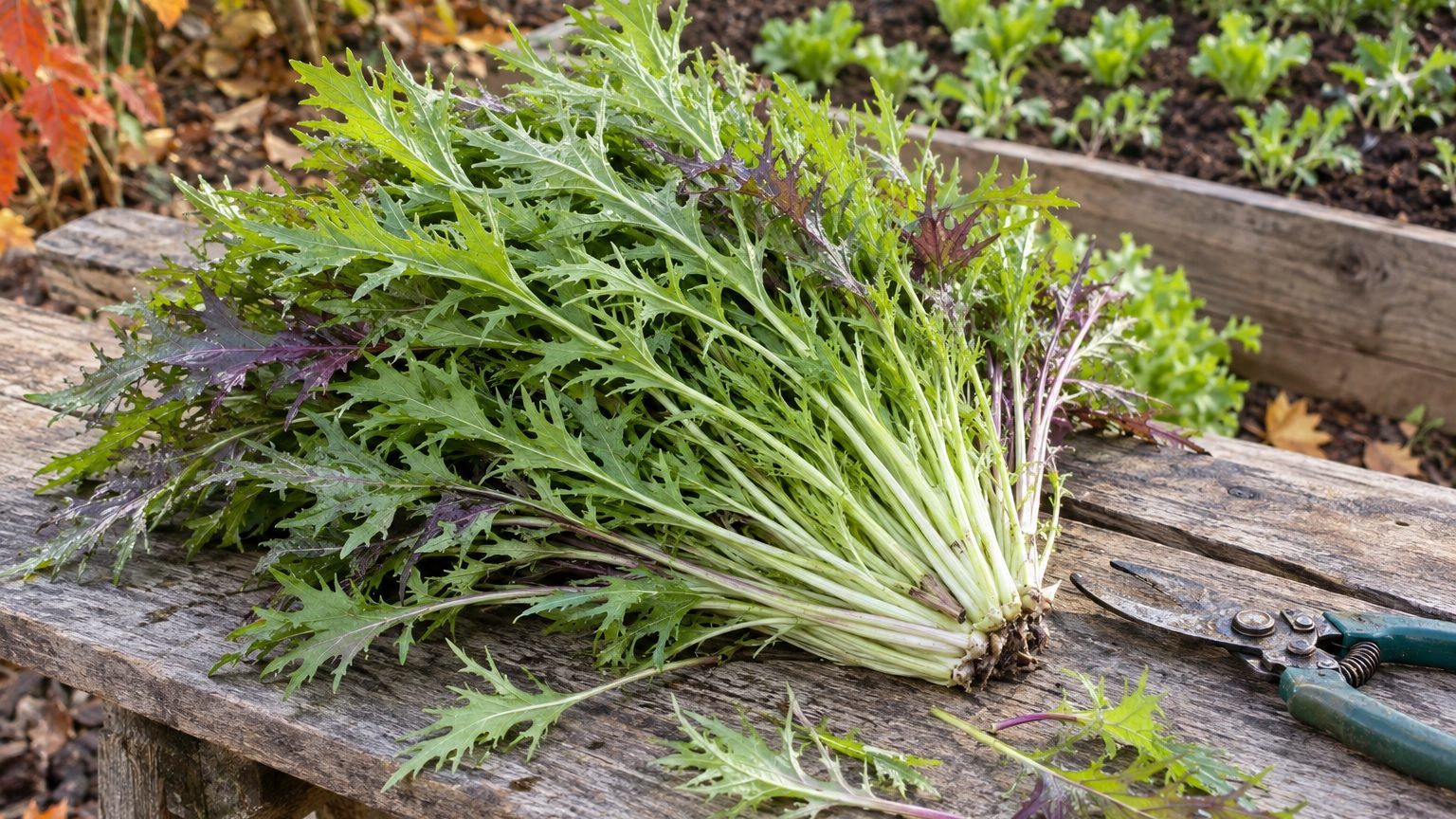

Mizuna is the easiest of the Asian greens to grow. It forms a loose, spreading rosette of feathery leaves, comes up fast from seed, and keeps producing when you cut it. Sow it in cool weather, harvest often, and keep it out of beds where cabbage-family crops grew. Most other mistakes with this plant get forgiven.
What is actually going on
If one crop in this family is worth a beginner’s first sowing, it is this one. The thing to understand is its loose growth. Cabbage and broccoli build a head, and a head has a window: harvest too early and you get nothing, too late and it splits or bolts. Mizuna never builds one. Leaves keep coming from a central crown, and every leaf is edible at every size. There is no critical stage to miss. The family overview, Growing Asian Greens: Fast, Cold-Hardy, and Prone to Bolting, covers how the other members compare.
Why is mizuna so forgiving?
Three habits explain it. The seed germinates quickly in cool soil, so a patchy sowing is easy to fix with a second pass. Baby leaves are ready within weeks of sowing, which means a failure costs you a short stretch of time rather than a season. And because the growing point sits low in the crown, cutting the leaves above it does not end the plant. It simply sends up more.
The flavor is mild and slightly peppery, gentler than most mustard greens. That sharpness climbs when the plant is stressed by heat, drought or age, so a bitter bunch tells you something about the conditions rather than the plant.
Mizuna is not immune to bolting. Long days and warm weather tell it to send up a flowering stalk, and once that starts the leaves turn tougher and hotter. The loose habit gives you more room to harvest before that happens, but it does not cancel the signal.
Is mizuna in the cabbage family?
Yes. Mizuna is a brassica, in the same species as turnip and bok choy, and it shares its troubles with cabbage, kale and mustard. Flea beetles chew small shot-holes in the leaves. Cabbage worms and aphids visit. Clubroot, a soil-borne disease, lives in the ground for years after one infected crop. Rotating mizuna into a bed that held cabbage or kale last year is not rotation at all, because the soil still holds everything those crops left behind. Keep it on a rotation with plants from other families, such as beans, tomatoes or onions.
In the garden
The routine is short: sow thinly in cool weather, thin early, cut high, and sow again. The table shows each step and what happens when it slips.
| Step | What to do | If it goes wrong |
|---|---|---|
| Sowing | Sow seed directly in cool weather, about a quarter inch deep, in rows or a broad band. Keep the surface evenly moist until seedlings are up. | Deep seed or a crusted, dry surface gives patchy germination. Sowing into warm, long days sends plants to flower early. |
| Thinning | Thin to about 3 inches apart for baby leaves, or 6 to 8 inches for full rosettes. The thinnings go in the salad bowl. | Crowded plants stay damp, yellow at the base and invite leaf spots. Overspaced plants waste bed room. |
| Cutting | Shear outer leaves, or the whole rosette, about 1 to 2 inches above the crown. | Cutting to the soil can kill the crown. Waiting until leaves are huge makes them coarse and sharp. |
| Succession | Sow a small patch every couple of weeks while the weather stays cool. | One large sowing bolts or matures all at once, and you either eat mizuna for a week or lose it. |
| Watering | Give steady moisture, with the soil damp but never soggy. | Dry spells push bolting and heat in the leaves. Waterlogged soil yellows them and rots the crown. |
How much cold can mizuna take?
More than most gardeners expect. Plants shrug off light frost and often get through harder freezes, though the outer leaves may blacken and the sweetness improves as the weather cools. A row cover or low tunnel extends the harvest well into winter where winters are cold, and in mild-winter regions the bed can feed you for months. When the bed has to survive the deepest cold, Tatsoi: The Hardiest Thing in the Bed is the tougher choice.
The usual failure is timing. Seed sown too late in fall leaves small seedlings that stall once days shorten, so they never size up. Autumn beds also draw slugs, which feed on tender leaves at night and are covered in Slugs in an Autumn Greens Bed. For varieties trialled where you live, ask your state extension service.
What it depends on where you are
Some of this carries across the country, and some belongs to your ground. The habit of the plant is the same everywhere: a loose rosette, a preference for cool weather, regrowth after cutting, and a brassica’s rotation needs. Those hold in Maine and in Arizona alike.
What changes is when the cool windows open and close. Season length, summer heat and summer rainfall decide that, and no single national calendar can do it for you. Where summers are hot and humid, the spring window is short and the fall window is long. Fall sowings can then carry on into winter harvests where freezes are mild. Where summers stay cool and winters arrive early, you can sow from spring into late summer, but a sowing made too late may never size up before the cold arrives.
Does summer rain change how mizuna grows?
It does. In wet summers, slugs, fungal leaf spots and rot get more pressure on a crowded bed, so wider spacing and morning watering matter more. In dry regions, the problem flips: without regular irrigation the leaves turn hot and the plant bolts sooner. Shade from a taller crop, such as trellised beans or tomatoes, can stretch the season in hot places by cooling the bed during the afternoon.
The state pages on this site spell out how these factors play out in your region. Your county or state extension service goes one step further. It can tell you the local last and first frost, which varieties have been trialled nearby, and whether clubroot or flea beetles are a known problem in your area. A phone call or a look at the extension website takes ten minutes and replaces a year of guessing.
The mistake that costs the most
The mistake is dropping mizuna into any gap because it grows fast and seems harmless. A gap left by harvested cabbage, a bare patch where kale finished, a row where radishes stood. All of these are brassica ground, and mizuna is a brassica too. Radish, turnip, arugula and bok choy count as well. They carry the same insects and the same soil diseases, so a bed that hosted any of them last season is the wrong place.
The cost does not show at once. The seedlings come up, the first cuttings look fine, and then flea beetles arrive in numbers the plants cannot outgrow. Or a patch stunts, wilts on a warm afternoon even in moist soil, and when you pull a plant the roots are swollen and distorted. That is the sign of clubroot, and once it is in the soil it stays for years. Do not compost those roots. Keep brassicas out of that bed for a long time and ask your extension office about soil testing, because soil acidity affects how the disease behaves.
Treat mizuna like any other crop in the rotation. Keep a rough map of where brassicas grew, a sketch on paper works, and plant mizuna where beans, tomatoes, onions or lettuce grew the previous season. Wait at least three years before returning any brassica to the same ground. If your garden is too small to rotate, grow a few plants in containers filled with fresh potting mix. A light row cover set over the seedlings from the day they are sown keeps flea beetles off the leaves, with no spraying needed.
Common questions
Can you eat mizuna raw?
Yes. Baby leaves are mild and good in salads. Larger leaves are sharper, so many cooks wilt them in a pan, add them to soups, or stir them into noodles at the end of cooking.
Does mizuna grow back after cutting?
It does, as long as you leave the crown and an inch or two of stem. Plants can be cut repeatedly until they bolt or the leaves lose vigor. Sowing a fresh patch every few weeks keeps the supply steady.
Why is my mizuna bitter or hot-tasting?
Heat, dry soil and age push the flavor toward pungent. Plants about to bolt turn especially sharp. Water evenly, cut leaves while they are young, and sow in cool weather to keep the taste mild.
Can mizuna grow in a container?
It does well in one. A pot or window box several inches deep with drainage holes and fresh potting mix is enough. Keep it evenly moist, and it avoids any soil-borne disease left behind by earlier brassicas.