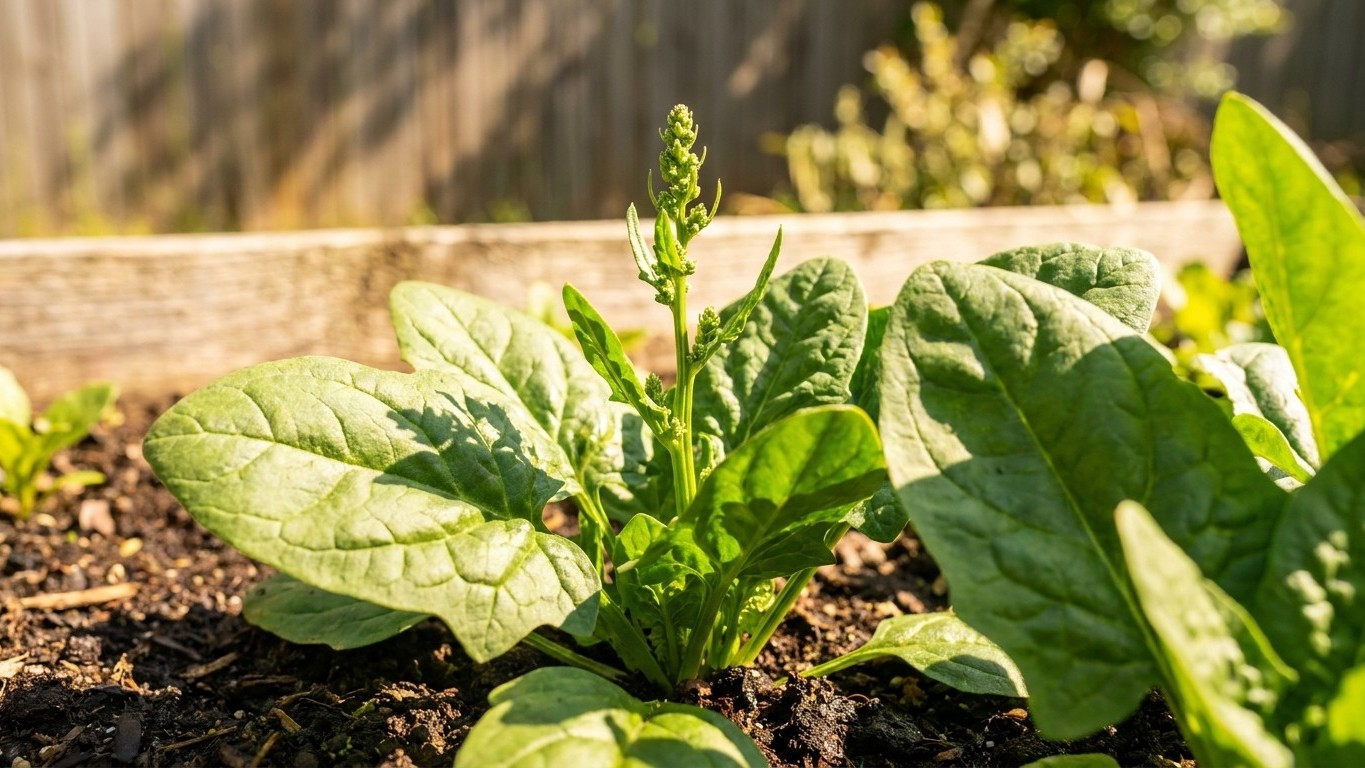

Spinach in Ontario gets eaten by five kinds of feeders: sap-sucking insects, leaf miners, chewing caterpillars and beetles, slugs and snails, and mammals such as deer and rabbits. They arrive on a schedule set by the frost-free season. Slugs show up first in cool, damp weather. Sap-feeders and leaf miners build as spring warms, and the fall crop meets whatever is left over from summer. Timing, symptoms and fixes follow.
Which pests attack spinach in Ontario
The provincial agriculture ministry’s extension staff track which insects and other feeders are active in Ontario gardens, and the groups below are the ones that matter on leafy crops. Sap-feeding insects such as aphids suck juice from the underside of leaves. Leaf miners tunnel between the two leaf surfaces. Chewing caterpillars and beetles bite holes from the edges and the middle. Slugs and snails rasp leaves at night. Deer, rabbits and groundhogs clip whole plants.
Some pests on Ontario lists have no business in a spinach bed. Borers and fruit worms that attack apple and other orchard trees feed on wood and fruit, so they never touch a leaf crop on the ground. Pests that specialize in tomatoes, corn or potatoes follow the chemistry of those plants and pass spinach by.
Which of these feeders matter most on spinach?
Spinach is a cool-weather crop that grows best where temperatures stay at or below 75 °F (about 24 °C), according to Utah State University Extension. That keeps it in the ground during the weeks when slugs, aphids and leaf miners are most active. Chewing caterpillars and beetles are usually a smaller problem on a short spring crop than on cabbage-family plants, though they can still shred a late planting.
Mammals are the wildcard. A single night of browsing can remove a whole row of young plants, and the damage looks nothing like an insect problem. Before you name any culprit, check the underside of the leaves and the soil surface at dusk with a flashlight. Slugs and small caterpillars feed after dark, and daytime inspections miss them completely.
When each one shows up, and what it does first
The calendar here follows the frost-free window. At Toronto Lester B. Pearson Int’l A, Environment and Climate Change Canada puts the mean last spring frost on April 30 and the mean first fall frost on October 16. That leaves about 169 frost-free days between them. Both dates are midpoints. In one year out of two the last frost comes later than April 30, and in one year out of two the first fall frost comes earlier than October 16. Northern and upland parts of the province run weeks behind this airport station.
When does spring spinach get attacked?
Slugs and snails come first, often within days of seedlings emerging. You see ragged holes with clean or slightly chewed margins, and silvery slime trails on leaves and soil in the morning. They favor cool, wet weeks around and just after the mean last frost.
Leaf miners usually follow as the days warm. The first sign is small white eggs on the underside of a leaf, then pale, winding blotches or tan patches where larvae feed inside the leaf. Aphids come in the same stretch. Look for curled, puckered new growth and clusters of small insects under the leaves, sometimes with a sticky film on the leaf surface. Chewing caterpillars and beetles leave holes in the leaf blade and dark droppings on the plant or the soil below.
What about the fall crop?
Fall spinach starts under a different pressure. Germination drops when soil is above 80 °F (about 27 °C), so the sowing window opens when the soil cools, not when the calendar says autumn. Seedlings that emerge in late summer sit next to leftover insect populations, and Pearson sees 15.8 days a year above 30 °C, so heat can linger into the first sowings. The rule for the finish line is to count back from the date you want to harvest and check the days to maturity on your seed packet. Our guide to When to Sow Autumn Spinach in Ontario walks through that window, and the general growing basics sit in Growing Spinach in Ontario.
Telling the damage apart from everything else
Many spinach problems look like insect damage and are not. Yellow leaves, wilting, tall flower stalks and spotted foliage all get blamed on bugs. The table below pairs the common symptoms with the usual causes and the sign that settles the question.
| What you see | Usual causes | What settles it |
|---|---|---|
| Ragged holes, slime trails | Slugs or snails | Trails on soil and leaves, damage worst after dark |
| Pale winding blotches or tan patches inside the leaf | Leaf miners | Hold the leaf to the light and look for a tunnel with a larva or small dark pellet inside |
| Curled leaves, sticky film | Sap-feeding insects | Small insects clustered on the underside |
| Yellowing, usually from the older leaves up | Nutrient shortage or waterlogged soil | Even pattern across plants with no insects present, and soil that stays wet |
| Midday wilting that recovers by evening | Dry soil or heat stress | Check moisture a few inches down |
| Central stalk shooting up, narrow leaves | Bolting | Warm weather and long days, no insect needed |
| Spots with fuzzy growth underneath | A leaf disease | Fuzz on the underside, often after damp weather |
| Torn or shredded leaves after a storm | Wind, hail or foot traffic | Damage appears overnight across the whole bed |
Bolting deserves a closer look. Long days trigger flowering in spinach, and the longest day at Pearson runs 15 hours 17 minutes. A cool summer does not buy extra weeks, and heat above 75 °F (about 24 °C) speeds the process and makes leaves bitter. If your plants are stretching upward and leaves are getting narrow, read Will Spinach Bolt Early in Ontario? before reaching for anything else.
What actually works here, and what is a waste of time
On a short season, timing and barriers beat treatments. A floating row cover stretched over the bed and sealed at the edges keeps flying insects from laying eggs on the leaves. Put it on the day you sow, before adults arrive, because once leaf miner larvae are inside the leaf a cover protects nothing. For fall plantings the same rule applies, and the cover also shelters seedlings through the first light frosts. Vent or remove it when temperatures climb toward 75 °F (about 24 °C), since trapped heat pushes spinach toward bolting and bitterness.
For slugs, remove the hiding places. Clear boards, debris and heavy mulch from the edge of the bed, water in the morning so the surface dries before night, and handpick at dusk with a flashlight. Pull and bag any leaf with a leaf miner tunnel. This removes the larva inside it, and a sprayed leaf with a live larva inside is still a ruined leaf. A fence around the bed handles deer, rabbits and groundhogs, as long as it goes up before the plants do.
Cutting young leaves early is a pest strategy too. Spinach harvested while still small is out of the garden before many insects build up. Succession sowing through the cool part of the season keeps a fresh planting coming along without leaving one big, aging bed for pests to settle in.
Several habits waste effort. Spraying after leaf miners are already inside the leaf, or after damage is advanced, protects nothing that has already been eaten. Sowing during hot weather, or sowing fall spinach into warm soil above 80 °F (about 27 °C), gives you poor germination and stressed seedlings that invite damage. Picking an insect control from a store shelf without checking what is registered for your use is also a risk. The county extension office is the right place to ask which products are registered in Ontario for leafy greens.
Where to check this for your own county
Start with the provincial agriculture ministry’s extension service and its local county or regional office. Their staff know which pests are active near you this season and can confirm a diagnosis from a sample or photo. Master Gardener programs in your area can also help with identification, though they do not replace the provincial service on questions about registered products.
Pest pressure shifts inside a single province. A lakeshore garden near Toronto warms earlier than an upland farm a couple of hours north, and the frost dates at Pearson are weeks off for northern districts. A pest documented across Ontario can be absent from your yard, and an unusual one can turn up in a county where it is rarely reported.
Before you call or email, write down the date relative to your last spring frost, what you saw first, and which plants are affected. Bring a sample leaf in a sealed bag, plus a photo of the underside. That is usually enough for the extension staff to narrow things down.
Common questions
Can I eat spinach with leaf miner or slug damage?
Trim away damaged or slimy areas and wash the rest thoroughly. Discard any leaves that are rotting. Damaged leaves also break down faster in storage. UC Davis Postharvest says spinach will not hold good quality for more than 2 weeks even at 32 °F (0 °C), and at the 41 to 50 °F range of most refrigerators it yellows in days. Store it at the back of the bottom shelf, not in the door.
Does fall spinach have fewer pests?
Cooling nights slow most insects, but they do not vanish by the mean first fall frost of October 16. Slugs stay active in damp autumn weather, and leftover aphids can still be around early on. Frost dates are midpoints, so half of years the first frost comes earlier.
Should I keep a row cover on all season?
Keep it on while insects are laying eggs and temperatures stay comfortable. Spinach grows best at 75 °F (about 24 °C) or below, so lift or vent the cover during warm spells. Check under it regularly, because slugs and aphids can be trapped inside with the plants.
Does hot weather mean more insect damage or just bolting?
Both can happen. Pearson averages 15.8 days a year above 30 °C and 6.08 days above 32 °C, so spells of real heat arrive in most summers. Bolting is triggered by long days and warmth together, and heat-stressed plants can also look worse when pests are present. Use the table above to sort out which one you are seeing, then check with your county extension office.