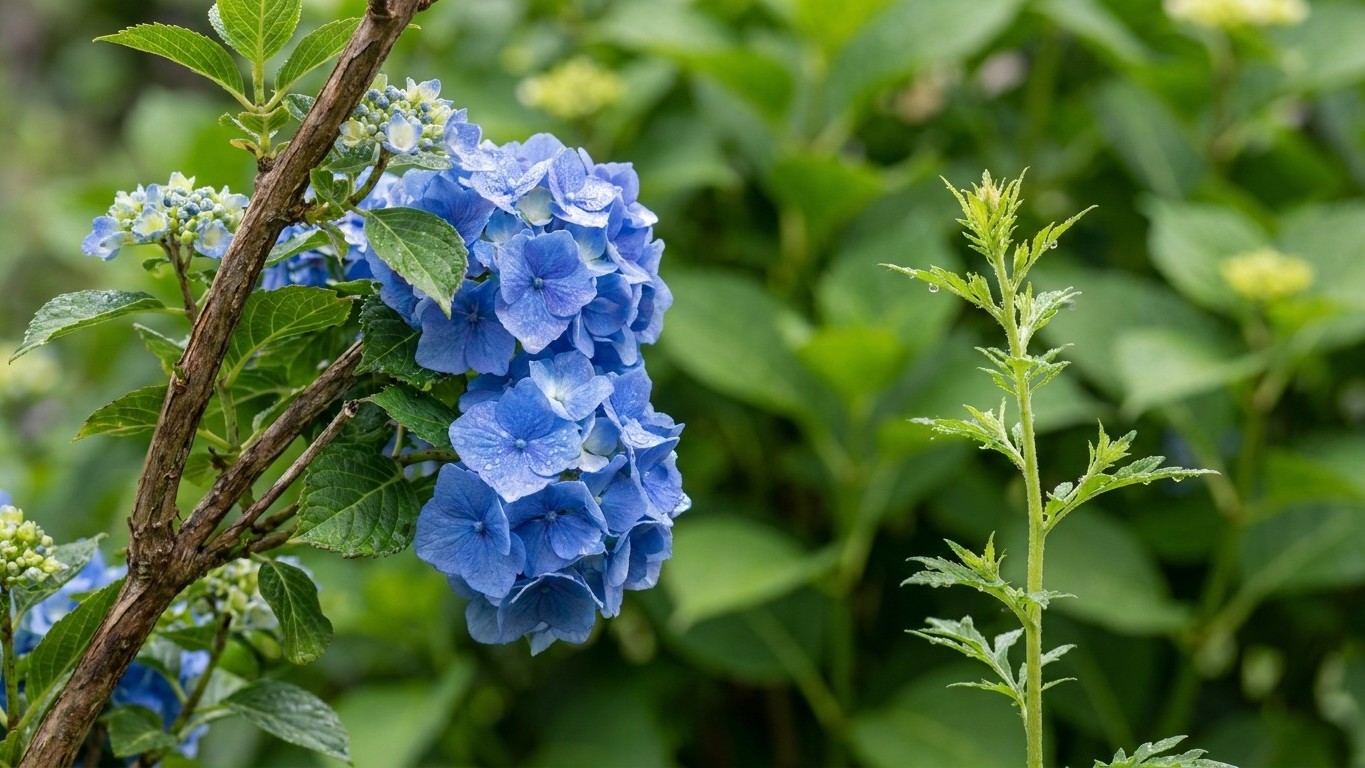

Plant hydrangeas in Vermont after the last spring frost, or in early fall, and pick types that flower on new wood. Smooth and panicle hydrangeas bloom dependably through hard winters. Bigleaf hydrangeas, the blue and pink mopheads, often lose their flower buds to cold unless they are a reblooming type or get shelter. This guide covers timing, site, varieties, color, pruning and winter care. For the wider picture, start with How to Grow Hydrangeas: The Complete Guide.
When to plant Hydrangeas in Vermont
The reference city here is Burlington, on Lake Champlain, the mildest corner of the state. NOAA’s 1991-2020 Climate Normals for the Burlington station (NOAA NCEI) put the last spring 32°F freeze between April 30 and May 10. The first fall freeze lands between October 3 and October 13. Those are Burlington dates. The Green Mountains, the Northeast Kingdom and any high-elevation lot run substantially shorter, so spring comes later and fall frost arrives sooner. If you garden in a hollow, on a ridge, or in the hills, shift your plans later in spring and earlier in fall.
Can you start hydrangeas from seed?
You can, but nobody does it for the garden. Seedlings are slow, take years to bloom, and rarely match the parent plant. Named varieties are sold as potted shrubs grown from cuttings, so the “start indoors” stage is already done by the nursery. Your job is to buy a healthy plant and get it outside at the right moment.
When do you plant hydrangeas in spring?
Container-grown shrubs can go into workable soil as soon as it is no longer frozen or soggy. Bigleaf and oakleaf hydrangeas leaf out early, though, and a late freeze blackens that new growth. Waiting until the frost window closes costs you nothing. Near Burlington that means roughly the second week of May. In the hills, wait until the local danger has passed, which can be late in May.
Plants that spent spring in a greenhouse, including the potted hydrangeas sold around Easter and Mother’s Day, need hardening off first. Set them outside in open shade for a few hours, then lengthen the time and add sun over about a week. Count back from your planting day and start hardening off the shrub before it goes in the ground. Bring pots in on any night when frost is forecast. If frost threatens after planting, cover the shrub with a sheet or an upturned bucket overnight.
Can you plant hydrangeas in fall in Vermont?
Yes, and fall is often better than spring. Warm soil and cool air let roots grow without pushing top growth. The shrub must establish before the ground freezes, so plant it early enough to give the roots time to grow. With a Burlington first frost of October 3 to 13, aim for a planting date well before then. Plant earlier in colder areas. A shrub that goes in during late October is more likely to heave out of the ground during freeze-thaw cycles, so mulch it well and check it after thaws.
Summer planting works if you will water faithfully, though the heat stress makes it the hardest option.
Soil and site preparation
Most hydrangeas want morning sun and shade from the hottest afternoon hours. Vermont summers are mild enough that smooth and panicle types can take full sun if the soil stays moist. Bigleaf and oakleaf types do better with afternoon shade. Deep shade produces healthy leaves and few flowers, so look for a spot with direct sun.
Drainage matters more than soil type. Hydrangeas like moisture, but they rot in standing water. Dig a hole, fill it with water, and watch how it drains. If water is still there the next morning, choose another spot or build a raised bed. Loam rich in organic matter is ideal. Heavy clay needs compost mixed into a wide area, and sandy soil needs it to hold water.
Avoid the places that cause trouble later: the drip line under a roof where sliding snow lands on shrubs, the roadside edge that gets plow spray and road salt, and wind-scoured hilltops that dry out leaves in summer and winter.
Start the work weeks before planting. A soil test through UVM Extension tells you your pH and nutrient levels, and the results shape your choices on color and amendments. Sulfur to lower pH and lime to raise it both act slowly, so apply them well ahead of planting. Compost can go in at any time.
Mark out the bed, strip the sod, and loosen the soil across an area wider than the root ball. Dig the hole as deep as the root ball and wider than it. Set the crown level with the soil, loosen circling roots, backfill with the native soil (lightly amended), and water thoroughly.
Spacing depends on the type. Compact panicle and smooth varieties need less room than the larger types. Standard smooth and bigleaf shrubs want more room than the compact types. Large panicle hydrangeas can spread wide, so give them room. Crowded plants hold moisture on their leaves, which invites disease.
Varieties that suit Vermont
Three traits decide success in a Vermont garden: whether flower buds form on new or old wood, how reliably the plant survives winter, and how much sun it tolerates. A hydrangea that blooms on new wood can be killed back to the ground and still flower that summer. One that blooms on last year’s wood loses its show if cold kills those buds. This is the main reason bigleaf hydrangeas disappoint here. Check the USDA hardiness zone map for your own address, since zones range widely across the state.
| Type | Blooms on | Cold reliability | Sun | Good for |
|---|---|---|---|---|
| Smooth (Annabelle, Incrediball) | New wood | Very dependable | Sun to part shade | Big white blooms, reliable flowering even after harsh winters |
| Panicle (Limelight, Bobo, Little Lime, Quick Fire) | New wood | Very dependable | Full sun to part shade | Cone-shaped blooms that age to pink, sturdy stems, long season |
| Bigleaf reblooming (Endless Summer series) | Old and new wood | Moderate | Morning sun, afternoon shade | Blue or pink color where winters are too hard for older types |
| Oakleaf (Snow Queen) | Old wood | Risky in colder areas | Part shade | Fall leaf color, peeling bark, sheltered sites |
| Climbing (Hydrangea petiolaris) | Old wood | Hardy | Shade to part shade | Walls, fences and tree trunks, though slow to start |
Smooth hydrangeas such as Annabelle are the safe default. Incrediball has the same look on stiffer stems that hold up in rain. Panicle types such as Limelight bloom later in summer and handle sun, so they suit open yards. Bobo and Little Lime stay compact for smaller beds. Quick Fire opens earlier than most and fades to deep pink. Reblooming bigleaf varieties are worth trying in a sheltered spot, near a south-facing wall or in Champlain Valley yards. Plan on protection in winter.
Neighboring cold states face the same winter bud loss, and the advice on new-wood bloomers carries over. See Growing Hydrangeas in Minnesota: Types, Colour and Winter and Growing Hydrangeas in Michigan: Types, Colour and Winter for comparisons.
What decides blue or pink hydrangea color?
Only bigleaf types respond to soil chemistry. Blue flowers appear where the soil is acidic and aluminum is available to the roots. Pink flowers show up in less acidic soil, where aluminum is locked up. Purple falls in between. A soil test shows where you start, and adjustments take months, so a single spring dose rarely changes things within one season. White hydrangeas stay white. Panicle blooms shift from white or cream to pink or red as fall nights cool, whatever the soil.
What to plant alongside
Good neighbors for hydrangeas share their taste for moist, humus-rich soil and tolerate part shade. Hostas, ferns, astilbe, heuchera and foamflower fill the space at their feet and shade the soil, which slows evaporation. Japanese forest grass adds a soft texture. Daffodils planted at the base cover the spring gap before the shrubs leaf out, and the foliage fades behind the hydrangea leaves. Rhododendrons and azaleas like the same acidic soil, which suits blue bigleaf varieties.
For pollinators, the lacecap-style fertile flowers on smooth and panicle hydrangeas draw bees and other small insects. The large sterile mophead blooms offer little nectar. Pair a sunny panicle with coneflower, bee balm or catmint if you want a bed that stays busy from July into fall.
Several things compete with hydrangeas. Large maples, birches and willows have shallow roots that take most of the water and nutrients, so a hydrangea planted close to a trunk struggles every dry spell. Lawn grass is another competitor. Keep a cleared, mulched ring around each shrub. Heavy feeders such as mature rhododendrons planted too tightly can crowd the root zone. Dense plantings of mildew-prone perennials like bee balm and phlox reduce airflow, and damp leaves invite disease.
A few pairings are popular but have little evidence behind them. Garlic, marigolds and chives are often said to repel Japanese beetles, and there is no reliable data showing they protect hydrangeas. Hostas next to hydrangeas also bring a downside: deer love hostas, and a browsed hosta bed puts the shrubs in the deer’s path.
Watering, feeding and support
The name comes from the Greek for “water vessel,” and the plants live up to it. New shrubs need deep soaking through their first summer. Established shrubs do well with regular water from rain or hose. Water at the base, early in the day, so leaves dry quickly. Hydrangea leaves wilt on hot afternoons even when the soil is fine, then recover by evening. Before reaching for the hose, push a finger into the soil to check moisture. If it is damp, the plant is coping with heat, not thirst.
Spread mulch over the root zone and keep it back from the stems. Mulch conserves water, moderates soil temperature and suppresses weeds. Asian jumping worms, one of the pests Vermont gardeners are warned about, turn mulch and topsoil into loose, dry granules that look like coffee grounds, and that dries out roots. Buy mulch, compost and plants from sources you trust, and avoid moving soil from infested beds.
Feed lightly. One application of a balanced, slow-release fertilizer when growth starts in spring is enough for most soils. Too much nitrogen produces lush leaves and floppy stems with fewer flowers. Skip fertilizer after midsummer, since late growth stays soft and gets hit by early frost.
Support helps tall, heavy-flowered types. Annabelle is the famous flopper, bending to the ground after a summer storm. Choose stiffer varieties like Incrediball, or put a peony ring or three stakes with twine around the shrub in spring while it is still small. Panicle hydrangeas with huge blooms can also arch after rain.
Prune according to bloom habit. Smooth hydrangeas can be cut back in late winter or early spring, or less severely to keep a taller framework. Panicle types take a light trim at the same time. Bigleaf, oakleaf and climbing hydrangeas bloom on old wood, so prune them right after flowering, and in spring remove only wood that is clearly dead. Because Vermont winters kill tips, wait until leaves emerge to see which stems are alive. Smooth hydrangeas spread by suckers, and the extras can be dug out and moved or removed. On tree-form panicles, snip suckers off at the base.
Common problems
The most common complaint is a shrub that will not bloom. In Vermont the usual cause is winter-killed flower buds on a bigleaf or oakleaf hydrangea. Other causes are pruning at the wrong time, too much shade, or too much nitrogen. Replace the plant with a new-wood type or protect it for the winter (see the last section).
Frost damage in spring turns new leaves black or limp. Do not prune right away. Wait, and new buds often push from below.
Wilting on hot afternoons that recovers at night is normal. Wilting that continues in the morning means dry soil, waterlogged roots or a damaged root system. Brown, crispy leaf edges point to sun scorch, drought or fertilizer burn.
Fungal diseases show up in humid summers. Leaf spot appears as small brown or purplish spots, which may merge on older leaves. Powdery mildew looks like a white dusting, usually late in the season. Both rarely threaten the plant. Improve airflow, water at the base, rake up fallen leaves, and remove badly spotted ones.
Among insects, a few matter in Vermont gardens:
- Japanese beetles skeletonize leaves in midsummer, leaving lacy veins. Knock them into soapy water in the morning when they are sluggish. Their larvae are among the white grubs that live in lawns, and European chafers and oriental beetles have grub stages of their own.
- Spongy moth caterpillars chew leaves in outbreak years. Hand-pick small numbers. They hide in bark crevices and shady spots.
- Aphids and spider mites cluster on soft new growth. A hard spray of water usually deals with them.
Deer and rabbits browse hydrangeas, especially in winter and early spring. Fencing or repellents work better than hoping for the best. For identification of any insect you cannot name, bring a sample to your county office. Pressure varies across the state.
Harvest and end of season
Cut hydrangeas for vases in the morning, choosing blooms that are fully open. Take long stems, strip the lower leaves and put them straight into water. Smooth and panicle types last well. For drying, wait until the flowers feel papery and have started to take on antique tones in late summer or early fall. Strip the leaves and hang the stems upside down in a dark, dry place, or stand them in water and let it evaporate. Dried blooms keep for many months. Cutting does not hurt new-wood bloomers. On bigleaf types, cut stems from the current season in summer, and leave the rest alone so next year’s buds stay intact.
As fall frost approaches, expect it between October 3 and October 13 near Burlington, and earlier in higher ground. Stop all fertilizing by midsummer. Water deeply if fall is dry, because shrubs enter winter in better shape with moist soil. Leave the faded flowers on, since they trap snow and give modest protection.
After the ground cools, add mulch over the root zone. For bigleaf and oakleaf hydrangeas, build a cage of chicken wire or burlap around the plant and fill it loosely with dry leaves or straw, then cover the top. This holds in warmth and shields the buds. Voles tunnel under snow cover and chew bark, so wrap young stems with hardware cloth. Resist the urge to cut back in fall. Smooth and panicle types can wait for late winter.
Local help
Dates and conditions shift from valley floor to hilltop, so check with University of Vermont Extension for county-level planting dates, soil testing and help identifying pests or diseases. Browse the other Vermont guides for more regional advice.
Common questions
What are the hardiest hydrangeas for Vermont?
Smooth hydrangeas (Annabelle, Incrediball) and panicle hydrangeas (Limelight, Bobo, Quick Fire) are the safest picks. Both bloom on new wood, so a hard winter does not cancel the flowers. Climbing hydrangea is hardy too, though slow.
Why is my hydrangea not blooming?
Winter bud kill on a bigleaf or oakleaf is the usual reason. Pruning in the wrong season, too much shade and too much nitrogen come next. Identify the type first, then match the pruning and winter care to it.
Can I change the color of my hydrangea?
Only bigleaf types respond. Acidic soil gives blue and less acidic soil gives pink. Do a soil test first, apply sulfur or lime gradually, and expect results to take a season or more. White varieties will not change.
Should I cut back hydrangeas in fall?
Not as a rule. Smooth and panicle types are best pruned in late winter. Bigleaf, oakleaf and climbing types bloom on old wood, so cutting in fall removes next year’s buds. Remove only stems that are clearly dead, and wait until spring to judge them.
Will deer eat my hydrangeas?
Deer browse them, especially in winter and early spring when other food is scarce. Fencing is the most dependable defense. Repellents help if you reapply them, and planting near the house helps a little.