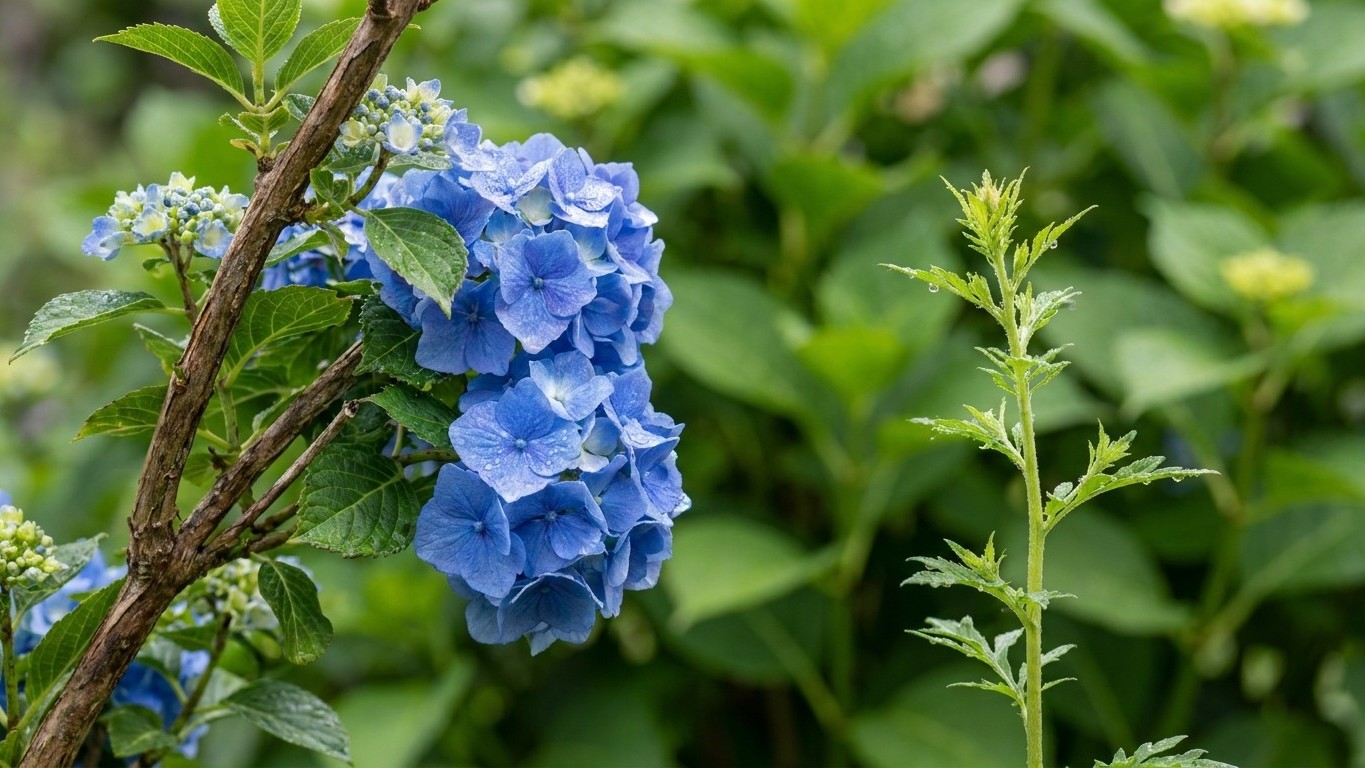

Hydrangeas in Illinois get pruned at one of two times, and the choice depends on where the plant makes its flower buds. Types that bloom on stems grown this season get cut in late winter. Types that bloom on last year’s stems get cut right after flowering, before summer ends. Cut at the wrong time and the shrub lives but skips the show. Most of the confusion comes from a plant tag that says only “hydrangea.”
What this comes down to in Illinois

At the Chicago O’Hare reference station, the last spring frost falls between April 11 and April 22. Panicle and smooth hydrangeas get cut in the weeks before that window, while bigleaf, mountain and oakleaf types get cut in summer, right after the blooms fade. The frost window matters because it marks when dormant buds wake up. The reference-station dates come from the NOAA NCEI 1991-2020 Climate Normals. Suburban and rural gardens usually see the last frost one to two weeks later, so adjust accordingly.
The first fall frost at the same station comes between October 24 and November 3. That window sets the other deadline: by the time it arrives, the old-wood types have already formed next year’s flower buds, so anything you cut after midsummer is next June’s bloom going into the brush pile.
The table below sorts the common landscape types by the wood that carries their flowers.
| Type | Example cultivars | Blooms on | When to prune |
|---|---|---|---|
| Panicle (Hydrangea paniculata) | Limelight, Tardiva | New wood | Late winter to early spring, before buds swell |
| Smooth (Hydrangea arborescens) | Annabelle, Incrediball | New wood | Late winter to early spring |
| Bigleaf (Hydrangea macrophylla) | Nikko Blue, Endless Summer | Old wood (reblooming types also on new wood) | Right after the main flush fades; light trimming only |
| Oakleaf (Hydrangea quercifolia) | Snow Queen | Old wood | Right after flowering, by midsummer |
Which hydrangeas can be cut hard in late winter?
Panicle and smooth types. Their flower buds form on shoots that grow in spring, so a hard cut costs nothing. Smooth hydrangeas such as Annabelle can be cut back hard, close to the ground. Panicles like Limelight do better when you thin the stems and leave a framework of older stems, which keeps the branches from flopping under heavy heads.
Which hydrangeas should barely be touched?
Bigleaf, mountain and oakleaf types. Their buds are already on the stems by fall, so pruning in winter or spring removes flowers. Pruning for these is mostly deadheading, taking out dead stems, and thinning a few of the oldest canes at the base after bloom. For shrubs that struggle through cold winters, the choice of type matters even more, and Which Hydrangeas Survive a Illinois Winter sorts that out.
Working it out for your own garden
A calendar date printed in a gardening book fits the author’s yard, not yours. A method built on the frost window works in a warm year, a cold year, or after a move to a different part of the state.
How do you tell which hydrangea you have?
Look at the flower head and the leaf. Cone-shaped white heads that age to pink or tan mean panicle. Big round white heads on soft green stems in June mean smooth. Round or flat heads in blue, pink or purple, on a shrub with glossy, thick leaves, mean bigleaf. Leaves shaped like oak leaves, with bark that peels in strips, mean oakleaf.
If the plant came without a tag, watch it for one season. A hydrangea that blooms in June and has set buds by the following spring is probably an old-wood type. One that sends up fresh stems and blooms from midsummer on is probably a new-wood type. In spring, scratch a stem with a thumbnail: green underneath means alive, brown and dry means dead.
How do you count back from the frost window?
Start with the new-wood types. Take a Limelight panicle hydrangea. The reference-station last frost runs April 11 to April 22. Buds begin to swell before that, so watch the buds and cut while they are still tight. For a garden that sees frost one to two weeks later than the airport, shift the whole window later by the same amount. The rule is simple: finish cutting when the buds are still tight and before they turn green and fat.
Now the old-wood types. Take a Snow Queen oakleaf. Flower buds for next year set over late summer and early fall, well ahead of the first fall frost window of October 24 to November 3. Counting back from that window gives the last safe date for a cut, so check your own county extension office for the timing. In most gardens the right moment is earlier, in July, as soon as the blooms have faded. A garden that gets its first frost one to two weeks early should move that deadline earlier by the same amount.
A reblooming bigleaf like Endless Summer gives more room, because it carries flower buds on both old and new wood. Even so, hard spring pruning cuts the early flush, so keep it to dead stems and a light shaping after the first wave of blooms.
What changes across the state
Illinois runs from the Wisconsin line to the point where the Ohio and Mississippi rivers meet. The USDA Plant Hardiness Zone Map, which rates plants by average annual extreme minimum temperature, spans zones 5a to 7b across that distance. The O’Hare dates above belong to the northeastern corner, so gardeners elsewhere should treat them as a starting reference rather than a rule.
In the south, spring arrives earlier and buds break sooner. Late-winter pruning of panicles and smooth types moves earlier on the calendar, and the cold-year gamble is different: a warm February followed by a late freeze can catch new growth already underway. In the north, the cut can wait longer, and dormancy holds firm into April. Gardeners in the north also face more winter dieback on bigleaf hydrangeas, which affects how much living wood is left to prune.
Lake Michigan shapes the northeastern edge of the state. Gardens near the shore warm up slowly in spring, which holds buds back, and the lake softens the first fall frost. Chicago’s dense neighborhoods hold extra heat, so city yards often run a little ahead of the surrounding suburbs. Away from the lake, flat central Illinois can swing hard between warm and cold spells. The hills in the northwest and the rolling country in the far south both run cooler at higher spots, which pushes frost dates later in spring and earlier in fall. Watch your own shrubs: when the buds begin to swell, it is time to finish pruning the new-wood types.
The mistakes this state punishes

Spring cleanup on a bigleaf is the most common one. A gardener sees stems that look dead in April, cuts the whole shrub to the ground, and loses the year’s flowers. Bigleaf hydrangeas leaf out late, often into May, and stems that look lifeless may carry live buds near the tips. Wait until leaves open on the lower stems, then cut back only to the first pair of buds that have swelled.
Pruning during a mid-winter thaw is another. A run of warm days in February invites the pruners out, but the shrub may have started to wake, and a hard freeze can follow in March or April. Prune new-wood types in the weeks before bud swell, not during a warm spell weeks before it.
Late-summer shaping hurts old-wood types. A shrub that looks overgrown in September gets trimmed for neatness, and next June has few blooms. If you want a smaller plant, prune in July right after flowering. If it is September, leave it.
Cutting everything to the ground in fall is a quieter error. Dried flower heads and stems protect the buds below them through the worst winter weather, and standing stems hold snow, which insulates the crown. Leave the cleanup for late winter on new-wood types.
The last mistake is taking too much from a panicle. Cutting back hard every year produces thin, weak stems that bend under large flower heads. For help picking shrubs that suit the climate to begin with, see growing hydrangeas in Illinois.
Checking this against your county
The reference-station dates give a place to start, and your own yard may run one to two weeks off. Your local University of Illinois Extension office can tell you the typical frost timing for your county, and its horticulture staff can help identify a hydrangea whose tag has been lost. Use the state hydrangea guide, growing hydrangeas in Illinois, for planting, siting and care beyond pruning.
Common questions
Can I prune hydrangeas in fall in Illinois?
Deadheading is fine, but heavy pruning is better left alone. Old-wood types already carry next year’s buds by fall. New-wood types can be cut in fall, but leaving the stems standing protects the crown through winter, and cutting in late winter works just as well.
What if I don’t know which type I have?
Wait. Do not cut anything in spring or summer until you have watched the shrub bloom for a season. Note whether flowers come from old stems or new growth, then set the schedule. Removing only dead wood does no harm to any type.
My hydrangea looks dead after winter. Should I cut it down?
Not right away. Bigleaf types are slow to leaf out, often into May. Scratch the bark of a few stems, and cut back only to wood that is green inside. If the base is alive, the plant usually regrows, though a bigleaf may skip flowers that year.
Does pruning change the flower color?
No. Color on bigleaf hydrangeas follows soil acidity and aluminum availability, which Why Hydrangeas Are Pink in Illinois, and How to Turn Them Blue explains. Pruning affects how many flowers you get, and the soil decides what color they are.