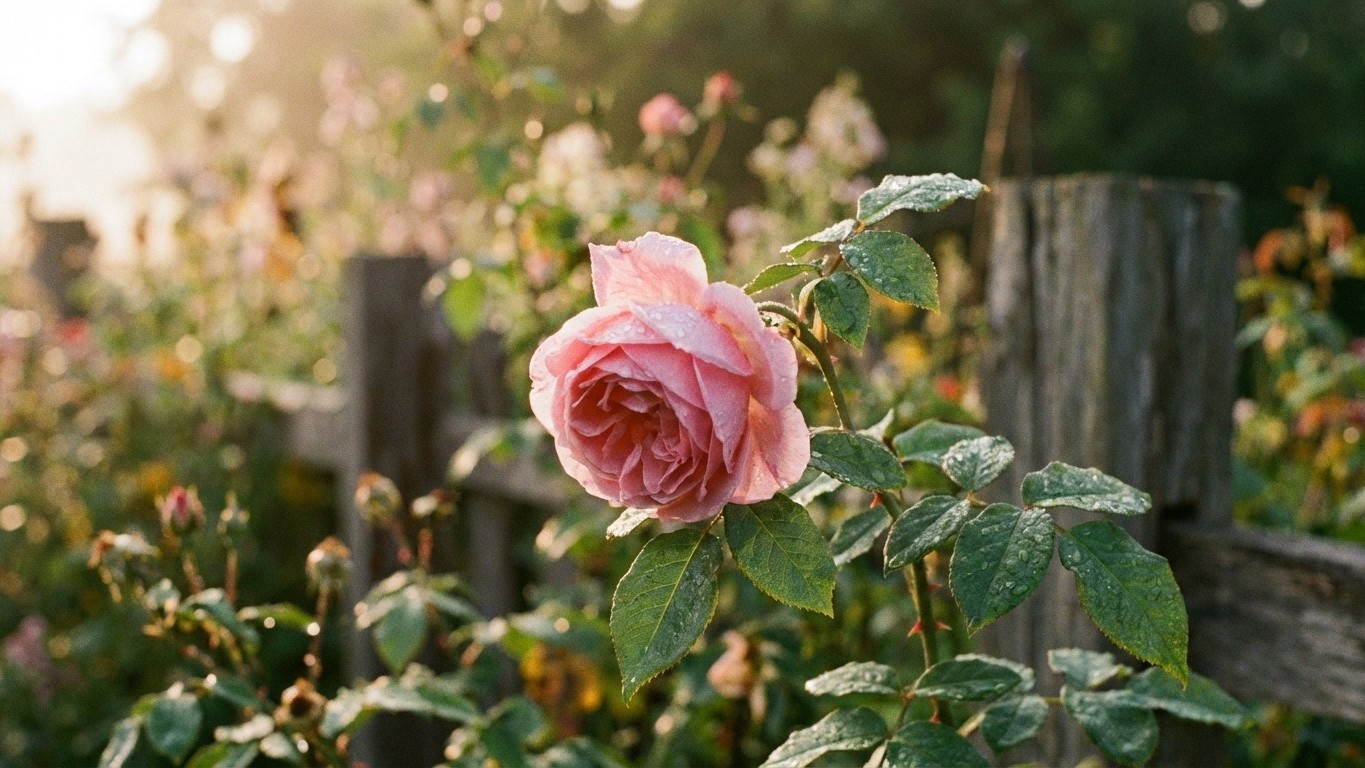

Cold is rarely what kills a rose in Florida. Heat, humidity, and sandy soil do the damage, so the roses that hold up are the ones that handle those conditions. Knock Out, New Dawn, and Old Blush work across most of the state. In north Florida you can add tough rugosas like Therese Bugnet and Hansa. Hybrid teas and imported cold-hardy types can still succeed, but they take extra work. If you are new to the basics, start with growing roses in Florida, then use the sections below to choose what to buy.
Which roses survive a Florida winter
USDA hardiness zones in Florida run from 8b to 11b. That system uses a single variable, the average annual extreme minimum temperature, so it tells you how cold the worst night of a typical year gets and says nothing about summer. The 8b end is in north Florida, and 11b is the far south. Nearly every rose sold in the United States clears that bar. Rugosas and the Canadian-bred Explorer series sit at the cold end of the rose world and shrug off winters far harsher than anything here. Hybrid teas are the group that needs help in the cold, where gardeners mound soil over the base and wrap the canes. Every Florida zone is warmer than that.
How cold does north Florida get for roses?
The NOAA NCEI climate normals for the Jacksonville airport station put the middle band of 32 F freeze probability (the 30 to 70 percent range) between February 16 and March 7 in spring. In fall the band runs from November 26 to December 13. Those are ranges, not deadlines, and the station is an inland site. In three of the thirty falls measured, no freeze came at all.
When a freeze does arrive, soft new growth burns first. A hard one can kill canes back toward the ground, yet established roots usually survive and send up fresh shoots. The roses that get hurt worst are the ones coaxed into tender growth by a warm spell just before the cold snap. For covers, timing, and what to cut afterward, see Protecting Roses Through a Florida Winter.
What changes in central and south Florida?
Central and south Florida are effectively frost-free, so Jacksonville’s dates do not apply to Orlando or Miami. The growing calendar flips there. The main rose season runs through winter, when nights are cooler and the air is drier, and summer is the hard stretch, with heat, daily rain, and fungal pressure. A rose’s cold hardiness stops mattering in that part of the state. Heat tolerance and disease resistance decide whether it lasts.
Named roses that hold up here
A handful of names come up again and again in Florida yards, and each one survives something different.
| Rose | Type | What it handles | Best fit |
|---|---|---|---|
| Knock Out | Shrub rose | Heat, humidity, black spot pressure | North, central, and south Florida |
| New Dawn | Climber | Heat, freezes, vigorous regrowth | Fences, arbors, and trellises statewide |
| Old Blush | China rose | Heat, long bloom season | Statewide |
| Therese Bugnet | Rugosa hybrid | Hard freezes, sandy soil | North Florida |
| Hansa | Rugosa | Hard freezes, sandy soil, salt spray | North Florida, including coastal sites |
Which named roses take heat and humidity best?
Knock Out earned its reputation by resisting black spot better than most roses and blooming in repeated flushes with little spraying. Resistance is not immunity, though. It can still catch problems like rose rosette, which are covered in Rose Diseases in Florida: What the Climate Here Actually Brings. New Dawn is a vigorous climber with pale pink flowers that returns strongly after a cold snap. It is a sensible pick for a fence or arbor anywhere in the state. Old Blush is an old China rose that keeps blooming through long warm seasons, and it has been a staple in Southern gardens for generations.
Which named roses handle north Florida’s cold snaps?
Therese Bugnet and Hansa are rugosa types, and rugosas are among the hardiest roses anywhere. A Florida freeze is trivial for them. Rosa rugosa grows on coastal dunes in its native range, so sandy soil and salt spray suit these two better than most roses. Their limit is the other end of the thermometer. Long, humid summers and mild winters wear them down. Keep rugosas to north Florida, where the seasons give them some relief, and expect them to thin out the farther south you plant them.
Sold here, but not for this zone
Garden centers in Florida stock roses nationally, and the buying decisions behind those shelves are made in distribution warehouses, not in Gainesville or Tampa. That means plenty of roses on display were selected for climates that look nothing like this one. Some of them come through with a little help. Others fail slowly, and you may not see the cause until the second summer.
Which shelf roses take the most work in Florida?
The big one is the bare-root hybrid tea in a plastic sleeve. Many of those are grafted onto a rootstock, which is fine in much of the country. In Florida’s sandy soils, nematodes can weaken that rootstock, and the plant declines even if the top looks healthy. Fortuniana is a rootstock Florida growers use for grafted roses. Ask which rootstock a grafted rose sits on before you buy it, and if the staff cannot tell you, pick a different plant.
Cold-hardy imports are the next group. Rugosas and Explorer roses are built for real winters, so a mild central or south Florida winter gives them little of what they expect, and the summers add stress on top. English-style garden roses are also common on the shelf. Many are bred for cooler, gentler climates and can turn leggy and spotted in Florida humidity, so plan on a regular fungicide routine if you grow them.
Then there are the potted miniature roses sold around Valentine’s Day. Those are grown for a few weeks of indoor color, and when planted outside they often fade by the first hot spell. They are cheap enough to try, but don’t build a bed around them.
What to check on the label before buying
Start with the grade. Bare-root roses are sold in grades, and the top grade has the thickest and most numerous canes. The discount grades are the ones that fill big-box racks. A Grade 2 plant spends its first season catching up, and in a climate that already stresses roses, that lost time is hard to recover.
Next, find out whether the rose is own-root or grafted. Some labels say “own root” outright. On a grafted plant, look for the graft union, a swollen knob near the base where the named variety joins the rootstock. Own-root roses grow from their own cuttings, so every cane belongs to the variety on the tag.
That matters more the colder the winter gets. In north Florida, a hard freeze can kill the canes down to the ground. On a grafted plant, what sprouts back may be the rootstock, which is a different rose, often a small single-flowered one. An own-root plant regrows as itself. Choose own-root where hard freezes can reach the plant, which means north Florida and the Panhandle. Farther south, where freezes barely happen, the question flips back to nematodes, and a grafted rose on Fortuniana is a reasonable choice.
Checking this against your own county
Florida stretches across a huge range of conditions, and a rose that thrives in Tallahassee may sulk in Fort Myers. UF/IFAS Extension has an office in each county, staffed by people who know the local soil, nematode pressure, and freeze history. Call your county office before you buy, and ask which rootstocks do well in your soil and how often hard freezes reach your neighborhood. Do not borrow Jacksonville’s frost window for a yard in Orlando or Miami, because it does not apply there.
Common questions
Do roses need winter protection in Florida?
In north Florida, yes, on the nights a freeze is forecast, especially for young plants or roses pushing soft new growth. In central and south Florida, which are effectively frost-free, protection is rarely needed.
Is Knock Out the only rose that holds up in Florida?
No. New Dawn and Old Blush also handle heat and humidity well, and Therese Bugnet and Hansa are strong choices in north Florida. Knock Out is the most common because it resists black spot well and blooms with little spraying.
Can I grow Hansa or Therese Bugnet in south Florida?
You can try, but expect trouble. They are rugosas, built for cold winters, and they tend to decline where summers are long and humid and winters stay mild. Old Blush or Knock Out are safer bets in the south.
Do Jacksonville’s frost dates apply in Orlando or Miami?
No. The February 16 to March 7 spring band and the November 26 to December 13 fall band describe one inland station in north Florida. Central and south Florida are effectively frost-free, and there the main rose season runs through winter while summer is the hard part.