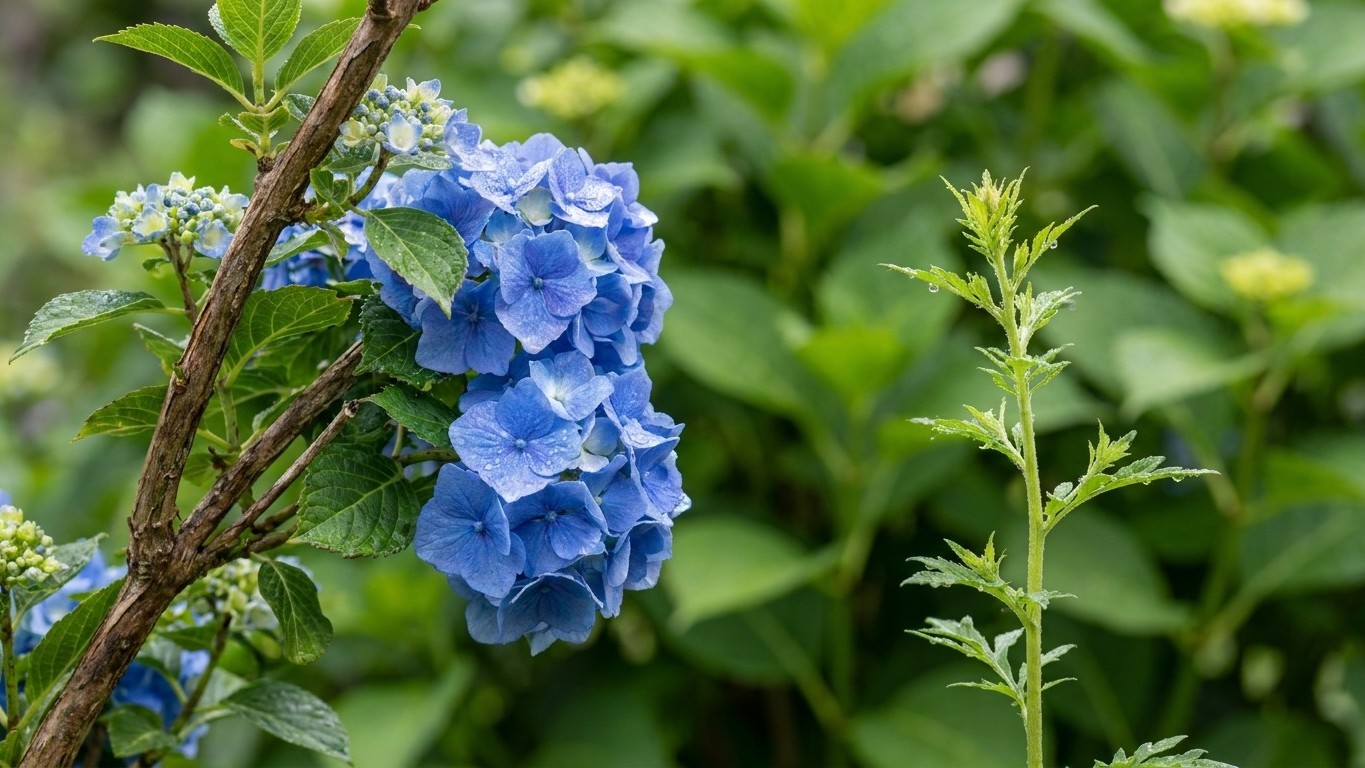

Winter protection for hydrangeas is a north Florida chore, and a short one. A handful of freezing nights can decide whether a bigleaf hydrangea blooms next summer, and most of the work happens before the cold arrives: mulch down, cover within reach, pruners put away. Farther south the picture flips. Central and south Florida rarely see frost at all, so the stress there comes from heat and sun, not cold.
What this comes down to in Florida

In Jacksonville, the reference city for north Florida, the last spring freeze at 32F typically falls between February 16 and March 7, and the first fall freeze between November 26 and December 13. Those two stretches are when a hydrangea in north Florida is exposed. Outside north Florida, they mostly do not apply.
Both ranges come from the NOAA NCEI Climate Normals, which track how often a 32F freeze occurs on each date. The window marks the dates when that probability sits in the 30 to 70 percent band. It is the middle of the distribution, not a pair of walls. A freeze can arrive earlier or later, and in three of the thirty falls on record at that station, no freeze came at all.
Why one freeze can cost a whole season of flowers
Bigleaf hydrangeas form next year’s flower buds on this year’s stems, usually by fall. A hard freeze that kills the stem tips takes the buds with it. You end up with a healthy green shrub and no blooms. Types that flower on new growth recover far better from the same night, which is one reason the Which Hydrangeas Survive a Florida Winter question matters before you buy a single cloth or bag of mulch.
Spring is the other risk. A warm spell in late January or February can push soft new leaves well before March 7, and those leaves have no defense against a late freeze. In fall the plant is mostly dropping leaves anyway. In spring it is spending energy it cannot get back.
One thing that looks like damage but isn’t: bigleaf hydrangeas in north Florida often shed their leaves in December and January. That is normal dormancy, not injury.
Where the window stops applying
Central and south Florida are effectively frost-free, and there the growing calendar inverts. The cool months are the easy ones, and summer is the hard part. Never apply the Jacksonville dates to Orlando or Miami. A gardener in either city who wraps a hydrangea in January is spending effort on the wrong problem. Shade from afternoon sun, steady moisture and mulch against summer heat will do far more.
Working it out for your own garden
A date printed in an article goes stale in a cold year or after a move. The method doesn’t. Take the window, then count backward or forward from it by the time each task needs.
Counting from the fall window
Set aside about three weeks for fall prep: laying mulch, moving potted plants to a sheltered spot, locating frost cloth, and staging stakes or clips to hold it. Three weeks before November 26 is November 5. Three weeks before December 13 is November 22. So the prep range for a Jacksonville-area yard runs from about November 5 to November 22. A range minus a fixed number of weeks gives another range, not a single day, and that is the honest answer here.
Spring runs the other way. Add two weeks of cushion to the end of the window: February 16 plus two weeks is March 2, and March 7 plus two weeks is March 21. Keep cloth within reach until sometime in that March 2 to March 21 range, and hold off on pruning questionable stems until then.
A worked example: early leaf-out versus late
Say a bigleaf hydrangea in north Florida starts swelling buds in early February after a mild January. Every night of the February 16 to March 7 window still lies ahead of it, and the new growth is tender. That plant needs a cover on standby and a forecast check each evening. Now take a panicle type that does not break bud until mid-March. It has already passed the band, so freeze odds have fallen below the 30 percent edge. They have not fallen to zero, but the exposure is much smaller. The line falls at when the plant wakes up, not on the calendar.
Telling cold damage from a normal winter
Brown, papery leaves that drop in midwinter are dormancy. Leaves that turn dark and limp, almost water-soaked, the morning after a freeze are cold injury. For stems, scratch a tiny patch of bark with a thumbnail. Green underneath means alive. Wait for new growth in spring to show where living wood ends before you cut anything.
What changes across the state
Florida stretches from a Panhandle that shares cold fronts with Georgia and Alabama down to the Keys, where freezes are essentially unknown. The USDA Plant Hardiness Zone Map, which is built on one variable, the average annual extreme minimum temperature, puts the state in zones 8b through 11b. That is a statewide range, and it shows the spread without telling you your frost dates. The frost window above is a single reference point, Jacksonville, and this page does not publish a second one for any other region.
Coast, inland and the Panhandle
Elevation hardly matters in a state this flat. Distance from water and latitude matter more. The Jacksonville station sits at an inland airport, and the coastal strip east of it tends to run milder, with freezes that come later and ease sooner. The western Panhandle, farther from the Atlantic, tends to run colder on clear nights. How much milder or colder depends on the year, and the figures are not published here.
| Area | Frost exposure | What protection looks like |
|---|---|---|
| North Florida, inland (Jacksonville is the reference) | Freeze in most years, in the window above | Mulch, cloth on standby, delayed pruning |
| North Florida coast | Tends to be milder and later | Same plan, but follow the forecast over the calendar |
| Central and south Florida | Effectively frost-free | No winter routine; manage summer heat and sun |
Inside one yard
Cold air drains downhill, even on gentle slopes, and pools in low spots. A hydrangea in a hollow can see a freeze that its twin on higher ground near a south-facing wall escapes. Live oak canopies and house walls hold some warmth too. If you have lost plants in one corner before, put the cover on that corner first.
The mistakes this state punishes

Wrong calendar, wrong chore
Pruning bigleaf hydrangeas in fall is the costliest habit. It cuts off the buds that would have bloomed. Heavy fall feeding is a close second, because it pushes soft growth right into the first-freeze window. Leave both alone until spring, and keep soil amendments aimed at flower color separate from winter prep (that project is covered in Why Hydrangeas Are Pink in Florida, and How to Turn Them Blue).
Trusting a warm spell is the other classic. A mild stretch in February wakes the plant while March 7 is still ahead of it. Treat that warmth as bait, not an all-clear. And do not skip fall prep because last winter passed without a freeze. The odds in the Jacksonville band are 30 to 70 percent, not zero.
Covering the wrong way
Plastic laid directly on foliage conducts cold to the leaves, and it can cook the plant on a sunny morning. Use frost cloth or an old sheet, drape it to the ground to hold soil heat, and remove it once temperatures climb the next day. Mulch should sit a few inches back from the stems, because piled against them it holds moisture and invites rot.
The last mistake is geographic. Gardeners in central and south Florida sometimes borrow north Florida advice and wrap plants for a frost that does not come. Put that effort into summer shade and watering instead.
Checking this against your county
One reference city cannot describe a state this long, so treat the dates here as a starting point. Your county office at UF/IFAS Extension can tell you how local conditions shift the window and which cold snaps actually hit your area. For the rest of the picture, from site selection to bloom care, see the state guide on growing hydrangeas in Florida.
Common questions
Do hydrangeas in Orlando or Miami need winter protection?
Generally no. Central and south Florida are effectively frost-free, and the Jacksonville window does not apply there. The main stress is summer heat and sun, so mulch, steady moisture and afternoon shade matter more than cloth.
When should I put frost cloth on in north Florida?
On any evening when the forecast shows 32F or lower, with the most likely nights falling between November 26 and December 13 and between February 16 and March 7 in the Jacksonville reference. Put it on late in the day and take it off the next morning once temperatures rise.
Should I cut back a freeze-blackened hydrangea right away?
No. Blackened tissue still shields the stems below it, and you cannot tell how deep the damage goes until new growth starts. Scratch the bark to check for green, then prune after the spring window has passed, which in the Jacksonville reference means after March 7 and ideally a couple of weeks later.
Does the Jacksonville window work for the rest of north Florida?
It is a starting point, not a guarantee. Jacksonville’s station is an inland airport, and the coast, the western Panhandle and low-lying yards can all run differently. Your county extension office can tell you how far your location sits from that reference.