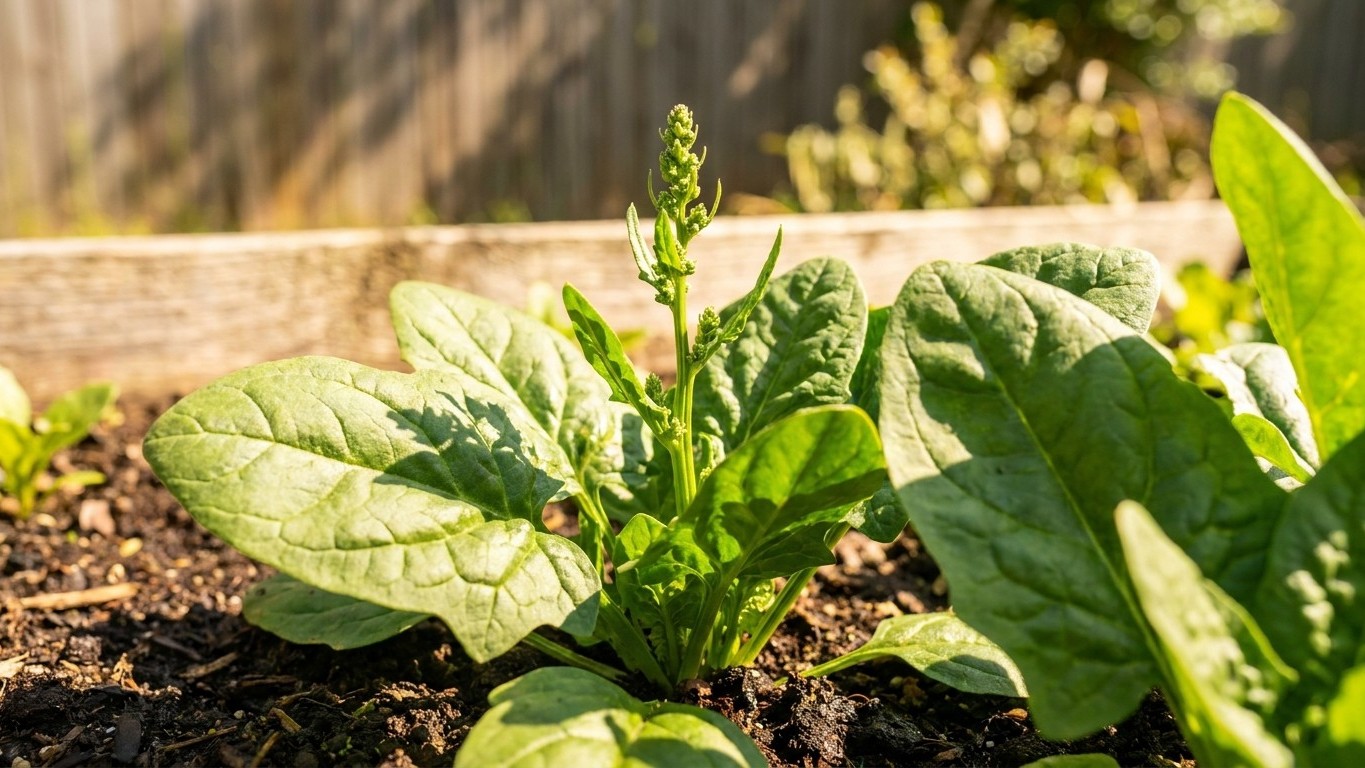

Cut spinach while the plant is a low, tight rosette of full-size leaves, before the center starts to stretch upward. In Connecticut that puts the spring cutting shortly after the early-April last frost on the shore, and the fall cutting up to the first freeze in late October or early November. Once cut, spinach is a short keeper. UC Davis sets the ceiling at two weeks, and only at 32°F. Most home fridges run warmer, so plan to eat it sooner.
When spinach is ready in Connecticut
The signal is the plant itself: a flat, low rosette with several leaves big enough to eat and a center that is still tight. The calendar only gives you a rough window. At the Bridgeport station on the Long Island Sound shore, the last spring frost falls between April 2 and April 12, and the first fall frost between October 28 and November 10. Spring cutting starts a few weeks after sowing and ends when the weather warms. Fall cutting runs until hard freezes shut the garden down.
Bridgeport is the mildest corner of the state. Inland towns and the northwest hills freeze later in spring and earlier in fall, so slide both windows to match your own yard. Your county extension office can tell you what local frost dates look like.
How do you know spinach is ready to cut?
Start with the outer leaves once they are a usable size. Cutting those and leaving the center lets the plant keep producing for a while. When the center begins to lengthen, the leaves narrow and a stalk starts to rise, the plant has switched from making leaves to making seed. Cut the whole plant at that point, because the leaves only get worse from here.
How long does the spring cutting last?
Utah State University Extension says spinach grows best where temperatures do not exceed 75 F. That same number marks where the leaves turn bitter. Days of 90 F or more are rare on the Connecticut shore, only 6.2 a year at Bridgeport, but spinach gives up far below that line. Daylight adds a second clock. The longest day of the year at the reference city runs 14 h 58, and long days trigger flowering along with warmth. A cool June does not buy extra weeks. If you want the full picture on timing and prevention, read Will Spinach Bolt Early in Connecticut?
When should fall spinach go in so it is ready before frost?
Utah State University Extension says to plant 50 to 75 days before the date you want to harvest. Counting back from late October on the shore, that points to mid-August through early September. The obstacle in August is warm soil, because seed germination drops once the soil is above 80 F. Cold is not the problem in fall. The sowing window opens when the soil cools. Your local county extension office can name the spinach varieties suited to home gardens. For sowing details, see Growing Spinach in Connecticut. Before you cut, check the leaves for chewing damage. What Eats Spinach in Connecticut, and When explains what is likely to be feeding on them.
Keeping it, and for how long
The UC Davis Postharvest Technology Center lists the optimum storage temperature for spinach as 32°F, with an optimum relative humidity of 95 to 98 percent. It describes spinach as highly perishable and says it will not maintain good quality for more than 2 weeks. That is a ceiling under ideal conditions. It is not a promise for the bag in your refrigerator.
The same source says wilting, yellowing of leaves and decay are likely to increase once storage goes beyond 10 to 14 days. At 41 to 50°F, which it lists as common distribution conditions, the decline comes faster. Spinach pulled from your own bed starts out fresher than the grocery-store kind, which helps. It does not change the temperature math.
What do those numbers look like side by side?
| Condition | What the UC Davis sheet says |
|---|---|
| 32°F, 95 to 98% humidity | Optimum. Quality will not hold beyond 2 weeks at best. |
| Beyond 10 to 14 days | Wilting, yellowing and decay become more likely. |
| 41 to 50°F | Common distribution conditions. Loss happens faster. |
A relative humidity of 95 to 98 percent is close to saturated air. Spinach leaves are thin and lose water quickly into dry air, so they go limp within hours when left open. The high humidity slows that loss. The cold slows the aging of the leaf itself. You need both working together, and a fridge that gives you one without the other shortens the clock.
How do you know when it is done?
Go by the leaves instead of the date on your calendar. Throw out the bunch when you see any of these:
- Leaves that stay limp after a few minutes in cold water
- Yellowing along the edges or across the whole leaf
- Slimy patches or a sour smell
Plan on using garden-cut spinach within the first week, and eat the leaves you cut earliest first. Anything that makes it past ten days is living on borrowed time, according to the source.
Where in the house that actually is
Few kitchens hit 32°F. A home refrigerator typically holds somewhere between 41 and 50°F at the door, which is the same band where UC Davis says spinach declines faster. The door is the warmest spot because it swings open all day. The shelves near the top get warm air each time you reach in. The back of the bottom shelf comes closest to the optimum, since cold air settles there and the door is far away. A cheap fridge thermometer, left on that shelf for a day, tells you what you actually have.
Leaves pressed against the back wall can freeze in some fridges. If you see ice crystals or dark, translucent patches, pull the bag forward an inch or two.
How do you get high humidity at home?
The easiest tool is a bag. Put the leaves in a plastic bag or a container and close it loosely, so the air inside stays moist but not dripping. A damp paper towel laid among the leaves works the same way, as long as it is damp and never soaking. If you cut whole plants with their stems, stand the cut ends in an inch of water, like flowers in a jar, and slip a bag over the leaves. A crisper drawer closed tight also holds humidity, and some have a vent slider you can set to high.
Wet leaves sitting in a sealed bag will rot faster, so shake off the excess water before it goes in. Every hour the spinach sits on the counter or in the door uses up part of that two-week ceiling. Move it straight from the garden bed to the back of the bottom shelf, and the leaves will usually hold up for the best part of a week.
Common questions
Can I cut spinach more than once?
Yes, as long as the plant is still a leafy rosette. Take the outer leaves and leave the center so it keeps growing. When the center starts to rise into a stalk, cut the whole plant, because it is going to seed.
How long does cut spinach keep in the fridge?
The UC Davis Postharvest Technology Center says spinach will not maintain good quality for more than 2 weeks, and that is at 32°F with 95 to 98 percent humidity. In a home fridge, expect less. Wilting, yellowing and decay increase after 10 to 14 days even in good conditions.
When should I sow spinach for a fall harvest in Connecticut?
Count back 50 to 75 days from the date you want to harvest, per Utah State University Extension. On the shore, where the first frost falls between October 28 and November 10, that points to mid-August through early September. Warm soil above 80 F reduces germination, so wait for the ground to cool if August is hot.
Why does my spinach taste bitter?
Spinach grows best where temperatures do not exceed 75 F, and warmer weather brings out bitterness. Long days push the plant toward flowering as well. Cut earlier in the season, and harvest in the cool of the morning when the weather is warming up.