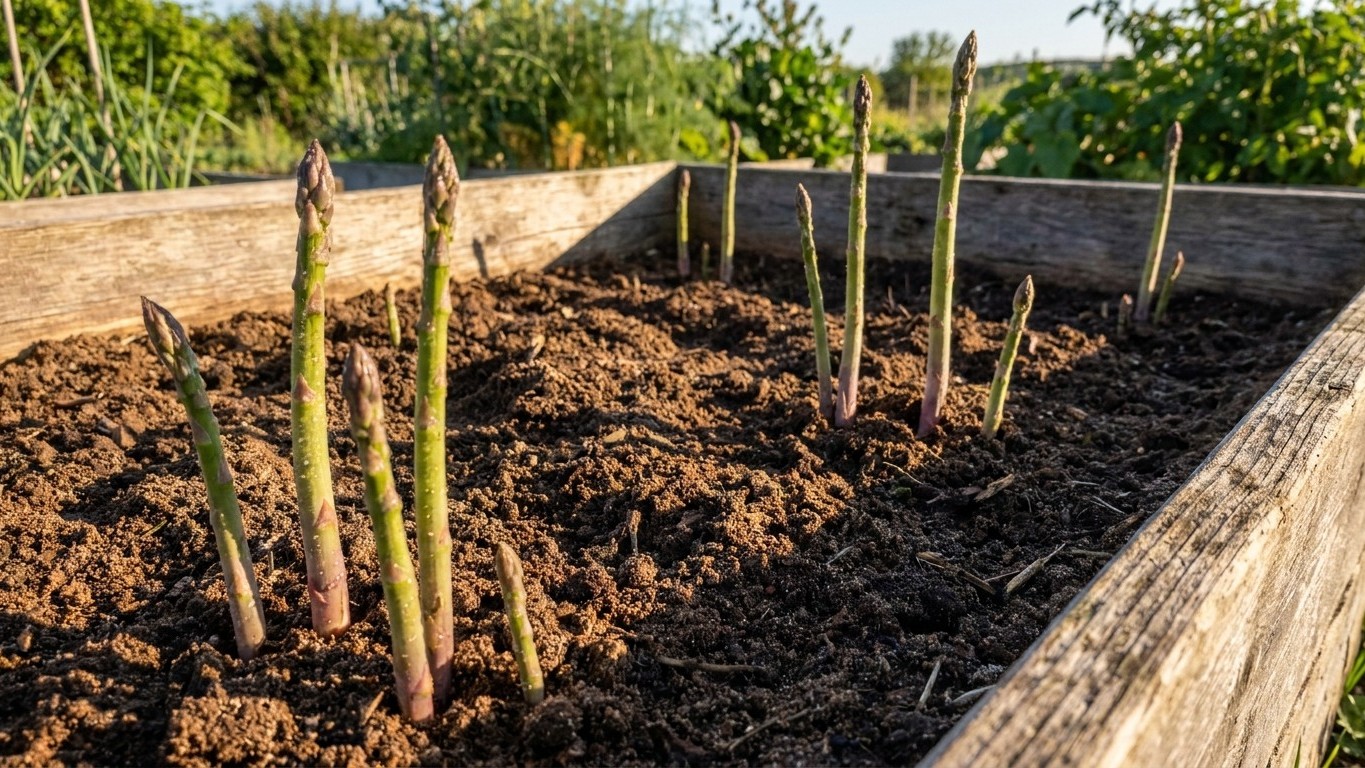

Asparagus gets eaten twice a year: once as spears in spring, again as ferns through summer. In Tennessee, the first round starts when spears break the soil after the last spring freeze. The second runs from the end of harvest until frost. What does the eating depends on which part of the plant is exposed, so the useful way to sort suspects is by symptom and by calendar. The University of Tennessee Extension county office makes the final call on species.
Which pests attack asparagus in Tennessee
University of Tennessee Extension documents which insects are active in the state’s gardens, through county offices that know local conditions. The practical way to use that service is to arrive knowing which group of feeders you are dealing with. For an asparagus bed there are four groups worth keeping in mind.
The first group chews spears. They scar, nick or tunnel into the tender shoots in spring, and the damage rides up the spear as it grows. A spear scarred at 2 inches is scarred at 8 inches, only bigger.
The second group chews ferns. Once harvest stops and the spears are allowed to open into tall feathery stalks, insects that favor foliage can strip branches back to bare stems. Because the ferns feed the crown for next year, this group matters more than it looks.
The third group feeds on sap. These insects leave no holes. They leave pale stippling, yellowing or a sticky residue on the foliage, which is why they are so often mistaken for a nutrient problem.
The fourth group is larger animals that browse. They nip shoots to stubs and leave clean, angled cuts, usually at one height across the whole row.
Many pest lists that circulate for Tennessee have nothing to do with this crop. Insects that bore into fruit or shade trees, grubs that live in turf roots, and the beetles and worms that go after tomatoes and squash can all appear in a general state pest guide. If an identification points you to a tree borer or a lawn grub, the identification is wrong, or the insect is simply passing through.
When each one shows up, and what it does first
The calendar starts with the last spring freeze. At the NOAA NCEI reference station, the 32°F freeze probability falls in the 30 to 70 percent band between March 31 and April 12 (NOAA NCEI climate normals). East Tennessee and the Cumberland Plateau run cooler and later than Nashville, so shift everything below by a week or more in those areas. Your own garden’s last freeze matters more than any normal.
Spears come first. Once soil warms past that freeze band and the first shoots push up, the spear chewers get their start. What you see first is ragged or scarred tissue near the tip, or small chewed notches along the stalk. Often the spear is still growing straight, so the damage is easy to dismiss until you cut it. If you planted crowns in early spring (see When to Plant Asparagus Crowns in Tennessee), the first-year shoots are thin and can look chewed even when little is wrong, since every nick shows on young plants.
Ferns follow. Spears that are left to open, whether because the bed is in its first two years or because harvest has ended, become the target for foliage feeders. The first sign is a thinning leaf, not a missing one: feathery branches that look combed out, then bare stems with a few clinging tufts. In summer, with the ferns at full height, a single bad week can remove a visible share of the foliage.
Sap feeders tend to show up on those same ferns as the weather turns hot and humid. They start as a dull or silvery cast on a few branches, which spreads along the stalk. The cast gets mistaken for early fall color, but it appears well before the first fall freeze, and it starts on part of the plant and not the whole.
Browsing animals have no season of their own. They go for whatever is tender, so a first-year planting with a few thin shoots can lose most of its above-ground growth in one night.
Summer rainfall adds a wrinkle. June averages 4.36 inches, July 4.16 and August 3.79, which makes August the driest of the three at the reference station. A dry stretch late in summer stresses ferns and makes light damage look worse. If foliage starts to fail then, check water before blaming an insect.
Telling the damage apart from everything else
Insects get blamed for a lot they did not do. Spring freezes, dry spells, hard soil and a missed fertilizer round all produce symptoms that look like feeding damage from across the yard. Look at the damage up close, and look for the cause (insects, droppings, residue) and not only the symptom. If you cannot find an insect, a trail of residue or a clear feeding pattern, treat the problem as environmental until the county extension office says otherwise.
| What you see | Possible cause | What settles it |
|---|---|---|
| Spear tips limp, dark and water-soaked after a cold night | Freeze injury | Several spears hit the same night, all at the same stage, with no chewing marks |
| Ragged tips or small notches on spears | Insect chewing, or mechanical damage from a hoe or foot traffic | Insects or droppings on or near the spear; mechanical damage follows a line of travel through the bed |
| Ferns thinning, bare stems with tufts left | Foliage chewers | Visible insects or chewed edges on branches, often on the sunniest side |
| Dull, silvery or yellowing foliage in summer | Sap feeders, drought stress, or low nutrients | Look under the branches for insects; check soil moisture a few inches down; compare with a soil test |
| Clean, angled cuts at one height across the row | Animal browsing | Uniform cut height and tracks or droppings nearby |
| Pale or stunted ferns with no insects present | Nutrient shortfall or poor drainage | Soil test; check whether water stands after rain |
The soil matters here. The Dickson series that the USDA lists as Tennessee’s representative soil is an old, leached Ultisol, naturally acid and low in nutrients, with about 1.5 percent organic matter at the surface. A garden on ground like that can show pale, weak growth that looks like insect damage and is not. That soil is moderately well drained, but drainage in a particular bed depends on slope, fill and compaction. If you are weighing whether a spot will last, Will Tennessee Soil Hold an Asparagus Bed for Fifteen Years? covers it.
When you are unsure, cut a damaged spear or frond and take it, with a photo of the whole plant, to your county extension office instead of guessing from a description.
What actually works here, and what is a waste of time
On a short season, timing does more than any product. A physical barrier goes on before the first damage appears, not after. Lightweight fabric row cover over a young planting in early spring keeps insects and browsing animals off tender shoots, and it can come off once spears are tall enough to cope or once you start harvesting. A fence at the right height handles animals that nip stalks to stubs. Neither costs much, and both work from the first day they are installed.
Sanitation helps as well. Cut dead fern stalks down at the end of the season and clear them from the bed, since old debris gives overwintering insects somewhere to shelter. Keep the rows weeded and the bed open to air and sun so foliage dries quickly after rain.
Harvest discipline protects the planting more than it seems to. Cut the bed too hard too early and the crown has little energy to recover when insects take part of the ferns. The end-of-harvest signal is physical: stop when most spears are thinner than a pencil, and let the ferns grow.
Spraying on a guess wastes money, and it can harm beneficial insects. By the time chewing damage is visible, the insect that caused it may have moved on or finished feeding. Treating ferns for a problem that is actually drought or a freeze does nothing at all. Nothing here is a recommendation for a pesticide. What is legal and registered in Tennessee changes, and only the county extension office knows what applies to your situation.
Where to check this for your own county
Start with the University of Tennessee Extension office in your county. Staff there handle plant and insect questions, can identify a specimen, and know what has been active locally this season. Call ahead to ask whether they want a sample, a photo, or a visit.
Pests vary from county to county, and sometimes from one side of a county to the other. Elevation, soil type, the neighbors’ plantings and the last hard winter all change who shows up. A river-bottom garden and a ridge-top garden are different places, even a few miles apart.
If you are still planning rather than troubleshooting, read Growing Asparagus in Tennessee for the full picture of the bed, from furrow depth to the long wait before harvest.
Before you call, gather a photo of the whole plant, a close-up of the damage, the date you first saw it, and whether it showed up after a cold night or a dry week.
Common questions
When do pests start eating asparagus in Tennessee?
Spear damage begins when shoots emerge after the last spring freeze, which at the reference station falls between March 31 and April 12. Fern damage begins once ferns open and runs through summer. East Tennessee and the Cumberland Plateau run later.
Is the damage on my spears from insects or from frost?
Frost injury looks limp, dark and water-soaked, usually on many spears at once after a cold night, with no chewing marks. Insect damage is ragged or notched, and often on only some spears. Your county extension office can confirm which one you have.
Should I spray as soon as I see damage?
No. Confirm the cause first, because freeze, dry weather and low nutrients all mimic feeding damage. Your county extension office knows which products are registered in the state and when they make sense.
Do young plantings need more protection?
Yes. First-year shoots are thin and few, so a little chewing or browsing takes a large share of the plant. A row cover or a fence set early gives crowns time to build, and the bed is not harvested until year 3 regardless.