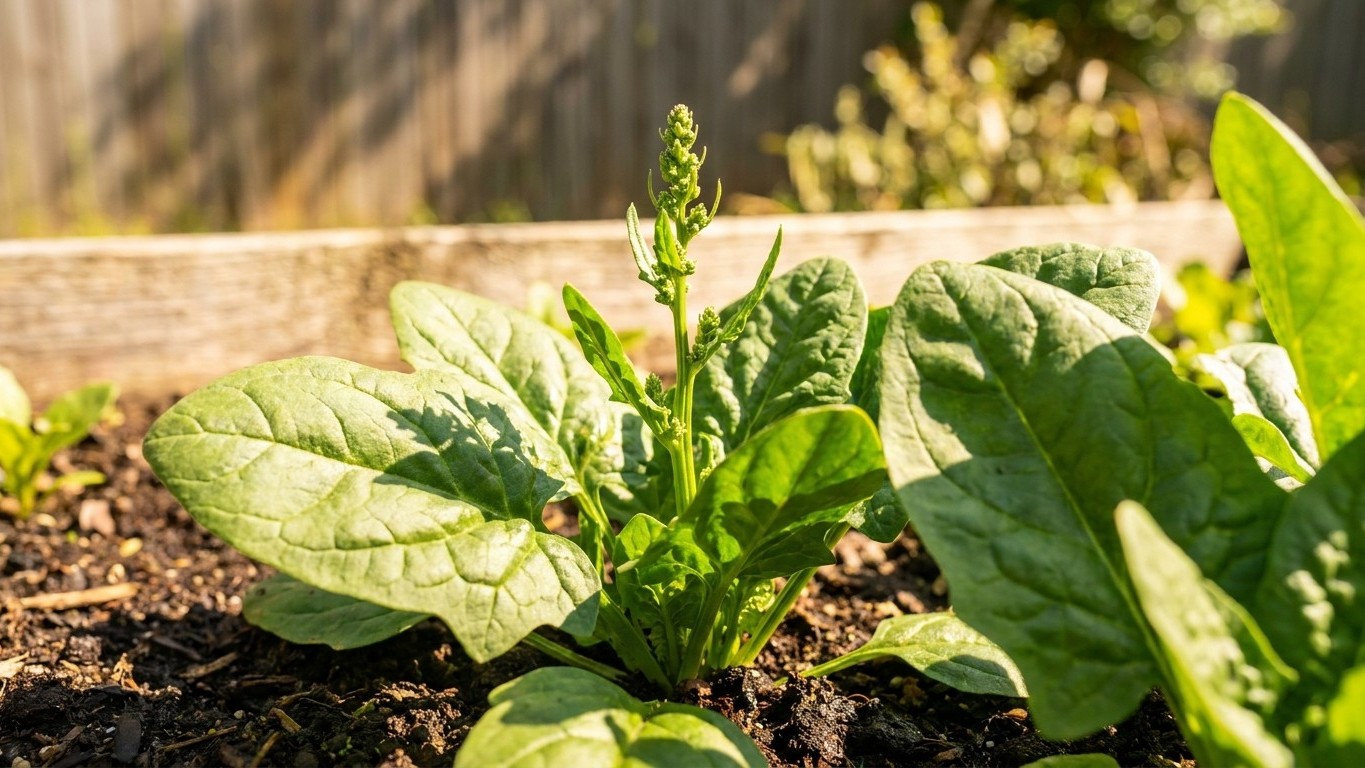

Spinach is ready when the outer leaves reach a usable size and the center of the plant is still flat. It keeps for up to two weeks at best, and only at 32°F. In a fridge door it yellows in days. Between those two facts sits most of the work: timing the cut to Florida’s cool months and getting the leaves cold quickly.
When spinach is ready in Florida
Start cutting when the plant is a full rosette of broad leaves with a low, flat center, and stop when that center begins to lengthen into a stalk. In north Florida, count back from the date you want to harvest, which puts fall sowing once the soil has cooled and the picking in the cool months, from late fall into late winter.
For a regular harvest, snip the outer leaves with scissors and leave the center to keep producing. Once the center starts to rise, cut the whole plant at the base and eat it that week. Look the leaves over first, since chewed edges and holes are worth understanding before you wash anything (see What Eats Spinach in Florida, and When).
The calendar around that window comes from the 1991-2020 climate normals that NOAA NCEI publishes for Jacksonville. The last spring freeze falls between February 16 and March 7, and the first fall freeze between November 26 and December 13. Those dates bracket the cold, but spinach does not wait for frost. Seed germination drops once the soil is above 80°F, according to Utah State University Extension, so in a hot region the planting window opens when the soil falls below that line, not when the first cold front arrives.
Why does spinach bolt in spring?
Utah State University Extension says spinach bolts during long days and warm temperatures, and that it grows best where temperatures do not exceed 75°F. Both triggers matter. At the longest day of the year, Jacksonville gets 13 h 58 of daylight, and long days alone can send the plant toward flowering. A cool snap in late spring will not buy you extra weeks once the days are that long.
Heat works on its own schedule. About 73.2 days a year reach 90°F or more at the Jacksonville station, so the warm months arrive early and stay late. The 75°F line is a growth ceiling, and it is also the point where leaves turn bitter. A plant that is past it may still look healthy and taste harsh. When you see the first stalk, or the leaves get sharp on the tongue, the crop is done. For more on timing, read Will Spinach Bolt Early in Florida?
Does the window change in central and south Florida?
Yes, and it runs the other way. Jacksonville’s inland airport station is a north Florida reading, and even there three of thirty falls saw no freeze at all. Farther south the land is effectively frost-free, so the calendar inverts. The main spinach season runs through winter, and summer is the hard part. Do not apply the Jacksonville dates to Orlando or Miami. Use the same signals instead: sow when the soil cools below 80°F, cut while the center is flat, and quit when heat and long days arrive. The full planting picture is in Growing Spinach in Florida.
Keeping it, and for how long
The UC Davis Postharvest Technology Center, in its produce fact sheet on spinach, gives the optimum storage temperature as 32°F (0°C) and the optimum relative humidity as 95 to 98%. The same sheet calls spinach “highly perishable” and says it will not maintain good quality for more than 2 weeks. That is a ceiling under ideal conditions. It is not a shelf life you can count on.
How long does cut spinach really last?
The fact sheet says wilting, yellowing of leaves and decay are likely to increase when storage goes beyond 10 to 14 days. It also says that happens faster at common distribution conditions of 5 to 10°C, which is 41 to 50°F. That range is where many home refrigerators sit, and it is even warmer in the door. Eat the first week’s cut first. Treat the second week as borrowed time, and check each leaf before you use it.
| Condition | Temperature | What UC Davis reports |
|---|---|---|
| Optimum storage | 32°F, at 95 to 98% humidity | Good quality for no more than 2 weeks |
| Beyond the ceiling | Optimum conditions | Wilting, yellowing and decay likely to increase after 10 to 14 days |
| Common distribution conditions | 41 to 50°F | The same losses, arriving faster |
Why does humidity matter as much as temperature?
A humidity of 95 to 98% is close to saturated air. Spinach leaves are thin and lose water quickly, so in dry fridge air they go limp even when the temperature is right. Cold with low humidity gives you wilted leaves, and cold with high humidity keeps them crisp. That is why the storage advice always pairs the two numbers.
Heat before the fridge counts too. Leaves cut in the warm part of a Florida day carry that warmth into the kitchen, and every hour they spend warm uses up part of those two weeks. Cutting in the cool of the morning and getting the leaves cold soon after is the cheapest way to protect the ceiling. The sheet’s numbers describe a crop that has been cooled quickly. A bunch left on the counter through the afternoon has already lost some of its margin before it reaches the shelf.
Where in the house that actually is
No home fridge hits 32°F with 95% humidity. A domestic fridge runs warmer than the optimum, and the door runs warmer still, in the 41 to 50°F range where spinach yellows in days. The shelf that comes closest is the bottom one at the back, where the coldest air settles and the temperature swings least when you open the door. A closed crisper drawer on that shelf is a good second choice, because it holds humidity better than open shelving.
High humidity in practice means a bag. Put the leaves in a plastic bag, closed loosely, with a slightly damp paper towel tucked in to hold moisture without soaking them. Standing water on the leaves speeds decay, so shake off any rinse water first or wait to wash until you are ready to cook. If you cut whole plants with the stems on, you can stand the cut ends in an inch or so of water in a jar and slip a bag over the top. The roots-in-water trick works for the same reason: the cut ends keep drinking while the leaves sit in humid air.
Whichever method you choose, put it at the back of the bottom shelf, not in the door. Skipping that step costs you the extra days between a harvest that lasts the week and one that is slimy by midweek. Check the bag every couple of days. Pull any yellowing leaf right away, since one decaying leaf can spoil its neighbors. Use the freshest leaves for salads and save the older ones for cooking, where a little softness does no harm.
Common questions
Can I cut spinach in a Florida summer?
Rarely. The longest day brings 13 h 58 of daylight at Jacksonville, and long days alone push spinach to bolt. Add the heat, with about 73.2 days a year at 90°F or more, and summer is the wrong season. Wait to sow until the soil drops below 80°F, then harvest through the cool months.
When should I stop cutting leaves in spring?
Stop when the center of the plant starts to lengthen into a stalk, or when the leaves turn bitter. Bitterness shows up around the same 75°F that limits growth. Cut the whole plant at that point and eat it quickly, because the flavor will not come back.
Which variety should I grow?
Your local county extension office can suggest varieties suited to your area. The cutting signals are the same for any of them: a full rosette, a flat center and no stalk. Your county extension office can tell you which do well in your part of the state.
Will spinach stay good for two weeks in my fridge?
Plan on less. Two weeks is the ceiling UC Davis gives for spinach held at 32°F with 95 to 98% humidity. A home fridge runs warmer, and the door is warmer still. Keep it bagged on the bottom shelf at the back and use it within the first week for the best flavor and texture.